
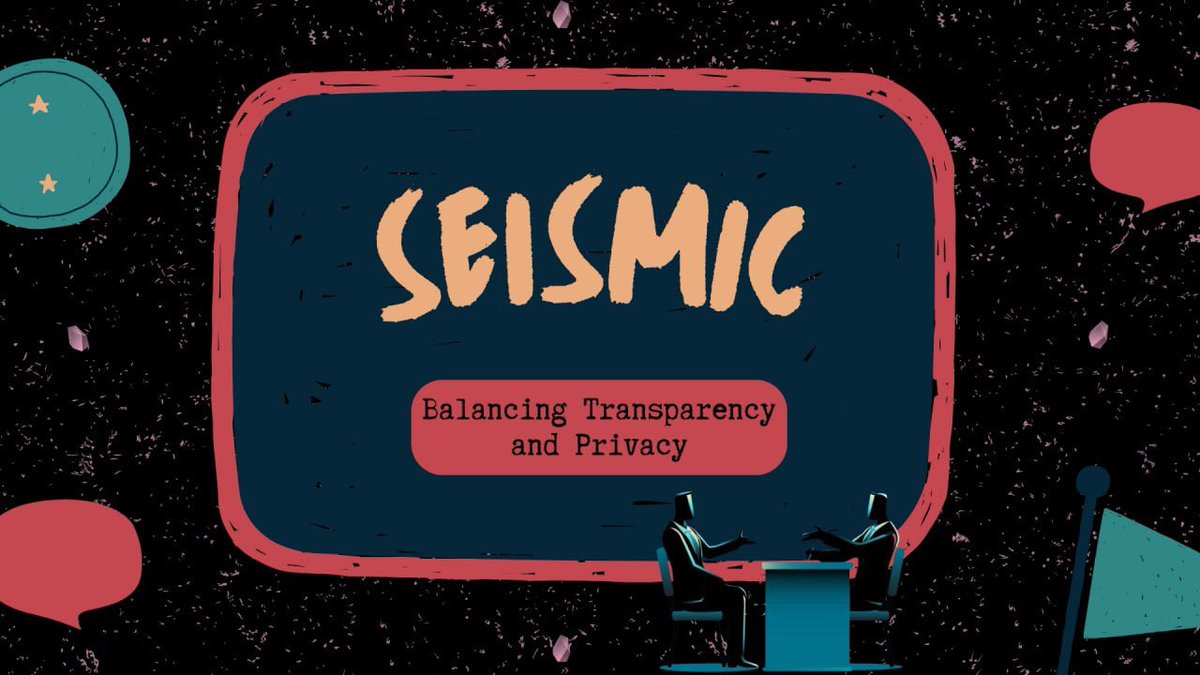
The conversation around transparency and privacy in blockchain often feels like a debate between two opposing ideals.
Transparency (Opening Argument):
“Blockchains are built on openness. Every transaction is visible, verifiable, and trustless. No hidden actions just pure accountability. That’s what makes the system work.”
Privacy (Counterargument):
“Accountability shouldn’t come at the cost of exposure. Total transparency may build trust, but it also creates risk.”
Transparency:
“If you reduce visibility, you reduce trust. How do users verify what they can’t see?”
Privacy:
“Privacy doesn’t remove trust,it refines it. Data can be validated without being fully revealed. You don’t need to expose everything to prove something is correct.”
Transparency:
“Openness has driven adoption so far. Why change it?”
Privacy:
“Because real-world use demands it. Businesses, institutions, even individuals need control over what they share. Full exposure isn’t sustainable.”
Now @SeismicSys builds on this idea by rethinking how privacy fits into blockchain systems.
So instead of choosing between transparency and privacy, it introduces a model where both can coexist.
By embedding privacy directly into smart contracts, Seismic enables data to remain protected while still being verifiable.
The future of blockchain isn’t transparency versus privacy,it’s the balance between both.
@xealistt
English