
پن کیا گیا ٹویٹ
𝗚𝗿𝗮𝗻 𝗖𝘂𝗯𝗲
32.5K posts


𝗚𝗿𝗮𝗻 𝗖𝘂𝗯𝗲
@GranCube
Analyzing blockchain governance and upgrade dynamics. Focused on institutional-grade infrastructure and long-term protocol resilience. Tezos.
شامل ہوئے Mayıs 2018
955 فالونگ1K فالوورز
Friday: AI is the new oil, but lithium is the engine. While others gamble on memes, Tezos tokenizes the $28k/ton lithium rush via Metals.io. Etherlink settles the physical grid at light speed. Smart money doesn't wait for the FOMO.
$XTZ #EnergySecurity #RWA
English
𝗚𝗿𝗮𝗻 𝗖𝘂𝗯𝗲 ری ٹویٹ کیا
𝗚𝗿𝗮𝗻 𝗖𝘂𝗯𝗲 ری ٹویٹ کیا

If Satoshi are dead or not able to access their coins, it doesn't make a difference.
If they're alive and able to access them, they need to protect them anyway from being stolen by someone with a quantum computer, which means they have to take an action. All the fork is doing is forcing this action to happen by a certain date.
English
𝗚𝗿𝗮𝗻 𝗖𝘂𝗯𝗲 ری ٹویٹ کیا

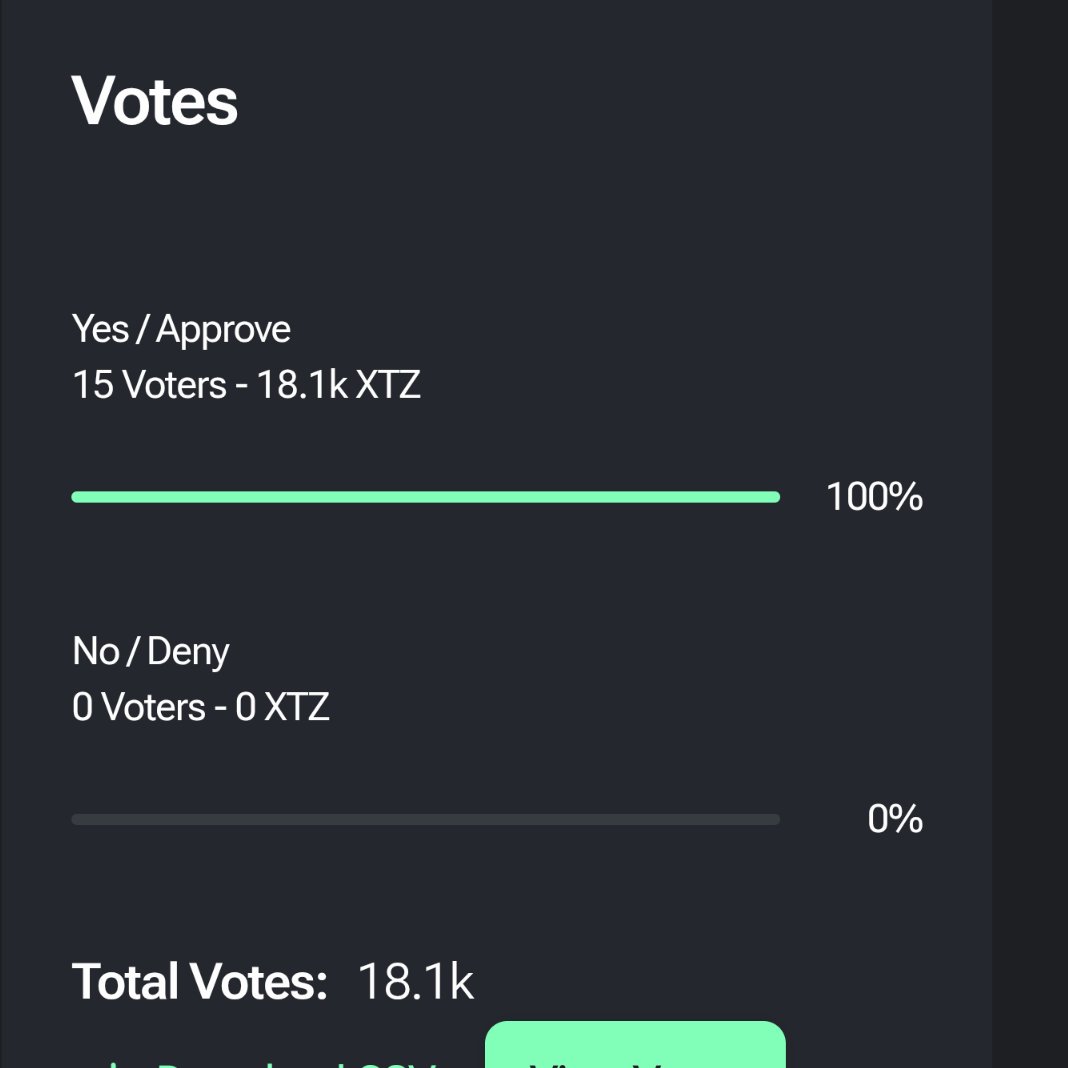
🥳 My @Tezos Ecosystem DAO proposal TEZTO just reached 100% yes votes!
Thank you all for the incredible support! 🙏
English
Thursday: AI needs power. Copper is $13k and supply is scarce. While others sell vapor, Tezos secures the grid via xU3O8 uranium and Metals.io RWA. Etherlink settles the physical world at light speed. Smart money owns the fuel.
$XTZ #EnergySecurity #RWA
English
𝗚𝗿𝗮𝗻 𝗖𝘂𝗯𝗲 ری ٹویٹ کیا

Only fools break the rules.. or do they? 🎲
Roll the dice and follow the rules of @Figure31’s new project, going live at 1pm EST on Tezos EVM ( @Etherlink ).
Chance, code, and creativity collide in real time onchain.
↓
English
𝗚𝗿𝗮𝗻 𝗖𝘂𝗯𝗲 ری ٹویٹ کیا


𝗚𝗿𝗮𝗻 𝗖𝘂𝗯𝗲 ری ٹویٹ کیا

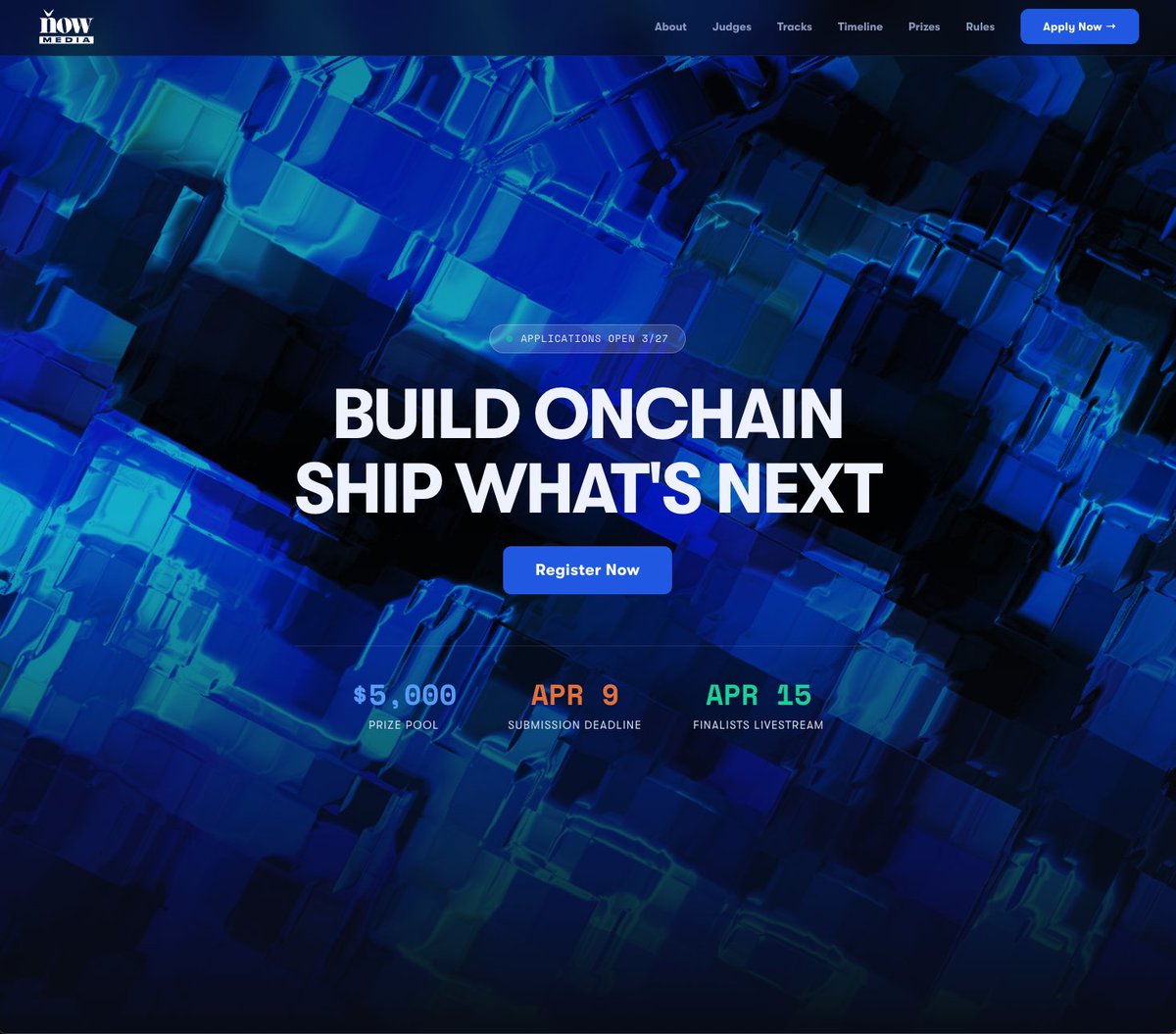
First submissions are rolling in for our Tezos EVM (@etherlink) Hackathon
The quality so far 👀
Have you started yours yet? ↓
English

What’s one project you think is massively underrated right now? 👇
English
Wednesday: SEC/CFTC cleared the fog. XTZ is a commodity.
While others play with memes, Tezos is in Cannes for TezDev 2026, launching native atomic composability.
Etherlink settles RWA at light speed.
Smart money doesn't wait for permission.
$XTZ #TezDev2026 #RWA
English
𝗚𝗿𝗮𝗻 𝗖𝘂𝗯𝗲 ری ٹویٹ کیا

テゾスでRWA(リアルワールドアセット)のウランかゴールドを1ドル分を配ってることを日本語で日本人向けにこっそりポストしようかと思ったけど、もはや自動翻訳なんだよね😋
Elon Musk@elonmusk
Grok automatically translating and recommending 𝕏 posts from other languages is starting to work
日本語
𝗚𝗿𝗮𝗻 𝗖𝘂𝗯𝗲 ری ٹویٹ کیا

TenX Protocols has received a delegation of ~7.8M XTZ from the @TezosFoundation, with 6M XTZ now staked on a TenX-operated validator.
This strengthens our validator operations on @tezos and supports our strategy of building recurring revenue through staking infrastructure.
Delegation reflects trust in validator performance, reliability, and long-term alignment.
Read the full news release:
tenxprotocols.substack.com/p/tenx-protoco…
TSX-V: $TNX
#TenXProtocols #Tezos $XTZ #BlockchainInfrastructure

English
Tezos just announced quantum-resistant user keys for protocol U upgrade using NIST's ML-DSA-44!
Future-proofing $XTZ against quantum threats.🤓
#Tezos #PostQuantum #QuantumResistant #XTZ
English
@apex_ether Don't lie about the leader.
Ethereum won't make it in time.
English

The culling of alt L1s has accelerated.
Ethereum is leading the push toward quantum resistance.
VC-backed, corporate, vapourware L1s are cooked.
Long term, this only strengthens Ethereum and its aligned ecosystem.
0xSammy@0xSammy
Google Quantum AI just showed ECDLP-256 can be broken with 20x fewer qubits than previously estimated ECDLP-256 is the math problem underpinning the cryptography that secures wallet signatures on virtually every major blockchain Under 500k physical qubits required which will allegedly take minutes to execute They validated it via zero-knowledge proof to keep the circuits classified. That tells you everything about the severity Every chain running on elliptic curve cryptography is now on a migration clock to post-quantum standards This is the most underpriced risk in the digital asset ecosystem The plus side is that 500k qubits is a ~5,000x gap between where we are today and where you’d need to be; the hardware doesn’t yet exist to execute this We allegedly have until 2029 to migrate to a post quantum safe protocol Honestly didn’t think this would be so soon, but at least we know what the existential threat to crypto will be in the coming years! Now time to backsolve it
English

“as unofficial Bitcoin security researcher, I still believe Bitcoin PoW is cooked due to the dwindling security budget”
The best bitcoin is ethereum
The ef ships hard things often, quantum resistance will happen
Justin Drake@drakefjustin
Today is a monumentous day for quantum computing and cryptography. Two breakthrough papers just landed (links in next tweet). Both papers improve Shor's algorithm, infamous for cracking RSA and elliptic curve cryptography. The two results compound, optimising separate layers of the quantum stack. The results are shocking. I expect a narrative shift and a further R&D boost toward post-quantum cryptography. The first paper is by Google Quantum AI. They tackle the (logical) Shor algorithm, tailoring it to crack Bitcoin and Ethereum signatures. The algorithm runs on ~1K logical qubits for the 256-bit elliptic curve secp256k1. Due to the low circuit depth, a fast superconducting computer would recover private keys in minutes. I'm grateful to have joined as a late paper co-author, in large part for the chance to interact with experts and the alpha gleaned from internal discussions. The second paper is by a stealthy startup called Oratomic, with ex-Google and prominent Caltech faculty. Their starting point is Google's improvements to the logical quantum circuit. They then apply improvements at the physical layer, with tricks specific to neutral atom quantum computers. The result estimates that 26,000 atomic qubits are sufficient to break 256-bit elliptic curve signatures. This would be roughly a 40x improvement in physical qubit count over previous state-of-the-art. On the flip side, a single Shor run would take ~10 days due to the relatively slow speed of neutral atoms. Below are my key takeaways. As a disclaimer, I am not a quantum expert. Time is needed for the results to be properly vetted. Based on my interactions with the team, I have faith the Google Quantum AI results are conservative. The Oratomic paper is much harder for me to assess, especially because of the use of more exotic qLDPC codes. I will take it with a grain of salt until the dust settles. → q-day: My confidence in q-day by 2032 has shot up significantly. IMO there's at least a 10% chance that by 2032 a quantum computer recovers a secp256k1 ECDSA private key from an exposed public key. While a cryptographically-relevant quantum computer (CRQC) before 2030 still feels unlikely, now is undoubtedly the time to start preparing. → censorship: The Google paper uses a zero-knowledge (ZK) proof to demonstrate the algorithm's existence without leaking actual optimisations. From now on, assume state-of-the-art algorithms will be censored. There may be self-censorship for moral or commercial reasons, or because of government pressure. A blackout in academic publications would be a tell-tale sign. → cracking time: A superconducting quantum computer, the type Google is building, could crack keys in minutes. This is because the optimised quantum circuit is just 100M Toffoli gates, which is surprisingly shallow. (Toffoli gates are hard because they require production of so-called "magic states".) Toffoli gates would consume ~10 microseconds on a superconducting platform, totalling ~1,000 sec of Shor runtime. → latency optimisations: Two latency optimisations bring key cracking time to single-digit minutes. The first parallelises computation across quantum devices. The second involves feeding the pubkey to the quantum computer mid-flight, after a generic setup phase. → fast- and slow-clock: At first approximation there are two families of quantum computers. The fast-clock flavour, which includes superconducting and photonic architectures, runs at roughly 100 kHz. The slow-clock flavour, which includes trapped ion and neutral atom architectures, runs roughly 1,000x slower (~100 Hz, or ~1 week to crack a single key). → qubit count: The size-optimised variant of the algorithm runs on 1,200 logical qubits. On a superconducting computer with surface code error correction that's roughly 500K physical qubits, a 400:1 physical-to-logical ratio. The surface code is conservative, assuming only four-way nearest-neighbour grid connectivity. It was demonstrated last year by Google on a real quantum computer. → future gains: Low-hanging fruit is still being picked, with at least one of the Google optimisations resulting from a surprisingly simple observation. Interestingly, AI was not (yet!) tasked to find optimisations. This was also the first time authors such as Craig Gidney attacked elliptic curves (as opposed to RSA). Shor logical qubit count could plausibly go under 1K soonish. → error correction: The physical-to-logical ratio for superconducting computers could go under 100:1. For superconducting computers that would be mean ~100K physical qubits for a CRQC, two orders of magnitude away from state of the art. Neutral atoms quantum computers are amenable to error correcting codes other than the surface code. While much slower to run, they can bring down the physical to logical qubit ratio closer to 10:1. → Bitcoin PoW: Commercially-viable Bitcoin PoW via Grover's algorithm is not happening any time soon. We're talking decades, possibly centuries away. This observation should help focus the discussion on ECDSA and Schnorr. (Side note: as unofficial Bitcoin security researcher, I still believe Bitcoin PoW is cooked due to the dwindling security budget.) → team quality: The folks at Google Quantum AI are the real deal. Craig Gidney (@CraigGidney) is arguably the world's top quantum circuit optimisooor. Just last year he squeezed 10x out of Shor for RSA, bringing the physical qubit count down from 10M to 1M. Special thanks to the Google team for patiently answering all my newb questions with detailed, fact-based answers. I was expecting some hype, but found none.
English

not just bitcoin, ethereum too
90M ETH
$200B in stablecoins / RWAs
all sitting on cryptography vulnerable to quantum attacks

nairolf@0xNairolf
6.7 million BTC are sitting in addresses vulnerable to quantum attacks yeah
English
@Ethprofit Bitcoin and Ethereum can't make it in time. That's a shame.
Tezos will be implemented soon. It's faster than Google🤓
Tezos also implements EVM, so please consider that.
If you want to transfer, it's now👍🏻
#Tezos $XTZ $ETH $BTC
𝗚𝗿𝗮𝗻 𝗖𝘂𝗯𝗲@GranCube
Tezos just announced quantum-resistant user keys for protocol U upgrade using NIST's ML-DSA-44! Future-proofing $XTZ against quantum threats.🤓 #Tezos #PostQuantum #QuantumResistant #XTZ
English
This is where bitcoin unforunately will die
The only way bitcoin will survive is to transition into a Ethereum Layer 2.
Project Eleven@projecteleven
🚨 Google has sounded the quantum alarm 🚨 Today, they released groundbreaking progress towards breaking crypto using a quantum computer. TLDR - Existing cryptography is dead. Mempool attacks are real. We must migrate to post-quantum now. Thread 🧵
English
𝗚𝗿𝗮𝗻 𝗖𝘂𝗯𝗲 ری ٹویٹ کیا

Commodity tokenization platform @metalsofficial is live on @tezos, giving users access to tokenized gold, uranium, and a basket of rare-earth metals through a single web application.
Read more: thedefiant.io/news/blockchai…
English

This is wild. Google Research demonstrates a ~20x more efficient implementation of Shor's algorithm that could break ECDSA keys within minutes with ~500K physical qubits.
Google is now are more confident on a 2029 post-quantum transition. We are no longer looking at mid 2030s, we could have quantum computers of this scale by the end of the decade.
They believe this result is so severe that they are not publishing the actual circuits. They instead published a ZKP proving that they know of the quantum circuit with these properties. This is very atypical, showing Google thinks this is serious shit.
All blockchains need a transition plan ASAP. Post-quantum is no longer a drill.

nic carter@nic_carter
Many are wondering "what Google saw" that caused them to revise their post-quantum cryptography transition deadline to 2029 last week. It was this: research.google/blog/safeguard…
English