

Knowledge of London
23.8K posts
Knowledge of London
@Knowledgepoint
Life is like a camera. Just focus on what's important & capture the good times, develop from the negatives and if things don't work out, just take another shot.
London, England شامل ہوئے Aralık 2009
372 فالونگ34.9K فالوورز

The "Mole Man of Hackney" was the nickname given to William Lyttle, an eccentric Irish civil engineer who spent roughly 40 years illegally digging a massive network of tunnels beneath his 20-room Victorian property in De Beauvoir Town, Hackney, London.
The Digging Obsession
Lyttle inherited the property at 121 Mortimer Road in the 1960s. He claimed his obsession started entirely by accident when he merely intended to hollow out a standard wine cellar. After completing that initial project, he remarked that he had "found a taste for the thing" and simply kept going.
Using only a shovel and a custom, homemade pulley system, Lyttle dug single-handedly for four decades. Over time, his subterranean excavations created a web of caverns and tunnels that reached depths of up to 8 metres (26 feet) and spanned out 20 metres (65 feet) in every direction from his house. One of his secret passages reportedly burrowed far enough to connect near the Dalston Lane railway tunnel.
Neighborhood Chaos & Eviction
Lyttle's unchecked digging turned into a major public safety hazard. Neighbors frequently complained that the ground was shaking. On one occasion, Lyttle cut off power to the entire street for a day when he accidentally struck a high-voltage, 450-volt underground electrical cable.
The council was finally forced to intervene in the early 2000s when the surrounding pavements and roads began to physically collapse and form sinkholes. A structural evaluation using ultrasound scanning revealed that his house was practically floating on a hollowed-out web of dirt.
In 2006, Hackney Council officially evicted Lyttle due to imminent structural dangers. When crews cleared the property, they removed 33 tonnes of debris, which oddly included the buried frames of three cars and a boat. The council filled the dangerous underground cavities with tons of solid concrete to stabilize the neighborhood.
Later Life and Legacy
Lyttle was ultimately ordered by the High Court to pay nearly £300,000 for the extensive stabilization repairs. Because he was banned from returning to the property, the council temporarily housed him in a hotel before moving him into a top-floor high-rise flat—specifically chosen so he could no longer tunnel into the earth. However, his compulsion could not be stopped; after he passed away from natural causes in June 2010 at age 79, authorities discovered he had knocked a large, tunnel-shaped hole right through the wall dividing his kitchen and living room.
Lyttle has since been remembered as one of London's legendary modern eccentrics, famously stating, "There is great beauty in inventing things that serve no purpose."


English
Knowledge of London ری ٹویٹ کیا
WW2 stretcher railings are a fascinating piece of repurposed history found throughout London. During the Blitz, the government manufactured over 600,000 steel stretchers to handle expected civilian casualties. Following the war, this massive stockpile was upcycled to replace metal fencing that had been scrapped for the war effort. The original wire mesh is still visible in the railing frame.

English
Shakespeare's Tree: On the slope of Primrose Hill stands a large oak tree planted in 1964 to mark the 400th anniversary of William Shakespeare’s birth, replacing the original tree planted there in 1864.
The plaque erected with the 1964 tree reads in bright colours on a black background:
SHAKESPEARE OAK.
Planted by Dame Edith Evans, D.B.E., for the Society for Theatre Research on April 23rd, 1964, to commemorate the Shakespeare Quatercentenary and to replace the oak planted by Samuel Phelps nearby on April 23rd, 1864.

English
The New Cross Gate Station's Botanical Mystery:
Tucked right beside Platform 1 on undeveloped land, you will find a towering Giant Redwood (Sequoiadendron giganteum). Though often dubbed a "mystery tree," local lore and tree experts have revealed that it was grown from seed in the early 1980s by a railway worker at the station.

English
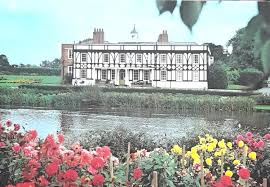
The Tragic Jinx of Broomfield House: Broomfield House in Broomfield Park.
The centerpiece of the park bordering the road is the ruins of Broomfield House. Originally a Tudor farmhouse built in the 1560s, it later became a grand mansion. Tragically, it is famous for being incredibly "jinxed" by fire. It was devastated by four separate fires in 1984, 1993, 1994, and 2019. Today, it remains an empty shell supported by scaffolding, and plans are underway to dismantle and memorialize the remaining ruins.


English
The Houndsditch murders of December 1910 saw three City of London police officers shot dead by a gang of heavily armed Latvian anarchists attempting to tunnel into a jeweller's shop at 119 Houndsditch. The tragedy shocked the nation and directly led to the infamous Siege of Sidney Street.
Police were called to investigate unusual drilling sounds late at night. When officers entered adjacent premises to check on the noise, the gang suddenly opened fire with semi-automatic pistols.
Tips led police to a hideout at 100 Sidney Street in Whitechapel. A massive gun battle ensued, involving hundreds of police and a detachment of the Scots Guards.
Then-Home Secretary Winston Churchill arrived on the scene and controversially took personal command, halting firemen from putting out a blaze at the besieged house until the suspects could no longer pose a threat.


English
Knowledge of London ری ٹویٹ کیا
Discovered during the construction of the Gherkin, St Mary Axe in 1995, a teenage Roman girl dated 350/400AD was found. In April 2007 she was reburied at the base of the Gherkin following ancient Roman funeral rites. Her grave is marked by a simple stone with marble inscription.


English
Knowledge of London ری ٹویٹ کیا
The pillar box at the corner of Cavendish Avenue and Wellington Place in St. John's Wood is a historically significant Victorian Penfold pillar box. Manufactured in the 1860s, this iconic hexagonal post box is Grade II listed and bears the royal cypher of Queen Victoria (VR).
It features a unique hexagonal shape, a petal-shaped cap, and decorative acanthus leaves topped by a classical finial.

English
The Eastcastle Street robbery was a brazen May 1952 armed heist in central London where seven masked men ambushed a Post Office mail van, stealing £287,000. Considered Britain’s largest postwar robbery at the time, it remains famously unsolved with no convictions and the loot never recovered.
At approximately 4 : 20 a.m., a Post Office van was transporting High Value Packets from Paddington railway station to the Eastern Central District Office. Due to routine road repairs on Oxford Street, the van was forced onto a diversion down Eastcastle Street.
The Front Trap: A large black saloon car emerged slowly from a side street, forcing the mail van to brake and slow down.
The Rear Block: A second green vehicle pulled up immediately behind and alongside the van, completely boxing it in.
The Assault: The attackers forcibly dragged the driver and two attendants out of the van, striking them with coshes.
The Escape: The thieves drove the mail van away, later abandoning it near Regent's Park in Augustus Street. Out of 31 high-value mailbags on board, 18 were missing.


English
Knowledge of London ری ٹویٹ کیا

Knowledge of London ری ٹویٹ کیا
The Rotherhithe Street Bascule Bridge is a striking, bright red, stationary bridge in southeast London. Built in the 1930s, it is one of the city's last surviving Scherzer rolling lift bridges, which once opened daily to let ships pass through the Surrey Commercial Docks. Unlike standard drawbridges on fixed hinges, it was designed as a "seesaw". It used heavy counterweights to roll back on curved tracks, requiring very little energy to lift the bridge in minutes. The bridge no longer operates or lifts. It is welded or secured in place, acting purely as a decorative remnant of the Docklands' industrial past.
The French noun bascule generally translates to seesaw, rocker, scales (or weighing machine), or counterbalanced device in English.


English
@grazeyb It gets confusing when looking for images. What type of design was it?
English

@Knowledgepoint I worked in the design team on 100 Sydney St in Chelsea when is was refurbed so that how I recognised it.
English
Knowledge of London ری ٹویٹ کیا
The Lost Ghost Canal:
Long before the railways arrived, the Croydon Canal sliced directly through Brockley Cross. Opened in 1809, it was an economic failure and closed by 1836. The London and Croydon Railway bought the canalbed and laid tracks directly over its route. The Grassy Embankment: On the west side of Coulgate Street (next to Brockley Station), a small grassy mound remains. While not the canal itself, it is a leftover spoil heap from when the railway dug out the old canal route.


English

@grazeyb Well spotted, this is 100 Sidney Street Whitechapel. When I knew it it was a council block called Siege House ✔️

English
Knowledge of London ری ٹویٹ کیا
Paul McCartney wrote "She's Leaving Home" after reading a Daily Mail article about 17-year-old Melanie Coe, a runaway schoolgirl with the headline: "A-Level Girl Dumps Car and Vanishes." McCartney was deeply struck by the parents' tragic refrain of not understanding why she left, despite having everything.
In February 1967, Melanie Coe, a girl from a well-to-do family in North London, snuck out of her home. She left behind a note and all her belongings to meet up with her older boyfriend. Because she inadvertently revealed where her boyfriend worked, she was found by authorities ten days later, at which point it was discovered she was pregnant.
The Eerie Coincidence.
The most fascinating element of the story is that McCartney had actually met Coe years prior. In 1963, McCartney was a judge on the ITV television show Ready Steady Go!, where he chose Coe as the winner of a dancing/lip-syncing contest. Neither realized the connection when he read the article and wrote the song years later
Melanie Coe, lived with her parents in a block of flats called Stamford Lodge, located on Amhurst Park Road in Stamford Hill, North London.

English