
Aaron Levie

11.4K posts

Aaron Levie banner
Aaron Levie

Aaron Levie

@levie

ceo @box - your business lives in content. unleash it with AI

Bay Area شامل ہوئے Mart 2007
784 فالونگ2.6M فالوورز
Aaron Levie
Aaron Levie@levie·
What gets missed with AI productivity gains is that by and large, most roles will continue to be as sophisticated as the tools allow. This is why also thinking through “today’s jobs will be replaced with AI” is a fallacy. Everyone thinks the market is static, but it’s not. As a result of everyone having access to the same technology which augments our work, then users of the tools will increasingly raise their level of output to the point where the prior definition of the job is no longer relevant. Thus, those that understand their particular field and grow in their skills will continue to be differentiated vs. others. If you can do far more, then you start to tackle bigger and harder problems. If you do that, then the expertise still is required to get the job done fully. The engineer with AI is going to be far more productive and capable with AI than the non-engineer trying to build the same piece of software. Building a lightweight app is no longer the definition of getting by in software development. Reviewing a contract will no longer be the definition of a paralegal. Splicing a video won’t be the definition of a video editor. Providing basic financial research won’t be the job of the financial analyst in the future. Simply put, AI will naturally cause most roles to actually grow in complexity rather than reduce in complexity, because we can do far more with the tools.
andrew chen@andrewchen

hot take :) The biggest and most productive people in the AI era are the folks who are already good at their jobs. AI as a multiplier, not an equalizer/democratizer

English
45
35
267
32.8K
Aaron Levie
Aaron Levie@levie·
It’s remarkable how often you need to be dramatically upgrading your AI architecture given the pace of progress in AI models right now. If you’re building agents, you basically need to throw away large parts of previous work that you setup to compensate for model limitations every few quarters. The systems you built to mitigate context window limits aren’t useful anymore, and for many use-cases it’s easier just to throw more compute at a problem today in ways that wouldn’t have worked previously. If you’re deploying agents in a workflow, you likely need to equally be rethinking your core systems at about that same frequency. The way you would deploy agents in an enterprise 18 months ago is entirely different from the best practices that you’d have today. This is partly why everyone’s working so hard right now. Right as a best practice is solidified, models improve dramatically, and that old work is rendered obsolete. Unclear that this lets up anytime soon, which is why the it pays to be so wired in right now.
Sam Hogan 🇺🇸@samhogan

most of tooling around llms was built for a world that largely doesn’t exist anymore RAG, GraphRAG, Multi Agent Orchestration, ReAct frameworks, prompt management/versioning tools, LLMOps tooling, eval tools, gateways, finetuning libs, etc all obsoleted in in the last 3 months

English
87
104
925
212K
Aaron Levie
Aaron Levie@levie·
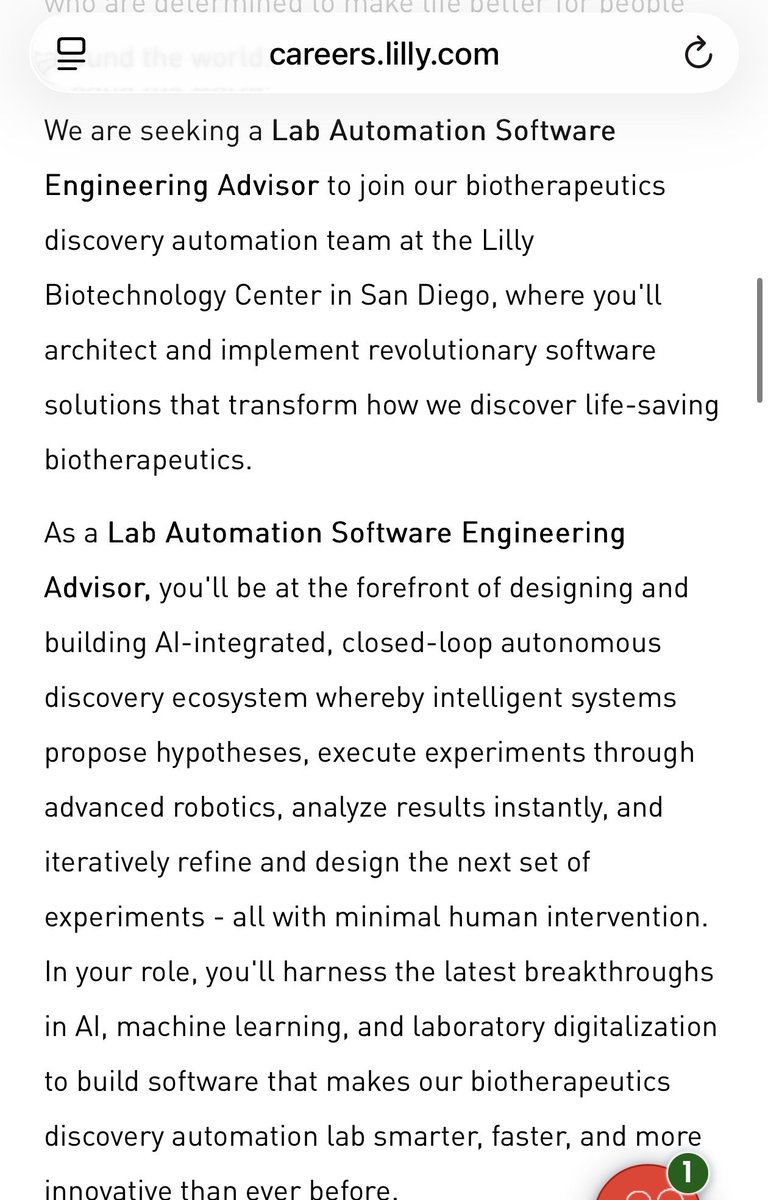
When people think software engineers, they tend to think jobs at tech companies building apps. The growth of the tech industry is so wired into our heads that that’s what we think the point and limit of software is. That’s just not how to think about software anymore. AI agents make it so every other company on the planet starts to create software for bringing automation to their workflows in a way that would have either been infeasible technically or unaffordable economically before. Every biopharma, industrial company, consulting firm, bank, and retailer will be building far more software in the form of backend systems, data processing, new digital experiences for clients, automating end-to-end workflows, and more. Small businesses will light up projects that would have needed a team of 50 to go do, but now becomes plausible with 5 people. And companies will start hiring engineers to help them make agents work and help redesign their business processes. All of this work will require people that are technical and skilled at software. The job becomes thinking through system design, wiring up various platforms, directing agents on what to automate, maintaining the system, upgrading it when things change, reviewing the output from the agents, and more. Just for fun, I went to Eli Lilly’s career site to see what jobs were open, and lo and behold they have a category called “Lab Automation Software Engineer”. There will be jobs like these in every company going forward, and they are the jobs that represent a new category of work that is now becoming available. And it’s only one of many examples of what engineers will be doing in the future. So before you think it’s the end of engineering, imagine the demand in the real world for this kind of work.
Aaron Levie tweet media
English
46
52
410
72.5K
Aaron Levie
Aaron Levie@levie·
Software going headless is inevitable in a world where agents use the tools 100X more than people do. And the reality is for a lot of software this is actually a huge boon to potential use-cases for these platforms. Software business models have largely been predicated on selling to the number of seats that are in the company in a given function, and the usage of your software is constrained by how much people can do in a given day. This means that your technology is often vastly underutilized relative to what it actually can power for the customer. Enter: agents. Agents can work 24/7, run in parallel, and string together work across systems. This is a big deal because now the agent can do far more than people ever could with these tools. Instead of reviewing contracts one by one, the agent will review all of them. Instead of manually moving data between marketing systems and across campaigns, the agent will let you run 10X more of them. Instead of being rate limited in a client onboarding process by human steps, agents accelerate these. Agents end up using these underlying platforms far more than people ever did, which opens up use-cases that the platform couldn’t go after before. Now, not every software market has the same amount of positive sum use-cases between people and agents, but I’d argue that a significant portion of systems of record, for instance, can be used far more than they are today. Your Salesforce data can be leveraged 100X more to do vastly more customer targeting and sales automation. Your documents can be turned into structured data and analyzed for insights and knowledge to automate other workflows. And so on. Now, of course you have to find a way to make this all commercially attractive, but it’s not hard to picture the revenue from API and agent consumption on these platforms becoming a rich component of revenue streams over time. Seats for the people, consumption for the agents. Lots of upside here for the companies that embrace this trend.
English
75
83
928
99.5K
Aaron Levie
Aaron Levie@levie·
Agents are going to use software 100X more than people will in the future. As a result, enterprise platforms will become headless and be able to work with any agent on or off platform. If you don’t do that you’re DOA. What some have missed is that this creates vastly more use-cases for these platforms than even existed pre-AI. This isn’t zero sum. Software value props have traditionally been capped at the number of users you have in a company. Agents have no upper limit. We’re going to run agents to process data at a scale humans never could, they’re going to be running 24/7 in parallel doing work for us, and they can integrate workflows across systems to generate all new value propositions. Once you embrace this approach, it becomes obvious how much more upside there is.
Marc Benioff@Benioff

Welcome Salesforce Headless 360: No Browser Required! Our API is the UI. Entire Salesforce & Agentforce & Slack platforms are now exposed as APIs, MCP, & CLI. All AI agents can access data, workflows, and tasks directly in Slack, Voice, or anywhere else with Salesforce Headless 360. Faster builds, agentic everything. 🚀 #Salesforce #Agentforce #AI venturebeat.com/ai/salesforce-…

English
136
178
1.8K
341.9K
Aaron Levie
Aaron Levie@levie·
@AriX The rare event where you start your day thinking you understand how computers work, and by the end of the day realizing you didn’t. Congrats!
English
1
2
38
4.7K
Ari Weinstein
Ari Weinstein@AriX·
So excited to share that we're bringing Computer Use to Codex. Computer Use lets Codex see, click, and type into your Mac apps, with its own cursor. It's a magical feeling to have agents using your apps in the background, and still get to use your computer at the same time.
English
77
68
1.1K
212.4K
Aaron Levie
Aaron Levie@levie·
@RobertDMellish @tszzl yeah no I wasn’t being facetious 😂 - I don’t comprehend the tweets I’m seeing about the podcast
English
1
0
6
496
Dave Mellish
Dave Mellish@RobertDMellish·
@levie @tszzl well, I suppose this proves your Rorschach test comment true, given that you and I could see such different things
English
1
0
6
497
roon
roon@tszzl·
the discourse about the dwarkesh jensen interview is ridiculous: the fact that a 25yo podcaster can make the ceo of the largest company in the world dance and answer to the people at all is impressive. the purpose of media is not to respectfully sing praises to the powerful
English
205
261
6.8K
265.2K
Dave Mellish
Dave Mellish@RobertDMellish·
@levie @tszzl I disagree. Confidence and control don’t present as angry and arrogant. There was one exactly one confident man in that discussion, and he was the 25 year old asking the insightful questions that rattled the CEO of the world’s largest company.
English
1
0
5
501
Aaron Levie
Aaron Levie@levie·
The new Codex is another jump in what agents will look like for knowledge workers. Agents that can code, work with tools, and use computers, can begin to execute long running tasks in the background for all areas of work. This can mean drafting reports, setting up data rooms for a merger, reviewing contracts, helping onboard clients, generating marketing assets, processing invoices, and more. With the Box plugin inside of the new Codex, you can begin to automate almost any kind of work with enterprise content. And importantly, being able to work across multiple apps is a huge point of leverage because we can now far more easily connect our tools together.
OpenAI@OpenAI

Codex for (almost) everything. It can now use apps on your Mac, connect to more of your tools, create images, learn from previous actions, remember how you like to work, and take on ongoing and repeatable tasks.

English
24
23
319
69.7K
magnus
magnus@magnushambleton·
@levie @MarysRoommate To Jensen!, it is weird that he doesn’t seem to have taken an interest in the things that customers representing 90%+ of his revenue came to AI as a result of x.com/magnushambleto…
magnus@magnushambleton

@OkayEstimator Jensen would massively improve his understanding of the customers that represent 90% of his revenue if he spent 12 hours reading the sequences

English
3
0
1
315
magnus
magnus@magnushambleton·
It’s instantly clear within the first 3min of the Dwarkesh Jensen episode that unlike every single other person that is at the center of the singularity, Jensen did not spend his early twenties debating things on LessWrong
English
52
58
3K
243.5K
Aaron Levie
Aaron Levie@levie·
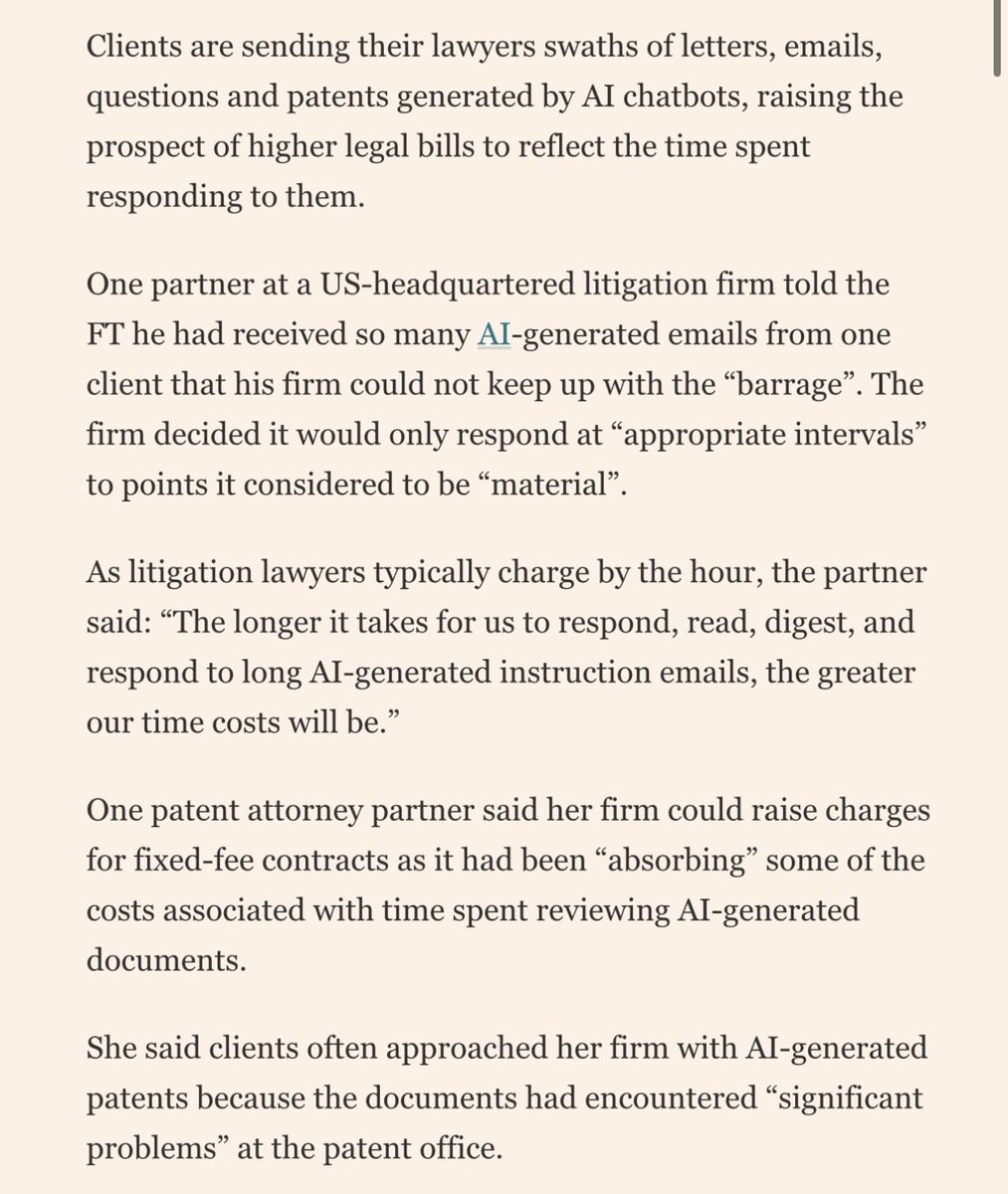
Why will AI create more jobs in plenty of industries? It’s because we’re going to use AI to accelerate output in one area, and then eventually you run into a new bottleneck somewhere else in the process that still requires humans. This example from the FT is an obvious one. More people asking legal questions from AI agents, which downstream eventually will mean there are more lawyers being pinged with questions. There are other drivers, too, like AI accelerating new business formation, more patent filings, new scientific research, and so on - all of which eventually land in the laps of lawyers and other regulatory functions. But the analogy holds for plenty of other work. More code will mean more security risks, which means more security researchers. Automating patient referrals in healthcare just leads to a bottleneck of not having enough doctors. More customer outreach via AI leads to more sales conversations. You can list thousands of categories like this. There’s a lot of areas where AI will lead to “efficiency” in the sense that we will automate something and then spend less in that area. But the value proposition taps out at some point because the world isn’t static. Your competitor will use AI to build a better product, go out and meet with even more customers, deliver a better service, run better ad campaigns, and you eventually have to match them or die.
Aaron Levie tweet media
English
75
65
436
89.1K
Ivan Burazin
Ivan Burazin@ivanburazin·
The ceo of Box says if you're not building for agents, you won't exist as a software company in 2-3 years. @levie recalled how in the 90s, it was mainframes built for institutions. If you didn't build for the CIO or IT org, you didn't exist. You could build software for users, but no one cared. Similarly, in the mid 2000s, it was software built for end users. If you didn't take that route, you got completely trounced. The likes of Yammer, Slack, Zoom, etc., ripped through enterprises with viral adoption. Bottom-up and completely user driven. And now it's software built for agents. We're going to have trillions of agent runs. The systems that optimize for agents the most will win. - lower latency - better API exposure - better system intelligence - serves the right information when called Agents will eventually choose their own tools on the fly and make purchasing decisions at runtime. All based on past experiences/online reviews/performance, sans any procurement process. The more pragmatic version is companies swapping out bad tools / tech that don't work well with agents. - crm doesn't expose the right APIs - auth can't handle agent scale requests - database has too much latency for agent workloads Being good enough for humans won't work because they have to pass the litmus test for agents to make the cut.
English
11
21
125
22.2K
Aaron Levie
Aaron Levie@levie·
One corollary to the fact that AI agents take real work to setup in company at scale, is that the role of the forward deployed engineer -or whatever it gets called in the future- isn’t going away any time soon. When a vendor sells any kind of agents into an organization, you’re no longer just selling a software tool that gets implemented and you’re done. You’re fundamentally selling some form of the actual workflow being done by your technology. This is far closer to a customer buying from a professional services firm than implementing traditional technology. This will almost always require a deep understanding of the domain that the customer operates in, the ability to help a customer wire up their systems to support the agents, make sure all the context is setup in the right way, and help provide change management to actually get the company to adapt its business processes. The ability to do this across customers, figure out best practices in a specific industry and customer segment, take new features back to go build in the product, and so on is going to be key. There’s no shortcut to getting this work done by the enterprise, and the vendors are going to have to do a lot of this or risk low adoption. Finally, this is a big opportunity for existing and next gen professional services companies. There are all new practice areas emerging in every system integrator and consulting firm just to do this kind of work, and this is going to continue to be in demand for quite some time. Yet another example of jobs that aren’t actually going away.
Aaron Levie@levie

The more enterprises I talk to about AI agent transformation, the more it’s clear that there is going to be a new type of role in most enterprises going forward. The job is to be the agent deployer and manager in teams. Here’s the rough JD: This person will need to figure out what are the highest leverage set of workflows on a team are (either existing or new ones) where agents can actually drive significantly more value for the team and company. In general, it’s going to be in areas where if you threw compute (in the form of agents) at a task you could either execute it 100X faster or do it 100X more times than before. Examples would be processing orders of magnitude more leads to hand them off to reps with extra customer signal, automating a contracting review and intake process, streamlining a client onboarding process to reduce as many straps as possible, setting up knowledge bases than the whole company taps into, and so on. This person’s job is to figure out what the future state workflow needs to look like to drive this new form of automation, and how to connect up the various existing or new systems in such a way that this can be fulfilled. The gnarly part of the work is mapping structured and unstructured data flows, figuring out the ideal workflow, getting the agent the context it needs to do the work properly, figuring out where the human interfaces with the agent and at what steps, manages evals and reviews after any major model or data change, and runs and manages the agents on an ongoing basis tracking KPIs, and so on. The person must be good at mapping the process and understanding where the value could be unlocked and be relatively technical, and has full autonomy to connect up business systems and drive automation. This means they’re comfortable with skills, MCP, CLIs, and so on, and the company believes it’s safe for them to do so. But also great operationally and at business. It may be an existing person repositioned, or a totally net new person in the company. There will likely need to be one or more of these people on every team, so it’s not a centralized role per se. It may rile up into IT or an AI team, or live in the function and just have checkpoints with a central function. This would also be a fantastic job for next gen hires who are leaning into AI, and are technical, to be able to go into. And for anyone concerned about engineers in the future, this will be an obvious area for these skills as well.

English
100
60
818
166.8K
Aaron Levie
Aaron Levie@levie·
“When execution is nearly free, taste becomes the moat but how a company organizes to make taste evident is still being decided.” Whether they’re called product managers in the future or not, this is precisely the role they should be playing in these companies. At some point you can’t have a complete roadmap free for all because your constraint isn’t token output it’s customer reception to your features.
English
9
7
85
9.1K
Aaron Levie
Aaron Levie@levie·
The more enterprises I talk to about AI agent transformation, the more it’s clear that there is going to be a new type of role in most enterprises going forward. The job is to be the agent deployer and manager in teams. Here’s the rough JD: This person will need to figure out what are the highest leverage set of workflows on a team are (either existing or new ones) where agents can actually drive significantly more value for the team and company. In general, it’s going to be in areas where if you threw compute (in the form of agents) at a task you could either execute it 100X faster or do it 100X more times than before. Examples would be processing orders of magnitude more leads to hand them off to reps with extra customer signal, automating a contracting review and intake process, streamlining a client onboarding process to reduce as many straps as possible, setting up knowledge bases than the whole company taps into, and so on. This person’s job is to figure out what the future state workflow needs to look like to drive this new form of automation, and how to connect up the various existing or new systems in such a way that this can be fulfilled. The gnarly part of the work is mapping structured and unstructured data flows, figuring out the ideal workflow, getting the agent the context it needs to do the work properly, figuring out where the human interfaces with the agent and at what steps, manages evals and reviews after any major model or data change, and runs and manages the agents on an ongoing basis tracking KPIs, and so on. The person must be good at mapping the process and understanding where the value could be unlocked and be relatively technical, and has full autonomy to connect up business systems and drive automation. This means they’re comfortable with skills, MCP, CLIs, and so on, and the company believes it’s safe for them to do so. But also great operationally and at business. It may be an existing person repositioned, or a totally net new person in the company. There will likely need to be one or more of these people on every team, so it’s not a centralized role per se. It may rile up into IT or an AI team, or live in the function and just have checkpoints with a central function. This would also be a fantastic job for next gen hires who are leaning into AI, and are technical, to be able to go into. And for anyone concerned about engineers in the future, this will be an obvious area for these skills as well.
English
272
396
3.8K
1M
Aaron Levie
Aaron Levie@levie·
Another week on the road meeting with a couple dozen IT and AI leaders from large enterprises across banking, media, retail, healthcare, consulting, tech, and sports, to discuss agents in the enterprise. Some quick takeaways: * Clear that we’re moving from chat era of AI to agents that use tools, process data, and start to execute real work in the enterprise. Complementing this, enterprises are often evolving from “let a thousand flowers bloom” approach to adoption to targeted automation efforts applied to specific areas of work and workflow. * Change management still will remain one of the biggest topics for enterprises. Most workflows aren’t setup to just drop agents directly in, and enterprises will need a ton of help to drive these efforts (both internally and from partners). One company has a head of AI in every business unit that roles up to a central team, just to keep all the functions coordinated. * Tokenmaxxing! Most companies operate with very strict OpEx budgets get locked in for the year ahead, so they’re going through very real trade-off discussions right now on how to budget for tokens. One company recently had an idea for a “shark tank” style way of pitching for compute budget. Others are trying to figure out how to ration compute to the best use-cases internally through some hierarchy of needs (my words not theirs). * Fixing fragmented and legacy systems remain a huge priority right now. Most enterprises are dealing with decades of either on-prem systems or systems they moved to the cloud but that still haven’t been modernized in any meaningful way. This means agents can’t easily tap into these data sources in a unified way yet, so companies are focused on how they modernize these. * Most companies are *not* talking about replacing jobs due to agents. The major use-cases for agents are things that the company wasn’t able to do before or couldn’t prioritize. Software upgrades, automating back office processes that were constraining other workflows, processing large amounts of documents to get new business or client insights, and so on. More emphasis on ways to make money vs. cut costs. * Headless software dominated my conversations. Enterprises need to be able to ensure all of their software works across any set of agents they choose. They will kick out vendors that don’t make this technically or economically easy. * Clear sense that it can be hard to standardize on anything right now given how fast things are moving. Blessing and a curse of the innovation curve right now - no one wants to get stuck in a paradigm that locks them into the wrong architecture. One other result of this is that companies realize they’re in a multi-agent world, which means that interoperability becomes paramount across systems. * Unanimous sense that everyone is working more than ever before. AI is not causing anyone to do less work right now, and similar to Silicon Valley people feel their teams are the busiest they’ve ever been. One final meta observation not called out explicitly. It seems that despite Silicon Valley’s sense that AI has made hard things easy, the most powerful ways to use agents is more “technical” than prior eras of software. Skills, MCP, CLIs, etc. may be simple concepts for tech, but in the real world these are all esoteric concepts that will require technical people to help bring to life in the enterprise. This both means diffusion will take real work and time, but also everyone’s estimation of engineering jobs is totally off. Engineers may not be “writing” software, but they will certainly be the ones to setup and operate the systems that actually automate most work in the enterprise.
English
253
645
5.3K
1.7M