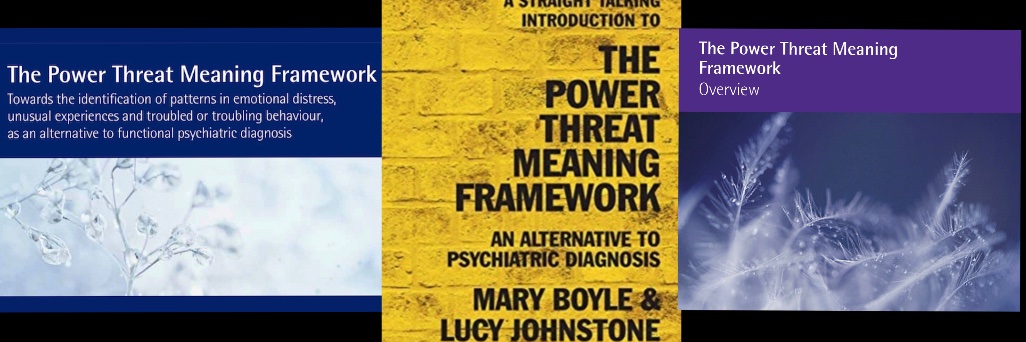
This paper explores three socially oriented approaches to mental health recovery: Open Dialogue (OD), Recovery Capital (RC), and the Power Threat Meaning Framework (PTMF)
#abstract" target="_blank" rel="nofollow noopener">tandfonline.com/doi/full/10.10…
🇬🇧 Conferencia de Clausura: The Power Threat Meaning Framework
La Prof. Mary Boyle presenta su marco alternativo al diagnóstico psiquiátrico tradicional, desde la University of East London.
Una mirada crítica y transformadora para despedir el congreso.
Worth re-reading. Dr Lucy Johnstone among other professionals and survivors who have for many years called for the abolition of the ‘personality disorder’ diagnosis. #PTMFdazeddigital.com/life-culture/a…
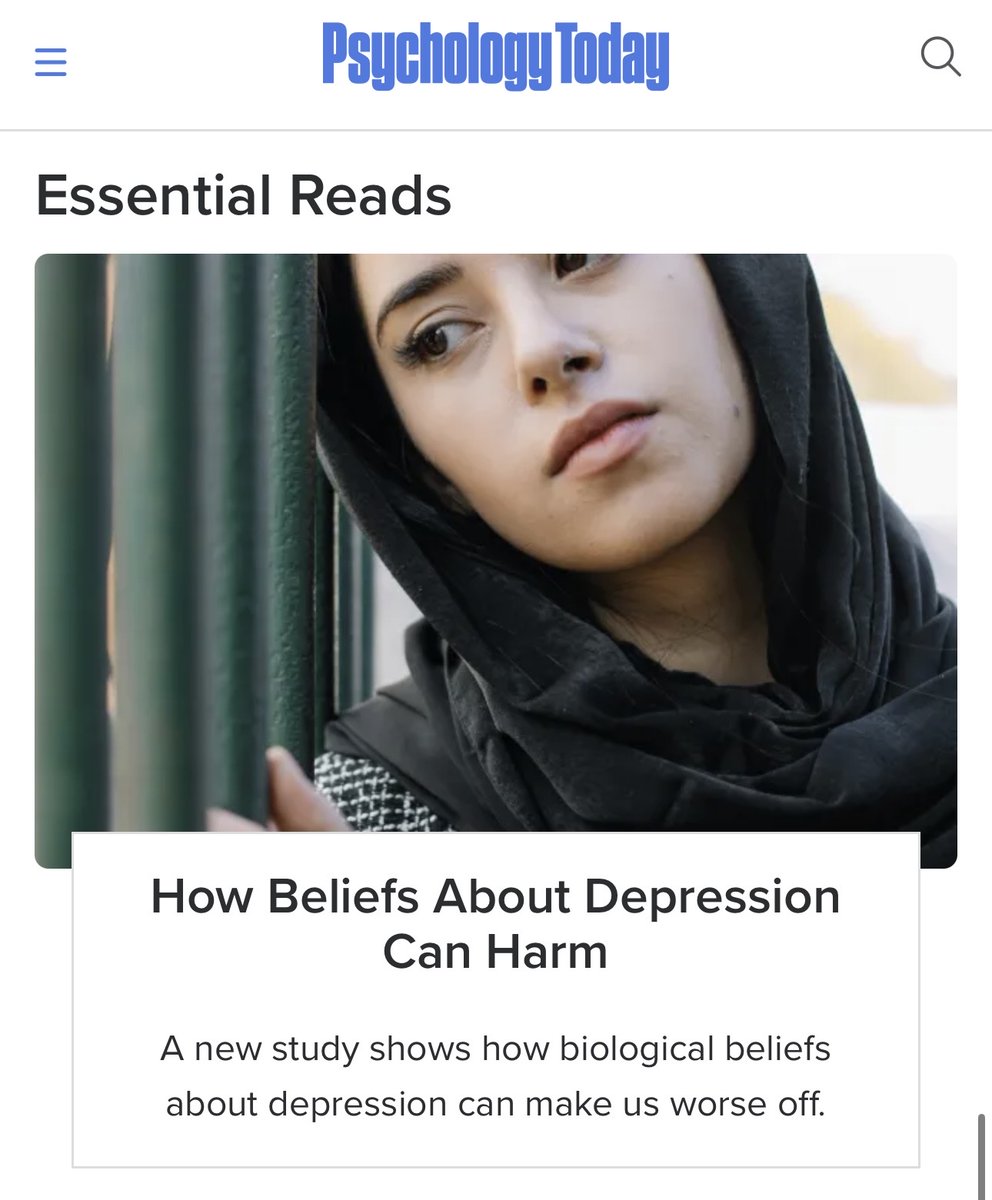
I wrote for @PsychToday on a new study showing how the biological approach to depression can undermine healing. Grateful for the work of @JDaviesPhd, @joannamoncrieff and @markhoro. Link below.
Good to learn in Dr Lucy Johnstone’s training session today with the Zebra Collective, that the #PTMFramework is being integrated into so many services in Torbay. #PTMF
Uta Frith, renowned autism researcher, gives an interview to the TES about autism – and the internet goes wild. We’re told that what she said will put back progress 40 years, that she knows nothing about autism, that she lacks critical thinking and that her words will harm autistic people to the point of suicide.
You’d guess she must have said something really awful. Perhaps something deeply offensive about autistic people which reveals her lack of compassion and understanding. Even then, it’s hard to know how one retired academic would have the power to make others commit suicide and to turn back progress to the extent that is predicted.
What she said was that she thinks the autism spectrum has expanded too far and that it isn’t helping anyone. Not those who originally received autism diagnoses, and not those who are now getting diagnoses who previously would not have done. She said that she thinks scientific progress is being held back because ‘autism’ now means something so heterogenous that we can’t identify anything that all autistic people share. Nothing biological or neurological, nothing cognitive, nothing behavioural. In her words, there are no markers.
The autism spectrum is, in fact, the widest spectrum imaginable. It goes from some of the most disabled people in our society to some of the highest achievers. And there’s no evidence that they have anything in common except their diagnosis.
Saying this sort of thing gets you into a lot of trouble online. There are accepted narratives that we are all expected to comply with, and one is the idea that the giant autism spectrum is protective, that it helps people to be included under one diagnosis. Any language which helps people differentiate is banned. Which is odd, because we don’t think that in any other area of medicine. No one says (for example), that we shouldn’t differentiate between Type 1 and Type 2 diabetes because it’s protective not to be able to talk about the differences. It’s obvious that differentiating between types of diabetes will lead to better understanding and interventions.
If you don’t comply with these narratives about autism – as Uta Frith hasn’t – then you will be publicly shamed. Your expertise will be challenged, even if you have 60 years of experience. You’ll be told that you are harming people and that you are ignorant. Personal slurs are likely to be used against you.
And it’s all about social control. Shame is about social control. It’s about creating things that can be said, and things that can’t be said. Others see the shaming and keep quiet.
It’s about controlling the narrative so that real discussions can’t be had. I’ve talked to so many clinicians who raise these concerns with me and who then say that they’d never speak up, for fear of shaming and even losing their job. There are important things that are not being talked about, for fear of the repercussions.
To my mind, the interesting question is really why. Why is it treated like blasphemy to say that the vast autism spectrum may no longer be fit for purpose? Why are we not allowed to discuss the reality of clinical practice?
Why are personal attacks the go-to when scientists disrupt the prevailing narrative? And why are we all so compliant, censoring ourselves to avoid the discomfort of shame?
Listen to our podcast with Uta Frith here. open.substack.com/pub/neurosense…
Last month we interviewed @FrithUta for our new podcast, Let's Talk Neurosense: the psychology of neurodiversity. She touched on many of the themes in her @tes interview, in particular should we be dividing the autism spectrum into subgroups and how masking has affected the way that we understand autism. Here's our interview.
@helenlewis@Docstockk@jon_severs
Why we need to rethink the autism spectrum with Dame Uta Frith open.substack.com/pub/neurosense…
"My memory for the times during which I had ECT are definitely patchy and I don’t know what I don’t know. That’s the trouble. I cannot even fight my corner now, because I simply cannot return to those times because the memories simply do not exist. I have been set up to be gas-lit and my medical record gives no credence to what little I can recall about my experiences of ECT."
As a doctor I felt compelled to agree to ECT- it nearly ruined my life: madintheuk.com/2026/03/ect-ne…