🧵 Elon: “Longevity is an extremely solvable problem” At Vitalist Bay (May 14 - May 17), we’re solving it! 1K+ pioneers, 100+ speakers, 50+ workshops, 40+ activities, 5 critical health tests Join us to spark dozens of SpaceXs for longevity!
Rob Sheko
143 posts

@RobSheko
Life is coming from you, not at you. Prev @harvardstemcell. Fmr Wagers Lab, Harvard iGEM Team Lead

🧵 Elon: “Longevity is an extremely solvable problem” At Vitalist Bay (May 14 - May 17), we’re solving it! 1K+ pioneers, 100+ speakers, 50+ workshops, 40+ activities, 5 critical health tests Join us to spark dozens of SpaceXs for longevity!

That's right folks! It's JPM week, SF's biggest biotech event of the year. Here's our guide to some of the top events of the week (that you can still get into) 🧵


🔥Announcing Aevitas 2026! 🔥 We had a phenomenal 2025, with companies ranging from brain tissue repair, large-scale biomarker analysis, stem cell manufacturing, and so much more! Are you a researcher, founder, or biotech builder? We have a home for you! Apply to join below 👇

AI x Longevity Pitch Workshop next week! Join NIMBLE and Aevitas for a showcase of cutting edge biotech companies followed by an Oxford style debate on the future of aging research, hosted at @FenwickWest. How will AI reshape the frontier of anti-aging biotech? Sign up below 👇


Great conversation at our Tech Week event with @imyoohealth and @kepler_ai_ on combining AI with advanced biomonitoring to create robust pictures of health and disease. If you want to learn more, keep an eye out for our next monthly meetup on these topics!

This Tuesday: We're co-hosting a special event on the Frontiers of Personalized Biomarkers as part of @a16z's @Techweek_. With @imyoohealth and @kepler_ai_, we'll demonstrate how multi-omics and AI can reshape healthcare and the future of data-driven bioenhancement. Info below

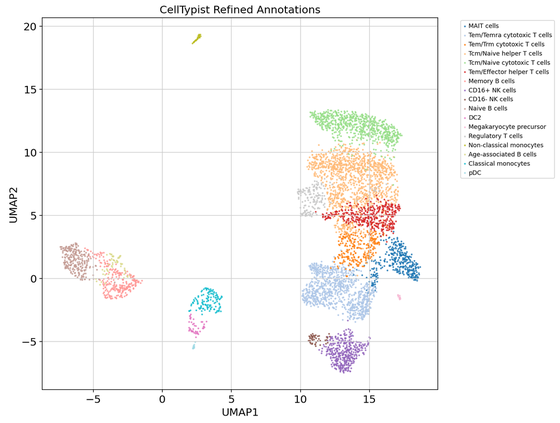
"Only ~0.02%-3.1% of [a cell's] genome" is being transcribed at any given moment. Other interesting takeaways from this new paper: > If you pool together a bunch of cells of the SAME type (like primary immune cells from a mouse's spleen), and you measure the transcription for each of them, you'll find that ~67% of the genome is active collectively. But at a SINGLE cell level, only like 0.04% of the genome is active. There is huge heterogeneity between cells, even of the same type. This heterogeneity disappears when we do bulk RNA-seq and measure cells together. > About 31% of a cell's transcription comes from known protein-coding genes. The rest of transcription happens in regions that don't make proteins. In other words, more "non-coding" DNA is transcribed than "coding" DNA. > There is a surprising disconnect between RNA production & decay at the single-cell level. If you look at thousands of cells together, the rate of RNA production (how fast genes are transcribed) usually matches the rate of RNA decay (how fast old transcripts are degraded). This makes sense, because cells presumably would want to keep a fairly steady balance of RNA levels. But when scFLUENT-seq was used to look at individual cells, this "rule" broke down! For a given mRNA, some cells were making a lot of new copies even if old copies weren’t being degraded much, while other cells had the opposite. So transcription and decay don't seem to be tightly matched within a single cell at a given time after all. The balance between production + decay is only true in bulk.

Favorite talk from @ARDD_Meeting day 1 was Maximina Yun's thorough look at aging in axolotls. These guys live ~10 years and regenerate limbs throughout. How and why they die is what she tried (and failed) to discover: - They don't have increased mortality late in life. - She couldn't detect any senescent cells by standard stains. - No telomere shortening. - Functional stem cells obviously. - Most interesting, their thymus doesn't involute. In ~all other animals, thymic cells are replaced by fat (by age 40 it's gone in humans) meaning limited education of new immune cells. In axolotls she sees upregulation of PPARG suggesting initiation of fat conversion, but no actual transition. Now doing an extensive -omics exploration of thymus throughout life (collab w @altos_labs), excited to see this.