Eva Hermann

1.9K posts

Eva Hermann banner
Eva Hermann

Eva Hermann

@RunwithEva

⚡2:31 marathoner | Certified running coach for amateur runners. Ended pro career in 2013. Resumed training in 2021 as a masters runner. Goal: sub-2:40 marathon


Löffingen, Deutschland شامل ہوئے Şubat 2014
277 فالونگ701 فالوورز
پن کیا گیا ٹویٹ
Eva Hermann
Eva Hermann@RunwithEva·
Something about me 🙂 I always loved sports, but couldn’t find myself in any until my university time. I have chosen to go for a psychology degree in order to understand myself better. 1/9
English
5
0
33
0
Eva Hermann ری ٹویٹ کیا
Iñigo San Millán
Iñigo San Millán@doctorinigo·
VO₂max can improve with exercise training in metabolically unhealthy individuals. But VO₂max can improve through mechanisms that have limited relationship to the core cellular dysfunction driving disease. For example, cardiac output can increase while mitochondrial function and cellular bioenergetics remain impaired. Lactate testing represents cellular adaptations to exercise and it is the best indicator for mitochondrial function that we have nowadays. @inigosanmillan/note/p-191346516?r=2nunp3&utm_medium=ios&utm_source=notes-share-action" target="_blank" rel="nofollow noopener">substack.com/@inigosanmilla
English
5
23
209
20.3K
Eva Hermann ری ٹویٹ کیا
Alan Couzens
Alan Couzens@Alan_Couzens·
Let me dump some carbs on you... Someone said yesterday that thinking about CHO intake in terms of stores, output and "bonking" is the "old way" of looking at carbs in sport. That pissed me off. So, let's start with... Only those with a bullet-proof basic understanding can have an advanced understanding. Put another way, he couldn't tell me why this is the case. So, let me tell you why this is that case... The error in thinking of a carbohydrate/glycogen "reservoir" comes largely in the sense that the reservoir isn't one tank. We have... Tank 1: Liver Glycogen Tank 2-2,000,000 Muscle Glycogen That is, every muscle fiber has its own little tank. So, in terms of glycogen depletion, while a significant drop in liver glycogen is obvious - the typical "bonk"... Drops is muscle glycogen are far more subtle... They manifest as progressive transition from more economical fibers to less economical. So, over the course of the race, pace for a given O2 uptake progressively decreases. *Assuming CHO makes it across the gut wall to the blood*... High levels of exogenous intake can offset this progressive depletion of more economical fibers & keep the pace high for a give O2 uptake over longer periods of time. This is why, again, assuming good levels of clearance from the gut, high CHO intake can have a small, but meaningful impact on the pace that can be held late in a race. TLDR... - A liver glycogen bonk is obvious. - Muscle glycogen depletion is subtle. - Exogenous CHO can offset glycogen depletion (to an extent) & help to maintain pace for longer. But.... 1/ The size of the engine determines fuel needs. 2/ You can only use what you can clear (& if you can't clear it, there's a timebomb jostling around in your gut - just waiting to go off)
English
5
8
156
13.6K
Alan Couzens
Alan Couzens@Alan_Couzens·
A little more on why easy mileage directly improves your 5K… Your 5K is ultimately limited by acidosis - the gradual build-up of acidity in the muscle that impairs contraction. Two key factors slow this building acidosis: 1/ How much O₂ you can deliver to the muscle 2/ How much mitochondrial machinery you have to use that O₂ In a 5K, all fiber types contribute - slow twitch, fast oxidative, and fast glycolytic. The acidosis you experience (and the lactate you see) reflects the combined contribution of all of them. So, when easy training increases mitochondrial density - especially in slow-twitch fibers - you get less glycolytic flux at a given pace. → Less acidosis → Less lactate accumulation → More sustainable speed At the same time, high volumes of low-intensity work drive cardiac remodeling - increasing stroke volume and improving O₂ delivery to working muscle. Put it together: Easy mileage doesn’t just support the “real work.” It shifts the physiology of the effort itself! That’s why 5K performance improves as easy mileage rises - even without changes in threshold or VO₂max work.
Alan Couzens@Alan_Couzens

I dunno, man... If you're say a 20 minute 5K runner doing 30mi/wk w/ 2 specific interval workouts/wk. You drop the interval workouts for a year and commit to building to consistent 60mi/wk of *only* easy miles plus strides. Then run a 5K. I know where I'm putting my money.

English
8
10
233
63.3K
Eva Hermann
Eva Hermann@RunwithEva·
@zbitter I will say it here again: Richard Ringer 2:04, 60g/h. Don’t get crazy.
English
1
0
0
513
Zach Bitter
Zach Bitter@zbitter·
So we are looking at about 480 cal/hr or just a hair shy of 120g/hr.
McKirdy Trained@McKirdyTrained

@Brady_H 2:04:18 - 8 gels + electrolytes 2:06:06 - 8 gels + electrolytes 2:09:44 - 8 gels + electrolytes 6 ounces (or so) of water every 5km for each. Slightly more or slightly less...

English
5
0
56
36.9K
Eva Hermann
Eva Hermann@RunwithEva·
@zbitter People get crazy about carbs on both extremes. We had a conversation with Richard Ringer (ran 2:04 in Boston) in March. He takes 60 g/h on the marathon. I am with @Alan_Couzens here - improve your fat oxidation then you will be less dependent on carbs and metabolically healthy.
English
1
0
1
225
Eva Hermann
Eva Hermann@RunwithEva·
@RunSensible @Alan_Couzens Let me share my data. RHR 45-48. HRmax 186. LT2 172, LT1 162. Most of my easy runs are between 130 and 140.
English
0
0
2
458
Neil Rooney
Neil Rooney@RunSensible·
@Alan_Couzens My resting HR is 39bpm. I'm 48yoa. Been consistently running and triathlons for 25yrs no injuries. VO2max test last week 54ml/kg/min Aerobic Threshold 120bpm Lactate threshold 141bpm I ran 10k on a treadmill today with HR cap 115bpm 8.05min/mile. Is that too fast?
English
5
0
9
28.3K
Alan Couzens
Alan Couzens@Alan_Couzens·
One thing I like about a fixed HR cap... It naturally grows with your fitness. 120 bpm is a much higher relative effort for someone with a resting heart rate of 40bpm, than it is for someone with a resting heart rate of 80 bpm (because it's much closer to the unfit person's resting state) As your resting HR gets lower & lower... You earn the right to push the aerobic work relatively harder over time.
English
5
7
199
25.8K
Eva Hermann ری ٹویٹ کیا
Howard Luks MD
Howard Luks MD@hjluks·
Tendon pain is the most common reason people come to see me. Most of it is self-inflicted — from doing too much, too soon, or from doing too little for too long. Let's review what most people (including many doctors) don't understand about why tendons hurt and how to fix them. 🧵
English
144
240
2.1K
826.9K
Eva Hermann
Eva Hermann@RunwithEva·
@Alan_Couzens This is what we did after the marathon recovery every half a year. 3-4 weeks easy mileage and Gym 3xweek. I never had any injuries. This is what I didn’t do enough over the past years when it’s even more important approaching 45y.o.
English
0
0
1
157
Alan Couzens
Alan Couzens@Alan_Couzens·
When you train a lot, energy availability becomes the limiter. Not just chronically (RED-S)… but acutely. Day to day. Periods where you’re under-fueled = periods where your body is tearing down rather than building up. Over a season, these add up. That’s why you need regular “anabolic resets” - deliberate periods of lifting coupled with a sustained energy surplus.
Alan Couzens@Alan_Couzens

👏 Or long periods of high volume catabolic endurance training without those essential "anabolic resets" where you dial the energy output down and regain some muscle. 💪 Very important as we get older.

English
3
1
118
13.7K
Eva Hermann ری ٹویٹ کیا
Andy Galpin, PhD
Andy Galpin, PhD@DrAndyGalpin·
Perform with Dr. Andy Galpin is back. New episode: How to Build a Strong Core & Abs 0:00 Core Training Myths 4:22 Why We Train Abs Wrong 7:27 Abs vs Core Explained 11:17 Look Feel Perform Goals 15:04 How Core Muscles Work 20:26 Stability and Anti Movement 24:00 Do Abs Need Daily Training 29:12 Spinal Safety and Crunches 31:37 Sponsor Eight Sleep 33:08 Testing Core Strength 41:42 Interpreting Test Results 47:02 Choosing Core Exercises 50:18 Isolation vs Compound Core 52:31 Contraction Intensity Rules 53:23 Size Principle Explained 56:16 Loading the Core Safely 1:00:14 Core Moves by Pattern 1:06:35 Program by Muscle Groups 1:08:01 Abs for Aesthetics 1:15:47 Aesthetic Programming Split 1:18:49 Core for Performance 1:21:15 Core for Back Health 1:24:17 Sample Week Template 1:29:22 Five Step Progression 1:35:54 Exercise Order Priorities 1:36:56 Rapid Fire Q and Belts 1:42:35 Final Wrap and Support Includes paid partnerships.
English
53
187
2.1K
1.7M
Eva Hermann
Eva Hermann@RunwithEva·
@Alan_Couzens Same here. My own running career was destroyed because my coach didn’t hold me back. I was young and stupid to figure out myself. I have also seen so many young gifted athletes finishing at 20 years old because they were completely burned down.
English
0
0
2
418
Alan Couzens
Alan Couzens@Alan_Couzens·
"Why are you 'the intensity police'?" 👮‍♂️ Because I've seen (and experienced first-hand) the negative performance and health impact of too much intensity in your routine. I saw numerous swimmers get burned out & overtrained (some got very sick) purely from pushing too hard over time. I saw my own performance plateau & my competitive aspirations fall away due to a program with excessive intensity. There's a better way, it's Eazzzy.
English
10
5
177
11.1K
Eva Hermann ری ٹویٹ کیا
Iñigo San Millán
Iñigo San Millán@doctorinigo·
Important dataset, but wrong framing leading to misinformation. They adjust for volume, then claim intensity is superior. A huge flaw in the study is the determination of high intensity which for the authors is >6METs which is ~21 mL O₂/kg/min… So the reality is that this high intensity is in the range of Z1-Z3 for many people…😬…That is not high intensity for most. And low intensity in the study is <6METS which for many is not even a brisk walk or just Z1 To produce intensity: • ↑ ATP turnover • ↑ glycolysis • ↑ lactate To sustain it: • mitochondrial capacity • NAD⁺/NADH balance • lactate clearance This study doesn’t even mention metabolism or bioenergetics… However, the main thing is misinformation as we keep falling into the same trap: either intensity or volume. It’s both! And more importantly, exercise must be individualized, whether for an elite athlete or a patient. academic.oup.com/eurheartj/adva…
Iñigo San Millán tweet media
English
5
34
174
12.5K
Iñigo San Millán
Iñigo San Millán@doctorinigo·
🚨New Substack Article: VO₂max vs Lactate VO₂max represents cardiorespiratory adaptations and measures oxygen delivery. Lactate reflects cellular and mitochondrial adaptations key for metabolic health. Over the past decades, elite sport moved beyond VO₂max and focused on metabolism. That shift changed how we interpret physiology, how we train and how we define performance Longevity and metabolic health are now arriving at the same crossroads. Because improving how we deliver oxygen is only part of the equation. Understanding how our cells use it is what ultimately determines metabolic health 👇 inigosanmillan.substack.com/p/vomax-vs-lac…
English
14
44
315
49.5K
Eva Hermann
Eva Hermann@RunwithEva·
@RealJarnoSays @Alan_Couzens Discipline over motivation 😎 I engage my family in training. I made rings and other things for my son, he loves it! I convinced (finally!) my husband to start with strength training (he is much older than me). He is complaining but following my instructions. 😄
English
0
0
2
44
Jarno B.
Jarno B.@RealJarnoSays·
@Alan_Couzens Half agree, for me the gym is also a social gathering and motivator, although that is diminishing the older you get (harder to keep a fixed routine with friends). It is ideal for sure for short training sessions, and it definitely saves time.
English
2
0
10
711
Alan Couzens
Alan Couzens@Alan_Couzens·
This 👇 Nothing would get me back to the inconvenient, unhygienic, crowded, posey "look at me" BS of your regular commercial gym. No better investment in your long-term health & fitness than building out your home gym. 💪
Fitness Wins@FITNESS__WINS

English
28
5
189
24.2K
Eva Hermann
Eva Hermann@RunwithEva·
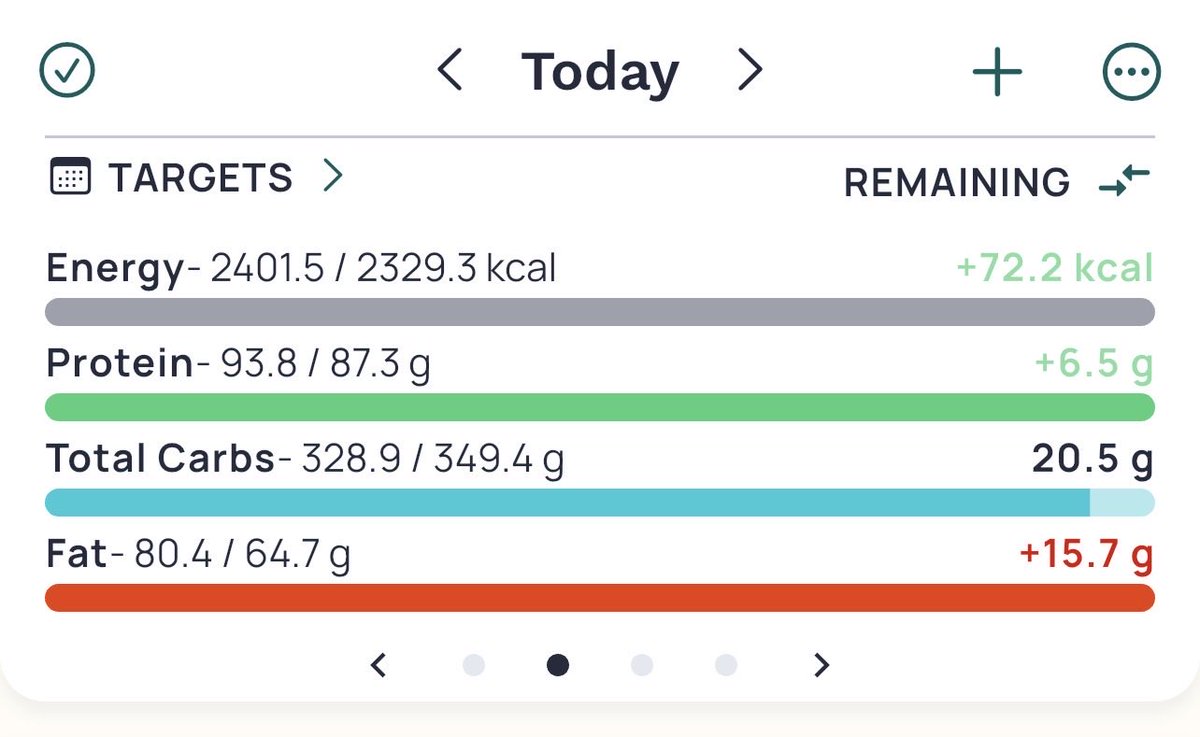
@Anton_Karlssson Something like this. 🙂 My weight is 51 kilo. Messed up with fats a bit today but ok..
Eva Hermann tweet media
English
1
0
2
303
Anton
Anton@Anton_Karlssson·
Endurance people, help me out: how do you NOT overeat protein? If you’re eating high calories, it feels almost impossible not to exceed 2 g/kg BW… unless you basically cut all pure protein sources - which is the tasty stuff!
English
14
0
9
30.1K
Alan Couzens
Alan Couzens@Alan_Couzens·
My latest: Metabolic health is a triangle 🔺 Remove one side… and the whole thing collapses! * Low-Intensity Movement 🚶 * Healthy Nutrition 🍲 * Stress Management 🧘 Without all three, high-level health and endurance just don’t happen. Most athletes are strong in one or two. The truly metabolically fit and healthy are strong in all 3! 👇
Alan Couzens tweet media
English
6
12
141
7.9K
Eva Hermann ری ٹویٹ کیا
Jack
Jack@FFS_WhatNow·
The second group looks way more fun 😂😂😂
English
432
2.3K
26.9K
857K
Eva Hermann
Eva Hermann@RunwithEva·
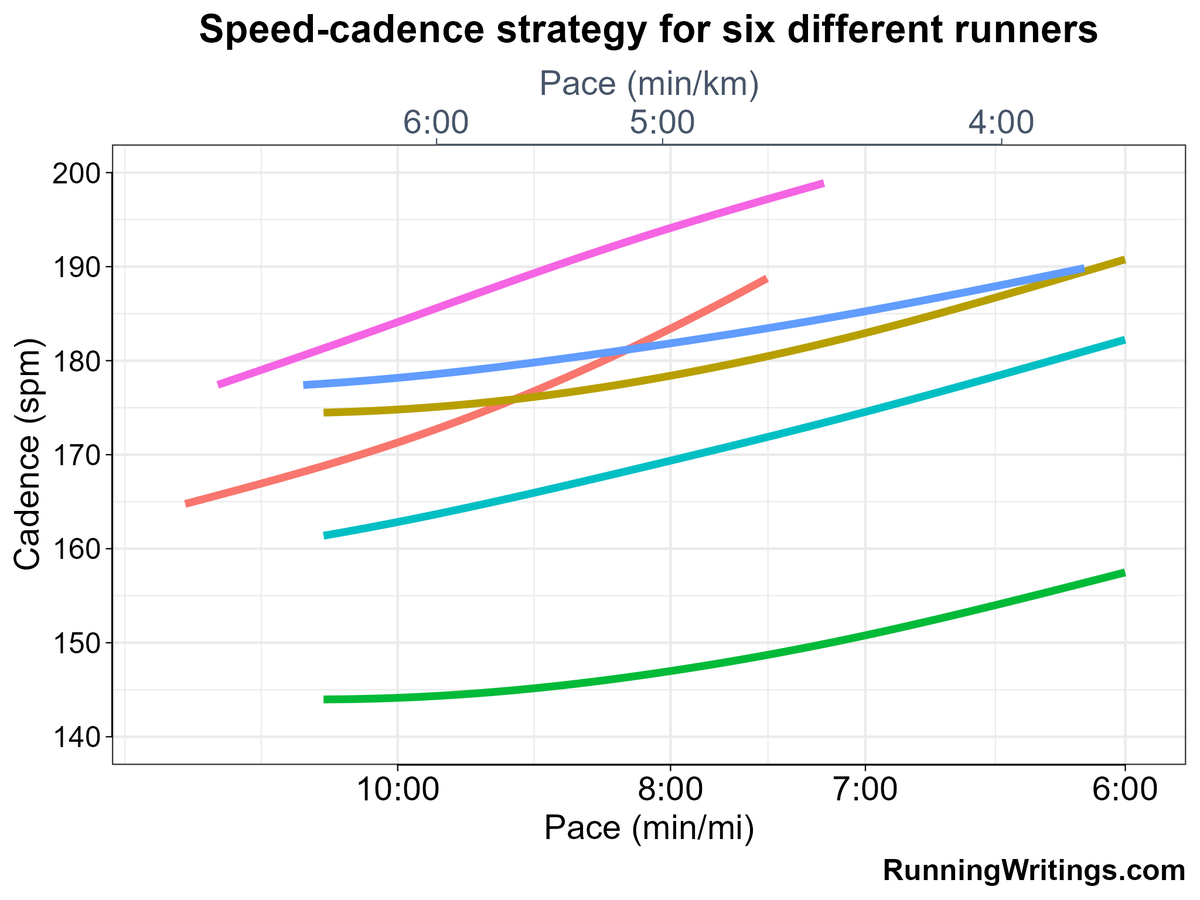
@JDruns A very valuable piece! Thank you. I have a runner who started running 4.5 years ago, he tried to keep “magic 180” all time. We started working 2 months after he started running and I told him to forget about it and run naturally. I shall look how his cadence changed over years.
English
0
0
0
13
John Davis
John Davis@JDruns·
New post: A comprehensive guide to cadence for runners This is THE authoritative guide to the science of cadence: how it changes as you go faster, why it differs between runners, and whether it's connected with injury. Link below! 👇
John Davis tweet media
English
4
6
60
12.7K