Serg Dort 🇺🇦
2.1K posts

Serg Dort 🇺🇦
@SergDort
Full stack vibe engineer. Journey before destination, tests before production.


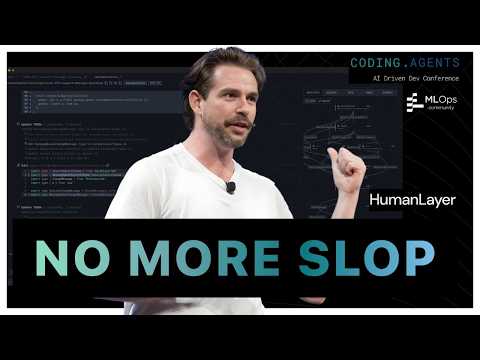
Peter Steinberger, creator of OpenClaw, on why AI agents still produce "slop" without human taste in the loop: "You can create code and run all night and then you have like the ultimate slop because what those agents don't really do yet is have taste." Peter is direct: raw capability without direction still produces mediocre output. "They are spiky smart and they're really good at things, but if you don't navigate them well, if you don't have a vision of what you're going to build, it's still going to be slop. If you don't ask the right questions, it's still going to be slop." Great AI-assisted work is defined by the human guiding it. @steipete describes his own creative process when starting a new project: "When I start a project, I have like this very rough idea what it could be. And as I play with it and feel it, my vision gets more clear. I try out things, some things don't work, and I evolve my idea into what it will become." Most people skip this part entirely, front-loading everything into a single prompt and wondering why the result feels hollow. "My next prompt depends on what I see and feel and think about the current state of the project." Each step informs the next. The work itself is the feedback loop. "But if you try to put everything into a spec up front, you miss this kind of human-machine loop. And then I don't know how something good can come out without having feelings in the loop — almost like taste." The agentic trap is what happens when you remove yourself from the process too early.

Peter Steinberger, creator of OpenClaw, on why AI agents still produce "slop" without human taste in the loop: "You can create code and run all night and then you have like the ultimate slop because what those agents don't really do yet is have taste." Peter is direct: raw capability without direction still produces mediocre output. "They are spiky smart and they're really good at things, but if you don't navigate them well, if you don't have a vision of what you're going to build, it's still going to be slop. If you don't ask the right questions, it's still going to be slop." Great AI-assisted work is defined by the human guiding it. @steipete describes his own creative process when starting a new project: "When I start a project, I have like this very rough idea what it could be. And as I play with it and feel it, my vision gets more clear. I try out things, some things don't work, and I evolve my idea into what it will become." Most people skip this part entirely, front-loading everything into a single prompt and wondering why the result feels hollow. "My next prompt depends on what I see and feel and think about the current state of the project." Each step informs the next. The work itself is the feedback loop. "But if you try to put everything into a spec up front, you miss this kind of human-machine loop. And then I don't know how something good can come out without having feelings in the loop — almost like taste." The agentic trap is what happens when you remove yourself from the process too early.


Been using Pi for few days now. And tbh I don’t see a reason to comeback to Claude or Codex. The minimalistic setup is so nice. And so extensible that you can build any workflow imaginable. Here are the extensions I use. Most are built by @nicopreme lol. The guy is a machine! github.com/stars/sergdort…


30 second explanation of the MemPalace by Milla Jovovich. By day she’s filming action movies, walking Miu Miu fashion shows, and being a mom. By night she’s coding. She’s the most creative, brilliant, and hilarious person I know. I’m honored to be working with her on this project… more to come.


I built a new plugin! You can now trigger Codex from Claude Code! Use the Codex plugin for Claude Code to delegate tasks to Codex or have Codex review your changes using your ChatGPT subscription. Start by installing the plugin: github.com/openai/codex-p…

I reimplemented "claude" CLI with codex and gpt-5.4-high. It cost $1100 in tokens, and is 73% faster and 80% lower resident memory during sustained interactive use. It is very easy to reverse claude from npm distribution, then reimplement is 1:1. It is indistinguishable from the Anthropic version to the every header and analytics it send back github.com/krzyzanowskim/…