Ab Deff

20.7K posts

Ab Deff

Ab Deff

@ab_deff

شامل ہوئے Şubat 2019
48 فالونگ33 فالوورز
Ab Deff
Ab Deff@ab_deff·
Shanaka Anslem Perera ⚡@shanaka86

In 2022, Ukraine's neon supply collapsed. The semiconductor industry panicked, then adapted. It accelerated the migration from deep ultraviolet to extreme ultraviolet lithography. EUV machines do not need neon. Problem solved. The industry congratulated itself for learning the lesson. Here is what it actually did. EUV machines generate so much heat that they require helium for cooling. TSMC's most advanced fabs consume 500,000 cubic feet of helium per year. There is no substitute. The semiconductor industry escaped the neon chokepoint by walking directly into the helium chokepoint. It traded one noble gas vulnerability for another. And the second is worse. Neon could be synthesised from air. Helium cannot be synthesised at all. Neon concentration was roughly 50 percent in Ukraine. Helium concentration is 30 to 33 percent in Qatar. Neon's end uses were narrow: excimer lasers. Helium's end uses span semiconductors, MRI machines, rocket fuel pressurisation, missile leak testing, and fibre optic manufacturing. The diversification of one noble gas deepened the concentration of another. Nobody mapped it. Nobody priced it. Nobody noticed until March 2026. Two days ago, Air Liquide rushed to open an emergency semiconductor materials factory in Taichung, Taiwan. Its Group Vice President Armelle Levieux stated publicly: "There is today a shortage of helium." Richard Brook of Garrison Ventures told the New York Times: "There is a tsunami coming, but it is still a thousand miles offshore." Approximately 200 specialised cryogenic containers sit stranded near the Strait of Hormuz. We are now at Day 28 to 30 of a 35 to 48 day boil-off window. When the helium warms past its threshold, it vents into the atmosphere. It does not wait. It does not negotiate. It escapes Earth's gravity and drifts into space. Permanently. Phil Kornbluth, the industry's most cited helium analyst for four decades, says we are looking at a minimum two to three month production shutdown and four to six months before the supply chain returns to normal. South Korea imported 64.7 percent of its helium from Qatar in 2025. Samsung's in-house recycling system, even if scaled across all lines, cuts consumption by only 18.6 percent. SK hynix claims diversified supply but has not disclosed alternative volumes. DRAM contract prices already surged 90 to 95 percent quarter on quarter, a record, before the helium constraint fully bites. The $4 trillion AI buildout runs on chips. The chips run on EUV machines. The EUV machines run on helium. The helium runs through one strait that is closed, from one gas field that is struck, processed by five manufacturers with full order books stretching to 2028. The semiconductor industry survived the 2022 neon crisis by creating the 2026 helium crisis. The lesson it learned made the next lesson worse. And the Federal Helium Reserve that might have served as strategic buffer was privatised in June 2024 for $460 million, sold to Messer Group, a German company with Chinese operations. The market has priced a temporary disruption. The physics has priced a structural shortage. One of them is wrong. Falsifier: Samsung achieves 95 percent or higher helium recycling with zero capacity loss, and Qatar restarts within six weeks. No credible source has argued either is feasible. Full analysis in The Last Molecule Standing, live on Substack now. open.substack.com/pub/shanakaans…

QME
0
0
0
1
Ab Deff
Ab Deff@ab_deff·
~
Shanaka Anslem Perera ⚡@shanaka86

Every fire exit the Gulf built to survive a Hormuz closure is being burned by the country that closed Hormuz. The Habshan-Fujairah pipeline was constructed in 2012 for exactly this scenario. A 380-kilometre bypass carrying 1.5 to 1.8 million barrels per day of Abu Dhabi crude directly to the Gulf of Oman, avoiding the Strait of Hormuz entirely. It was the insurance policy. The infrastructure that guaranteed the UAE could export oil even if Iran shut down the strait. Satellite imagery confirmed today shows fires at two pumping stations along that pipeline. Iran hit the insurance policy. This is not an isolated strike. It is a systematic campaign. On March 3, drone debris set fire to the Fujairah Oil Terminal, the pipeline’s destination, where 70 million barrels of storage sits across 15 tank farms. On March 14 and 16, successive drone strikes hit the Fujairah zone again, suspending loading operations. Iran struck Dubai International Airport’s fuel tank, shutting down the busiest airport in the Middle East. Iran struck the Shah gas field. Iran struck Oman’s Salalah port. Iran struck a Kuwait desalination plant. Iran hit Ras Laffan, the heart of Qatar’s LNG. Every facility the Gulf spent decades building to reduce Hormuz dependence has been struck within thirty days of the strait closing. The only remaining major bypass is Saudi Arabia’s East-West pipeline to Yanbu on the Red Sea, 1,200 kilometres of exposed desert with multiple vulnerable pump stations. The Houthis, who entered the war on March 28, have explicitly warned that closing Bab al-Mandeb is “among our options.” If the Red Sea exit closes, the last bypass dies. The Gulf’s entire alternative infrastructure, built over forty years and hundreds of billions of dollars, would be neutralised by a combination of Iranian drones costing less than a Toyota and Houthi missiles fired from the poorest country in the Arab world. Iran’s strategy is not to win the air war. It cannot. Seventy percent of its launchers are degraded. Its navy is destroyed. But none of that matters if Tehran can demonstrate that every molecule of Gulf oil, whether it flows through Hormuz or around it, passes within range of Iranian or proxy weapons. The message is actuarial, not military. Every alternative route that the insurance market might deem safe has been struck at least once. Every risk model has been updated with a confirmed incident. The fire exit has been set on fire. The insurance premium for the bypass is now the same as the premium for the front door. The Gulf states did everything right. They diversified. They built pipelines. They invested in alternative ports. They prepared for the Hormuz scenario for forty years. And in thirty days, Iran demonstrated that preparing for the scenario and surviving it are not the same thing, because the preparation assumed the adversary would not think to burn the fire exits. The adversary thought of it. open.substack.com/pub/shanakaans…
QST
0
0
0
17
Tehran Times
Tehran Times@TehranTimes79·
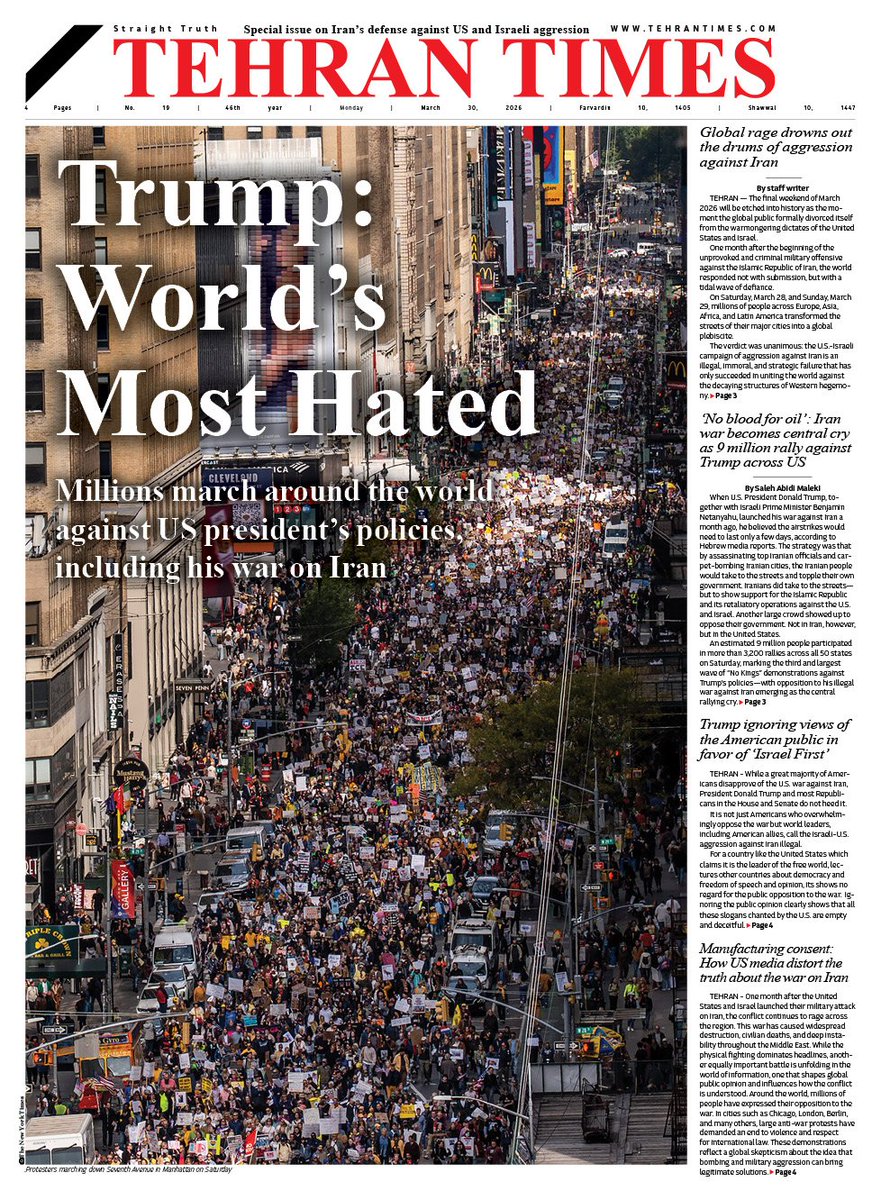
Special issue of the Tehran Times Stay tuned for straight truth
Tehran Times tweet media
English
23
373
1.1K
50.5K
Bloomberg
Bloomberg@business·
After a month of fighting, Iran has arguably secured the most significant strategic victory — a tightening grip over traffic through the Strait of Hormuz bloomberg.com/news/articles/…
English
34
751
2.5K
68K
Ab Deff
Ab Deff@ab_deff·
Shanaka Anslem Perera ⚡@shanaka86

BREAKING: The United States just took over $126 million from Switzerland’s fighter jet account to cover missile shortfalls in the Iran war. Switzerland did not approve this. Switzerland did not consent. Switzerland had already frozen its Patriot payments after learning deliveries would be delayed four to five years. The US circumvented the freeze. SRF, Switzerland’s national broadcaster, reported on March 26 that Washington redirected Swiss funds originally allocated for 36 F-35 fighter jets to cover Patriot air defence shortfalls using the Foreign Military Sales pooled trust fund, a structure that allows the Pentagon to reallocate payments across a buyer’s contracts without that buyer’s permission. Swiss armaments chief Urs Loher confirmed the diverted amount is a “low three-digit million” Swiss francs and called the situation “very unsatisfactory.” The money Switzerland paid for jets is now subsidising a war Switzerland refused to participate in. Bern halted new arms exports to the US on March 20 citing the Iran conflict. Switzerland rejected two US military flyover requests linked to Iran operations. Two hundred years of armed neutrality, and Washington reached into the account anyway. Here is why. The United States fired 943 Patriot interceptors defending Gulf states in the first four days of Operation Epic Fury per a US Congressional study cited by the Jerusalem Post last week. Lockheed Martin and Boeing produce 620 Patriot interceptors per year combined. In four days, America burned through eighteen months of global Patriot production. The war has consumed roughly one-third of the entire THAAD missile stockpile. Annual THAAD production does not exceed 100 units. The cost asymmetry is what makes the depletion irreversible at current production rates. Each PAC-3 interceptor costs $3.9 million. Each Iranian Shahed drone costs between $20,000 and $50,000. The cost exchange ratio is 114 to 1 in Iran’s favour per Military Times. Iran manufactures an estimated 10,000 Shaheds per month per Reuters. America produces 620 interceptors per year. Iran builds more drones in a single week than the United States builds interceptors in an entire year. Every interceptor fired in the Gulf is one that cannot be delivered to Switzerland, Ukraine, Taiwan, Japan, or Poland. The State Department warned allies on March 27 that Patriot deliveries to Ukraine would face disruptions as the Pentagon prioritises Iran per Quiver Quantitative. Senator Chris Murphy said on record: “We’ve been told again and again one reason we can’t provide interceptors for the Patriot system for Ukraine is that they’re in short supply.” Lockheed signed a framework to quadruple production to 2,000 units per year. That capacity will not arrive for six to seven years. The Pentagon has asked Congress to shift $1.5 billion from other programmes to accelerate procurement per Bloomberg. None of this helps now. The interceptors are depleting now. The allied accounts are being raided now. Switzerland is considering reducing its F-35 order from 36 to 30 jets and accelerating evaluation of European alternatives per Bluewin and Global Defense Corp. Swiss parliamentarians have called the redirection “an unacceptable violation of procurement sovereignty.” The Swiss parliament is preparing formal hearings. Switzerland is the canary. A neutral country with two centuries of armed neutrality just had its fighter jet money taken without consent to feed a four-week-old war that burns 18 months of interceptor production every 96 hours. Every US ally with a pending defence contract should be asking one question: whose account is next? Full analysis: open.substack.com/pub/shanakaans…

QME
0
0
0
7
Ab Deff
Ab Deff@ab_deff·
Shanaka Anslem Perera ⚡@shanaka86

BREAKING: The United States just took over $126 million from Switzerland’s fighter jet account to cover missile shortfalls in the Iran war. Switzerland did not approve this. Switzerland did not consent. Switzerland had already frozen its Patriot payments after learning deliveries would be delayed four to five years. The US circumvented the freeze. SRF, Switzerland’s national broadcaster, reported on March 26 that Washington redirected Swiss funds originally allocated for 36 F-35 fighter jets to cover Patriot air defence shortfalls using the Foreign Military Sales pooled trust fund, a structure that allows the Pentagon to reallocate payments across a buyer’s contracts without that buyer’s permission. Swiss armaments chief Urs Loher confirmed the diverted amount is a “low three-digit million” Swiss francs and called the situation “very unsatisfactory.” The money Switzerland paid for jets is now subsidising a war Switzerland refused to participate in. Bern halted new arms exports to the US on March 20 citing the Iran conflict. Switzerland rejected two US military flyover requests linked to Iran operations. Two hundred years of armed neutrality, and Washington reached into the account anyway. Here is why. The United States fired 943 Patriot interceptors defending Gulf states in the first four days of Operation Epic Fury per a US Congressional study cited by the Jerusalem Post last week. Lockheed Martin and Boeing produce 620 Patriot interceptors per year combined. In four days, America burned through eighteen months of global Patriot production. The war has consumed roughly one-third of the entire THAAD missile stockpile. Annual THAAD production does not exceed 100 units. The cost asymmetry is what makes the depletion irreversible at current production rates. Each PAC-3 interceptor costs $3.9 million. Each Iranian Shahed drone costs between $20,000 and $50,000. The cost exchange ratio is 114 to 1 in Iran’s favour per Military Times. Iran manufactures an estimated 10,000 Shaheds per month per Reuters. America produces 620 interceptors per year. Iran builds more drones in a single week than the United States builds interceptors in an entire year. Every interceptor fired in the Gulf is one that cannot be delivered to Switzerland, Ukraine, Taiwan, Japan, or Poland. The State Department warned allies on March 27 that Patriot deliveries to Ukraine would face disruptions as the Pentagon prioritises Iran per Quiver Quantitative. Senator Chris Murphy said on record: “We’ve been told again and again one reason we can’t provide interceptors for the Patriot system for Ukraine is that they’re in short supply.” Lockheed signed a framework to quadruple production to 2,000 units per year. That capacity will not arrive for six to seven years. The Pentagon has asked Congress to shift $1.5 billion from other programmes to accelerate procurement per Bloomberg. None of this helps now. The interceptors are depleting now. The allied accounts are being raided now. Switzerland is considering reducing its F-35 order from 36 to 30 jets and accelerating evaluation of European alternatives per Bluewin and Global Defense Corp. Swiss parliamentarians have called the redirection “an unacceptable violation of procurement sovereignty.” The Swiss parliament is preparing formal hearings. Switzerland is the canary. A neutral country with two centuries of armed neutrality just had its fighter jet money taken without consent to feed a four-week-old war that burns 18 months of interceptor production every 96 hours. Every US ally with a pending defence contract should be asking one question: whose account is next? Full analysis: open.substack.com/pub/shanakaans…

QME
0
0
0
4
Ab Deff
Ab Deff@ab_deff·
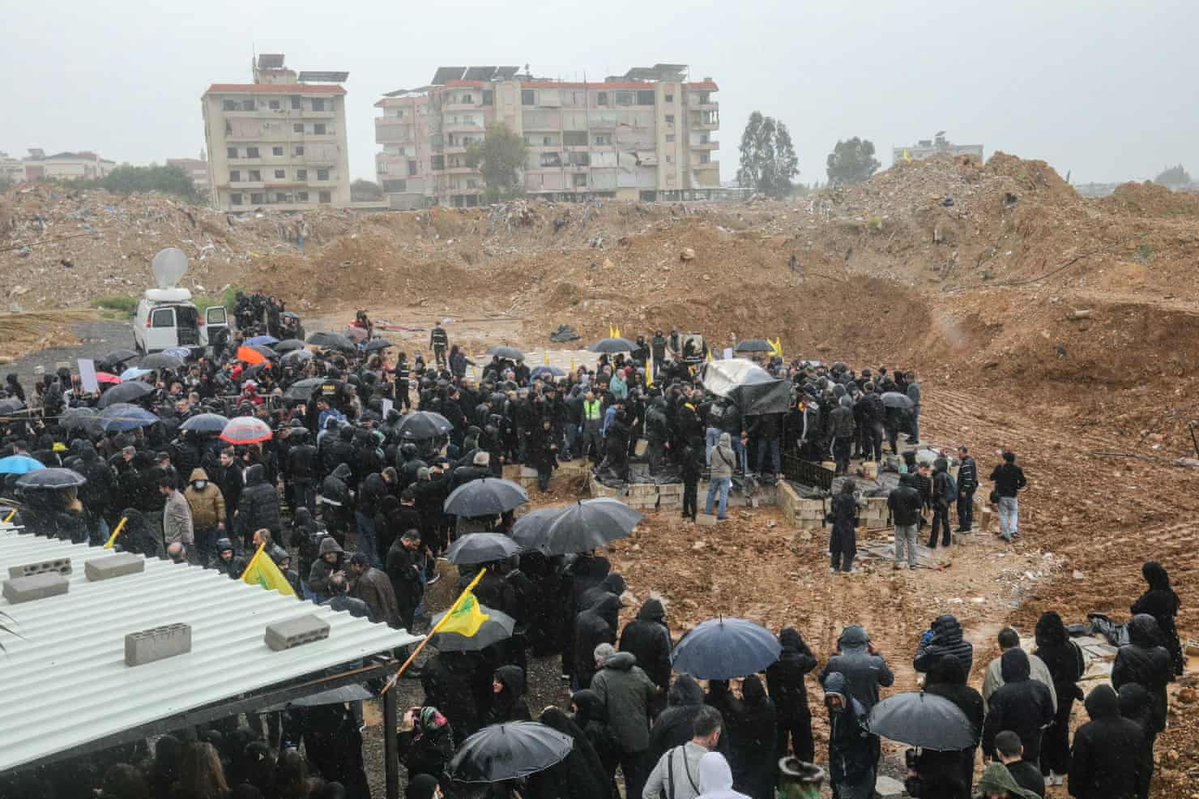
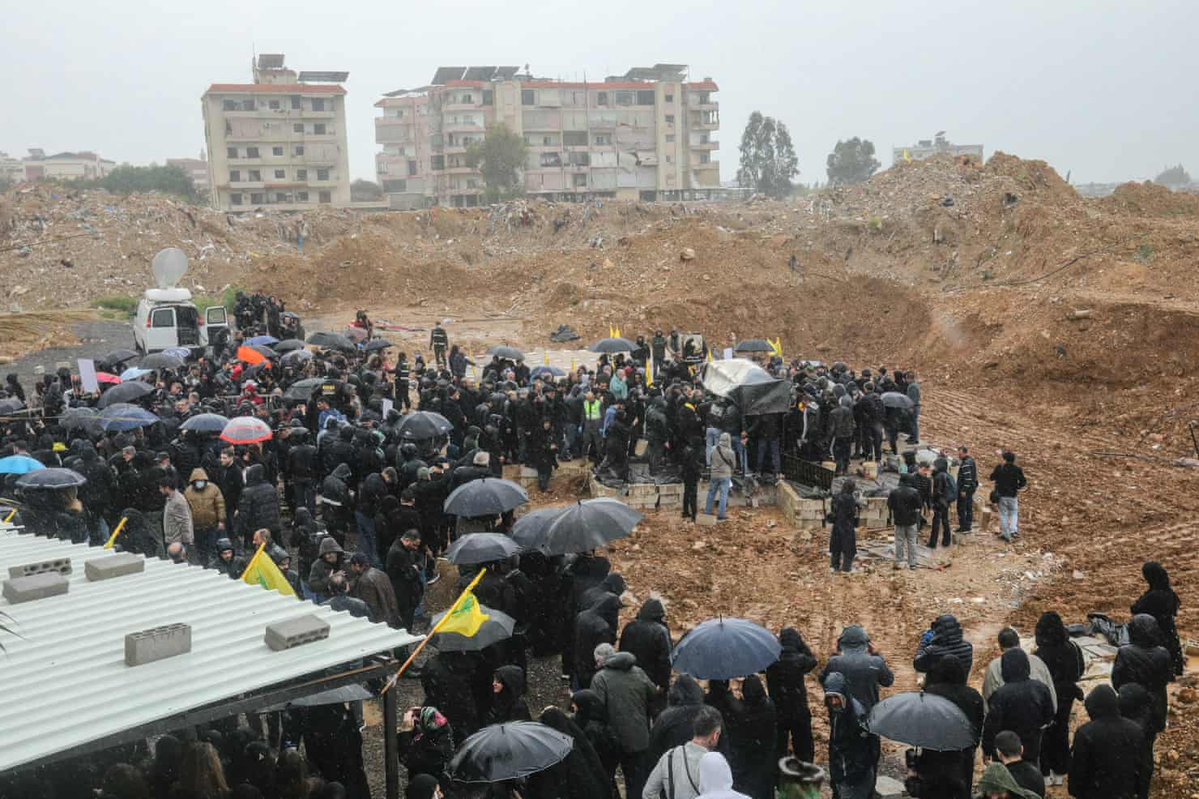
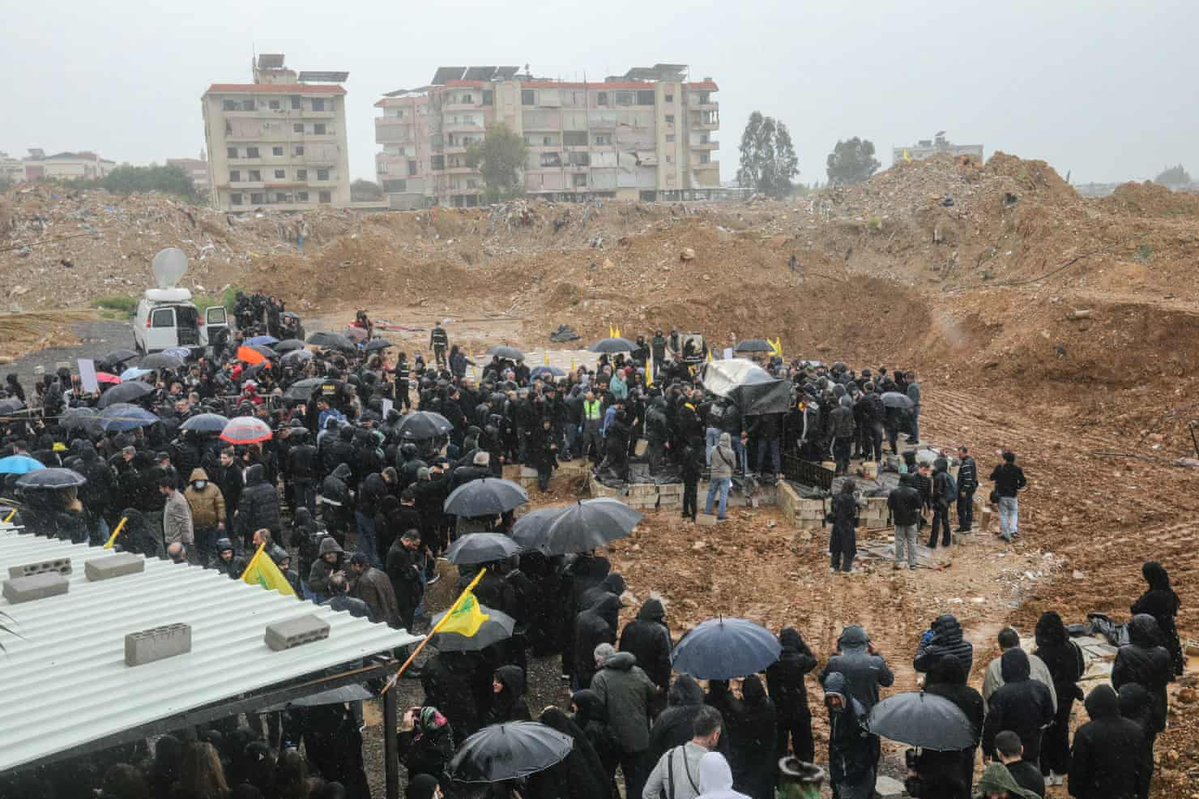
@Jerusalem_Post Mourners gather in the Choueifat area on the outskirts of Beirut for the funeral of journalists killed the previous day in an Israeli strike in southern Lebanon.
Ab Deff tweet mediaAb Deff tweet media
English
0
0
0
2
The Jerusalem Post
The Jerusalem Post@Jerusalem_Post·
Protesters blocked the entrance to the Knesset following the passage of the state budget, demonstrating against the government’s wartime policies, the “Changing Direction” group said. jpost.com/israel-news/po…
English
3
4
9
2.9K
Ab Deff
Ab Deff@ab_deff·
@TimesofIsrael Mourners gather in the Choueifat area on the outskirts of Beirut for the funeral of journalists killed the previous day in an Israeli strike in southern Lebanon
Ab Deff tweet mediaAb Deff tweet media
English
0
0
0
2
Ab Deff
Ab Deff@ab_deff·
@haaretzcom Mourners gather in the Choueifat area on the outskirts of Beirut for the funeral of journalists killed the previous day in an Israeli strike in southern Lebanon
Ab Deff tweet mediaAb Deff tweet media
English
0
0
0
2
Ab Deff
Ab Deff@ab_deff·
Mourners gather in the Choueifat area on the outskirts of Beirut for the funeral of journalists killed the previous day in an Israeli strike in southern Lebanon.
Ab Deff tweet media
English
0
0
0
12
Fox News
Fox News@FoxNews·
JUST IN: Factory goes up in flames following an Iranian missile attack on an industrial zone in southern Israel.
English
775
896
3.8K
256.8K