DeathlessDAO

73 posts

DeathlessDAO banner
DeathlessDAO

DeathlessDAO

@deathlessDAO

Harnessing AI + decentralization to empower YOU with control of your health data (🤖+🤫)

شامل ہوئے Kasım 2021
27 فالونگ1.7K فالوورز
پن کیا گیا ٹویٹ
DeathlessDAO
DeathlessDAO@deathlessDAO·
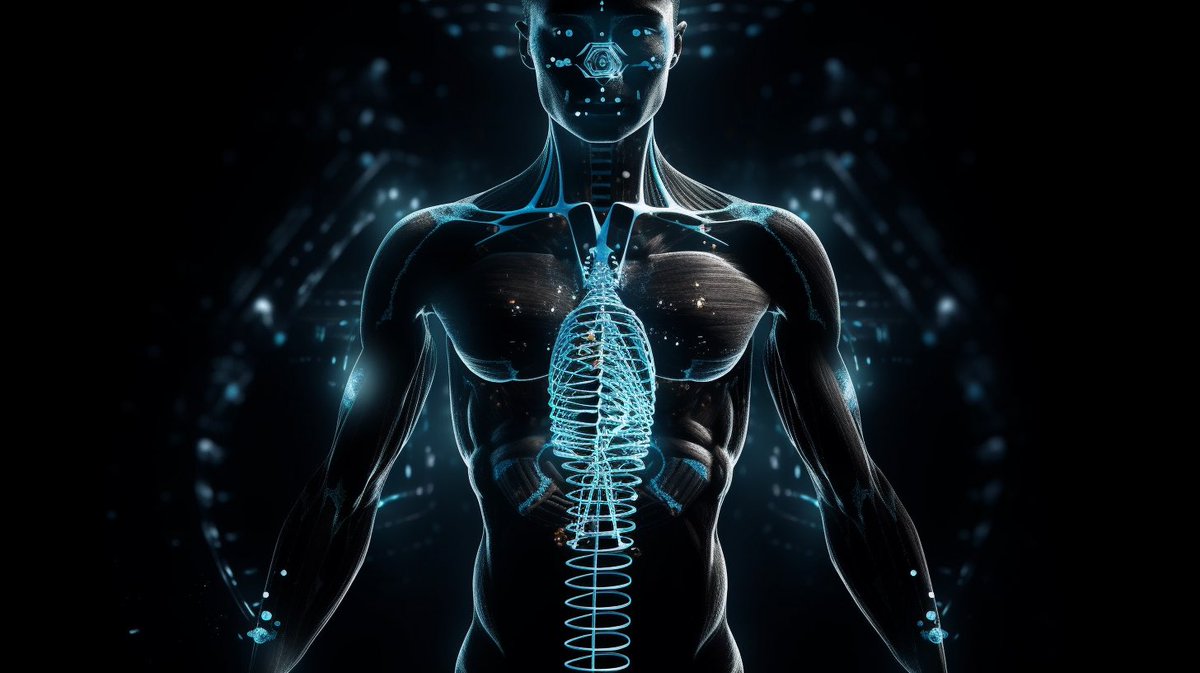
🧬 Top 10 Science-Backed Biohacking Secrets for Extreme Longevity: Unlock Your True Potential Now! 🚀 #biohacking #longevity #health
DeathlessDAO tweet media
English
1
1
7
1.7K
DeathlessDAO ری ٹویٹ کیا
Nikhil Yadala
Nikhil Yadala@nikhilyadala·
@nvidia CEO Jensen Huang says that he doesn't know what else is better than wishing upon aspiring people to suffer in life so that they would learn the RIGHT lesson He is soooo wrong in the thinking process, though. What we should wish upon youngsters is not that they should suffer to learn the right lesson. We NEED to wish upon the youngsters that they should try to solve the hardest problem they can ever conceive of. In the path towards doing that, they would learn the right lesson
English
0
5
12
223
DeathlessDAO ری ٹویٹ کیا
Sai Krishna Kothapalli
Sai Krishna Kothapalli@kmskrishna·
Bro casually opensourced what companies are spending millions on and are charging hundreds and thousands of dollars from users for biological age tests. 🔥🔥🔥
Nikhil Yadala@nikhilyadala

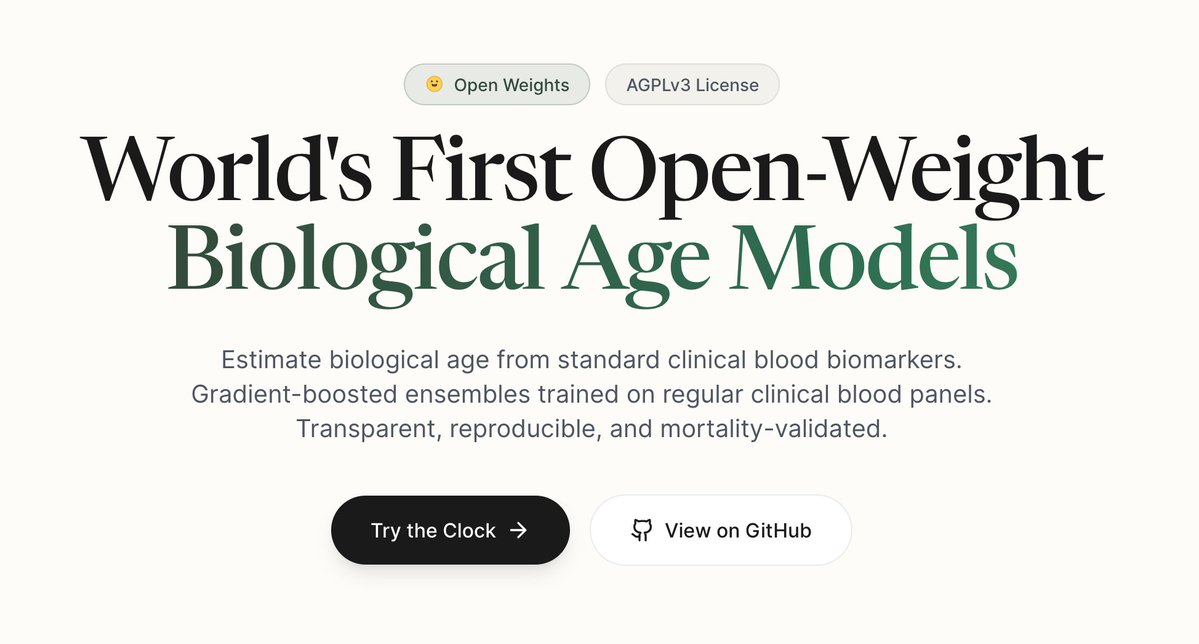
You want to get your biological age tested. You search Google. 100 different tests. You pick a few. They all give you completely different numbers. Whom to trust? How about you trust no one. Take control with OpenAge. openAgeAI.com
English
0
3
6
240
DeathlessDAO ری ٹویٹ کیا
Nikhil Yadala
Nikhil Yadala@nikhilyadala·
You want to get your biological age tested. You search Google. 100 different tests. You pick a few. They all give you completely different numbers. Whom to trust? How about you trust no one. Take control with OpenAge. openAgeAI.com
GIF
English
11
73
150
22.8K
DeathlessDAO ری ٹویٹ کیا
Nikhil Yadala
Nikhil Yadala@nikhilyadala·
See it in action at openAgeAi.com/chat/ Building your own aging model used to require a research lab. Not anymore. With public data and your existing blood test records, you can tune the model by including the blood markers that are more meaningful to your situation (Claude already knows what they are!) and create a personalized aging clock to inform your habits, supplement dosages, and protocols based on your own models and personalized analyses. ( Plus it's more accurate than what you get when you pay !) OpenAge AI does this for you. website: OpenAgeAI.com Code: github.com/Healome/openage Data: huggingface.co/datasets/Healo… Models: huggingface.co/Healome/openag…
Nikhil Yadala tweet media
English
1
29
52
1.5K
DeathlessDAO ری ٹویٹ کیا
Nikhil Yadala
Nikhil Yadala@nikhilyadala·
How to increase the confidence score of this model ? This model focuses on predicting chronological age after correcting for diseases. A better version would be trained to predict all-cause mortality directly, but the current dataset has too few mortality events for sufficient confidence. The repo also contains a VAE-based encoder architecture to incorporate other omics modalities and enhance the signal-to-noise ratio. Star the repo and let's build the best models we can trust. website: openageai.com Code: github.com/Healome/openag…
Nikhil Yadala tweet media
English
1
5
23
419
DeathlessDAO ری ٹویٹ کیا
Nikhil Yadala
Nikhil Yadala@nikhilyadala·
My definition of truth here is inspired by discrete math: something that is comprehensive, consistent, sound, and correct. But more importantly, a true statement has to make all its downstream corollaries also true. If someone tells you "your biological age is 34," every decision you derive from that number, like adjusting a supplement dose, changing a protocol, or evaluating whether an intervention worked or not, should also be valid. If any part of the underlying information is missing (the error range, the confidence interval, the sensitivity to transient states), then the confidence in every downstream decision has to decrease proportionally. Because it means the original statement wasn't comprehensive enough to disclose the full state of what it's measuring. A biological age number without this extra context ( of error rates, dataset inconsistencies, disease variations, not having corrected for all disease groups across all age groups, heavily non-reliant upon test-retest, etc) is a lie in the sense that it presents itself as a complete truth when it's actually a partial statement with missing context.
Nikhil Yadala@nikhilyadala

x.com/i/article/2035…

English
0
8
16
1.2K
DeathlessDAO ری ٹویٹ کیا
Nikhil Yadala
Nikhil Yadala@nikhilyadala·
Since the GrimAge class of models is still trained on methylation data, all associations are true only at the population level. Great metric for global health/policy making/cohort-based analytics. But, for an individual, due to high variance throughout the day, we can not conclude much out of this at its face value without adding a huge uncertainty window. Terrible for personalised decision making on supplements, etc
P.D. Mangan Health & Freedom Maximalist 🇺🇸@Mangan150

"GrimAgeAA by contrast was associated with all outcome variables under investigation, except grip strength, and continued to be associated with 4 of them (walking speed, polypharmacy, Fried frailty score, and all-cause mortality) even in the full multivariable-adjusted models; a finding which implies that the GrimAge clock is tapping variation in the pace of aging that is not simply due to SEP and other lifestyle-related factors." academic.oup.com/biomedgerontol…

English
0
5
12
489
DeathlessDAO ری ٹویٹ کیا
Nathan S. Cheng thinks you should work on aging.
🧵1/ LBF7 Spain is happening and we're doing something kinda wild: -We’re gathering the smartest people who want to SOLVE AGING -going to a longevity resort in the Spanish mountains -to learn, discuss and ACTUALLY BUILD stuff for 7 days straight Here’s what we’re cooking 👇
English
17
105
239
32K
DeathlessDAO ری ٹویٹ کیا
Nikhil Yadala
Nikhil Yadala@nikhilyadala·
And we need very strong metrics that can guide AI to navigate through these hypotheses space and rank various approaches to comprehensively solve aging. When the metric is strong ( precise, interpretable, actionable, and reactive to all the interventions in a unique way) AI can be scaled infinitely to search the entire space of possible hypotheses with RL or even just DPO for models at cellular/organ level. This is the most important problem to be solved to align AI for Longevity. Comment what you think such a metric looks like ?
Mikhail Batin@MikhailBatin

What's standing between us and a cure for aging? The sheer, almost inhuman complexity of the problem. Let's try to get a handle on just how complex we're talking. How many questions do we actually need to answer to crack the aging problem? Just as a quick exercise, I looked into the protein elastin. By bouncing ideas off Gemini, I generated 127 questions in about 4 hours, and the AI kept suggesting more research paths. You could probably map out the entire elastin field with maybe 200 fairly broad questions. Now, maybe the secret to living to 150 is hidden in the answers to a handful of those. Or maybe not. Let's be honest, probably not. Okay, scale that up. There are roughly 4,000 genes linked to aging. Using the same logic, that translates to potentially 800,000 questions just covering the known aging-related genes. But genes are only about 2% of our DNA! Factor in active transposons, bioelectricity, countless chemical reactions, the microbiome, mitochondria, epigenetics, organ replacement, research methodologies... not to mention the broader questions around the fight against death itself: society, culture, education, funding. (Yes, even answering "how do we fund elastin research?" costs money). Suddenly, you're looking at a ballpark figure of maybe 10 million questions related to tackling aging and death. And here's the kicker: we have no idea which subset of these questions holds the key. So, what's our leverage against this complexity? AI. Artificial intelligence. AI can be crucial not just for helping formulate these questions, but also for generating hypotheses. Let's conservatively estimate 10 plausible hypotheses per question. Boom. Now we're facing 100 million hypotheses. Trying to test all of those experimentally would require resources on the scale of a quadrillion dollars. Are we stuck? No. Here’s the workaround: We can start processing this massive hypothesis space right now, computationally. We need to develop metrics – think complexity, interconnectedness, predictive value ("cooperability") – to rank them. We build a dynamic "hypothesis pyramid," pushing the most promising ideas to the top using various prediction methods (which themselves form a sort of methodological toolkit). Crucially, as we do this, the firehose of biological data only increases, meaning our predictive models will continuously get better. The core strategy is this: stay in silico (in the virtual space) for as long as possible. Leverage computational speeds millions of times faster than real-world lab work. By the time we need large-scale physical validation, lab automation will likely be far more advanced anyway. The beauty of this approach? We can start building it now. Even just the process of generating questions, mapping hypotheses, and developing predictive frameworks is valuable. It might seem abstract at first – "why just list questions?" – but it's essential groundwork for understanding how to actually deploy targeted AI agents in the fight against aging. I invite everyone interested to our event to come and discuss how we tackle this "wall of questions and hypotheses" in our quest for longer lives. lu.ma/369wo6vk

English
2
3
9
698
DeathlessDAO ری ٹویٹ کیا
Nikhil Yadala
Nikhil Yadala@nikhilyadala·
If you believe that AI can solve all the suffering - you need to truly be ruthless in defining what causes suffering You can only do that with excellence and being uninhibited about the truth. You need to explicitly express the truest states of utopia with deep meaningful states of life. You live forever healthy in such a world. Just saying I want to be healthy is like aiming for a good sleep. Saying I want to live a healthy tomorrow is asking for immortality Even sleeping everyday also takes us very close to death.. infact it's same as death it's just that after we get up, the world is a bit more famililar than it would be for a new born baby (after the death of someone) oldage ( and also death as a result of it) give meaning to the life because of the "suffering" involved in it. The "suffering" exists because of the expectation of your "natural" life and the reality ( old age). So, is why old-age provides the meaning to the life and by extention one may say that a life well lived must include death but if you zoom back out slightly so, you can engineer suffering. Just by adjusting our expectations. You can suffer with hunger till night by not eating food, And get close to infinite bliss by eating a heavy meal. You can suffer by throwing away all your money you ever earned/saved, and starting again fresh. Certain forms of suffering like the examples i gave are, IMO , the kind of suffering that lets you spring back from it with some non zero probability if you work hard ( or in other words , if you LIVE YOUR MEANINGFUL LIFE) old age, and death are the other kind of suffering. No amount of you living a meaningful life will ever get you back at life. It's irreversible suffering. It's not necessary !!!
Mikhail Batin@MikhailBatin

I see no other way to extend life than by changing our attitude towards the idea of immortality. Towards the very word itself, towards the desire to live forever, towards openly stating that death is unacceptable. We will achieve nothing if we don’t speak the truth, if we choose compromise, if we try to please those who don’t like us. Not wanting to die is normal. It’s the stance of a sensible, reasonable person. Seeing the prospects of immortality in technology is a rational view of the world. Striving to reduce the number of deaths at any cost is the truly humane position—and no other. Those among us who scold us and claim there’s another tactic—that we should tell people what they want to hear about health improvements—overlook the fact that this tactic has already been used for the past 40 years and it failed. Just show that supporters of immortality are very rational people: IT engineers, AI developers, individuals competent in many other areas. Right now, immortality has a weak brand. In fact, it has none. We need to distance ourselves from all sorts of dietary supplements and the desire to age gracefully. We need intellectual courage to tell ourselves and those around us what we are doing and why. For nothing less than survival!
English
0
3
21
1.9K
DeathlessDAO ری ٹویٹ کیا
Nikhil Yadala
Nikhil Yadala@nikhilyadala·
Hi @fedichev , As per this paper, would it then be right for me conclude that - if we have a way to keep the total Gibbs free energy negative forever (ΔG < 0 ) , it would be a valid aging therapetic towards immortality. If that were the case, ΔG is a valid biomarker of the entropic aging. Like how we measure VO2max today, we can create a device to measure the ΔG to assess the efficacy of any aging intervention ?
English
1
2
5
417
DeathlessDAO ری ٹویٹ کیا
Nikhil Yadala
Nikhil Yadala@nikhilyadala·
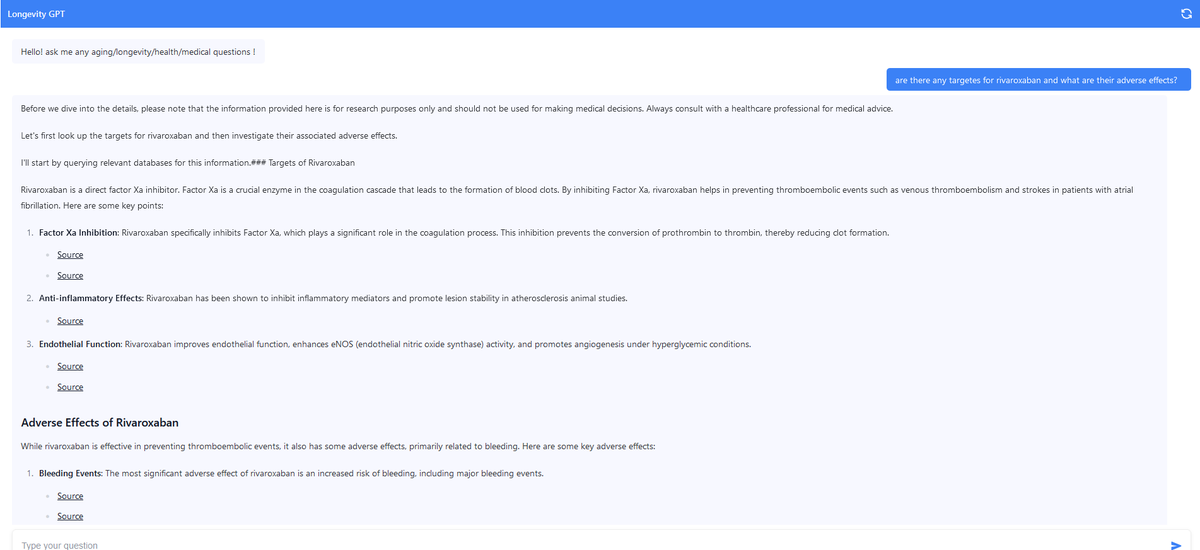
LongevityGPT is now much more advanced. It is now indexed on 100x more papers and several other ontologies and databases, with a 150 times faster response time, and you will feel the magic while using it !!! Do some deep-dives at askLongevityGPT.com, especially about the things listed in the following tweets. Mixture of Agents (MoA) coordinate to orchestrate the subtasks based on high-level reasoning to curate the final answer x.com/nikhilyadala/s…
Nikhil Yadala tweet media
English
11
49
268
42.1K
DeathlessDAO ری ٹویٹ کیا
Nikhil Yadala
Nikhil Yadala@nikhilyadala·
Life is so beautiful on its own. Everyone deserves a fair chance at life and to live it healthy. It’s demeaning to say that life gets its purpose solely because of death. We don’t have unlimited resources, compute, or time to keep waiting forever and accumulating the opportunity cost of not solving aging. The highest ROI thing you could do today is to convince the smartest friend you know in your life to appreciate the urgency and necessity to divert their focus to solve this global pandemic NOW If enough smart people work on this, it’s easy to achieve Longevity Escape Velocity before your loved ones have to suffer for decades and die miserably ! Here is a list of major problems and solutions you and your friends can start working on today longbiofellowship.org/bottlenecks
Mikhail Batin@MikhailBatin

Yesterday at Lifeforce Longevity Connect, @aubreydegrey made an important point. One of the reasons for the slow progress toward an anti-aging drug is that many smart people have shifted their focus to AI development. It might seem that AI holds the greatest promise for radical life extension, but for now, it’s a black hole for immortalism, where natural intelligence is getting absorbed. We need to resolve this strange contradiction. In my next presentation, I will suggest how we might achieve this.

English
0
2
16
1.4K
DeathlessDAO ری ٹویٹ کیا
Mikhail Batin
Mikhail Batin@MikhailBatin·
Why is slowing down aging the most difficult task? 1. Imperfection of biological reactions: Biochemical processes in the body always produce harmful byproducts. Even the most effective repair systems cannot eliminate all damage, which accumulates and affects aging. Evolutionary selection is not designed to fix all damage, but rather to increase fitness for passing on genetic material. 2. Antagonistic nature of biological processes: Water, oxygen, and glucose, necessary for life, also cause damage. Many biochemical processes are simultaneously beneficial and harmful, complicating the fight against aging. 3. Contradiction of stability and instability: Instability, such as genomic instability, is necessary for evolution and normal functioning but also accelerates aging. 4. Systemic nature of biology: The organism is a complex network of interacting cells and organs. Insufficient understanding of these interactions can lead to unexpected negative consequences from interventions. 5. Limited model organisms: Research on aging using worms, flies, and rodents is not always applicable to humans, who have more complex organs and systems. 6. Complexity of the human brain: The human brain is particularly susceptible to aging due to its complexity and various factors, such as inflammatory immune responses and DNA damage. 7. Lack of rejuvenation mechanisms: The body does not possess inherent mechanisms for radical tissue regeneration, complicating life extension efforts. 8. Problems in the organization of science: Scientific research often does not focus on developing a theory of aging or radical approaches to extending life. Many solutions effective in animals may be useless for humans. 9. Unresolved smaller tasks: Science has not solved many simpler problems, such as curing monogenetic diseases, indicating the difficulty of combating aging. 10. Pharmaceutical giants turning away: Pharmaceutical companies, despite their experience and resources, do not pursue the creation of anti-aging drugs. 11. Insufficient funding: Budgets for aging research are small compared to the scale of the task. Investment in combating aging is not comparable to spending on other issues like pandemics. 12. Lack of a plan and theory: There is no single plan or theory of aging. The reductionist approach often fails, and it is unlikely that one mechanism of aging will be found. 13. Hostility and ignorance: The optimism of life extension advocates shocks experts, while the biological community often ignores or opposes the idea. 14. Ignoring bold approaches: Experiments on organ and tissue replacement are rare, and no major organizations aim to radically extend life. 15. Weak philosophy of life extension: The philosophy of life extension is barely noticeable, while society maintains a mortalistic ideology. Immortalism propaganda has little influence on politics. 16. Increasing risks: Risks of nuclear war, bioterrorism, and unfriendly AGI are growing, while discoveries in aging biology show we are farther from solving the problem than we thought.
English
6
9
29
2.2K