

Fabricated Knowledge
11.8K posts

Fabricated Knowledge
@fabknowledge
Simplifying the world of semiconductor investing in the age of AI. Part of the @semianalysis_ gang.
شامل ہوئے Eylül 2021
812 فالونگ29.2K فالوورز


Olympian Gold Medalist Alysa Liu, recently went viral for her Teen Vogue rant on OpenAI Codex.
“I can see why Sam Altman open sourced Codex. Clearly the experience is significantly worse than Claude Code. I was unable to feel the AGI using Codex. As oppose to using Claude Code, I felt the enlightenment coming and support UBI ”


English
@FundaAI We wrote about it to clients…. Last year lmao
English

We're glad that we wrote the report when $TSEM was near its bottom, and published it before Serenity and SemiAnalysis. +40% in two weeks!
FundaAI@FundaAI
Deep| $TSEM: SiPho Capacity Inflection Drives Multi-Fold Growth Cycle AI data center compute clusters are currently scaling from thousands of GPUs to tens or even hundreds of thousands of nodes. At this magnitude, traditional copper interconnects are reaching severe physical limits; once transmission rates hit 800G and above, transmission reach shortens dramatically while power consumption escalates exponentially. To bypass these constraints, Silicon Photonics (SiPho) is becoming the essential backbone for AI Networking. As of 4Q25, Tower Semiconductor’s Silicon Photonics business has emerged as the company’s primary growth engine. Revenue doubled from $106mn in 2024 to $228mn in 2025, achieving an annualized revenue run rate exceeding $360mn by the end of 2025. As the industry transitions from 400G/800G toward 1.6T, Tower has positioned itself as the lead supplier of 1.6T Silicon Photonics wafers. We believe Tower is currently the premier SiPho PIC (Photonic Integrated Circuit) foundry with a distinct competitive lead. Among major competitors, Malaysia’s Silterra lacks significant expansion capacity, while SiPho offerings from UMC, GlobalFoundries (via the AMF acquisition), and STM still trail Tower by a wide margin. The TDP (Thermal Design Power) of AI server racks, such as the Nvidia GB200 series, has jumped from 700W in the Hopper generation to over 1,200W, necessitating the adoption of liquid cooling and more efficient optical interconnects. Within these environments, SiPho facilitates higher speeds while maintaining system scalability under strict thermodynamic limits. On February 5, NVIDIA and Tower Semiconductor established a strategic partnership focused on high-speed optical interconnects for AI data centers. Tower will leverage its SiPho process platform to manufacture 1.6T-class SiPho optical engines and modules for NVIDIA’s next-generation networking architecture, optimized for NVIDIA’s specific protocols. This collaboration aims to resolve bandwidth and energy efficiency bottlenecks during the Scale-out phase of massive GPU clusters. Separately, we have highlighted the rapid progression of Optical Scale-Up, with volume production expected to commence in 2027. Delivering over 10x the optical bandwidth of traditional Scale-Out, Optical Scale-Up—whether implemented via pluggable modules, NPO, or CPO—will significantly drive demand for SiPho PICs. Alibaba’s UPN512 (a 512-xPU optical scale-up super-node) validates the migration of optics from scale-out networking into the scale-up core domain, as LPO/NPO and other near-packaged solutions achieve system-level economics. Consequently, optics is evolving from a mere bandwidth expansion tool into a foundational infrastructure component for scale-up architectures. For SiPho, this shift directly expands the long-term TAM. Scale-up environments demand higher port densities, extreme bandwidth, and stricter power budgets—requirements natively addressed by high-integration SiPho PICs and linear drive solutions. SiPho’s penetration is moving beyond “incremental replacement” to potentially becoming the default interconnect standard for next-generation AI super-nodes. Detailed Report open.substack.com/pub/fundaai/p/…
English
@insane_analyst you're so absolute you cannot realize the relative bro
English
Fabricated Knowledge ری ٹویٹ کیا
We mapped Felten et al.'s AI exposure scores onto BLS consumption data by income quintile.
The top 20% of households have 29% more of their spending basket exposed to AI-driven cost reductions than the bottom 20%.
AI deflation has a distributional problem.
The mechanism is financial services. Securities, insurance, credit intermediation — the most AI-exposed sector in the economy — are 17.7% of Q5's budget and 2.1% of Q1's.

English
Fabricated Knowledge ری ٹویٹ کیا


Fabricated Knowledge ری ٹویٹ کیا

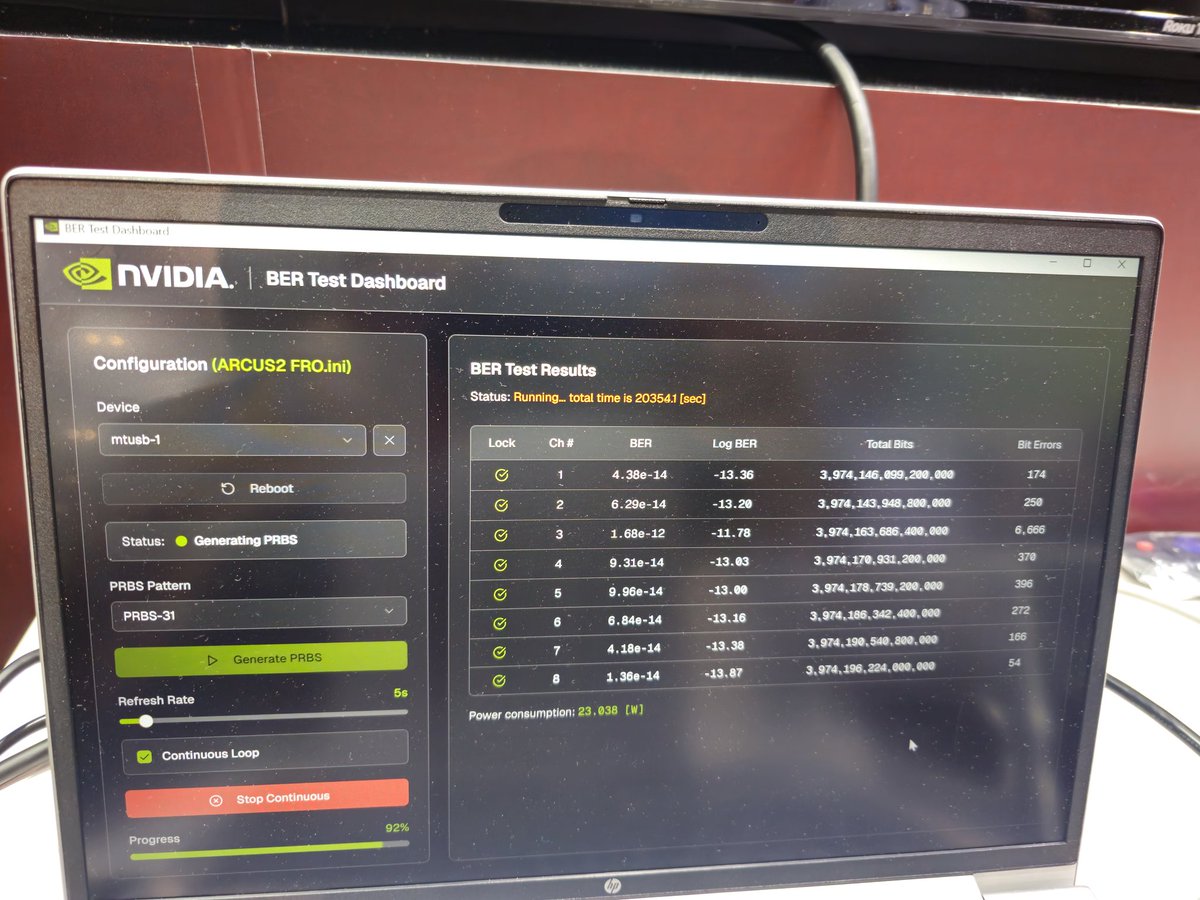
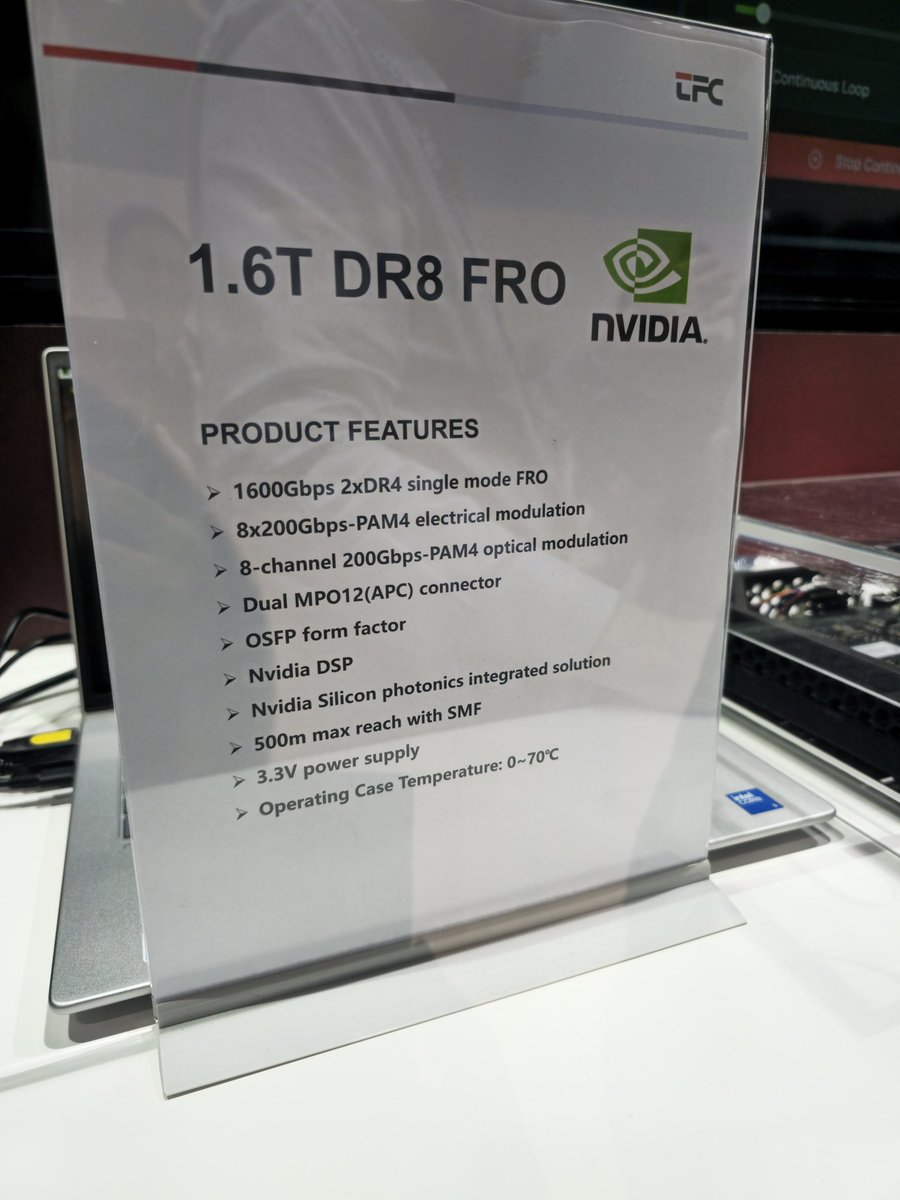
Nevermind Nvidia did show something new at OFC. COUPE in 1.6T tranceicer. e-14 BER on 7/8 200G PAM4 lanes. I am practically speechless.
Hitting e-14 with all lanes active is borderline impossible. This is wonder of engineering.
Also TFC is partner, cope harder $HIMX bulls. 🤡
English
@TBU12345678 It’s actually Apple it’s kind of incredible
English

Fabricated Knowledge ری ٹویٹ کیا


Fabricated Knowledge ری ٹویٹ کیا

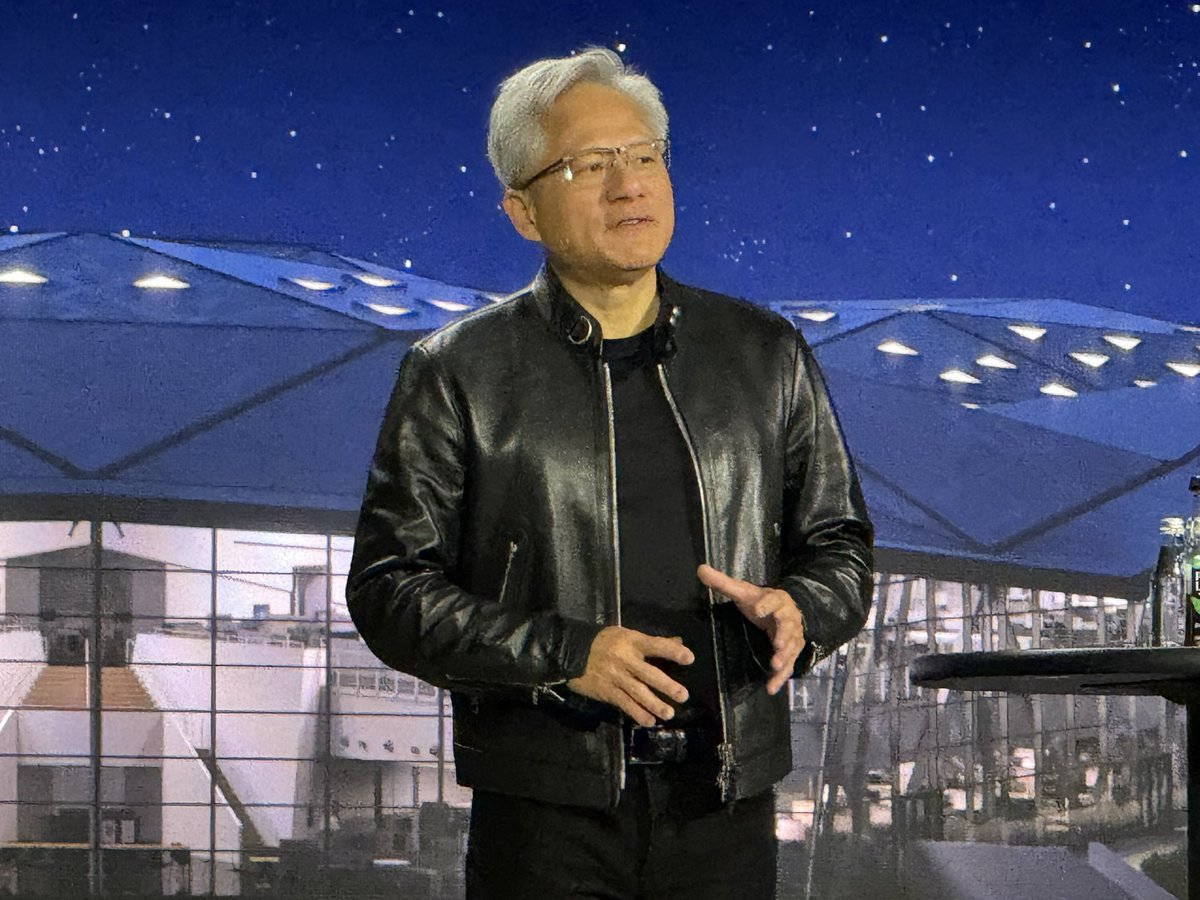
At press q&a, Jensen Huang was asked if the $20 billion Groq deal meant Nvidia was slow to shift from AI training to inference. He replied, “First of all, you are looking at the inference king.”
English
Fabricated Knowledge ری ٹویٹ کیا

God the CCOI waves thesis is so cope, like galactic levels actually
English
Fabricated Knowledge ری ٹویٹ کیا
Your next GPU cluster just got 30% more expensive and it's not even NVIDIA's fault this time
English
@buccocapital The time period I’m referring to is a very different one, they had a bit of a lost decade or 2 and a turnaround! Platform shifts matter. Look the world takes longer than hype, but idk I’m a bleeding edge best of breed. Fighting the fade ain’t my strength
English

@fabknowledge Yup. I am not pounding the table for fucking Salesforce lmao. But…they’re not dead yet. Long game
Also…IBM beat QQQ over the last five years. By A LOT
English
People keep thinking that their distribution (think MSFT, or CRM) is bigger than the technology (AI), but the fact that people are buying macs to mess around with cc (they are also good machines lol) tells me that this technology is much bigger than any distribution this time
English
I am going to just pus that distribution / friction is THE ONLY thing that matters if we are going to be software brained. I do understand and appreciate it, but I do think this is a big thing and making it all abt distribution is such a technology loser way to look at it. Lots of great tech companies with awesome dostribution lost, like IBM had cto relationships with every single company LMAO
English
@fabknowledge Those people are fucking dweebs. It’s like .00000000001% of the market. Distribution matters. It will always matter. It doesn’t mean the incumbents will win, but it certainly gives them an advantage. Just look at the sentiment shift on Google in 1 year
English
Fabricated Knowledge ری ٹویٹ کیا


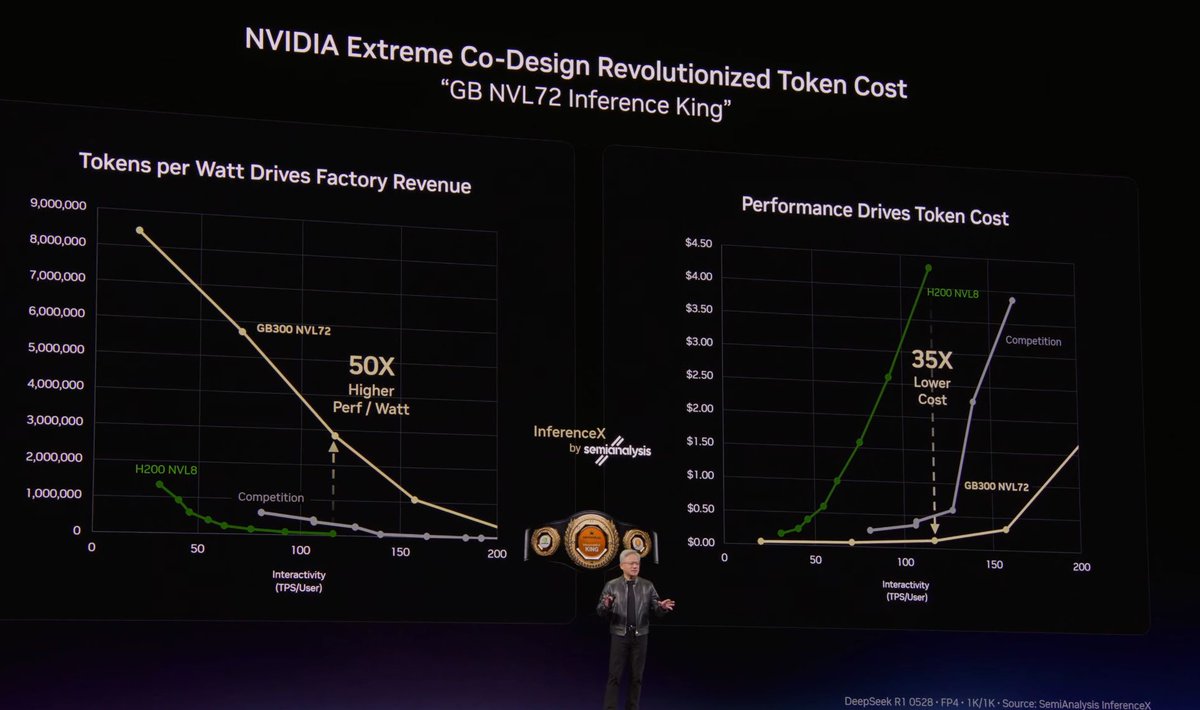
@lithos_graphein Bro I don’t even know what this means anymore I’m bullish
English

Fabricated Knowledge ری ٹویٹ کیا

@dalibali2 I think it’s because attendance like 10x and there’s no smooth thing. Idk if you went to GTC pre 20k seat speaker, it was so much cuter back then
English

@fabknowledge Agree they all suck but I just don’t think they organize it all that well.
English