Termsheetinator

755 posts

Termsheetinator banner
Termsheetinator

Termsheetinator

@termsheetinator

Advisory Incubator™ • Commercial Finance & Revenue Advisory

شامل ہوئے Mayıs 2025
39 فالونگ7.8K فالوورز
پن کیا گیا ٹویٹ
Termsheetinator
Termsheetinator@termsheetinator·
Want to close a $50K B2B deal in less than 4 weeks during Q4... as an agency? THEN BOOKMARK THIS MASTERCLASS Here are all of the steps & 9th inning emails that we sent to this prospect in order to SET TIMELINES, ACCOUNTABILITY AND EXPECTATIONS. Which ended up pushing it across the finish line 2 weeks shy of the holidays. Firstly you need a pipeline full of opportunities with prospects who have a high ACV - a dry pipeline creates a fearful state and we cannot operate in that realm. ------------- 1. The first step is proper diligence, the initial discovery call needs to full of questions around how your prospect turns interest into cash - Get extremely curious and analyze every single milestone in their sales process and gather the metrics for each step. Then focus on how many decision makers influence approvals, from budget to legal and everything in between. If you can do this successfully - you can create a good first draft of the scope. ------------- 2. You have to end your discovery like this, word for word in order to create the environment that tells them: 1. This is the first draft of the scope, not a proposal 2. You will not "yes" or "no" my first draft 3. We engage with one another via email 4. You provide me with constant feedback 5. We both invest into revisions ------------- END OF DISCOVERY SCRIPT: 5 minutes before the end of the call: Step 1 - Time Check + Frame the Process “Prospect, I appreciate your time today. I think we’ve got about a 5 minutes left, so what I’d like to do now is set the right environment for how we move this forward. We never send a scope expecting a yes or no. We go through an iterative process with you because the first draft is never the final proposal - and we want your concerns to surface so we can resolve them together.” Step 2 - Lock In the Next Call “So here’s what I’d like to do: let’s get a review call on the calendar. Are you free [insert day/time]?” (Set it for 3-4 days out and never on a Monday - Wait for yes) “Perfect - I’ll send over that calendar invite right after this call.” Step 3 - Set Expectations for the First Draft “Tomorrow, you’ll receive the first draft of the scope from my team. That draft is simply us covering as much ground as possible from today’s conversation. Once you receive it, a lot of concerns should hopefully come up - and that’s exactly what we want. When we ask for feedback, we don’t mean ‘do you like it?’ We mean: Where are the areas of concern?" Step 4 - Assign the Prospect Homework (Accountability Loop) “So between receiving the scope tomorrow and our review call on [day], will that give you enough time to review it and send us that first layer of feedback?” (Wait for yes.) “Great - then we’ll expect that feedback the following day.” Step 5 - Future-Pace the Deal Movement “I’ll be coming into our call on [day] with revisions already done and a second draft ready for us to review together. Then we’ll simply repeat that loop - your concerns come in, we resolve them, we refine the scope and then we can move into the other concerns that the influencers and other decision makers will have - until this becomes a proposal everyone looks at and says, ‘This is exactly what we need - let’s move forward.’ Does that work for you?” (Wait for yes.) Step 6 - Identify Decision Makers “Before I let you go, are you the only decision maker, or are there other partners or influencers who’ll need to review the scope as well?” (If others exist:) “Perfect - once we get through all of your feedback, we’ll move into having them see the revised draft and begin surfacing theirs." Step 7 - Final Recap + Authority Signal “Alright - here’s the next steps then: • Scope sent tomorrow • First layer of feedback from you before [X day] • Review call on [day/time], with revisions completed on our side • Then we continue tightening until the proposal is exactly right I’ll send the calendar invite right now, and we’ll get to work.” Step 8 - Exit With Leadership “Appreciate your time today. See you on [X Day]” ------------- For example, if you did discovery on Tuesday and set your Review call for Friday and they don't send you any feedback come Thursday - we send this email from your EA's mailbox: "Prospect, Your review call with [YourName] is set for tomorrow at [X time]. Before coming into the review call we need to revise the scope. Could we get the feedback by the end of today or should we reset the call for Tuesday at the same time?" From the beginning we constantly timeline them and keep them accountable to the timelines we set. If they reply "need more time" get your EA to reset it and then reset feedback timeline. If they don't reply at all, you simply go into the call and get the feedback live, set the next review call again and then leave the call and get the 2nd draft into motion. ------------- Continue this feedback loop with them until you exhaust your prospect/champion of feedback and then tell them how to approach the other decision makers with the draft and then get them to bring that feedback to you. Continue revising the scope until everyones concerns are brought to surface and resolved via the scope. After 2-5 of these loops, the champion grows an internal bias to defend it because they damn near co-authored the scope they present to leadership or if its the CEO he can sell it his advisor, stakeholders or whoever else influences his decisions. ------------- Once we get to that place, WE HAVE TO PUSH THE DEAL ACROSS THE LINE WITH A VERY SPECIFIC MOTION. No one will ever just completely submit and lay down and say "Send over the invoice we'll pay it right away - it's very rare and never the general rule" Once we know all of the feedback has been dissolved, we're getting buying signals and they've been dancing with us for 2-3 weeks - we turn it into an engagement letter and then send the letter to push for closing with this email below: Engagement Letter Executed, Payment Next Steps (Sent by you): "Name, the engagement letter has been executed on oared as well. In case you don't receive a final copy, I've attached it below for your records. Next steps are quite simple: 1. Once the Upfront Fee has been settled, we are going to begin post-capitalization to stay on pace. 2. Please provide your mailing address - with every engagement we send a welcome gift. 3. Between the invoice being settled and the holidays - we will have 1-2 onboarding meetings. Once the invoice has been settled, I'll immediately get in touch to organize the dates for our 1st onboarding session before the Christmas holidays." ------------- This is the exact email we sent that got the letter signed for the deal linked in this thread. We didn't get a reply, we just saw the letter get signed. After we saw the letter executed - we then sent this email and the invoice was settled: Bump sent from your EA's email (Girl Name): Name, pacing towards getting everything set up for Month:Date, just wanted to make sure you got [YourNames] previous email. All of our pre-capitalization steps are completed now. Can we get this settled by [A date 2-4 days out from now]? Continuing to set timelines, accountability and PUSHING the deal across the line with making easy to buy from us. ------------- This is a very short and sweet thread that doesn't cover every single point - but that's why operators join Advisory Incubator - to see me do it for them LIVE.
Termsheetinator tweet media
Termsheetinator@termsheetinator

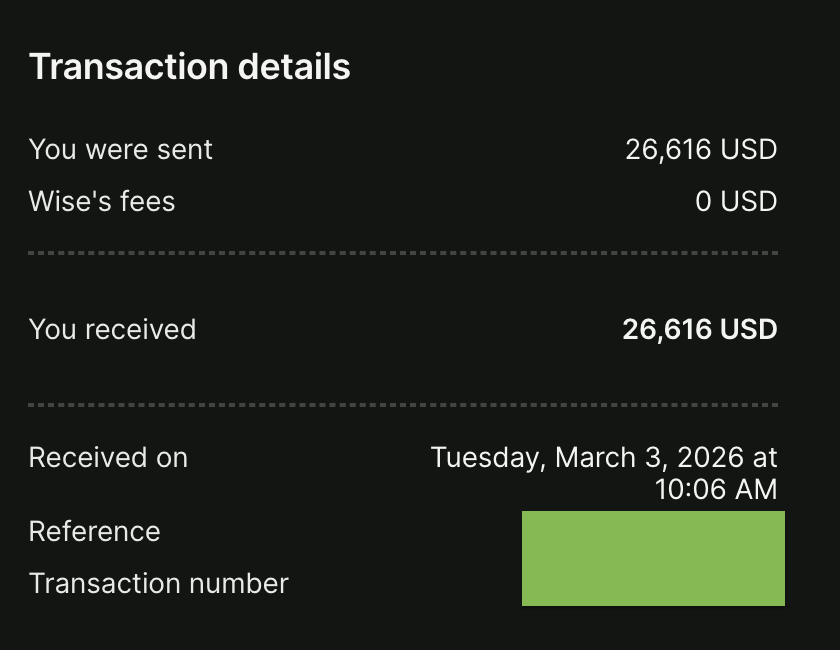
$50,000 USD engagement - half upfront, half 45 days later, contingent on a clear milestone. Closed by one of my members who followed my process step by step and let me close the deal for him. Timelines, accountability, buy-in on revisions - that’s how you move a prospect from “interested” to wired funds. If you’re in the program, you already know how hard I push you on this, spam my calendar, don't do anything after discovery without me doing it for you and once you close 1-2 deals through me, we then allow you to start following the process on your own to become a peer/member and graduate from being a student. Ask anyone in my program: nobody puts more time into helping you actually get deals closed. Our deals close via email, and we’ll break this one down micro step by micro step in the future. Advisory Incubator exists because I’m actively doing this across 7 offers and 4 companies - not teaching from the sidelines or my past life. I'm 1 of 1, very rare breed and practise what I preach every single day, 7 days per week. Advisory Incubator is just getting started. We don’t do small retainers. 50K is also a peanut warm-up rep. Back to business.

English
2
5
79
42.8K
Termsheetinator
Termsheetinator@termsheetinator·
Sell The Wedge™ to charge 10x more. You think you are selling "demand generation" or "meetings." But to the prospect, you are selling risk. Every time you promise 50 introductions, the prospect does the mental math. They see 45 bad calls, 4 maybe’s, and 1 closed deal. They see the hours their team will waste filtering the noise you create. They see a cost center. That is why you get stuck haggling over price. That is why you are treated like a vendor. There is only one way to escape this trap: Stop selling the input. Start selling the output. This is The Wedge™ It is the specific insertion point deep inside your prospect’s sales process where you plug in your engine. It allows you to promise 1/10th of the volume for 10x the value. If you do not find the wedge, you are just another lead gen agency competing on volume. If you do find it, you become a strategic partner who owns the outcome. Here is the deep dive into how it works, how to find it, and how to use it to close high-ticket deals without ever debating on a call. The Trap of Top-of-Funnel Promises When you operate from the top of the funnel, you are forced to sell volume. You promise 40, 50, or 100 "opportunities." The prospect looks at that number and immediately discounts it. They know their conversion rates. They know that a "meeting" is just the start of a long, expensive filtering process. When you sell the top of the funnel, you are asking the prospect to take all the risk. You are saying, "Pay me, and I will give you a pile of rocks. You have to pan for the gold yourself." This creates three fatal pain points: Price Compression: Your value is tied to the number of hours or meetings. You can’t charge $50k for a pile of rocks. Endless Revision Cycles: The prospect keeps asking for "better quality" because you haven't defined what "quality" actually costs. The "Vendor" Dynamic: You are judged on activity, not results. If the meetings don’t convert, it’s your fault. If they do convert, it’s their sales skill. The Wedge™: Precision Over Volume The Wedge™ is the exact opposite of volume selling. Instead of throwing mass at the problem, you identify the precise moment in the prospect’s process where the odds flip in their favor. You find the step where a "maybe" becomes a "likely." Then, you promise to deliver prospects right to that step. You are not selling "meetings." You are selling "Assessments," "Term Sheets," "Greenlit Approvals," or whatever specific language they use internally. When you sell the wedge, three things happen: Volume Inversion: You promise fewer deliverables (e.g., 5 instead of 50), but the value is higher. Risk Transfer: You are taking the filtering burden off their plate. You are delivering the gold, not the rocks. Price Justification: It is easy to justify a high fee when the prospect sees the direct path to revenue. How to Find The Wedge™ (Vertical Funnel Mapping) You cannot find the wedge by asking general questions like "What are you looking for?" or "Who is your ideal client?" Those questions keep you on the surface. You have to go vertical. You have to map their funnel, step by step, until you find the gap. 1. Start at the Top, But Don't Stay There Find out how many inquiries or applications they get. Get the raw number. That is just the context. The real work begins now. 2. Walk Down the Staircase Do not let them skip steps. Force them to define every micro-movement in their sales process. Action: Ask who touches the inquiry first. Ask how many move to the second step. Ask how long that takes. Goal: You are building a staircase. 300 inquiries -> 100 callbacks -> 50 second calls -> 10 proposals -> 2 deals. 3. Identify the Drop-Offs (The "Gap") You are looking for the massive choke points. Where do they lose the most people? Usually, it’s right at the beginning. 300 people raise their hand, and 250 disappear immediately. That is the gap. That is where the pain is. 4. Find the Confidence Threshold This is the most critical step. After the drop-off, where do they start winning? Does the prospect feel safe once they get a "Meeting"? Probably not. Do they feel safe once they get a "Signed NDA"? Maybe. Do they feel safe once they get a "Paid Deposit" or "Exclusivity on a Deal? Definitely. The Wedge is the point where the prospect’s historical data makes them feel safe. The Three Dimensions of a Wedge Not every step in the funnel is a valid wedge. You have to measure it against three dimensions. Dimension 1: Depth How far down the funnel is it? A "top of funnel" wedge (e.g. an introduction) is low value. You have to promise high volume. A "bottom-of-funnel" wedge (e.g., a signed term sheet) is high value. You only need to promise one or two. Dimension 2: Time This is the hidden killer. You might find a perfect wedge at the bottom of the funnel, but if it takes 6 months to get there, you will fail in a 90-day engagement. You must calculate the "Timeto Wedge." How long does it take for a cold lead to reach this step? If the time is longer than your engagement window, you must move the wedge up the funnel, even if the conversion rate is lower. Dimension 3: Data Confidence Does the prospect know the conversion rate for this step? If they say, "We don't know how many proposals close," that is a Blind Wedge. It is dangerous because they don't know the value of what you are selling. If they say, "80% of people who pass Assessment close," that is a High-Confidence Wedge. You can build a scope around that number. The "Blind Client" Warning Sometimes, you will map the entire funnel and realize the prospect has no data. They don't know their conversion rates. They don't know their drop-off points. This is a major red flag. A client who cannot define their funnel is a client who will project their insecurities onto you. They will question your price, demand more volume, and blame you when deals don't close. If you cannot find a wedge because they lack data, you are not ready to sell them an engagement. You need to sell them a diagnostic first. How to Sell the Wedge (Approach Over Script) Once you have identified the wedge, you must frame the entire scope around it. 1. Adopt Their Internal Language Pay attention to the specific words they use for their process. Do they call it a: "Consultation"? "Underwriting"? "Exclusivity"? "Proposal Sent"? Use that word verbatim in your scope. When you use their language, you signal that you are an insider, not an outsider. 2. Anchor the Milestone, Not the Activity Structure your engagement around delivering the wedge, not the activity leading up to it. Approach: Instead of promising "50 cold calls," you promise "5 Proposals Sent" or "2 Deals Under Exclusivity". 3. Handle Objections as Scope Revisions This is where most reps fail. They try to debate the objection on the call. The Mistake: The prospect says, "That number seems low." The rep tries to justify why 5 is enough. The Strategy: Use the objection to revise the wedge. If they think the number is too low, it means the wedge is too high (or they don't trust their own conversion rates). The Pivot: Propose moving the wedge up the funnel. "If we move the milestone to an earlier stage, we can increase the volume, but the trade-off is lower certainty. Which do you value more: volume or certainty?" The Wedge is the Close When you find the wedge, the close becomes a natural consequence. You aren't asking them to buy a marketing service. You are offering to install a precision component into their existing machine. You are showing them exactly where you fit, exactly what you will deliver, and exactly how they make their money back. If the wedge is clear, the price is irrelevant. If the wedge is unclear, no amount of salesmanship will save you. Sell The Wedge™
English
0
0
9
421
Termsheetinator
Termsheetinator@termsheetinator·
THE PLAYMAKER SCOPE™ (STOP BEING A VENDOR) YOUR SCOPE IS LAZY. THAT IS WHY YOU CAN'T CHARGE $50,000. I just watched a rep send a scope that said: "We will generate 40 meetings across various industries." "Various industries" Are you selling a service or throwing darts blindfolded? This is the Vendor Trap. You are waiting for the client to tell you where to go. You are hoping they sign the check so you can figure it out later. That is not advisory. That is fraud. If you want to close $50k engagements, you must be a Playmaker. THE PROBLEM: The client says: "We are agnostic. We service everyone. Just get us meetings." So you put "Everyone" in the scope. Now the client looks at that number - "40 meetings" - and it’s a blur. It’s abstract. They can't visualize the revenue. They can't see the "woman." So they stall. They ask for revisions. They ghost. THE PLAYMAKER FRAMEWORK: You are not a monkey pushing buttons. You are a strategist. If they are agnostic, you pick the lane. 1. The Granular Breakdown: Don't say "40 meetings." Say: 12 Meetings from Manufacturing (High ACV, short cycle) 8 Meetings from Public Sector (Long cycle, high retention) 20 Meetings from Financial Services (High volume) 2. The "Product-Market-Fit" Table: Create a table in the scope. Product A (High Ticket) -> Sector X (High Intent) Product B (Entry Level) -> Sector Y (High Volume) Now, map the meetings to these specific intersections. 3. The Visual: When the client reads the scope, they aren't seeing a cost. They are seeing a roadmap. They can "visualize the woman." "Oh, I see. We are going hard after Manufacturing for Product A. I know that will work." THE PSYCHOLOGY: When you break it down this granularly, you aren't "selling" them a service. You are leading them. You are saying: "I have done the research. I have studied your business. THIS is where the money is." If you just put a big blob number, you are saying: "I have no idea, let's just spam people." THE UNLOCK: If you find yourself in Revision 3 or 4 and they are still dancing, it’s because you haven't taken the reins. Do the work. Map the strategy. Build the table. Be a Playmaker.
English
0
0
7
523
Termsheetinator
Termsheetinator@termsheetinator·
THE REVISION TENNIS™ END GAME IF YOU END YOUR DISCOVERY CALLS ASKING FOR A "DECISION," YOU ARE HANDING THE DEAL TO YOUR COMPETITORS ON A SILVER PLATTER. BOOKMARK THIS IMMEDIATELY. I just reviewed 5 back to back calls. The single point of failure wasn't the opening. It wasn't the rapport. It was the End Game. Most reps finish a discovery call with a wet handshake: "I'll send you a proposal, let me know what you think." That is how you die. You are creating a "Yes/No" environment where you have zero control. Here is the Revision Tennis™ End Game - how to walk out of every call with the deal already locked in the chamber. THE MISTAKE: The rep asks for a decision. Or worse, they let the prospect say, "I'll take this to my partners and get back to you." As soon as that happens, you are dead. The partners didn't hear your pitch. They see a price tag. They see risk. They say "No." You just lost a $40k deal because you were too scared to lead. THE FIX: PRESCRIBE THE ENVIRONMENT. You must transition from "Inteviewer" to "Leader" in the last 5 minutes. You do not ask for a meeting. You do not ask for a decision. You set the culture. 1. The Pivot: "I’ve really enjoyed this conversation. We have about 5 minutes left. I want to prescribe the next clear steps so we can continue this dialogue." 2. The EA Injection: "Right after this call, my EA (Alexandra) is going to email you. She’s going to set up a new thread to coordinate this." 3. The "No Yes/No" Rule: "Within 48 hours, you’ll get the first draft of the scope. Now, this is critical: This is not a proposal for you to say Yes or No to. It is a starting point. We never move forward on a first draft." 4. The Isolation Play (The Champion): "We need to create an environment where you give us feedback - confusion, concerns, validation. We work through YOU. We do not want this going to your partners until YOU have your fingerprints all over it and it’s defensible." 5. The Lock: "Does Tuesday work for a review call to go over your feedback?" WHY THIS WORKS: You are dismantling their ability to "No" you. When you say "Don't show this to your partners yet," you are aligning with your Champion. You are telling them: "I am protecting you from looking bad. I am going to make you look like a genius to your bosses." They now work for you. They will defend the scope internally. Stop asking for business. Start prescribing the process. Play Revision Tennis™ until the scope becomes their scope.
English
0
0
11
505
Termsheetinator
Termsheetinator@termsheetinator·
What’s the most money you’ve made in one shot?
Termsheetinator tweet media
English
2
0
10
1K
Termsheetinator
Termsheetinator@termsheetinator·
if you go to a comedy club and watch 10 comics, you are only going to remember two of them. you remember the comic who said the most controversial thing. (novelty) and you remember the last comic who walked off the stage. (tail end of an event) peer-reviewed studies on memory back this up. it’s called the serial position effect. novelty and recency. everything in the middle is hard to remember unless there was novelty or some sort of connection. same thing with sales calls, the will always remember the novel thing and the ending. no novelty + ambiguous next steps = a bad set = remembering nothing. that is the equivalent of a comedian walking out and saying "hey everyone, airplanes are fast, right?" it’s instantly forgotten. Unless it's sooo bad then that is the novelty, it was so bad it's worth remembering. if you want to close deals in high-velocity b2b, you have to weaponize those two moments. the first is the novel insight. offer novel Insights. but even if you land this - here is where 99% of people blow their brains out. they nail the insight. they get the prospect nodding. and then they fumble the landing. ZERO clarity on the next micro-step or how to properly proceed so they're not doing all the work. the end of the call is the other half of the equation. you have to prescribe the next step with absolute authority. you don't ask. you tell.. PRESCRIBE. if you drop a novel insight and then fail to prescribe the path, you wasted the insight. you left them with a problem but no clear path to the solution. collapse the sales cycle by being the most memorable person in the room. say something they haven't heard. and tell them exactly where to stand when the meeting ends.
Termsheetinator tweet media
English
1
0
10
534
eric zakariasson
eric zakariasson@ericzakariasson·
whats going on with chatgpt these days? almost all responses ends with clickbaity questions "if you want, i can tell you the one mistake that almost everyone forgets"
English
931
250
11.7K
1.1M
Termsheetinator
Termsheetinator@termsheetinator·
This was the motto since day 1, mission completed and never had the 10k/mo narrative in mind. Escape the rat race first, don’t go deeper with lambo liabilities and Miami fenthouses. Get 2M in your brokerage account through a hold co and go the dividends route to then only work on projects for purpose not to pay your bills.
English
0
0
1
124
Ayman Al-Abdullah 🧱
Ayman Al-Abdullah 🧱@aymanalabdul·
Best tip I can give first-time founders: Get to $1M liquid outside the business as quickly as you can $1M invested at ~10% = ~$100K/year That’s baseline survival secured so you can keep building forever
English
37
28
902
54.8K
Termsheetinator
Termsheetinator@termsheetinator·
Most B2B sales cycles are EXTENDED or LOST by NOT understanding these: ├ The Flexibility Trap ├ Timeline Manipulation ├ The "Probe" Phase ├ Systemized Authority TRIPLE BOOKMARK THIS MASTERCLASS High-ticket negotiation dynamics show that prospects constantly probe for flexibility to see how much they can extract. flexibility extends the timeline - they ask to extend timelines - they ask to spread payments - they treat your model as a suggestion - they equate "customization" with better service This dependency leads people to extend sales cycles from 1.5 weeks to 4+ weeks - because every concession invites another "ask." The "Hidden Discount" signals (paying with your margin): ├ Asking to spread a 3-month scope over 6 months ├ Requesting a lower retainer to "test the waters" ├ Pushing for success-fee structures instead of upfront capital (turning you into a referral source) ├ Treating your time as a variable they can adjust These signal that they are buying a commodity, not a result. They show that they view your time as a flexible resource rather than a fixed ingredient in a recipe. Authority signals (resistance to negotiation): ├ A fixed quarterly rate and timeline ├ A productized process that doesn't change ├ A "take it or leave it" stance on the pricing ├ A 100% success rate based on the system These signal resistance to "Timeline Manipulation" and maintain a "Productized" perception. Step 1 - identify the "Probe" Any time a prospect pushes on the structure of the deal, recognize the test. - Requests for extended timelines are not about cash flow, they are about risk reduction. - Requests for lower retainers are not about budget, they are about testing your confidence. - Requests for "pilot programs" are not about validation, they are about delaying commitment. If they ask to dilute the intensity, they are checking if you are the Expert (who dictates the process) or the Vendor (who takes orders). Step 2 - Calculate the "Hidden Discount" Internally Do the math on what they are actually asking: - Spreading a 3-month engagement over 6 months creates a 50% dilution in intensity. - Lowering the retainer reduces the resources allocated to the result. - Changing the timeline changes the ingredients of the "recipe." - Realize that Time is not a luxury, it's a variable that dictates quality. When you concede on time, you are no longer selling the same product. Step 3 - Adopt the "Fixed Product" Mindset This is the most important part. Internalize that your process works because it is systemized. Our "Best Burger" is the best. We won't change ingredients based on customer preference. - A Surgeon doesn't negotiate the duration of the operation. - A proven system fails the moment you modify the variables. Recognize that holding the line on the timeline and price is the only way to guarantee the result. This forces a binary decision in the prospect's mind: ├ Buy the result as designed (Closes in 1.5 weeks) ├ Go find a vendor who will customize the process (Walk away) At this point, you’re not selling a service.. you’re offering a Fixed Outcome This is where most scopes go wrong... They’re ONLY anchored in "getting the deal" - Accommodating timeline requests - Adjusting pricing to fit comfort levels - Offering "lighter" versions of the service - Acting like a freelancer instead of a firm - They lack education on the Cost of Flexibility. They scope based on accommodation, not authority. The buyer’s motivation lives somewhere else It lives in: - Buying a proven system (The "Best Burger") - Certainty that the process won't be diluted - Fear that a "custom" timeline implies a weaker result - Trusting the expert enough to stop negotiating This is why deals stall for 4+ weeks... They think you're just "labor" they can rent by the hour Nothing new is being surfaced... No "Product" is being shown Here’s how Shortening Sales Cycles works for $50k deals: You don’t start with a negotiation You start with the Product - Fixed Timeline (Quarterly sprints only) - Fixed Rate (No spreading costs) - Fixed Process (The "Recipe") The understanding that "No" is better than "Maybe" Only then do you connect the Rigidity to the Speed of Close Rigidity collapses sales cycles because: ├ Flexibility signals you don't know what works ├ Experts dictate the treatment plan, patients don't ├ A 6-month timeline for a 3-month problem is just expensive procrastination ├ You're the Surgeon, they're the Patient (You don't negotiate the surgery duration) If you’re not internally convinced that Time = Quality, you’re extending the sales cycle yourself. If your scopes don't act like a Product on a Shelf, they’ll always feel like a negotiation. And if you don't hold the line on the timeline, you’ll lose 4 weeks of your life to a prospect who is just "kicking tires."
Termsheetinator tweet media
English
1
0
18
1.5K
Will Narduzzi
Will Narduzzi@wduzzer92·
@termsheetinator I am putting a lien on an asset owned by a very profitable food service company. Owner said they had no problem with second lien behind first, even with first not being okay with it. We recommended to find another asset free and clear. Wild how people operate
English
1
0
0
111
Termsheetinator
Termsheetinator@termsheetinator·
met an operator on Thursday who runs a truck repair chain been in business 20 years owns two properties with over a million in equity he’s in foreclosure the story is an example of what goes wrong when you have operational smarts but zero financial literacy a consultant told him to factor his receivables to speed up cash flow he walked into his local branch and asked the manager if it was okay manager said "we can't stop you" he heard "yes" corporate later says "covenant breach" the bank called the loan, filed a judgment, and froze his accounts. he didn't even know the judgment was there until another bank rejected him months later now he’s got a foreclosure sale date looming the business is fine it does half a million a month in revenue but the capital structure is broken this is the distressed asset world and the opportunity is bigger than people realize there is more demand for this kind of refinancing and restructuring than we could ever service. i could grow my headcount by a 1,000% tomorrow and still have deal flow spilling out of my inbox it’s endless because most business owners are great at the thing they do - fixing trucks, selling products - but they are terrible at managing the balance sheet they sign docs they don’t read. they listen to consultants who don’t know the nuance of their loan covenants they make a ton of money but stay on a hamster wheel because they have no financial literacy they are one bad call away from losing everything we are stepping in here pay off the bank, refinance the debt, take the real estate as collateral it’s a slam dunk for us. we get a 3% fee on the debt funded for him, it’s a second chance
Termsheetinator tweet media
English
1
0
28
2.2K
Termsheetinator
Termsheetinator@termsheetinator·
People think finance is: - IPOs - venture capital - Wall Street But there’s a huge industry most people never see: private credit basically lenders financing businesses directly. Typical deals: $1–20M loans - acquisition financing - refi on expensive debt - working capital - factoring receivables - asset-based lending - much more... Boutique advisory shops connect the two sides fast 1. Borrower needs cash 2. Lender wants yield 3. If the deal closes, we get paid We just closed a $3.25M loan for an urgent care operator. He’s growing his business by acquiring other clinics. - Operator brought 25% equity in cash at closing - Lender financed 75% LTV - Term sheet issued.. - Commitment letter signed. - Funds wired. - Zero securities. - Deal closed. Simple business, huge leverage.
Termsheetinator@termsheetinator

🥱

English
1
0
13
2K
by
by@beyoumf·
No cheating. Your keyboard must finish this: “I can’t stop thinking about…”
English
126
8
141
10.9K
Termsheetinator
Termsheetinator@termsheetinator·
The S&P 500 selling strategy.. Promise 10x less to close 10x more deals. The "Normie" entrepreneur sells like a gambler. They promise the moon, 100x ROI, rely on hype, and hope the buyer doesn't notice the risk in overpromising. They act like a speculative asset-high volatility, low trust. The Advisory sells like the offering is the S&P 500. When you are engaging with Family Offices, M&A Boutiques, Lenders and Brokers.. etc.. you are not selling a service - you are offering a low risk growth vehicle, diversification in demand channels. Sophisticated buyers do not spend money, they deploy capital. They need certainty, data, and risk mitigation. To close these deals, you must restructure your approach from "pitching a service" to "architecting a low risk vehicle." while using the word "budget" for the transaction. 1. The Risk Profile: Meme Coin vs. S&P 500 The most common mistake in high-stakes B2B sales is over-promising to create "compelling" value. Entrepreneurs believe that offering 50 opportunities is better than offering 5. In reality, to a sophisticated buyer, 50 opportunities sounds like a fantasy, "leads" or more work - essentially a "meme coin" The Meme Coin Approach: This is the high-risk pitch. It relies on speculative numbers and aggressive promises. You claim you can deliver outcomes that are statistically improbable or possible but you're throwing the kitchen sink at them in one engagement. This triggers the buyer's "too good to be true" filter. You look desperate, like a shitcoin trying to find a buyer. The S&P 500 Approach: This is the conservative pitch. It relies on historical data and realistic outcomes. You aren't trying to hit a home run on the first swing - you are offering a reliable, single-base hit with documented upside. The Strategy: Your goal is to position yourself as a safe, boring, high-probability investment. Under-promise: Offer just enough value to clear the hurdle of a positive ROI. Over-deliver: Let the actual performance serve as the "alpha" that convinces them to renew. You cannot remove the seasoning once you’ve over-seasoned, but you can always add more seasoning if needed. It is far safer to start with a conservative ROI and increase it later than to start with an unrealistic one and lose credibility immediately. 2. The Math: Reverse Engineering the Funnel You do not close deals with charisma alone - you close them with arithmetic. The negotiation is won or lost before you ever send a scope, during the discovery phase. The Framework: You must be able to dismantle the prospect's sales funnel into hard numbers. You need to know: Top of Funnel: The volume of raw leads required. Conversion Metrics: The percentage drop-off at each stage. LTV (Lifetime Value): The exact worth of a closed deal to the client. The Thought Process:Once you have the data, you reverse engineer the offer. If a client has a $300k LTV and a 10% close rate, you know that 10 qualified opportunities statistically yield $300k in revenue. At that point, the price of your engagement is no longer a "cost." It is a capital expenditure. If you charge $50k to deliver those 10 qualified opportunities, you are offering a 6x return on investment. The conversation shifts from "Can we afford this vendor?" to "Can we afford to miss this ROI?" 3. The Structure: Budget vs. Retainer Language dictates the dynamic of the relationship. The word "retainer" implies an employee-employer relationship or a subscription that can be cancelled. It lowers your status and perceived offering. The Concept: You are not an employee - you are a specialized partner executing a project. You do not charge retainers - you require Budget for an Engagement. The Advance Model: You must change the financing structure of your deal. You cannot operate as a bank for your client, financing their growth on your own dime. The Budget: You require capital upfront to capitalize the project (vendors, data, talent, tech). The Advance: Instead of monthly billing, structure the payment as an "advance against deliverables." This positions you as a professional firm that requires resources to execute. It also ensures the client has "skin in the game." A client who has paid a significant advance is psychologically committed to the process - they will return calls and provide feedback because they have already invested. 4. The Process: The Culture of the Draft The greatest friction in closing deals is the "Yes/No" binary. Sending a final proposal forces the prospect to make a hard decision. If they have any lingering doubts, the answer defaults to "No." The Framework: You must eliminate the "Yes/No" environment and replace it with a Feedback Loop. The Draft Methodology: Never send a "Contract" or "Proposal." Always send a "Draft Scope." The psychological implication is that the document is unfinished and requires their participation and input to be valid. Objective: The only goal of the first draft is to solicit concerns, not a signature. Iteration: Every objection they raise is a gift. It allows you to revise the scope to address that specific concern. Convergence: Through 2-3 revisions, you systematically dismantle every risk factor in their mind. By the time you send the final Engagement Letter, the deal is already done. The "close" is simply a formality of the iterative process you led them through. 5. Timelining: The Push to Close Amateurs wait for the prospect to decide. Professionals dictate the timeline. The Thought Process: You cannot be willing to "make a new burger" for every customer. You have an offer, a process, and a finite capacity. If a prospect is dragging their feet, it is often because they lack urgency, not because they lack interest. The Timeline Strategy: Once the scope is refined and the concerns are handled, you must initiate a "Push to Close." This involves associating the engagement with a specific start date or capacity limit. Scarcity: You are engaging with a specific sector or territory, and capacity is limited. Leadership: You are not asking for permission - you are informing them of the next step. You force the decision by becoming the leader in the interaction. You know when "the club lights come on," and you are the one calling the cab. If they don't get in, the cab leaves - because you only need a few deals a year, not everyone. 6. Loss Aversion: The Risk Flip Sophisticated buyers are more motivated by the fear of losing money than the prospect of making it. The "Normie" focuses entirely on the upside - what the engagement adds. The professional focuses on the downside - what the engagement stops. The Strategy: Your goal is to make the status quo more expensive than your fee. You must subvert their current growth model by exposing its inefficiencies. The Audit Framework: You need to dismantle their existing channels (referrals, paid ads, networking) to find the "leak(s)" Resource Allocation: How much time and internal capital is currently being Invested into these existing channels? True CAC Calculation: Most companies do not know their real Customer Acquisition Cost. They ignore the labor hours, the software costs, and the "opportunity cost" of their leadership chasing leads. The Comparison: Compare their bloated, internal CAC against the cost-per-opportunity in your engagement. The Inversion: Once you have the data, you frame the decision around Loss Aversion. The "No" Decision: If they do not engage, they continue bleeding capital on inefficient internal channels. They are effectively lighting money on fire every month. The "Yes" Decision: By engaging, they stop the bleed. They pay a fixed cost for a predictable output. The Thought Process: You are not asking them to take a risk on a new vendor - you are offering them a life raft from a sinking ship. If they walk away, they are choosing to stay in a high-cost, low-yield environment. If they move forward, they are reducing overhead and increasing efficiency. The risk is no longer in hiring you the risk is in ignoring you. When the cost of inaction exceeds the cost of action, the deal closes itself.
Termsheetinator tweet media
English
3
0
11
1.9K
Termsheetinator
Termsheetinator@termsheetinator·
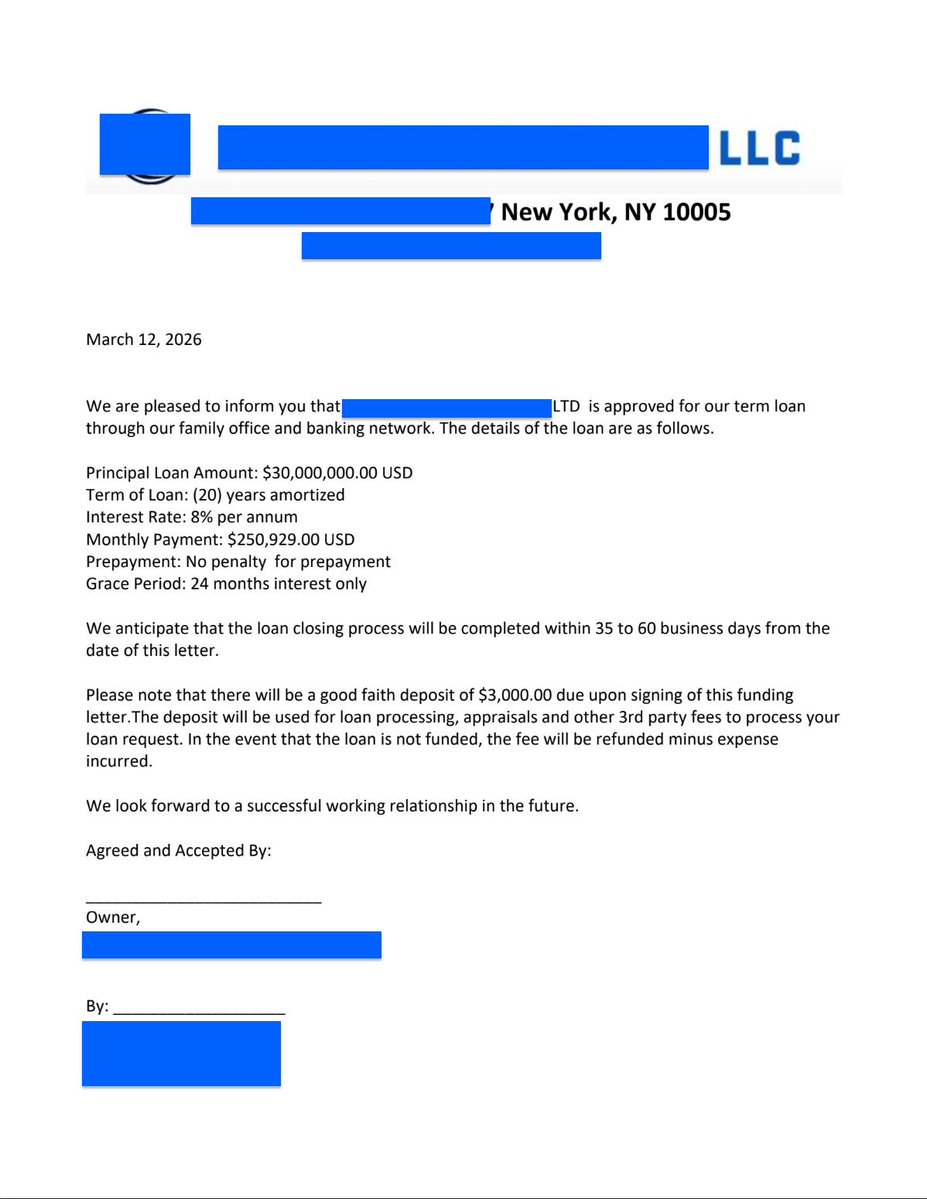
🥱 too easy the content pipeline is incredible, just shit posting $30M termsheets and $90K demand gen deals for now.
Termsheetinator tweet media
Termsheetinator@termsheetinator

Aside from all the processes, systems and model - what separates a $5K/mo retainer and a $50K/qtr deal owner is balls and audacity. Charging anything under $50,000 pisses me off. DPP's first deal was $40,000 which was very upsetting Their second deal is $50,000 The world is back in perfect harmony In this life, there's no "receiving" - you have to take it. If you want a deal to close, you need to push the deal across the line. If you want to invest your excess cash, but you've never done it before and you're scared, you have to just tell yourself to shut up and make the big transfer. The world is full of scared retards who don't know whats best for them, clients heavily included. Half the time I feel like a doctor feeding medicine to my children, they don't want it, but I know it's best for them to take it. Best way to become extremely aggressive in life and essentially dominate everything in your proximity is to have good intentions. Once you understand that your intent is positive, you want the best outcome for yourself and the person you're dealing with, you have the permission to be extremely aggressive with pursuing it. And that's what allows you to win, having good intentions, star with being aware of what those intentions are, and then don't allow yourself to be passive with outcomes. You need to be extremely aggressive, you need to take what you deserve and what you want.

English
0
0
6
1.1K
Termsheetinator
Termsheetinator@termsheetinator·
Aside from all the processes, systems and model - what separates a $5K/mo retainer and a $50K/qtr deal owner is balls and audacity. Charging anything under $50,000 pisses me off. DPP's first deal was $40,000 which was very upsetting Their second deal is $50,000 The world is back in perfect harmony In this life, there's no "receiving" - you have to take it. If you want a deal to close, you need to push the deal across the line. If you want to invest your excess cash, but you've never done it before and you're scared, you have to just tell yourself to shut up and make the big transfer. The world is full of scared retards who don't know whats best for them, clients heavily included. Half the time I feel like a doctor feeding medicine to my children, they don't want it, but I know it's best for them to take it. Best way to become extremely aggressive in life and essentially dominate everything in your proximity is to have good intentions. Once you understand that your intent is positive, you want the best outcome for yourself and the person you're dealing with, you have the permission to be extremely aggressive with pursuing it. And that's what allows you to win, having good intentions, star with being aware of what those intentions are, and then don't allow yourself to be passive with outcomes. You need to be extremely aggressive, you need to take what you deserve and what you want.
Termsheetinator tweet media
Termsheetinator@termsheetinator

ANOTHER STUDENT WIN - $40K B2B ENGAGEMENT: I'm currently waiting up my car to drive to the airport to spend the weekend with my other student who closed $100,000 in Q4 of last year while writing up the success story of this other students $40K deal. Advisory Incubator™ is slowly becoming responsible for nearly 7 figures in top line revenue and will only continue to grow bigger and bigger. There's not a SINGLE model that comes even REMOTELY close to the one I built by hand, brick by brick, call by call. Our engagements have a performance feature that's bound to no window of time, we always unlock the second tranche of budget - These guys also have 1-2 other deals in the pipeline near close. If you're tired of participating in the race to the bottom then you need to become an Orchestrator.

English
0
0
12
2.3K