uncoveredalpha

98 posts

uncoveredalpha banner
uncoveredalpha

uncoveredalpha

@uncovered_alpha

Ex-sell side/buy side. Spent years writing research nobody read on stocks everybody owned. Now writing research people actually want on stocks nobody covers.

England, United Kingdom شامل ہوئے Nisan 2026
145 فالونگ459 فالوورز
uncoveredalpha
uncoveredalpha@uncovered_alpha·
The “Claude kills Bloomberg” take is recycled hot-air that misunderstands what the Terminal actually sells. Cowork and live artifacts are impressive productivity layers, but they are dashboarding tools sitting on top of your data — not a replacement for the proprietary data fabric, network, and execution plumbing
English
1
0
14
1.2K
Ejaaz
Ejaaz@cryptopunk7213·
my god. anthropic casually going after bloomberg terminal and every single data tracking provider under the sun 😂 bloomberg terminal charges $24K per seat this could affect major data platforms like DataDog, Google analytics, CRM dashboards and sooo much more Anthropic is building the control center for every single enterprise company unbelievable
Claude@claudeai

In Cowork, Claude can now build live artifacts: dashboards and trackers connected to your apps and files. Open one any time and it refreshes with current data.

English
101
57
1.6K
514.5K
uncoveredalpha
uncoveredalpha@uncovered_alpha·
To clarify — the 4% spread and 75-yr CAP are SBUX-specific. The 70+ CAP is market-implied from the current multiple, not my underwriting assumption. A 4% spread is actually not unusual for franchisors. McDonald’s, for example, runs asset-light with refranchised royalty streams, and its after-tax ROIC has historically sat in the high-teens to low-20s versus a WACC in the 6–8% range — implying a spread materially wider than 4%. Both Yum Brands! and Domino’s would have ROIC-WACC spreads above 4% too. SBUX’s 4% spread doesn’t mean the market is pricing dominance, its pricing duration of a mediocre spread. If Niccol restores ROIC to 16%, the implied CAP halves to ~37 years — much more defensible. The Excel in the Substack post lets you flex both inputs.
English
0
0
0
16
KipsBayKapital
KipsBayKapital@KipsBayKapital·
@uncovered_alpha 4% ROIC-WACC is relative large, especially for a restaurant. Are you sure your calculations are correct, 70+ CAP seems extremely unlikely
English
1
0
0
27
uncoveredalpha
uncoveredalpha@uncovered_alpha·
I decomposed what the market is really pricing into $MCD, $CMG, and $SBUX using the Competitive Advantage Period framework — a tool from Mauboussin & Johnson (1997) that most investors have never heard of. Every stock price embeds an assumption about how many years a company can earn above its cost of capital. That duration is the CAP. 1/ The results across three restaurant stocks I used to cover on the sell side: McDonald’s — 17 years. ROIC 18%, WACC 6%, 12% spread. 60% of the EV is steady-state value. The market is pricing continuity on a 70-year moat. Conservative and probably right. Chipotle — 30 years. Same 12% spread, but each year of CAP contributes only $830M vs MCD’s $4,700M. The duration demand is quietly extreme. 2/ Starbucks — 75 years. Sounds absurd. But the 4% ROIC-WACC spread means each year of excess returns adds only ~$1,070M to the EV. The model is diagnosing a narrow spread, not forecasting 75 years of dominance. If Niccol gets ROIC back to 16%, the implied CAP halves to ~37 years. That’s the real bet. 3/ The takeaway: MCD is a compounder priced as a compounder. CMG is a growth story priced for perfection. SBUX is a ROIC recovery trade hiding in plain sight. Every multiple is a duration assumption. The only question is whether you’ve made it explicit. Full post with charts and excel file you can use to adjust assumptions etc on Uncovered Alpha open.substack.com/pub/uncovereda…
English
1
1
13
1.5K
uncoveredalpha
uncoveredalpha@uncovered_alpha·
Honestly, for finance folks without a coding background, Computer is way more approachable — it runs in an isolated environment with a real filesystem and browser, spins up sub-agents, and hands back actual deliverables rather than snippets you have to stitch together yourself. Even with coding experience I’ve found Claude Code frustrating in comparison; it lives in the terminal and assumes you’re fluent in the CLI, whereas Computer just executes the goal end-to-end. The Skills system is the real unlock for me — reusable instruction sets / playbooks that teach Computer how to do recurring tasks, so you build up a personal library of workflows you can redeploy in one click. Plus with the Comet integration it can take full control of the browser and act inside any logged-in app without needing MCPs or custom connectors. Not sponsored — if something better shows up I’ll switch, but right now nothing else matches it for research-heavy workflows
English
1
0
0
20
Will
Will@Will421973·
@uncovered_alpha How do you use computer differently to any other LLM?
English
1
0
1
31
uncoveredalpha
uncoveredalpha@uncovered_alpha·
A few anecdotes from covering consumer that mirror this: Picking up a new name used to mean 10-12 weeks of S-1 archaeology, sell-side primers, and sheepish IR calls before I felt comfortable in a management meeting. Now, I can see a scenario where onboarding to say a restaurant franchisor I’d never modeled — using Perplexity computer to stress-test my understanding of franchisee unit economics, royalty waterfalls, and the ad fund mechanics against the 10-K. By week 2-3 you could be asking the CFO about G&A reinvestment cadence rather than burning the call on definitions. I’ve recently started running adversarial dialogues — have Perplexity computer role-play a skeptical PM, a franchisee, a former ops exec — and it surfaces the second-order questions (cannibalization from remodels, DMA-level media efficiency, co-op politics) that used to only emerge after years of pattern recognition. It’s not a substitute for the real operator call, but it means the real call is spent extracting alpha, not building scaffolding. Agree on the red queen dynamic, but your point stands: most coverage is a mile wide and an inch deep. The people who use these tools with genuine epistemic discipline (not just to generate content, but to find their own confusion and resolve it) will compound faster than anyone did in the pre-LLM era. Best time ever to be junior and hungry. @lefttailguy
illiquid@lefttailguy

I think its a better time than ever to be a junior investor, given you have the insatiable curiosity, energy, and epistemic humility, meta-rationality (cc: @alixpasquet) required to use these tools well. Now more than ever before, junior investment professionals can ramp/reach the frontiers of knowledge on an industry without nearly as much handholding from an experienced mentor. The amount of detail with which you can interrogate technologies, business models, strategic dynamics, industry history, analogous situations, market structure questions, etc. with Claude is amazing. You can create, simulate and read the equivalent of the "WME mailroom" (see Ovitz, Barry Diller, etc.) on every single investment situation, business, industry, if you have the discipline to do so. Previously, as you were reading through primary source material (particularly on an unfamiliar name/business model/industry), you had all of these conceptual questions and confusions arise. Maybe you went to sell side primers or other industry research to clarify your confusion, maybe you called IR, maybe you asked your mentor (who got annoyed because they are busy). Worst case you broadcasted your confusion during a management meeting when you could have been using that time to elicit scarce, alpha-generating context. In some cases, you never clarified your confusions at all and they manifested as permanent holes in your mosaic. Now you can simply mine Claude to give you clarity around those questions and concepts until you have some semblance of a high-fidelity understanding. You can have it point you to related source material that would give you an even more synoptic understanding of the topic at hand. By doing this rigorously, you 10x your ability to visualize an investment situation and have a prepared mind going into the parts of the investment process that are alpha generating. Of course, this "clear understanding" is simply a hypothesis that can be falsified and updated by new information. But having a clear understanding that's falsifiable is better than having a muddled understanding or no understanding at all. Of course this can become a red queens race where everyone else also does this and this level of understanding becomes table stakes. But I really don't think most people understand their coverage to the depth at which they claim to. Actually doing the work with these tools should confer an advantage.

English
8
7
156
51.9K
uncoveredalpha
uncoveredalpha@uncovered_alpha·
Agree on (1); and the macro backdrop reinforces it. A 12% US labour shortage from demographics means even a 40% wipeout in professional services/finance still leaves labour scarce. The binding constraint doesn’t seem to be unemployment; it’s the widening gap between who produces (increasingly agents) and who consumes (increasingly retirees). That’s why the PM-role change you expect at post-5yrs probably arrives alongside a much bigger fiscal/state footprint
English
0
0
0
260
Gappy (Giuseppe Paleologo)
My current predictions for the next 5 years are: 1. No significant HC reduction. A 10% in tech HC is possible. But the heavy-tailification of HF size distribution will continue, with the largest ones growing in size. 2. No alpha compression. Alpha moves. It “compresses” for the losers. Saying 1. because a) five years is a short time, and b) the financial industry is abnormally innovation-averse, much more than what outsiders surmise. Beyond five years, I can imagine a drastic, *drastic* change in the role of the PM. But it will be resisted tooth and nails because it will be very painful. It’s still vague in my head, and if it were well defined I would not tweet how anyway. But I look forward to it. I might be the rare Greek who fights on the side of the Barbarians. Prepare the 🍿, Brett. In some form you’ll be very impacted too. Maybe for the better.
Brett Caughran@FundamentEdge

In the 1995-2010 era, it took a lot of bodies to run a scaled Tiger-Cub strategy. 100+ headcount was common across research, back office & trading (starting in '08, I was one of a large research team) Largely due to technology, that headcount requirement declined dramatically: what once had to be built in-house was increasingly offered in a more effective and cost efficient matter on an outsourced basis with technology. Traders, in particularly, deeply understand the impact of technology from 1995-2015 on their role. You no longer needed a full time person sourcing short borrow or a full time person doing forensic accounting. This happened both on front office & back office roles: the idea that you need seven investors on a consumer team to cover that space seems anachronistic even before LLMs (I was one of seven). You see similar approaches now operated with ~15 people across front & back office. This efficiency benefit fed back into alpha compression...as headcount barriers to entry dissipated, traditional alpha in Tiger style investment approaches compressed as it was easier to practice that particular approach to investing. Today, the multi-strategy approach to long/short investing is ascendant. And it has been a very headcount intensive approach, with the large firms employing 3,000-5,000+ bodies. Is the technology impact to Tiger style investing a relevant prior for the next 5 years? With AI, can the multi-manager firm of the future operate with 500 bodies instead of 5,000? And what does that mean for alpha pools & the "peak pod" debate, talent demand and the future of fundamental investing?

English
12
14
276
63.8K
uncoveredalpha
uncoveredalpha@uncovered_alpha·
Think you’re missing the point. Plenty of competent investors can do this without AI — not the debate. My point, tied to the original post, was about junior development : it lets juniors get reps in and walk into the PM Q&A with a more refined thesis and fewer holes in their assumptions. That back-and-forth is the value — especially when your PM doesn’t have time to dig into every driver and expects you to credibly defend assumptions under a grilling
English
0
0
8
392
theoldrenown
theoldrenown@theoldrenown·
Hot take. If you need to do all this to realise your SSS assumption is aggressive/conservative, you’re ngmi. Many such cases of people ‘discovering’ AI use cases for stuff competent people have been doing for the last decade…
uncoveredalpha@uncovered_alpha

I’ve had a few requests for prompts I use and have found success with, so here’s one I like for stress‑testing a single assumption in a 3‑statement model.
 The basic idea: upload your own model (I like Perplexity Computer for this task and I pre-select the GPT-5.4 model -seems the best for excel based tasks), then tell the assistant which assumption you want to attack — for example, Chipotle same‑store sales growth — and have it (1) benchmark that assumption versus history and category data, and (2) role‑play a skeptical PM to surface second‑order questions. You either come out with conviction that’s been stress‑tested, or a list of the 3–4 things you actually need to diligence. Example prompt: stress‑testing a same‑store sales assumption I’m going to upload my own 3‑statement model for Chipotle (CMG) that includes an explicit same‑store sales (SSS) assumption by year.
 Your job is to attack one assumption in that model: my base‑case U.S. same‑store sales growth for the next 5 years.
 Step 1 – Read and restate my assumption
 Ingest the uploaded model and identify the line item(s) that represent same‑store sales or comparable restaurant sales growth by year.
 Restate back to me, in plain English, what SSS path I am underwriting (e.g., “you are assuming ~7% SSS in year 1, then 5–6% annually through year 5”).
 Flag any inconsistencies between the SSS assumption and other model drivers (traffic vs. price mix, margin progression, unit growth).
 Step 2 – Historical and industry context check
 Using public data from SEC EDGAR or company-specific press releases, summarize Chipotle’s historical SSS and traffic/price mix over the last 10–15 years, highlighting periods of high growth, normalization, and drawdowns
 Compare my forward SSS assumptions to: Chipotle’s own historical SSS distribution and volatility.
 Recent SSS trends for major QSR/fast‑casual peers (McDonald’s, Taco Bell, Starbucks, Cava, etc.), noting whether the category is in broad acceleration, normalization, or deceleration.
 Tell me explicitly: relative to that backdrop, is my SSS path aggressive, conservative, or in line with history and peers?
 Step 3 – Structured adversarial role‑play I want you to run adversarial dialogues where you role‑play different skeptical PMs who each attack my SSS assumption from a distinct angle.
 For each persona:
 Run a short dialogue (5–10 exchanges) between that persona and me (as the analyst) focused only on whether my Chipotle SSS assumption is reasonable.
 Each persona should ask pointed, practical questions that a real operator or PM would ask, and surface second‑order issues rather than generic “what if growth slows?” prompts.
 Step 4 – Synthesis and decision
 From all personas, extract the 5–10 most important challenges to my SSS assumption, grouped into themes (e.g., “category traffic headwinds,” “unit growth cannibalization,” “LTO fatigue,” “labor/throughput ceiling”).
 For each theme, tell me: How big a swing factor it is to my SSS (e.g., could it move SSS by ±200 bps?). What specific evidence I should diligence with management or third‑party data (e.g., recent weekly traffic trends, saturation analysis, new‑unit AUV cohorts).
 Conclude with a one‑page style summary: “If you keep your current SSS assumption, here is the conviction statement you should be comfortable making.” “If you are not comfortable with that, here are the 3–4 targeted diligence items that would most update the SSS view.” Important constraints
 Do not rewrite or “fix” my entire model; stay focused on SSS and variables directly tied to SSS (traffic, pricing, mix, throughput, unit growth).
 Be explicit when you are inferring or generalizing from industry data vs. citing Chipotle‑specific history


English
2
0
37
13.3K
uncoveredalpha
uncoveredalpha@uncovered_alpha·
1/ Caveat on the prompt above: it’s designed to be iterative. You run it, take the fair pushback, adjust the model, and run it again. Your same-store sales (SSS) path in round 3 should look sharper than round 1 — either lower, higher, or same but much better defended. 2/ And you will disagree with some of the pushback. That’s the point. Defend it. If you can’t articulate why you’re keeping the assumption under pressure from a skeptical PM, you won’t be able to defend it in a real Q&A session either.
English
0
0
1
478
uncoveredalpha
uncoveredalpha@uncovered_alpha·
I’ve had a few requests for prompts I use and have found success with, so here’s one I like for stress‑testing a single assumption in a 3‑statement model.
 The basic idea: upload your own model (I like Perplexity Computer for this task and I pre-select the GPT-5.4 model -seems the best for excel based tasks), then tell the assistant which assumption you want to attack — for example, Chipotle same‑store sales growth — and have it (1) benchmark that assumption versus history and category data, and (2) role‑play a skeptical PM to surface second‑order questions. You either come out with conviction that’s been stress‑tested, or a list of the 3–4 things you actually need to diligence. Example prompt: stress‑testing a same‑store sales assumption I’m going to upload my own 3‑statement model for Chipotle (CMG) that includes an explicit same‑store sales (SSS) assumption by year.
 Your job is to attack one assumption in that model: my base‑case U.S. same‑store sales growth for the next 5 years.
 Step 1 – Read and restate my assumption
 Ingest the uploaded model and identify the line item(s) that represent same‑store sales or comparable restaurant sales growth by year.
 Restate back to me, in plain English, what SSS path I am underwriting (e.g., “you are assuming ~7% SSS in year 1, then 5–6% annually through year 5”).
 Flag any inconsistencies between the SSS assumption and other model drivers (traffic vs. price mix, margin progression, unit growth).
 Step 2 – Historical and industry context check
 Using public data from SEC EDGAR or company-specific press releases, summarize Chipotle’s historical SSS and traffic/price mix over the last 10–15 years, highlighting periods of high growth, normalization, and drawdowns
 Compare my forward SSS assumptions to: Chipotle’s own historical SSS distribution and volatility.
 Recent SSS trends for major QSR/fast‑casual peers (McDonald’s, Taco Bell, Starbucks, Cava, etc.), noting whether the category is in broad acceleration, normalization, or deceleration.
 Tell me explicitly: relative to that backdrop, is my SSS path aggressive, conservative, or in line with history and peers?
 Step 3 – Structured adversarial role‑play I want you to run adversarial dialogues where you role‑play different skeptical PMs who each attack my SSS assumption from a distinct angle.
 For each persona:
 Run a short dialogue (5–10 exchanges) between that persona and me (as the analyst) focused only on whether my Chipotle SSS assumption is reasonable.
 Each persona should ask pointed, practical questions that a real operator or PM would ask, and surface second‑order issues rather than generic “what if growth slows?” prompts.
 Step 4 – Synthesis and decision
 From all personas, extract the 5–10 most important challenges to my SSS assumption, grouped into themes (e.g., “category traffic headwinds,” “unit growth cannibalization,” “LTO fatigue,” “labor/throughput ceiling”).
 For each theme, tell me: How big a swing factor it is to my SSS (e.g., could it move SSS by ±200 bps?). What specific evidence I should diligence with management or third‑party data (e.g., recent weekly traffic trends, saturation analysis, new‑unit AUV cohorts).
 Conclude with a one‑page style summary: “If you keep your current SSS assumption, here is the conviction statement you should be comfortable making.” “If you are not comfortable with that, here are the 3–4 targeted diligence items that would most update the SSS view.” Important constraints
 Do not rewrite or “fix” my entire model; stay focused on SSS and variables directly tied to SSS (traffic, pricing, mix, throughput, unit growth).
 Be explicit when you are inferring or generalizing from industry data vs. citing Chipotle‑specific history
uncoveredalpha tweet mediauncoveredalpha tweet mediauncoveredalpha tweet mediauncoveredalpha tweet media
Gustavo Copelmayer@guscopelmayer

@uncovered_alpha Give us some sample prompts you are working with

English
1
1
86
25.8K
uncoveredalpha
uncoveredalpha@uncovered_alpha·
I’ve had a pretty similar experience on HOG — strong reactions, not much nuance. That’s usually a signal worth paying attention to. When sentiment gets this one-sided, it often says more about positioning and narrative fatigue than underlying fundamentals. I’ve found it a much more interesting setup the deeper I’ve dug in.
English
0
0
0
68
Lee Roach
Lee Roach@leevalueroach·
$HOG is up over 30% since I published this.
Lee Roach@leevalueroach

Every time I post about this company on X, the replies come fast and they come ugly. “Boomer brand.” “Going to zero.” “Who even uses these products anymore?” I have been called an idiot more times on this one name than any other idea I have shared publicly in the last two years. I love it. There is a principle that has guided value investors since Benjamin Graham first wrote it down: the market is not always right, and the times it is most wrong are precisely the times when everyone agrees on the narrative. When a stock has nearly 14% of its float sold short, when the comment section fills with contempt, when the sell-side has a consensus “Hold” and the price is near a multi-year low, that is not evidence the thesis is wrong. That is evidence that expectations have been reset to a level where almost any improvement becomes a positive surprise. Here is what I will tell you in the free section, and it is already more than most people following this story have bothered to figure out. This company is being valued by almost everyone, including the sell-side analysts who cover it daily, using a completely wrong enterprise value. Not slightly off. Not a rounding error. The number most investors are looking at is roughly five times higher than the real number. The reason is a balance sheet technicality that takes about twenty minutes to work through, and almost nobody has done it. When you do the work and strip out the non-recourse financing subsidiary that has nothing to do with the core operating business, you find a company trading at an enterprise value of roughly one billion dollars on a business that has historically generated hundreds of millions in annual EBITDA and billions in revenue. You also find something else. A new CEO who just bought stock in the open market with his own money. A board member who did the same. Three hundred and forty-seven million dollars in share buybacks completed in 2025 alone, retiring eleven percent of shares outstanding in a single year. An investor day coming in May that could be the most important single catalyst this company has seen in a decade, specifically because management has signaled the return of the one product that dealers loved, that entry-level riders needed, and that the previous CEO killed for reasons that had more to do with his own preferences than with any rational business logic. The previous CEO is gone. He was pushed out after a proxy fight. The new man came from a consumer brand background, flew to Milwaukee, sat with dealers, and listened. His first moves were to stop doing the things that were destroying the business and start doing the things that the people actually closest to the product had been begging for. Meanwhile, there is a pension fund sitting on the balance sheet that is overfunded by nearly half a billion dollars. There are four owned manufacturing facilities plus a corporate headquarters building that would take hundreds of millions of dollars to replace. There is over a billion dollars in net cash at the parent company, completely separate from the financing subsidiary, that most investors do not realize is there because they are reading the consolidated statements without doing the work of separating the pieces. Nearly 14% of the float is sold short. That is not a warning sign. That is a coiled spring. I am a member of the Ben Graham school. I do not buy on hope. I buy on math. The math here, when you do it correctly, is among the most compelling I have seen in years on a company of this size, this brand recognition, and this operating history. The full analysis is below for paid subscribers. It covers the balance sheet deconsolidation in detail, the real enterprise value, the valuation case, every catalyst I can see between now and year-end, and what I think this is worth on a conservative recovery scenario.

English
4
1
31
5.6K
uncoveredalpha
uncoveredalpha@uncovered_alpha·
100%. Spent years on the sell-side and this is genuinely underrated. You’re on the phone with 40+ buy-side seats a quarter, many with a different variant view, different time horizon, different long/short thesis, different pet KPI. The sheer diversity of pushback is something you simply can’t replicate in a buy-side seat covering the same 15 names. The LLM angle doesn’t replace that — but it does let you simulate a version of it before you’ve earned the call list. Juniors without the sell-side firehose can now at least rehearse the adversarial dialogue. Still not the real thing, but a better starting point than solo pattern-matching on 10-Ks.
English
1
0
1
99
Matt McClintock
Matt McClintock@MattJMcClintock·
@lefttailguy @uncovered_alpha One of the nice things about the sell-side is you get a large number of reps from a wide range of investment perspectives on the names that you cover.
English
1
0
2
76
uncoveredalpha
uncoveredalpha@uncovered_alpha·
Appreciate that Brett, love your stuff. I think the big unlock for juniors is comprehension durability — because you’re interrogating concepts until they click (rather than nodding through a primer), the knowledge actually sticks. My rough heuristic: if you can’t explain the mechanic back to the LLM in your own words and have it not find a hole, you don’t really know it yet. That feedback loop is what the old apprenticeship model delivered, just 10x slower and dependent on whether your MD was in a good mood.
English
1
0
3
312
Brett Caughran
Brett Caughran@FundamentEdge·
Great example here of using AI to both accelerate and deepen comprehension:
uncoveredalpha@uncovered_alpha

A few anecdotes from covering consumer that mirror this: Picking up a new name used to mean 10-12 weeks of S-1 archaeology, sell-side primers, and sheepish IR calls before I felt comfortable in a management meeting. Now, I can see a scenario where onboarding to say a restaurant franchisor I’d never modeled — using Perplexity computer to stress-test my understanding of franchisee unit economics, royalty waterfalls, and the ad fund mechanics against the 10-K. By week 2-3 you could be asking the CFO about G&A reinvestment cadence rather than burning the call on definitions. I’ve recently started running adversarial dialogues — have Perplexity computer role-play a skeptical PM, a franchisee, a former ops exec — and it surfaces the second-order questions (cannibalization from remodels, DMA-level media efficiency, co-op politics) that used to only emerge after years of pattern recognition. It’s not a substitute for the real operator call, but it means the real call is spent extracting alpha, not building scaffolding. Agree on the red queen dynamic, but your point stands: most coverage is a mile wide and an inch deep. The people who use these tools with genuine epistemic discipline (not just to generate content, but to find their own confusion and resolve it) will compound faster than anyone did in the pre-LLM era. Best time ever to be junior and hungry. @lefttailguy

English
1
2
92
37.6K
uncoveredalpha
uncoveredalpha@uncovered_alpha·
Exactly this. The rep problem is the hidden bottleneck in traditional coverage — even on a name you’ve followed for years, how many times have you actually been forced to defend the terminal margin assumption out loud, against a smart pushback, in real time? Maybe a handful. Earnings prep, the odd PM grilling, a couple of management meetings a year. With the LLM as a sparring partner, you can run that drill nightly. I’ll pick one core assumption — say, “this concept can sustain mid-single-digit unit growth for a decade” — and have it attack from five angles: site saturation math, cohort AUV decay, labor availability in tier-3 markets, franchisee ROIC hurdles, format fatigue. You come out the other side either with conviction that’s been stress-tested, or with a crisp list of the three things you actually need to diligence with operators. Now you can shortcut a meaningful chunk of it, provided you’re honest about where the model’s pushback is weak and supplement with real primary work.
English
0
1
19
5.3K
illiquid
illiquid@lefttailguy·
@uncovered_alpha This sounds really fun. The role play piece is a really great way to build automaticity. Because for most names in coverage, you simply don't get enough reps being pressure tested on the core assumptions to understand them like the back of your hand. Or it takes a long time.
English
2
0
10
2.3K
uncoveredalpha
uncoveredalpha@uncovered_alpha·
The week that was This is a fast-moving, squeezy market, so it’s worth laying out the two competing narratives I have been hearing in the market. Bulls The bull case leans heavily on mechanics and technicals. CTAs were mega-short and trade risk parity, meaning falling vol forces them to buy. Vol has collapsed from 31 to 17 in two weeks, they’ve been aggressive buyers, and while already overweight, they still have room to add. Every PB desk is flagging this to fundamental investors, who are in no mood to fight a losing short-term battle, so sellers step aside just as buyers accelerate. Layer on a meaningful liquidity boost from China, the Fed expanding its balance sheet, and the TGA drawdown, and the mechanical tailwind is substantial. The narrative overlay is arguably bigger. Through the Iran war, the market has actually gained conviction in the AI buildout — effectively putting the “is AI a bubble?” debate to bed. That’s massive, and it’s the single biggest driver of the US tape. The buildout is also proving harder and longer than expected, which is bullish for software (a staple of every short basket) because it extends duration on terminal values, and bullish for suppliers and contractors as cycles lengthen. So the most important part of the market rips. On top of that, the market is pricing an end to the Iran war, and Trump’s meeting with Xi next month (the first of four over 14 months) is seen as constructive — Trump needs rare earths, magnets, and solar, so he has to play nice. Life’s good, and the market keeps climbing the wall of worry. Bears Bears remain the consensus, in my view. They genuinely don’t understand why markets are up this much and see complacency across the risk stack. We started the year with Goldilocks — EU accelerating, US sustaining growth, rate cuts on the horizon. That’s the holy trinity. Then the war hit: growth expectations came down on the oil shock, and rate cuts got pushed out. Incrementally more negative, yet markets are higher. The counter is that most investors still like their books here, which suggests prior levels were simply too low. The Earnings Test Bulls are clearly winning — liquidity and technicals tend to trump fundamentals. The interesting question is how earnings season plays. Plenty of names now look fundamentally challenged by recent events but have almost fully round-tripped. Will the market look through a soft print in a week or two? Recent history has been unkind to weak estimate momentum. Conversely, beneficiaries like oil stocks aren’t pricing much of the upside — do they rip on strong numbers? This is a duration point: the market has been short-term focused on estimate momentum, and it may now be terming out to the medium term. We’re also seeing multi-decade highs in the US Long/Short momentum basket, reconfirming the long-term uptrend. US momentum continues to correlate very tightly with AI Winners vs Losers.
English
0
0
2
470
uncoveredalpha
uncoveredalpha@uncovered_alpha·
Thanks, how would your playbook change if we start to see second‑round effects – e.g., 1y/2y inflation swaps staying bid while wage growth or core services firm back up – so that the ‘short‑term supply shock’ morphs into something more demand‑driven? Which cross‑asset tell would you treat as the earliest ‘you’re wrong, this isn’t just supply’ signal: breakevens, the dollar, or long‑end reals?
English
0
0
0
23
uncoveredalpha
uncoveredalpha@uncovered_alpha·
IMO $MCD entering this category is far compelling than $SBUX. $MCD can compete on lower priced products given scale and value positioning. $SBUX is facing premium competition from 7Brew and $BROS which I think have done an excellent job at capturing the Gen Z customer in this category. I don’t think $SBUX can change that dynamic with some frankly overpriced energy refreshers…
English
1
0
0
361
McFranchisee
McFranchisee@McFranchisee·
The best thing about this new beverage trend, @McDonalds already had the necessary & essential components for this type of launch. McD has the world’s best drinks already, with under $10k in smallwares and a handful of new beverage SKU’s - we are adding a new line of business in the hottest trend in our current footprint.
McFranchisee tweet media
David Henkes@davidhenkes

I tend to agree with @jonathanmaze here on the impact of @McDonalds getting heavier into the beverage space. This is a category (cold beverages in particular) that has shown tremendous resilience and indeed is outperforming all restaurants and foodservice in terms of growth. 1/

English
7
0
44
28.5K
uncoveredalpha
uncoveredalpha@uncovered_alpha·
How will McDonald’s affect the beverage market? Great article by @jonathanmaze. As a former restaurant sell side analyst I enjoyed reading this. I think the natural assumption is $MCD takes share as it has the largest drive-thru network in the country and the format lends well to the sale of energy based beverages. But @jonathanmaze makes some great points on $MCD entry into other categories that did not cause market share losses to incumbents. Rather their entry drove awareness and likely accelerated growth in the category. IMO $MCD entering this category is far compelling than $SBUX. $MCD can compete on lower priced products given scale and value positioning. $SBUX is facing premium competition from 7Brew and $BROS which I think have done an excellent job at capturing the Gen Z customer in this category. One thing that was odd with the new $MCD energy drinks launch was the decision to use Red Bull instead of Monster given $MCD >70 year partnership with $KO. Wonder if $MCD is trying to reduce concentration from $KO in favor of better pricing? restaurantbusinessonline.com/financing/how-…
English
0
0
1
189
uncoveredalpha
uncoveredalpha@uncovered_alpha·
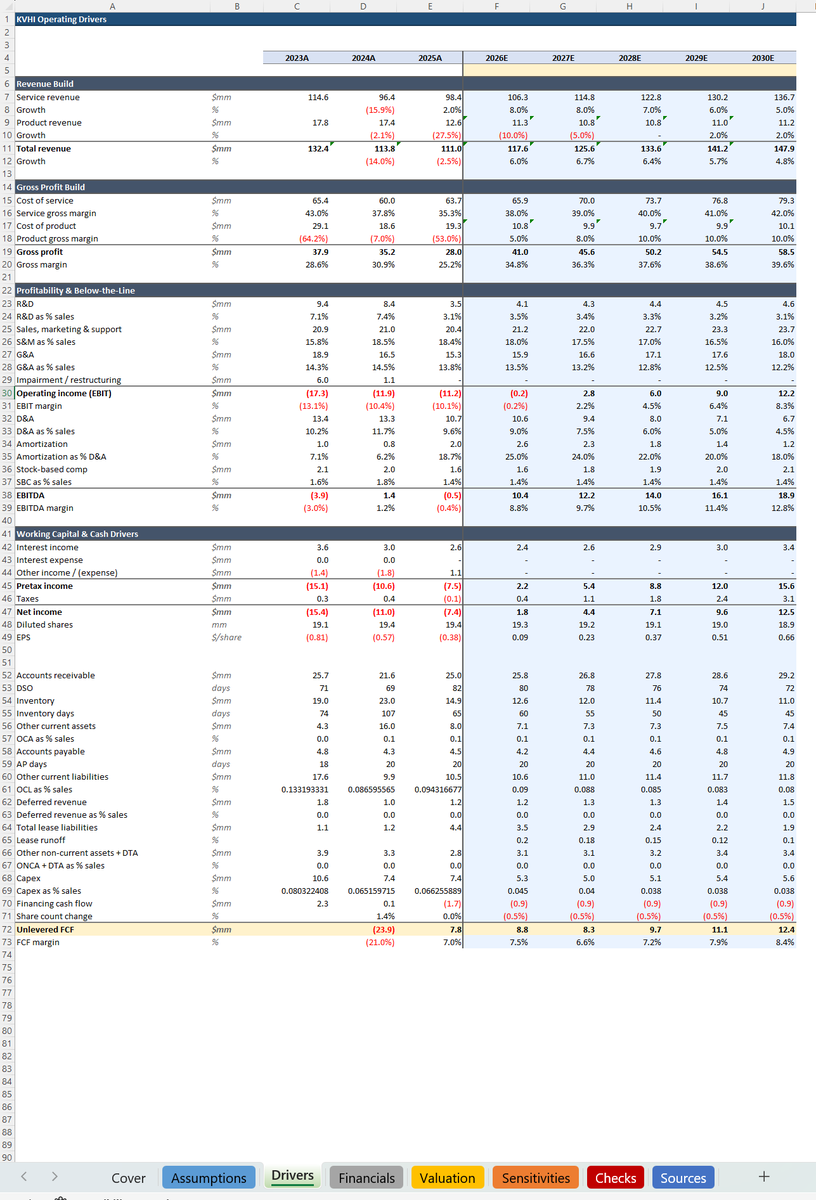
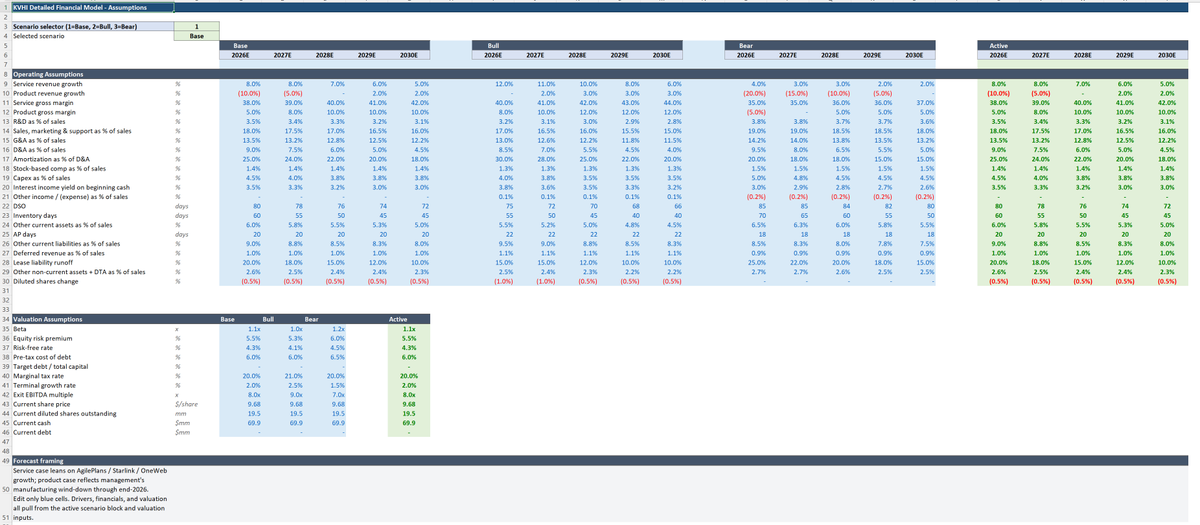
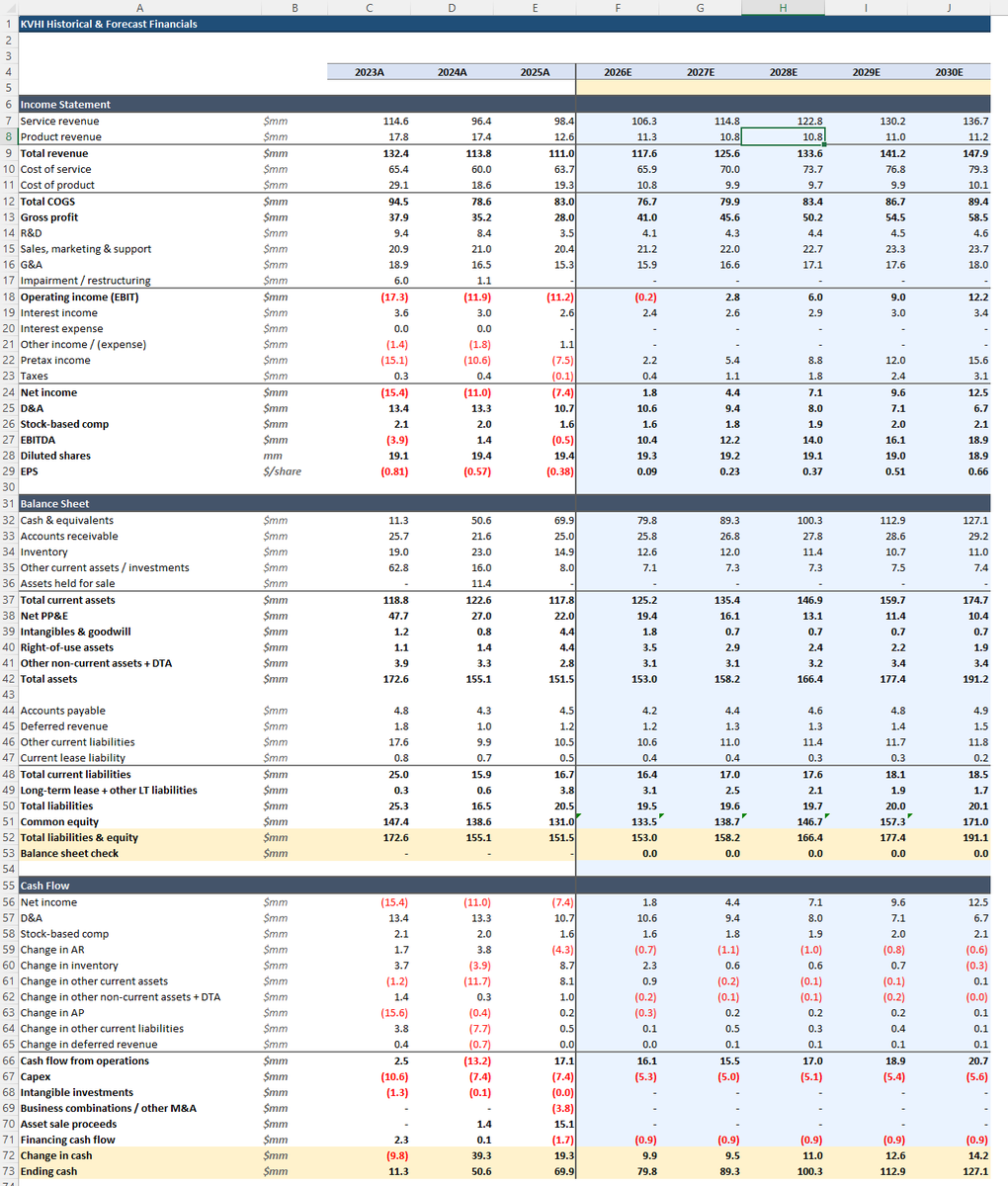
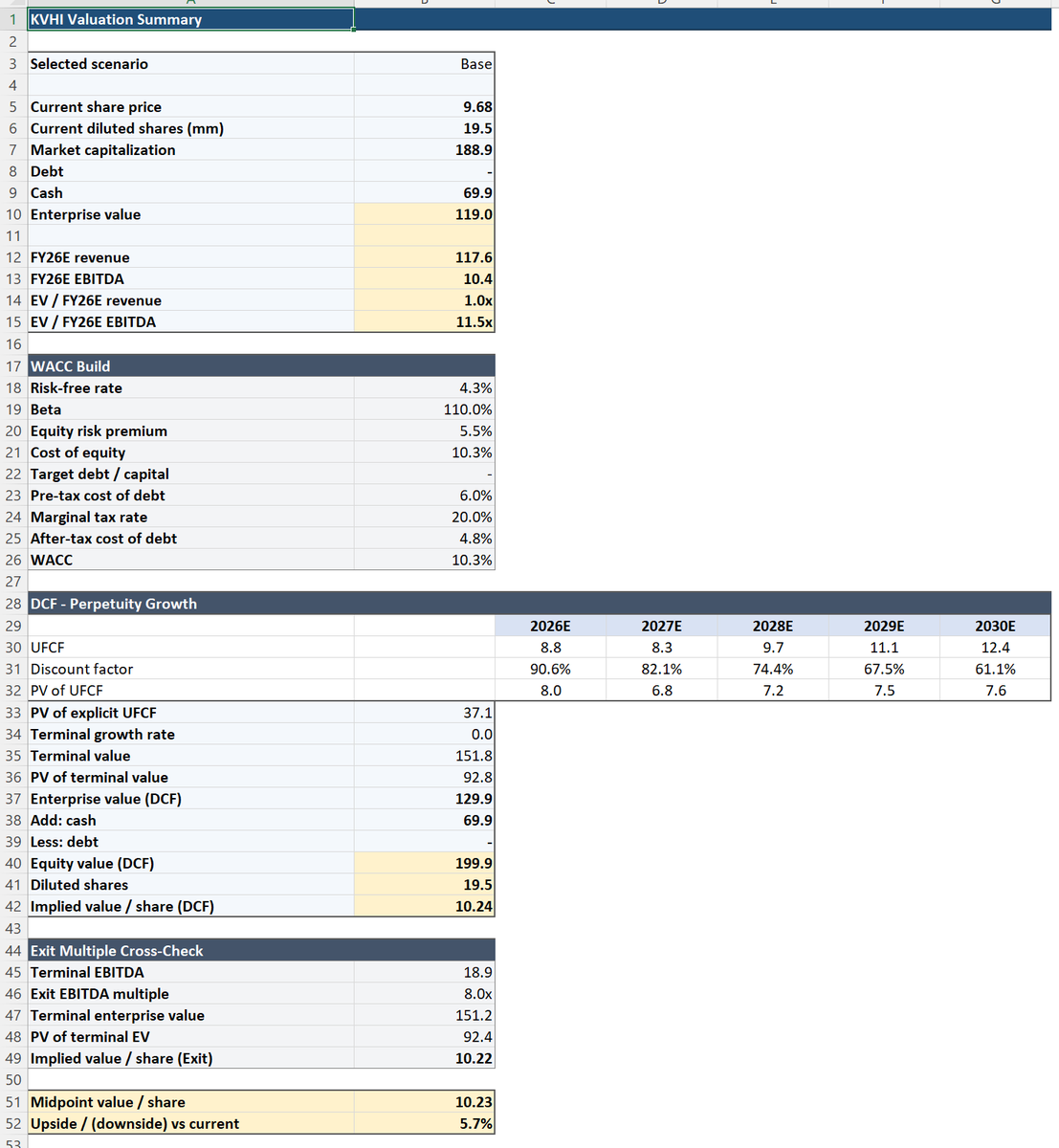
@dan_tmt Throw in quarterlies and a detailed revenue build then it starts to become more impressive
English
1
0
0
48
uncoveredalpha
uncoveredalpha@uncovered_alpha·
The most interesting framing I've come across on the AI-and-jobs debate: The challenge isn't mass unemployment. Demographics almost certainly prevent that. The US faces a 12% labour shortage over the next decade from ageing and collapsed immigration alone. Even a brutal 40% wipeout of professional services and finance jobs only narrows that gap to -5%. Labour will still be scarce. The real problem is a growing disconnect between who consumes and who produces. Demographics are adding consumers that don't produce (retirees). AI is adding producers that don't consume (agents, bots, automated systems). In a textbook economy, households supply labour to firms and get goods and services back. The loop is closed. But when a growing share of production doesn't flow through human wages, and a growing share of consumption isn't backed by human production, you need something to bridge the gap. That something is government — either via transfers or via tax and subsidy. Either way, fiscal footprints get bigger. The state's role in directing the factors of production expands. That's the structural regime shift for markets — not an unemployment crisis, but a redistribution crisis.
English
0
0
1
132