

Walter Whyte
3.3K posts
Walter Whyte
@walterwhyte
This Dude abides
Here, there and everywhere... شامل ہوئے Haziran 2010
229 فالونگ76 فالوورز
@sarma @audible_com @audibleuk @iTunes @AppleBooks This was supposed to be a thumbs up 👍, but for some reason it didn’t work.
English

Finally. 🤪📚🤓🎧 I got the audio out for my memoir: The Girl with the Duck Tattoo. THANK YOU I LOVE YOU. On @audible_com @audibleuk and @iTunes / @AppleBooks … Audible link is here: amzn.to/47SXe8m


English
@LoudOutside Imagine the tragedy had she lost her grip and dropped 3 feet to the ground.
English

The real hero that day was a young boy who rushed to help his mother after she became stuck above the ground while working on the garage door.
Acting quickly, he managed to lift the heavy ladder on his own so she could get down safely
English
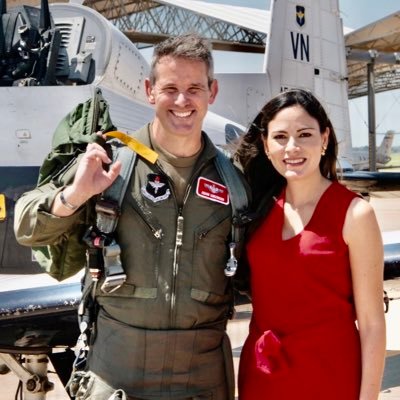
What a thin skinned tiny little baby and an absolutely unqualified disgraceful ass canoe.
Trump will be forever seen as a low point for America
English

@MattWallace888 You're a fucking clown
King of clickbait right here!
I think you got dropped on your head as a kid you prick
English

🚨 LIVE NOW 🚨 President Trump’s plane SURROUNDED by Fighter Jets as he is rushed to DC 👀
NOTIFICATIONS ON IMMEDIATELY!
I have a very bad feeling right now 😳
English
@Angry_Staffer I’m sure Susan Collins will have much to say about this.
English
Congress: he can’t go to war without us!!!
I mean… technically, you’re right.
Maybe do something about it other than a strongly worded letter.
English

We know that Trump is going to repeat the “I’ve been exonerated on Epstein” line every single day forever because that’s what he does.
Would it be totally outrageous for someone then to simply ask him who it was that exonerated him so we can get some clarification on that?
English

Donald Trump has never publicly threatened to sue Noel Casler. Think on THAT.
NoelCaslerComedy@caslernoel
Trump knows what Andrew knows about him. The breakfast in UK during first term was big tell after Donald denied knowing the former Prince, a past guest at Mar a Lago who most certainly knows Trump is a predator. Hope Andy spills the tea & the beans and toast on our PEDOPOTUS.
English
@esrv21 @LSofiaDim Her post is translated from Spanish. Not her homeland. We’ll see how in favor she is when ICE visits.
English

@LSofiaDim Vendes tu patria por eso !! Pero odias pagar impuestos para ayudara a tu gente de tu pais. No gracias ! Yo no me vendo mi patria por nadie ..
Richmond, CA 🇺🇸 Español

Estados Unidos hace a Dinamarca una oferta de 700.000 millones de dólares por Groenlandia y a cada residente 100.000 dólares por la ciudadanía estadounidense.
¿100 mil dólares para seguir viviendo en sus casas y ser americanos?
¿Dónde firmamos?
Español
@GuntherEagleman Haha! Grandpa fell asleep again and passed gas.
English

BREAKING: Evacuations are underway at The World Economic Forum in the main venue after reports of a strange odor that's causing people to cough.
It's time to get President Trump back to America ASAP!!!
English

Subpoenas are not suggestions—they are enforced by law.
Bill and Hillary Clinton defied their subpoenas and must be held accountable.
This Wednesday, we will begin the process to hold them in contempt of Congress.
No one is above the law.
English
BREAKING 🚨🚨🚨
US Department of Homeland Security release hospital photo of ICE agent who murdered Renee Good after reports of internal bleeding.

English


@FoxNews @MrsErikaKirk She’s doing this while selling a fucking book?!? 🤢
English

HOLIDAY MESSAGE: @MrsErikaKirk shares her — and what would have been Charlie’s — holiday season message:
"Just rest...Love on your babies. Love on your family members. Life is short."
Find Charlie Kirk's final work, 'Stop, in the Name of God,' at 45Books.com.
English
English


🚨 Afghan illegal waited till the Guardsmen turned a corner.
He SH0T a female soldier in the chest.
Walked up, stole her gun and SH0T her point blank in the head.
Then kept SH00TING, hitting another troop until a third hero dropped him.
This is Biden’s America.
English
@harparr1 @GuntherEagleman Yes. Because nothing says transatlantic ocean drug run like an open oar powered canoe. 🤦🏻
English

@GuntherEagleman Nothing says “fishing trip” like a packed boat headed straight for our shores. 😆
English
Oh look, another completely innocent “fisherman’s” boat that Democrats love to defend.
English
Seems like a big deal.
Owen Gregorian@OwenGregorian
Fed Study Vindicates Trump Trade Policy: 150 Years of Evidence Shows Tariffs Lower Inflation | John Carney, Breitbart News A sweeping new analysis of tariff policy spanning 150 years suggests that the economic establishment may have fundamentally misunderstood how tariffs affect prices and employment, a finding with profound implications for understanding President Donald Trump’s trade policy and the proper response by the Federal Reserve. Researchers at the Federal Reserve Bank of San Francisco examined major tariff changes from 1870 through 2020 across the United States, the United Kingdom, and France. Their conclusion challenges the conventional wisdom that dominated economic policy debates in recent years: when countries raise tariffs, prices actually fall, not rise. “We find that a tariff hike raises unemployment and lowers inflation,” the authors, Régis Barnichon and Aayush Singh, write in their working paper released this month.”This goes against the predictions of standard models, whereby CPI inflation should go up in response to higher tariffs.” The finding arrives at a politically charged moment. As the Trump administration has implemented tariff increases averaging 18 percent on U.S. imports in 2025, mainstream economists warned of a significant inflationary spiral. The Federal Reserve officials have repeatedly said they have hesitated to cut interest rates because they expect tariffs to push up prices. More recently, several Fed officials have said that they think the central bank should not cut interest rates further due to what they believed would be inflationary pressures from tariffs. But the historical evidence suggests those concerns may have rested on shaky theoretical foundations not backed by evidence. The Tarifflation Story Was Upside Down The researchers’ approach was ingenious. Rather than trying to parse recent decades of limited tariff variation, they exploited massive swings in tariff policy across centuries, using these shifts as a natural experiment to understand cause and effect. The key insight came from American political history. Throughout the 19th century and into the 1930s, Republicans and Democrats held fundamentally opposite views about tariffs. Republicans, representing industrial interests in the North, favored high tariffs for protection. Democrats, representing the agricultural South, opposed them as harmful to farmers and consumers. This partisan divide created something economists rarely find: quasi-random variation in policy. When recessions hit, the political response to higher unemployment depended on which party was in power—not on any consistent economic logic. Republicans would raise tariffs to protect their constituents. Democrats would lower them for the same reason. “Since recessions did not favor one party over another, there was no general relation between the direction of tariff changes and the state of the economy,” the authors explain. This meant they could use straightforward statistical methods to isolate tariff effects, without worrying that policy makers were adjusting tariffs in response to economic conditions. They also identified eight major tariff changes explicitly motivated by long-term political considerations rather than cyclical pressures—from the McKinley Tariff of 1890 to the recent Trump tariffs of 2018—and analyzed those separately. Both approaches yielded the same surprising result. The Inflation Puzzle Using a standard economic model, researchers estimated the effect of tariff shocks on inflation and unemployment. A roughly 4 percentage point increase in average tariffs lowered inflation by about 2 percentage points while raising unemployment by about 1 percentage point, they found. The results held across different time periods. Whether examining the first wave of globalization before 1913, the interwar period, or the modern post-World War II era, the pattern remained consistent: higher tariffs correlated with lower prices and weaker economic activity. This pattern contradicts standard economic theory, which predicts that tariffs should raise business costs and lead to higher consumer prices. Instead, the researchers observe tariff increases associated with both lower inflation and higher unemployment, a combination the authors say more consistent with a negative demand shock than a supply-side cost increase. “These findings point towards tariff shocks acting through an aggregate demand channel,” the authors conclude. However, the researchers do not identify the specific mechanism. They note that when tariffs “appear to act as aggregate demand shocks.” When tariffs increased, stock prices fell and market volatility spiked, which could reflect uncertainty dampening economic sentiment. They also note that tariffs could depress asset prices, which could then depress demand. But they stop short of proving this is what actually happens. “We provide suggestive evidence that an aggregate demand channel can be at play, but an important avenue for future research is to understand the theoretical reasons for these surprising yet robust findings, which are central to the appropriate monetary response to tariff shocks,” the economists write. Alternative explanations remain plausible: tariffs could strengthen domestic workers’ bargaining power, raising wages and reducing firms’ hiring at the margin, while foreign competitors simultaneously cut prices to maintain market share. A Reconsideration of Trade Theory The paper’s findings overturn decades of consensus among mainstream economists about tariff effects. Trade theory has long held that tariffs are economically inefficient, raising consumer prices while reducing overall prosperity. Yet this study of 150 years of actual tariff episodes suggests the real-world effects are far more complex than textbook models suggest. The research suggests that tariff shocks operate primarily through aggregate demand mechanisms rather than through the simple cost-push mechanism that trade models emphasize. This distinction matters enormously. It means that tariffs can be used as a policy tool without triggering the consumer price spirals that economists have warned about for generations. Although, even here, the results are merely suggestive. It’s not clear from the research why tariffs push down inflation and employment, only that they do. The study’s authors note the surprising scarcity of rigorous empirical research on tariff effects. “There is surprisingly little empirical evidence on the aggregate macroeconomic effects of tariff changes,” they observe, “with most studies focused on partial equilibrium effects.” By grounding their analysis in historical evidence rather than theoretical assumptions, Barnichon and Singh have forced a reckoning with how much the policy consensus rested on untested premises. “The results are more uncertain” in the modern period, the authors acknowledge, because tariff variation has been so limited since World War II. But the point estimates still point in the same direction: higher tariffs are associated with lower inflation and weaker activity. A Challenge to the Establishment Consensus The paper comes at a moment when the economic consensus faces increasing scrutiny. For decades, mainstream economists have dominated policy debates, and their models—which predicted significant consumer price increases from 2025 tariff hikes—shaped expectations and Fed decisions. Yet the historical evidence suggests those models were wrong. The authors meticulously tested their findings against various alternative explanations and methodological approaches. Each time, the core result persisted: tariff increases lower inflation and raise unemployment. This consistency across centuries, countries, and identification strategies gives the findings substantial credibility. What emerges is a picture of tariffs far different from what opponents have typically portrayed. Rather than a crude tool that raises prices and harms consumers, tariffs appear to operate through sophisticated demand and supply mechanisms that reshape economic activity in ways economists are only beginning to understand. Tariffs in a New Light The findings reframe the debate over trade policy fundamentally. Long-term structural effects of tariffs may differ from short-run price and employment impacts, reorienting the economy towards more domestic production and less dependence on foreign manufacturers. A long-neglected idea known as optimal trade theory has long suggested that tariffs can be used by large economies to improve their terms of trade, forcing foreign producers to offer goods at lower prices. And tariffs may productively redistribute economic activity toward domestic industries and manufacturing sectors that economists might otherwise overlook. More importantly, the study removes the most potent intellectual weapon from the free-trade arsenal: the claim that tariffs inevitably raise consumer prices. For generations, this assertion ended policy debates before they could begin. Policymakers considering tariffs faced the accusation that they were imposing a regressive tax on consumers. Kamala Harris, in her failed bid for the presidency last year, repeatedly described Trump’s tariff proposals as a national sales tax that would increase consumer prices. Now that idea lies in tatters. With the consumer price argument dismantled, the debate over tariffs can proceed on grounds better rooted in economic history and national purpose. Policymakers can weigh the benefits of protecting domestic industries, rebalancing trade relationships, and rebuilding manufacturing capacity against the effects on economic activity and employment. They can consider whether tariffs might encourage productive investment and industrial development, questions that have been largely off-limits in mainstream economic discourse. The paper’s findings also call into question the Fed’s response to tariffs. If the main effects are lower inflation and higher lower employment, monetary theory would suggest that the Fed should cut interest rates when tariffs are imposed. Instead, the Fed this year took the opposite course, holding interest rates steady and only cutting hesitantly—moves that now look like a major policy mistake. breitbart.com/economy/2025/1…
English