COMSPOC_OPS

83 posts

COMSPOC_OPS banner
COMSPOC_OPS

COMSPOC_OPS

@COMSPOC_OPS

COMSPOC Operations Team | Technical experts in orbital analysis, maneuver detection, and near real-time space tracking | Advancing Space Domain Awareness.

Exton, PA Tham gia Eylül 2024
132 Đang theo dõi1.7K Người theo dõi
COMSPOC_OPS
COMSPOC_OPS@COMSPOC_OPS·
Pakistan's PRSC-EO3: an unusual orbit for an optical satellite Radar tracking via @LeoLabs. Processed via COMSPOC SSA. PRSC-EO3 (visualized in cyan) launched April 25, 2026 on a Long March 6. It's an optical imager — but its orbit is curious. Most optical LEO satellites use sun-synchronous orbits (~97-105° inclination), which provide consistent lighting for imaging. PRSC-EO3 is in a 38° inclined orbit instead. This sacrifices global coverage and consistent lighting, but increases revisit rates over a specific latitude band: 20-40°N. That's India, Kashmir, and Pakistan. Now consider PRSC-S1 (visualized in pink), Pakistan's SAR satellite launched July 2025, sitting in a 41° orbit. Similar inclination, similar altitude — but their RAANs are ~175° out of phase. When one passes over South Asia in daylight, the other passes in darkness. SAR works day and night. Optical needs sunlight. The geometry appears to allow complementary coverage. We ran the access analysis [Image 1]. The SAR sensor (unconstrained) and optical sensor (daytime-constrained) together provide repeatable revisit across day and night. The gaps left by one are filled by the other. Then there's PRSC-HS1 — a hyperspectral satellite in SSO [Image 2], capable of detecting camouflage and identifying materials from orbit. Optical shows you the picture. SAR shows you the picture at night and through weather. Hyperspectral tells you what you're looking at. Five remote sensing satellites in 16 months [Image 2]. All launched by China. All with orbits favoring South Asian coverage. The stated missions are civilian. The orbital architecture appears consistent with a multi-modal ISR constellation. @shell_jim , @planet4589, @joroulette, @SpaceNews_Inc , @IntegrityISR #Pakistan #Space #SAR #ISR #PRSC
COMSPOC_OPS tweet mediaCOMSPOC_OPS tweet media
English
13
98
328
55.8K
COMSPOC_OPS
COMSPOC_OPS@COMSPOC_OPS·
👀USA 325 keeps an eye on COSMOS 2589 as it settles into GEO COSMOS 2589 🇷🇺 (launched last June) spent the past few weeks circularizing its orbit before parking at ~98°E. USA 325 🇺🇸 (GSSAP-6) was watching the whole time. Things got interesting around April 19th when COSMOS 2589 actually drifted past USA 325 mid-maneuver. USA 325 repositioned, and by late April both were sitting at the same longitude. From there, observation passes came twice a day due to their different inclinations. Closest was ~13 km on 1 May, with sun angles lining up nicely for a good look. 3D visualization attached — you can really see how COSMOS 2589 tightened its orbit while USA 325 adjusted to stay in position. This is what GSSAP does: when something new shows up in GEO, they're there to take a look. Analysis via COMSPOC SSASuite. @SpaceNews_Inc @SpaceflightNow @BreakingDefense @joroulette @shell_jim @planet4589 #GSSAP #COSMOS #GEO #SDA
English
2
19
105
9.5K
Space Domain Awareness
Space Domain Awareness@shell_jim·
Have you investigated if the Russian "umbra tactic" is being employed? Past Russian RPOs in LEO exploit favorable solar illumination geometries for the "chaser" object...such that, when solar illumination would become favorable for the target to see the chaser, it is synchronized with the objects entering the earth's shadow (I've been wanting to complete some more recent analysis on this - so only speculating this may be occurring with this group)
English
2
4
53
4.5K
COMSPOC_OPS
COMSPOC_OPS@COMSPOC_OPS·
🛰️Russian satellites multi-object proximity event in LEO Radar tracking data via @LeoLabs_Space, processed through COMSPOC SSA Suite. This week we observed a complex proximity event involving Russian satellites: COSMOS 2581, 2582, 2583, and Object F (a subsatellite released by 2583). The highlight: COSMOS 2581 and 2583 achieved a closest approach of ~3 meters on 28 April at UTC, with near-zero relative velocity. This wasn't a coincidental pass — COSMOS 2583 performed several fine maneuvers to maintain this tight configuration. Meanwhile, COSMOS 2582 trailed the formation at sub-100 km range, while Object F passed within 15 km of 2582 and within 10 km of 2581 — neither maneuvered. For context: in late 2025 to now, we tracked these same COSMOS satellites performing 3-object RPO. These satellites launched 5 February 2025. Whatever Russia is testing, it's sophisticated. @SpaceNews_Inc @SpaceflightNow @BreakingDefense @joroulette @shell_jim @planet4589 #RPO #SSA #Russia #Space
English
7
113
426
117.5K
COMSPOC_OPS đã retweet
Astrolab
Astrolab@Astrolab_Space·
As we look forward to the next era of lunar exploration, we also look backward to all the groundwork Apollo laid for us. We're excited to answer NASA's call for the next generation of rovers with FLIP and FLEX, building on the legacy of lunar exploration that came before with new Artemis era technology and capabilities.
English
10
39
212
6.4K
COMSPOC_OPS đã retweet
COMSPOC Corp.
COMSPOC Corp.@COMSPOC·
COMSPOC CEO Paul Graziani joined Laura Todd of @SpaceWatchGL TV to discuss orbit characterization, maneuver detection, and why "it probably won't happen to me" is dangerous thinking. Tracked objects have increased from about 25,000 to 35,000 in the past year, and as Paul noted, handling all of that data becomes a significant operator load. It comes down to a central question: “How can I see what I really need to worry about?” Watch the full interview: youtube.com/watch?v=_DM3h-… Thank you, Laura and SpaceWatch Global TV, for the discussion.
YouTube video
YouTube
English
0
1
5
1.2K
COMSPOC_OPS
COMSPOC_OPS@COMSPOC_OPS·
🛰️ GEO INSPECTION EVENT: US satellites hand off on China's SJ-29 pair For 4 days from 14-18 March, USA 324 and USA 325 (GSSAP) positioned themselves on opposite sides of China's Shijian-29A & 29B — a coordinated "bracket" providing observation angles from both east and west, followed by a handoff for continuous watch on the Chinese pair. USA 324 (GSSAP-5) drifted east and executed two drift-stop burns on 14 March, parking itself at 73.0°E. By 19 March it had closed to ~63 km range from SJ-29A. USA 325 (GSSAP-6) had been positioned near the SJ-29 pair since early January 2026, not long after the Chinese launch. On 18 March it executed its final departure burn and is now drifting east at +0.69°/day, currently at 78.4°E as of 1800Z on 25 March. SJ-29A & SJ-29B (launched Dec 2025) are stationed at 73.19°E and 73.25°E respectively. China describes them as space target detection technology demonstrators — essentially space situational awareness platforms. This coordinated handoff — USA 325 departing as USA 324 arrives — suggests the SJ-29 pair remain a high priority for the GSSAP constellation. Inspectors watching the inspectors. #GSSAP #SpaceSituationalAwareness #GEO #satellite
English
4
36
151
17.9K
COMSPOC_OPS
COMSPOC_OPS@COMSPOC_OPS·
🛰️ SY-1202 UPDATE: China's GEO inspector just bounced again. On 12-13 March, SY-1202 executed two in-track burns, reversing its drift from westward (-0.63°/day) to eastward (+0.65°/day). Currently at ~20.7°E and now heading east. This satellite behaves like a pingpong ball in GEO — it drifts back and forth across a ~150° arc, bouncing between ~20°E and ~170°E longitude. When it hits one boundary, it maneuvers and heads the other way. What's in its path as it drifts east? Worth watching. 👀 #SpaceSituationalAwareness #GEO #China
English
0
13
35
2.8K
COMSPOC_OPS
COMSPOC_OPS@COMSPOC_OPS·
SJ-29A and SJ-29B continue settling into GEO following their late December launch, remaining near ~73°E longitude as of 28 Jan. USA 325 is operating near ~73°E on a stable GEO orbit, consistent with previously observed GEO operational patterns.
English
0
5
29
1.8K
COMSPOC_OPS đã retweet
COMSPOC Corp.
COMSPOC Corp.@COMSPOC·
The access and overflight tools in SSASuite’s Mission Awareness Services (MAS) bring different parts of space operations into one analysis framework. Operators can evaluate space-to-ground coverage of assets that provide position, navigation and timing (PNT), ISR, and SSA, as well as space-to-space coverage of SSA satellites and ground-to-space coverage of ground-based sensors. These tools also enable operators to model electromagnetic interference effects on any of these systems to determine coverage impacts. Learn more about MAS: #mas" target="_blank" rel="nofollow noopener">comspoc.com/ssasuite#mas
COMSPOC Corp. tweet media
English
0
1
6
827
COMSPOC_OPS đã retweet
COMSPOC Corp.
COMSPOC Corp.@COMSPOC·
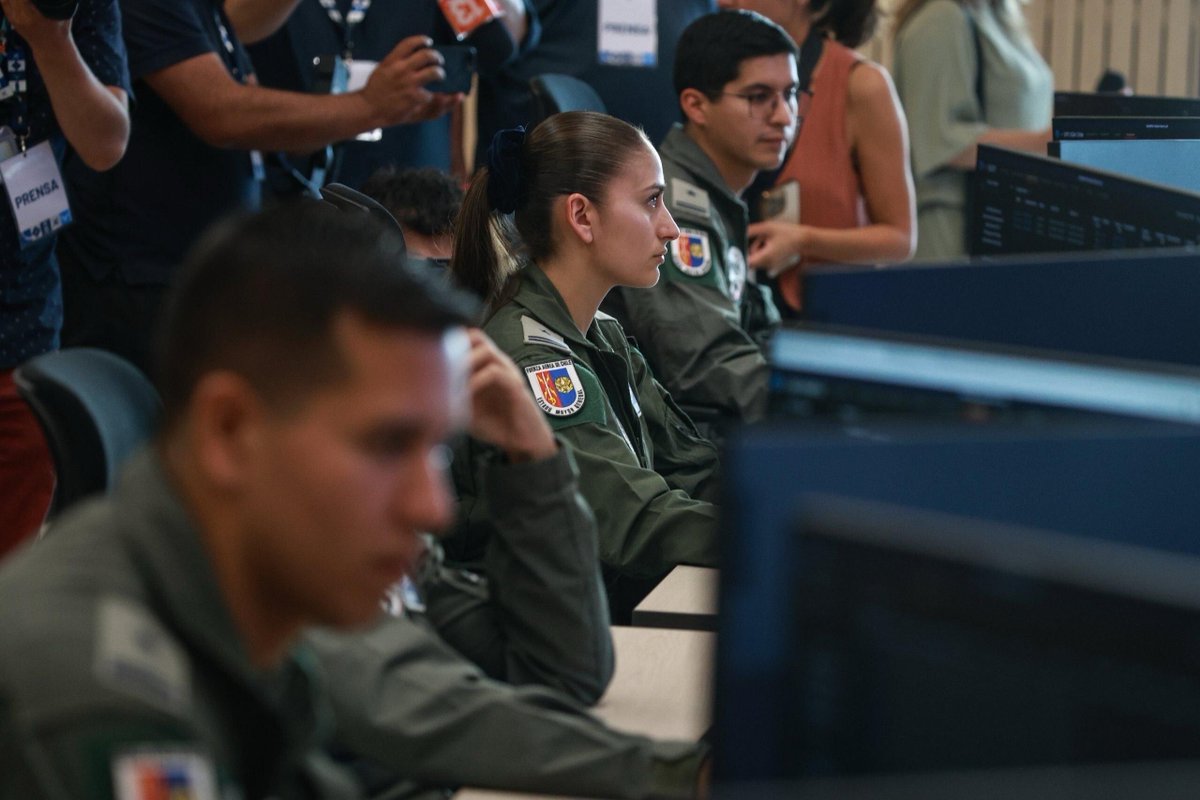
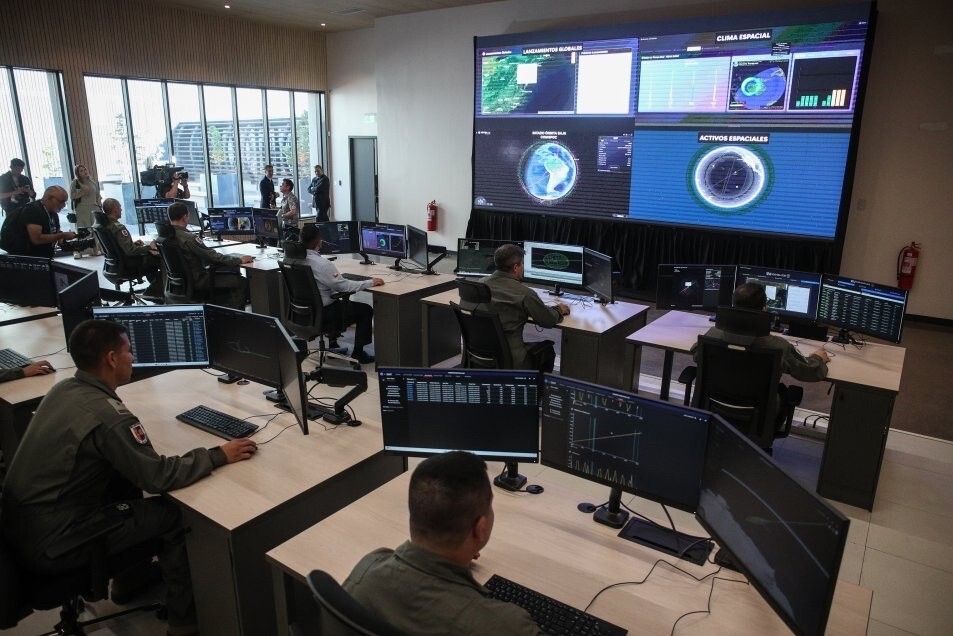
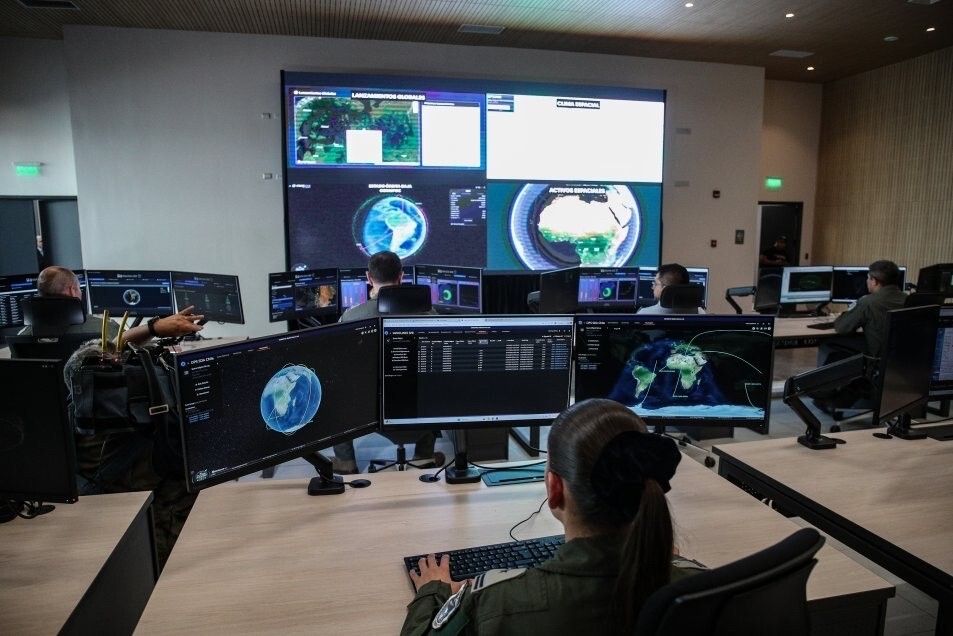
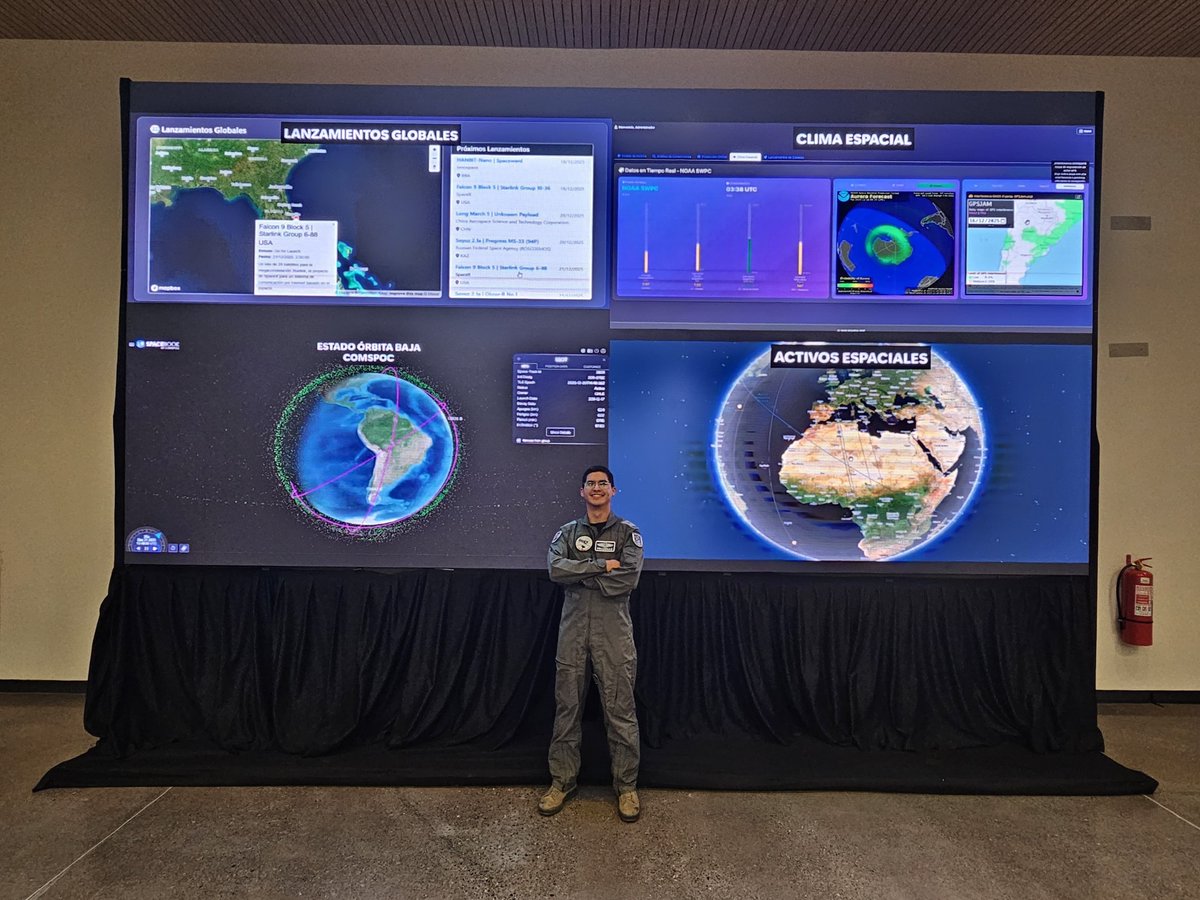
Congratulations to Chile on the inauguration of the National Space Center (CEN) last week, a major milestone in the country’s space program. Operated by @FACh_Chile (FACh), the new center strengthens Chile’s ability to develop satellites and independently process and analyze strategic data. These photos, shared by FACh, show COMSPOC’s SSASuite and Spacebook in use as they demonstrated their new ops center to an audience comprising international delegations and senior leadership.
COMSPOC Corp. tweet mediaCOMSPOC Corp. tweet mediaCOMSPOC Corp. tweet mediaCOMSPOC Corp. tweet media
English
0
2
6
967
COMSPOC_OPS
COMSPOC_OPS@COMSPOC_OPS·
Over November 2025 we observed coordinated rendezvous‑and‑proximity operations between USA 324 (GSSAP‑5) and the French military communications satellite SYRACUSE 3A which COMSPOC Ops team has provided @BreakingDefense for information about this event. USA 324 is a U.S. GEO SSA asset launched in January 2022; SYRACUSE-3A is a Syracuse III comms satellite launched in October 2005. The event started in early November to early December. The maneuver sequences showed three primary in‑track phases — initial negative in‑track burns (initiating eastward drift), positive in‑track burns (halting the drift), and a final negative in‑track burns (restarting eastward drift). Across each phase, USA 324’s maneuvers consistently occur after SYRACUSE 3A’s, suggesting SYRACUSE 3A led and USA 324 followed. The maneuvers appeared coordinated, resulting in multiple close approaches. The closest observed separation in this series was 25.1 km on 19 November 2025 at 23:09 UTC. The event is possibly the third bilateral RPO event among the the US and its multinational coalition partners in an effort to increase cooperation in space, following the September 2025 event between SKYSET-5A and USA 271. #space #satellite #SpaceDomainAwareness
English
1
15
61
20.3K
COMSPOC_OPS đã retweet
COMSPOC Corp.
COMSPOC Corp.@COMSPOC·
To reconstruct specific encounters that their reporters discussed with military leaders for this article, the Post relied on data and analysis produced by @COMSPOC_OPS, using our enterprise SSA solution, SSASuite. Through this collaboration, the Post has brought these complex events vividly to life for their readers to appreciate. “There are a lot of activities that are on a vector toward levels of hostility,” COMSPOC CEO Paul Graziani is quoted as saying. COMSPOC's SSASuite offers military-grade SSA analysis capabilities in a turnkey, commercial off-the-shelf package. As the Washington Post has demonstrated today, now is the time to take serious action toward protecting your space assets. Read the full piece (subscription required) by @SpaceDavenport, @asteckelberg and @wneff. (2/2)
English
0
1
2
629
COMSPOC_OPS
COMSPOC_OPS@COMSPOC_OPS·
THIS IS THE LAST STRAW: SHIJIAN‑21 and SHIJIAN‑25 Undocked Over the Thanksgiving weekend, two Chinese military satellites, SHIJIAN‑21 (SJ‑21, SSC.49330) and SHIJIAN‑25 (SJ‑25, SSC.62485), appeared as separate objects after 4 months of refuel-docking. The timing and character of recent burns suggest SJ‑25 may have departed from SJ‑21 on 25 November. On 25 November at 06:33 UTC, SJ‑25 executed an in‑track burn that lasted about 40 minutes and imparted roughly 0.13 m/s of delta‑v — consistent with an undock or separation maneuver. Both SJ‑21 and SJ‑25 performed further adjustment maneuvers in the following days. They have remained in proximity, averaging under 10 km over the past two days, but are clearly two distinct objects. Both have a mean longitude of about 127.2°E, positioned over China. Why it matters: if the 25 November burn was indeed an undock, SJ‑25 likely completed a successful life‑extension role for SJ‑21, meaning SJ‑21 could operate without relying solely on its limited propellant. Caveat: we will want to see distinct, sustained maneuvers from SJ‑21 before concluding it is fully back in independent operation. #Space #satellite #ChinaSpace #TechnologyNews
English
0
4
14
1.2K
COMSPOC_OPS
COMSPOC_OPS@COMSPOC_OPS·
Lead Ops Engineer Andy here.... My hypothesis regarding what you would most likely see of you tried to run a Least Squares over this data for a TLE would be something like, "yeah we see a 'maneuver' but it is really noisy.". Really you aren't seeing a maneuver but an orbit change and guessing how you got from point A to point B. You will never catch all these maneuvers with a BLS.
English
0
0
5
633
COMSPOC_OPS
COMSPOC_OPS@COMSPOC_OPS·
It’s also possible SJ‑23 simply hit an operational longitude limit and turned around as part of routine station‑keeping — not necessarily a direct approach to TJS-14.
English
0
0
5
609
COMSPOC_OPS
COMSPOC_OPS@COMSPOC_OPS·
Close talkers in orbit We observed a short RPO between Shijian‑23 (SJ‑23) and TJS‑14 on 15–17 October 2025. The public TLEs suggested a close approach of about 75 km. Our software's extended‑Kalman‑filter/smoother analysis, in collaboration with @IntegrityISR, showed the close approach to be roughly 46 km on 16 October, at 03:03 UTC. The sun‑phase angle was about 23°, so lighting was poor for imaging. The first maneuver occurred on 15 October (center ~21:19 UTC), lasting about one hour and characterized as a primarily negative in‑track with a delta‑v of ~1.6 m/s. The second maneuver occurred on 16 October (center ~09:18 UTC), lasting about 1 hour 10 minutes; it is also characterized as a negative in‑track with a delta‑v near 1.9 m/s. TJS‑14 has been described in Chinese state media as a communications platform for radio and television broadcasting, data transmission, and related technical tests and verifications. Shijian‑23 is reported to be a technology‑demonstration/dual‑use platform intended to validate on‑orbit systems and capabilities. Because both objects are reported to be communications‑focused and lighting was poor, the event is more likely a diagnostic or communications‑assessment interaction than an imagery event. #SpaceDomainAwareness #SSA #SpaceTraffic #satellite
COMSPOC_OPS tweet mediaCOMSPOC_OPS tweet media
English
1
5
12
2K