Highly Compelling

178 posts

Highly Compelling banner
Highly Compelling

Highly Compelling

@CompellingVideo

Twitter Account for Highly Compelling YouTube Channel.

Tham gia Ocak 2022
170 Đang theo dõi100 Người theo dõi
Highly Compelling
Highly Compelling@CompellingVideo·
@ChrisStringer65 If they call Jebel Irhoud an "Early Homo sapiens" then anything can be jammed into that category with a small face
English
1
0
2
584
Chris Stringer
Chris Stringer@ChrisStringer65·
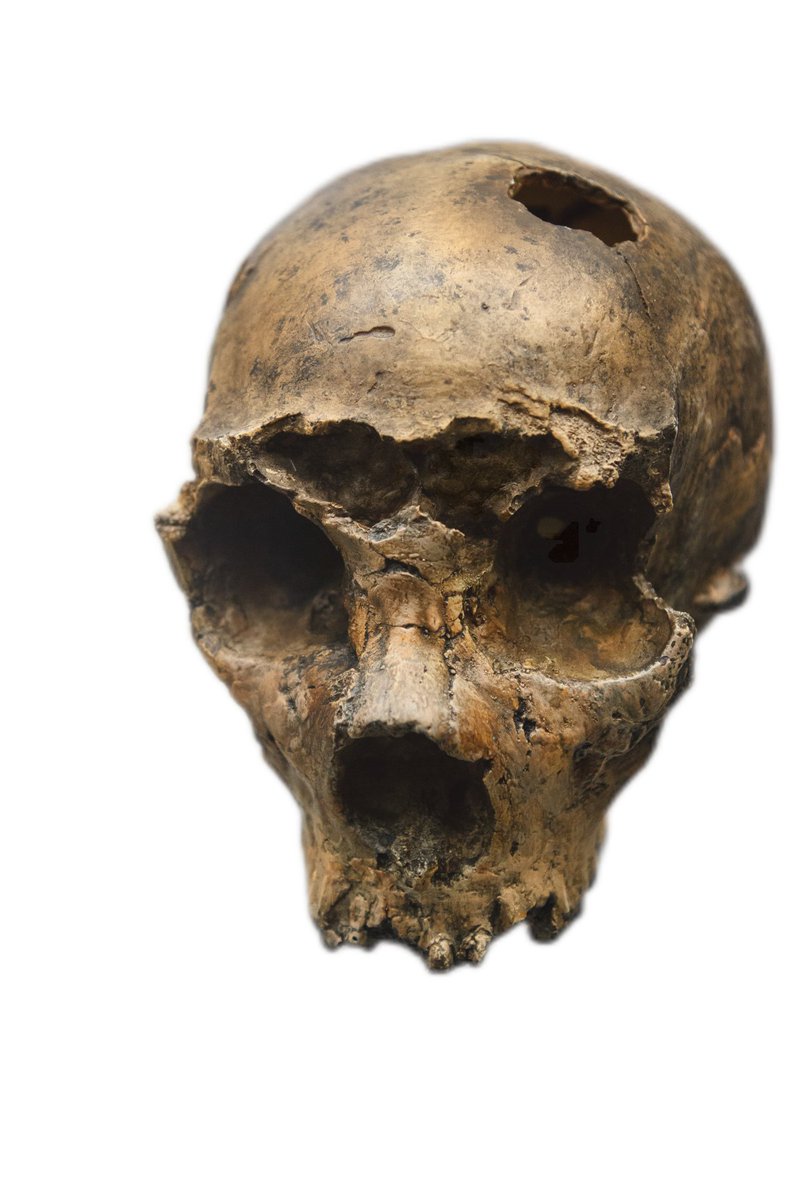
#FossilFriday The incredible frontal sinus of the Petralona skull - the browridge is virtually hollow!
Chris Stringer tweet media
English
11
39
83
0
Highly Compelling
Highly Compelling@CompellingVideo·
@cquilesc What do you think of the hypothesis the dark skinned WHG came directly from Africa to Italy via Sicily at low sea levels and obtained Blue Eyes by mixing with a group from Northern Italy c.20kya ?
English
0
0
0
35
Highly Compelling
Highly Compelling@CompellingVideo·
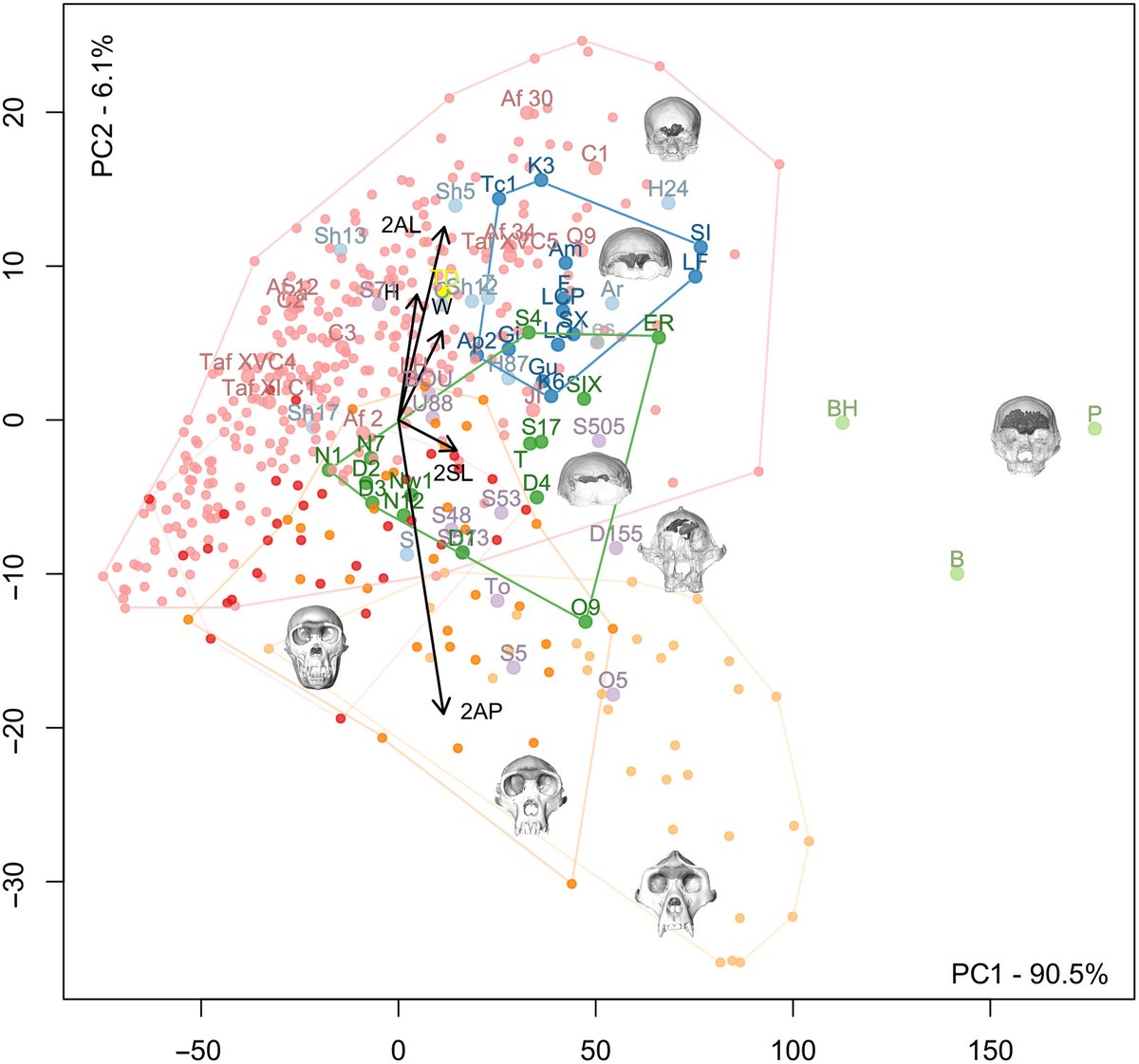
@ChrisStringer65 Petralona (P) is a real outlier...Saccopastore seems similiar in size. Maybe archaic Homo sapiens?
Highly Compelling tweet media
English
1
0
1
640
Zeke Darwin
Zeke Darwin@Zeke_Darwin·
Any of my paleoanthropologist/archaeologist followers want to weigh in? Trying to explain how a 9 million year old ape does not overturn our OOA model when it comes to humans originating in Africa.
Zeke Darwin@Zeke_Darwin

@AncientEpoch No, I’m not drawing an arbitrary line in the sand by saying human refers to the genus homo which is preceded in our models by the genus Australopithecus. I’m not trying to argue, I was just trying to help you out a bit as you claimed this overturned our understanding of OOA.

English
1
0
3
704
Highly Compelling
Highly Compelling@CompellingVideo·
@irussell21 @AncientEpoch We also don't know for sure what was the ancestor of Humans. Homo erectus is in Asia almost the same time as it appears in Africa. Also Homo floresiensis ancestor may be an even earlier Homo in Asia 2 Mya. So did Homo erectus evolve in Africa or Asia? Fact is we don't know.
English
0
0
0
19
Zeke Darwin
Zeke Darwin@Zeke_Darwin·
@CompellingVideo @AncientEpoch I agree that would be more of an arbitrary line in the sand, but it still doesn’t apply because if we look at the australopithecines (our inferred precursor) no evidence of them has been found out of Africa OR in the “in between” you bring up.
Zeke Darwin tweet media
English
1
0
0
33
Ancient Hypotheses
Ancient Hypotheses@AncientEpoch·
With respect it’s not reading comprehension in regards to a headline that’s the issue. You are in fact arguing where the line in the sand should be. Once again a team of international scientists researchers from various academic institutions had this to say. “The study's detailed analysis also reveals that the Balkan and Anatolian apes evolved from ancestors in western and central Europe. With its more comprehensive data, the research provides evidence that these other apes were also hominines and means that it is more likely that the whole group evolved and diversified in Europe, rather than the alternative scenario in which separate branches of apes earlier moved independently into Europe from Africa over the course of several million years, and then went extinct without issue. "There is no evidence of the latter, though it remains a favorite proposal among those who do not accept a European origin hypothesis," said Begun. "These findings contrast with the long-held view that African apes and humans evolved exclusively in Africa” So for me it’s Zeke vs this international team 👇🏼 “The findings are described in a study published today in Communications Biology co-authored by an international team of researchers led by Professor David Begun at the University of Toronto (U of T) and Professor Ayla Sevim Erol at Ankara University. Which also include colleagues at Ege University and Pamukkale University in Türkiye and the Naturalis Biodiversity Center in The Netherlands.”
Zeke Darwin@Zeke_Darwin

@AncientEpoch @rebirthofthewo1 It gets some bad headlines similar to this find from earlier this summer. Made this video yesterday and it is super relevant. tiktok.com/t/ZT8hXC2aG/
English
2
0
0
571
Highly Compelling
Highly Compelling@CompellingVideo·
@irussell21 @AncientEpoch The arbitrary line in the sand is dividing Africa and Euasia especially during low Mediterranean sea levels. Africa and Eurasia not separated by an ocean
English
1
0
0
32
Zeke Darwin
Zeke Darwin@Zeke_Darwin·
@AncientEpoch No, I’m not drawing an arbitrary line in the sand by saying human refers to the genus homo which is preceded in our models by the genus Australopithecus. I’m not trying to argue, I was just trying to help you out a bit as you claimed this overturned our understanding of OOA.
English
2
0
1
887
Zeke Darwin
Zeke Darwin@Zeke_Darwin·
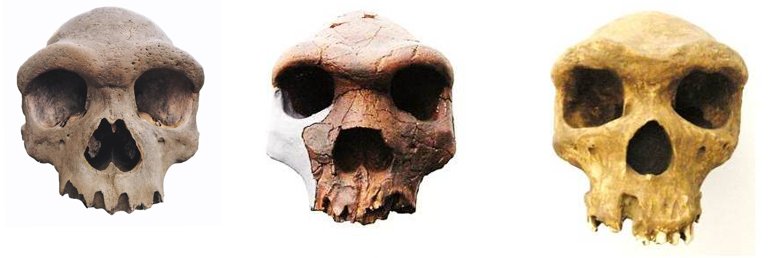
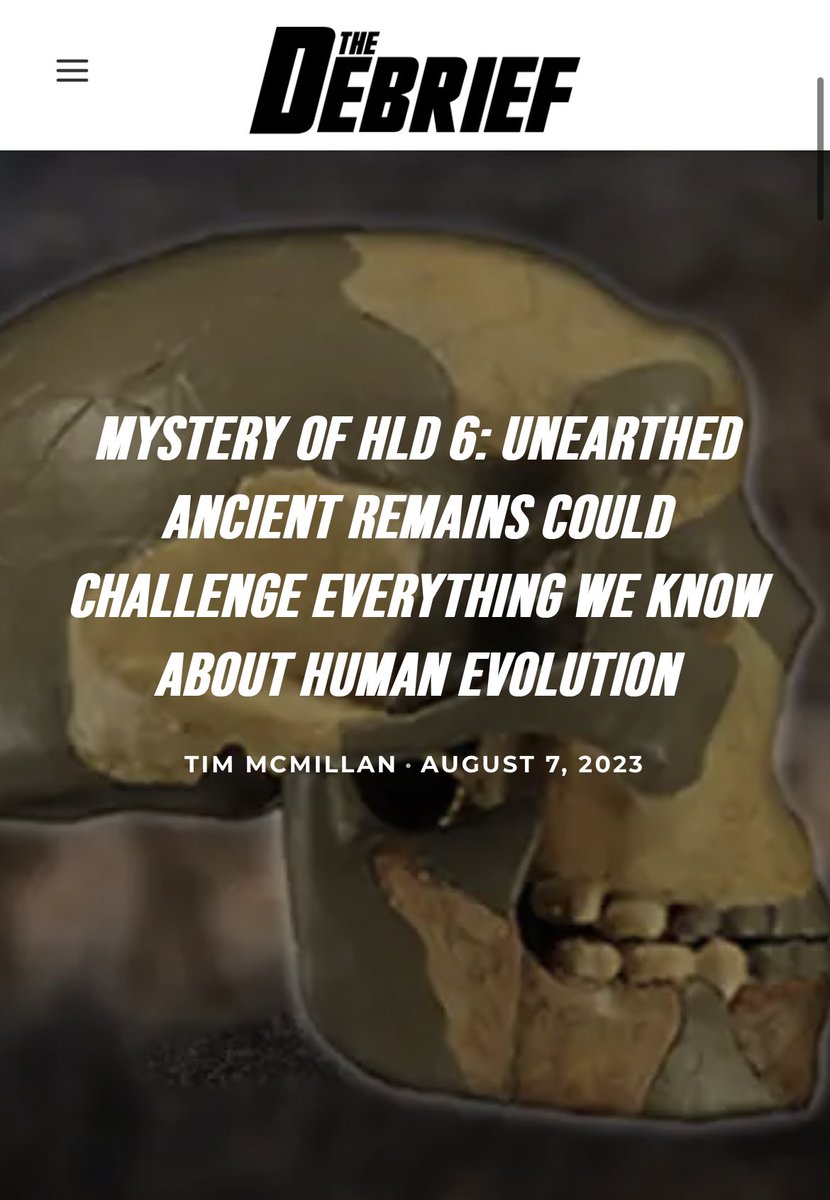
Honest question @LtTimMcMillan - How could this skull possibly "challenge everything we know about human evolution"? We know erectus made it out there long before 300kya. We know early denisovans were in that area at the time. Have you seen the "longi" skull?
Zeke Darwin tweet media
English
1
0
2
386
Nick Longrich
Nick Longrich@NickLongrich·
@razibkhan If humans are in Australia 65,000 years ago, this scenario falls apart, though, and lends support to an Out-Of-Africa dispersal via Bab-Al-Mandab >100,000 years ago. More and more evidence (e.g. humans in SE Asia 85,000 ya) seems to support this. nature.com/articles/natur…
English
2
0
1
196
Razib Khan 🧬 ✍️
Razib Khan 🧬 ✍️@razibkhan·
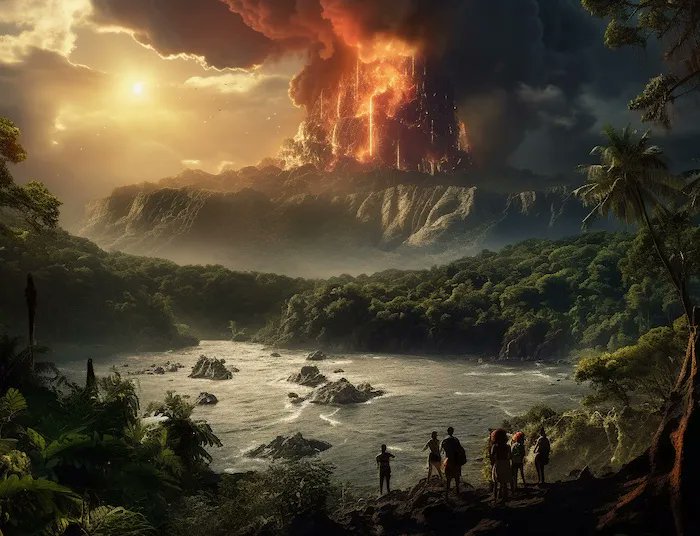
Our explosive past: on cataclysms and demographics razibkhan.com/p/our-explosiv… 74,000 years ago, a volcano erupted at western Indonesia’s Lake Toba, leaving half a foot of ashfall as far west as India. The most powerful explosion of the last 2.5 million years, the Toba eruption triggered a decade-long cold snap that wrought havoc even amid the last Ice Age’s already inclement conditions. When the cataclysm hit, Neanderthals had reigned supreme from the Atlantic to the Siberian Altai for hundreds of thousands of years, while their Denisovan cousins dominated East Asia. To the south, diminutive small-brained human populations occupied Indonesia’s Flores islands and Luzon in the Philippines, coexisting with both modern humans and Denisovans. But thirty thousand years after Toba, a blink of the eye in geological time, the landscape of human geography was abruptly transformed. Neanderthals, Denisovans and Southeast Asia’s enigmatic hominins were extinct or under extreme, terminal pressure from African newcomers. Neanderthals, by then resident in Europe for over 500,000 years, disappeared 5,000 years after that mass arrival of African humans to northwest Eurasia. Denisovans, by then as far into their East Asian sojourn as Neanderthals their western one, disappeared soon after their cousins. Finally, the small human populations of Flores and the Philippines also died out 50,000 years ago, after modern humans’ final expansion. This radical homogenization of Eurasian humanity is associated with the expansion of the Initial Upper Paleolithic (IUP) archaeological culture, which radiated out of the Middle East 50,000 years ago, washing over the whole of Asia, Europe and Australia by 45,000 years ago. In 2004, when Stanford paleoanthropologist Richard Klein wrote The Dawn of Human Culture, the IUP conquest of the world was considered conterminous with the rise of humans qua humans. Today we know this is wrong. Modern humans, from the ancestors of southern Africa’s San Bushmen to those of the indigenous Aboriginal people of Australia, began to diversify into distinct lineages more than 100,000 years ago, when Neanderthals and Denisovans were flourishing across Eurasia's whole breadth. Additionally, the bearers of the IUP toolkit were not even the first modern African-derived humans in Eurasia; archaeological finds in Laos place modern populations with our delicately built, gracile stature in Southeast Asia 85,000 years ago, 10,000 years before Toba. But ancient and modern genomic data exclude the possibility that today’s Southeast Asians descend from these African-related Asians that flourished before Toba. Instead, all modern Europeans, Asians, Australians and New World peoples, indeed 85% of humans alive today, descend from the tribes that diversified 40-45,000 years ago, correlating precisely with the spread of the IUP, and its immediate successor culture in western Eurasia, the Aurignacians. Additional genetic data now indicate that these IUP populations did not exit Africa 50,000 years ago in a single sweep, setting right to worldwide conquest. Instead, the ancestors of all non-Africans existed as a coherent and isolated breeding group for tens of thousands of years before their clear demographic explosion, one enduring legacy of which is the striking biological homogeneity unmistakable in the genes of all non-Africans. Today the synthesis of archaeology, genomics and ancient DNA converges upon the outlines of a complex narrative much more nuanced and intricate than the clear, stark story of world conquest Klein’s book outlined. Yes, all non-Africans descend from a people that embarked upon settling the world outside the mother continent 50,000 years ago. Still, it is also clear that within Africa, more than 100,000 years ago, our species had already begun to diversify into the branches recognizable today. The out-of-Africa event was more capstone than prologue to the human story. Earlier waves of modern-looking African humans had even expanded out of the continent long before the IUP expansion. They left their tools and remains across Eurasia more than 100,000 years ago, as well as their genes in prehistoric Siberian Neanderthals. Finally, even the expansion of IUP-equipped humans out of Africa was not a singular event marking a transition out of the ancestral continent in a single step; even the modern human explosion of 50,000 years ago was a series of expansions. The out-of-Africa event was the culminating ignition of a long evolutionary fuse. It began with a single tribe whose origins go back tens of thousands of years earlier, to the time of the Toba event, when the ancestors of modern non-Africans were a small, isolated population on the ancestral continent’s edge. Neandersovans and Neanderhumans A genetic narrative illuminating the recent origin of modern humans outside of Africa begins with an essential piece of cellular machinery, the mitochondrion. This organelle is the workhorse of the cell, generating energy that powers our body’s external mechanics and internal physiology. The average cell is packed with thousands of mitochondria, and every single one has its own DNA, the legacy of a past, hundreds of millions of years ago when they were independent, free-living bacteria. These bacteria were absorbed into larger microorganisms, who eventually became the cellular constituents of eukaryotes. For the purposes of phylogenetics, it is critical to observe that mitochondria in every cell are only inherited from the eggs, rather than the sperm, meaning that every human obtains these cell-scale power plants exclusively from their mother. Because each cell harbors so much mtDNA. it was already easy to extract, amplify and analyze the mitochondrial genetic code with crude 20th-century methods. This resulted in much of our first understanding of human evolutionary phylogenetics being mediated through the direct maternal lineage, an unbroken line from mother to daughter coalescing back to a common ancestress, “mitochondrial Eve.” This project, in the spotlight throughout the 1980’s and 1990’s, established that mtDNA Eve lived 200,000 years ago in Africa. All non-Africans could be nested within the family trees of various African populations, all of whom were much more genetically diverse than non-Africans. Human mtDNA can be sorted into seven major lineages, macro-haplogroups, all of which are labeled with the letter L and a number. Of these, one: L3, has seven descendants, only two of which, haplogroups M and N, are found outside of Africa. So it is M and N alone that define the maternal lineages for the 85% of humans whose heritage derives back to the out-of-Africa event. When the first Neanderthal mtDNA was analyzed in 1998 it proved very different from all modern lineages. The best estimates of the time of divergence placed the split between Neanderthal mtDNA and that of modern humans 300-400,000 years ago, well before Mitochondrial Eve. And it’s not just the direct maternal lineage. Just as we have mtDNA Eve, a last common mitochondrial ancestor, so we have Y-chromosomal Adam, the last paternal ancestor of all men, whose lineage has been passed uninterrupted from father to son. Y-chromosomal DNA from ancient Neanderthal remains also shows the same pattern as mtDNA, where Neanderthal branches diverged 300-400,000 years ago, 100,000 years before the last common modern human male Y (like mtDNA haplogroups, for the Y chromosome, non-African lineages are all nested within African ones, reflecting the same broad history for men and women). So far so good. These results bolstered the contention at the time of paleoanthropologists like Chis Stringer, drawing on fossil evidence, that Neanderthals were indeed a separate species that did not contribute to the genes of modern populations in Europe,
Razib Khan 🧬 ✍️ tweet media
English
3
8
29
6.8K
Jimmy Corsetti
Jimmy Corsetti@BrightInsight6·
Just to clarify, I think it is likely that earth got nailed by meteors within that timeframe. And if earths shields were reduced during a pole shift, we would be more vulnerable to the Sun and cosmic impacts. However, something else happened to turn that Sahara into what it is now. (And created that catastrophic water erosion that seemingly blasted the Sahara). In short, it seems to me that something else was the main cause of the Younger Dryas climate catastrophe.
English
60
12
224
29K
Paige Madison
Paige Madison@FossilHistory·
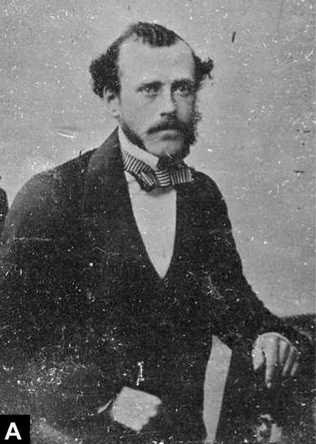
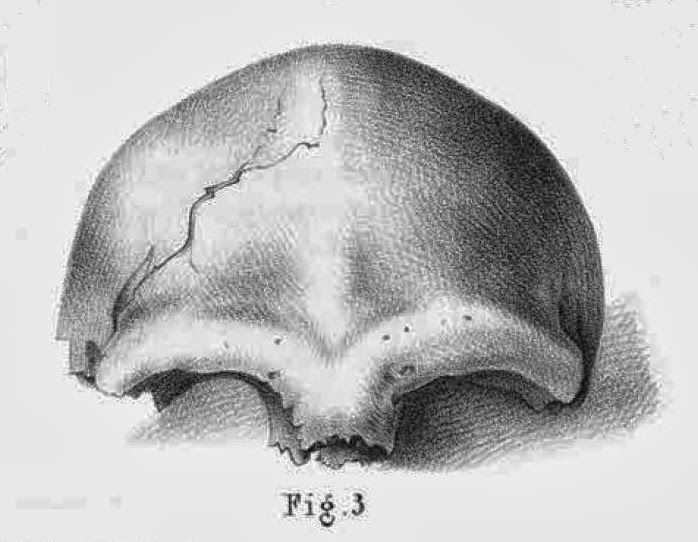
Remembering William King #OnThisDay, the man who declared Neanderthals a new species, Homo neanderthalensis in 1864. He said the thoughts and desires of the Neanderthal "never soared above those of a brute." #histsci
Paige Madison tweet mediaPaige Madison tweet media
English
2
13
54
5.3K