Nick Agule, FCA

891 posts

Nick Agule, FCA

Nick Agule, FCA

@NickAgule

Chartered Accountant; Energy Expert; Business Consultant; Husband and Father; Charity Worker; Law, Justice & Democracy Advocate; Survived Covid (SCV)

London, England Tham gia Aralık 2020
1.1K Đang theo dõi719 Người theo dõi
Nick Agule, FCA
Nick Agule, FCA@NickAgule·
Nick Agule, an energy expert, reveals why Nigeria’s power sector resists solutions and offers President Tinubu one clear pathway to deliver 24-hour electricity at zero cost to Govt. He further challenges the belief that transmission is too sensitive and delicate an asset to be entrusted to private sector management. youtu.be/ptzRIU7KeOI?si…
YouTube video
YouTube
English
0
0
0
10
Nick Agule, FCA
Nick Agule, FCA@NickAgule·
Nick Agule, an energy expert, reveals why Nigeria’s power sector resists solutions and offers President Tinubu one clear pathway to deliver 24-hour electricity at zero cost to Govt. He further challenges the belief that transmission is too sensitive and delicate an asset to be entrusted to private sector management. youtu.be/ptzRIU7KeOI?si…
YouTube video
YouTube
English
0
0
0
0
Instablog9ja
Instablog9ja@instablog9ja·
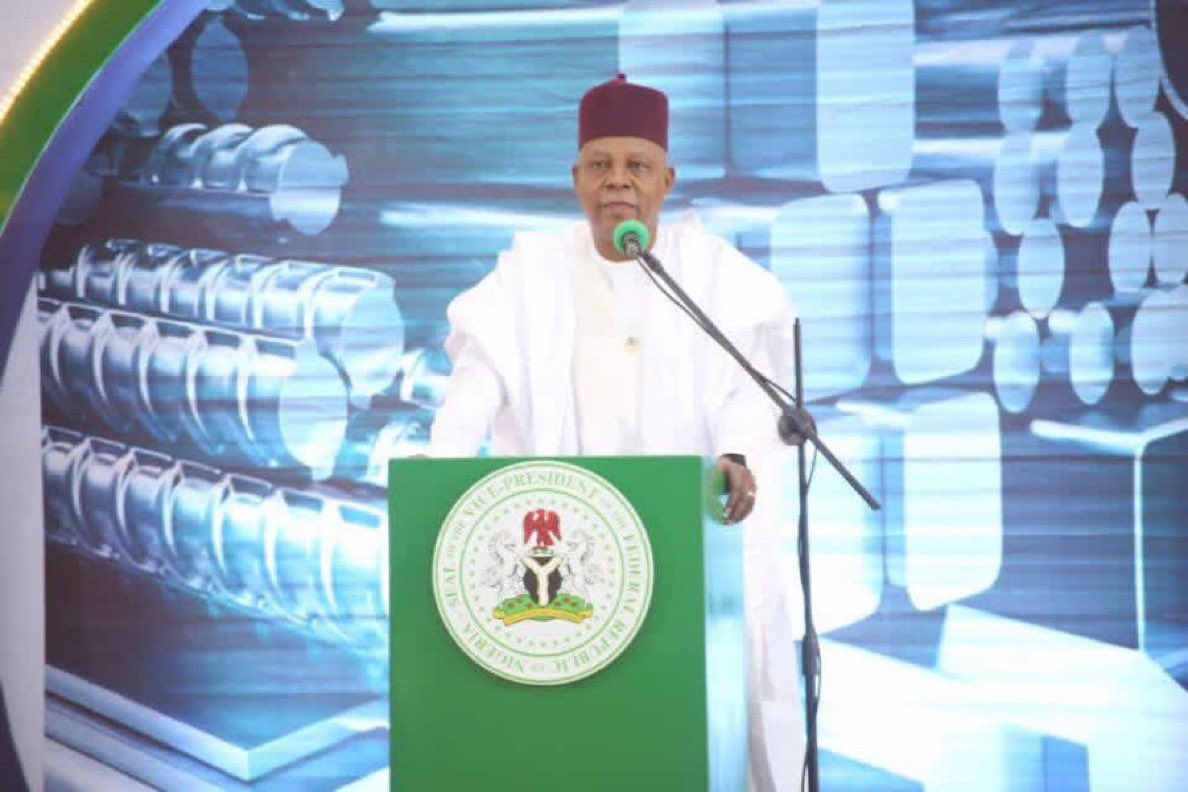
Shettima assures Nigerians of major reforms to boost electricity supply across the country
Instablog9ja tweet media
English
189
22
272
21.5K
Senator Shehu Sani
Senator Shehu Sani@ShehuSani·
When 15k troops want to invade a nation of 90 million people covering 1,648,195 square kilometers,you can only pray for them.
English
523
478
4.3K
165.2K
President Bola Ahmed Tinubu Media Centre
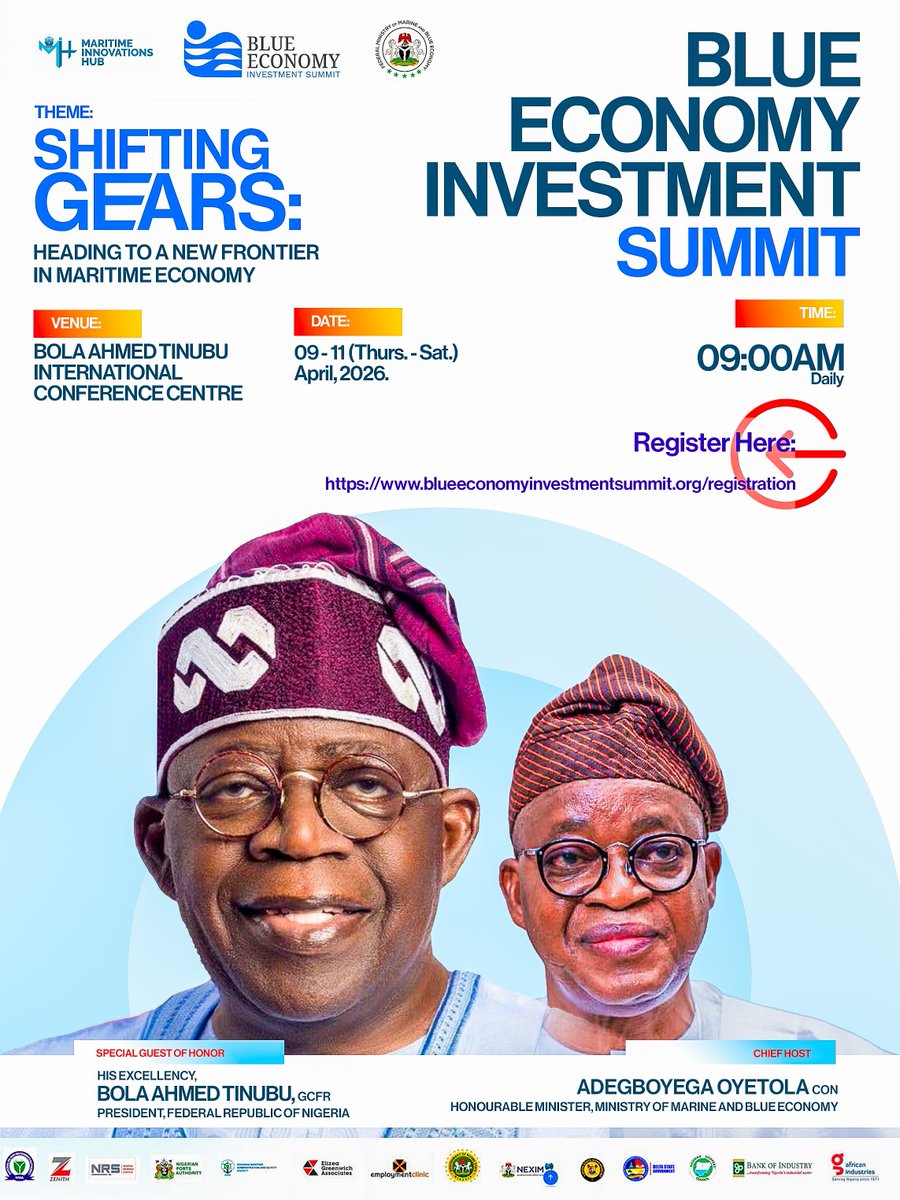
Nigeria, under President Bola Ahmed Tinubu’s administration, is opening new opportunities in the maritime sector, boosting innovation, investment, job creation, and sustainable economic growth beyond oil. For this, we are excited to announce the Blue Economy Investment Summit 2026 (@blueeconomyIS). This summit will bring together industry leaders, investors, and stakeholders to discuss policies, infrastructure, and partnerships shaping the future of the blue economy. Be a part of history by joining the conversation. Click the link below to register: blueeconomyinvestmentsummit.org/registration #MaritimeInnovationsHub #BlueEconomyInvestmentSummit
President Bola Ahmed Tinubu Media Centre tweet media
English
58
95
118
2.4K
Nick Agule, FCA
Nick Agule, FCA@NickAgule·
*6. Government is an inhibitor to economic development* My first-ever flight was Nigeria Airways - Lagos to Makurdi in 1995. Today, instead of building a national carrier, we repainted a leased aircraft while private operators like Air Peace now fly multiple London routes. My first-ever trip outside Benue was on a train from Makurdi to Port Harcourt in 1984, on a service originating from Maiduguri. That connectivity is gone. These are not just memories, they show regression where progress should have been inevitable. Note that the sectors you've rightly mentioned are doing well - technology, banking, finance, telecommunications - are all private sector driven. The government is currently sitting on key drivers of the economy - infrastructure, railways, roads, power, steel, oil and gas, refining etc. We expect advisers to put it in the ears of the President to liberalise these sectors as we did telecoms. *Low-Hanging Fruits:* Nyanya-Maraba Gridlock A major gateway into the capital is permanently blocked because a market occupies the roadway. If motorists waste 5 litres of fuel per trip, that’s roughly N7,000 lost each time. Multiply by a million daily journeys and you get N7 billion wasted, excluding delays, vehicle wear, pollution, and security risks. Clearing the market and securing the corridor is a simple fix. Is this too much to expect from a 66‑year‑old nation? Further on the Nyanya-Maraba gridlock, what if the guards battalion stationed in Keffi are responding to a security situation in the capital city? It'll take an hour to navigate the gridlock! What about the VIP movement that's forced to stop? There are massive security implications too. Then think of the citizens who are trading on the road and those patronising them, what if a truck becomes uncontrollable? All these risks will be solved by clearing off the market, installing barricades and providing the traders a market space away from the highway! Is this too much to ask after 66-years of nationhood? *We are not alone* Many countries such as Rwanda, Vietnam, Ireland, UAE, China, Singapore, Japan, Germany etc, overcame wars, dictatorships, and even genocides to achieve remarkable progress. They did not wait for time to pass; they made deliberate choices. Nigeria has enjoyed over 25 years of uninterrupted democracy. That is enough time not to arrive, but at least to stand up and move forward. We have run out of excuses. *Leadership* I agree that leaders emerge from amongst our ranks, but there is a structural bottleneck: *Nigerians often cannot freely elect leaders who are competent and accountable.* Without this, the potential of the people is curtailed, and progress slows. Even in 6,000 years it won't happen for us! In summary: humility is important, but without leadership, rule of law, and strategic vision, development is impossible. Nigerians are patient, but patience has limits. Thank you. _Nick Agule (nick.agule@yahoo.co.uk) is a public policy analyst_
English
0
0
1
58
Nick Agule, FCA
Nick Agule, FCA@NickAgule·
premiumtimesng.com/opinion/864625… *Right of Reply - I Am Not Ignorant* Doc, Thank you for your thoughtful article. I agree with much of your analysis, but a few additional perspectives are necessary. I turn 60 on Saturday (not for birthday wishes on this platfor please), just making a point. I was conceived in the 1st Republic, born under the 1st military regime, and have lived through every chapter of Nigeria’s evolution. I benefited from an excellent public education my parents never had, and I remain grateful for that privilege. My desire today is simple: a return to the Nigeria of the 60s, 70s, and early 80s. Wanting this does not make me ignorant. I am self-aware, emotionally grounded, and globally exposed. Nigerians are not asking for miracles but just the basics: food, water, shelter, power, education, healthcare, roads, rail, security, and the jobs that flow from these. With these fundamentals in place, many of the skilled Nigerians we trained but now powering other economies, would gladly return. Expecting these basics from a 66‑year‑old nation is not unreasonable. Our persistent failures stem from the absence of foundational systems including: *1. Population Data* We do not know our true population. The last census was nearly 20 years ago. Entire generations, including university graduates are missing from our population database. No country can plan education, healthcare, housing, or jobs without accurate numbers. Is it too much to ask for a census? *2. National Identity System* Most Nigerians remain anonymous within their own country. In functional societies, a unique identifier (social security number in the US, national insurance in the UK, Qatar ID, etc) links citizens to education, healthcare, banking, employment, home ownership, taxation, driving, and voting. Tax compliance is never voluntary; it is enforced through integrated identity systems. After 66 years, and certainly within a focused 3‑year reform window, is a unified digital identity system too much to expect? *3. National Emergency Response System* A functional 999 system is a basic requirement for any modern state. Instant alerts deter crime, improve response times, and generate real-time intelligence. 50% of crimes will not happen if the criminals know that citizens will alert the authorities. The other 45% crimes will not happen once enforcement becomes visible. Tragedies like the recent loss of soldiers in Kebbi show the cost of not having such a system because citizens had no organised platform to pass the intel. This is not a luxury; it is essential infrastructure. If we can import expertise in football coaches, we can certainly build a world-class emergency response network with imported technology and expertise too. *4. Power Supply* After 66 years, we generate barely 5,000MW. At this pace, it would take over 2,600 years to reach the 200,000MW needed for a 200‑million‑person economy. No nation can industrialise on 5,000MW. We may get frustrated and think we are still too young but that's not it. We simply don't have enough power to lift off! Until power is fixed decisively, every other sector will remain constrained. *5. Governance and Rule of Law* You rightly emphasise the role of government. This is precisely where Nigeria fails. Enforcement is weak, public funds mismanaged, and the rule of law inconsistent. If President Tinubu focused on one thing - RULE OF LAW - development would accelerate. Order, tax compliance, and social discipline naturally follow when rules are clear and enforced.
English
1
0
2
54
Nick Agule, FCA
Nick Agule, FCA@NickAgule·
*When an Oil Nation Pays First‑World Prices on Third‑World Wages* Nick Agule Email: nick.agule@yahoo.co.uk X: @NickAgule Facebook: Nick Agule, FCA 23 March 2026 1. Nigeria’s cheapest petrol is N1,350 per litre. At exchange rate of N1,344/$, that’s $1 per litre. 2. In the US, the cheapest petrol is $3.01 per gallon = $0.75 per litre. 3. Fuel is 25% cheaper in America than in oil‑producing Nigeria. *Now the real tragedy:* 1. Nigeria’s minimum wage: N70,000 = $52/month 2. US minimum wage: $7.25–$16/hour → $1,264/month 3. Nigerian worker gets: 52 litres/month. US worker gets: 1,685 litres/month 4. Inflation: Nigeria 15% vs US 3%. Nigerians are getting poorer 5× faster. 5. Unemployment: US 4% vs Nigeria ~70% (real) *Conclusion* Nigeria now finds itself in a brutal paradox: paying first‑world fuel prices on third‑world wages. A Nigerian worker earning $52 a month is forced to buy petrol at $1 per litre, while an American earning $1,264 a month pays $0.75 per litre. The result is a staggering gulf in purchasing power - 52 litres versus 1,685 litres. With inflation running at 15% and real unemployment hovering around 70%, the Nigerian worker is being pushed into poverty five times faster than his U.S. counterpart. The numbers tell a simple, painful truth: the economy is squeezing citizens harder than ever, while offering little relief or opportunity. Nigeria is not just experiencing hardship, it is experiencing economic injustice. *What the Government Must Urgently Do* 1. *Deploy regulators permanently to the Dangote Refinery* - NMDPRA, FCCPC, SON and others must maintain on‑site oversight to scrutinise pricing and operations. This is the basic safeguard every government applies when a single operator dominates a strategic market. 2. *Restore Nigeria’s public refineries* so the country is no longer fully exposed to a single supplier or global price shocks. 3. *Accelerate the full privatisation of NNPCL* to improve transparency, efficiency, and competition in the downstream sector. 4. *Stabilise and boost national power supply* to reduce the overwhelming dependence on petrol and diesel for electricity generation. 5. *Activate the Gas Masterplan* to capture and commercialise flared gas, directing it into domestic, commercial, and industrial use to diversify energy sources. 6. *Redirect Frontier Exploration Funds* into renewable energy development, reducing Nigeria’s long‑term reliance on fossil fuels and insulating the economy from global crude‑price disruptions that originate far beyond our borders. 6. *Additional short‑, medium‑ and long‑term measures* have been outlined in my earlier article and remain essential for a sustainable energy future. facebook.com/share/p/1BEQKr… _Nick Agule is a public affairs analyst_
Nick Agule, FCA tweet media
English
0
1
1
40
Nick Agule, FCA
Nick Agule, FCA@NickAgule·
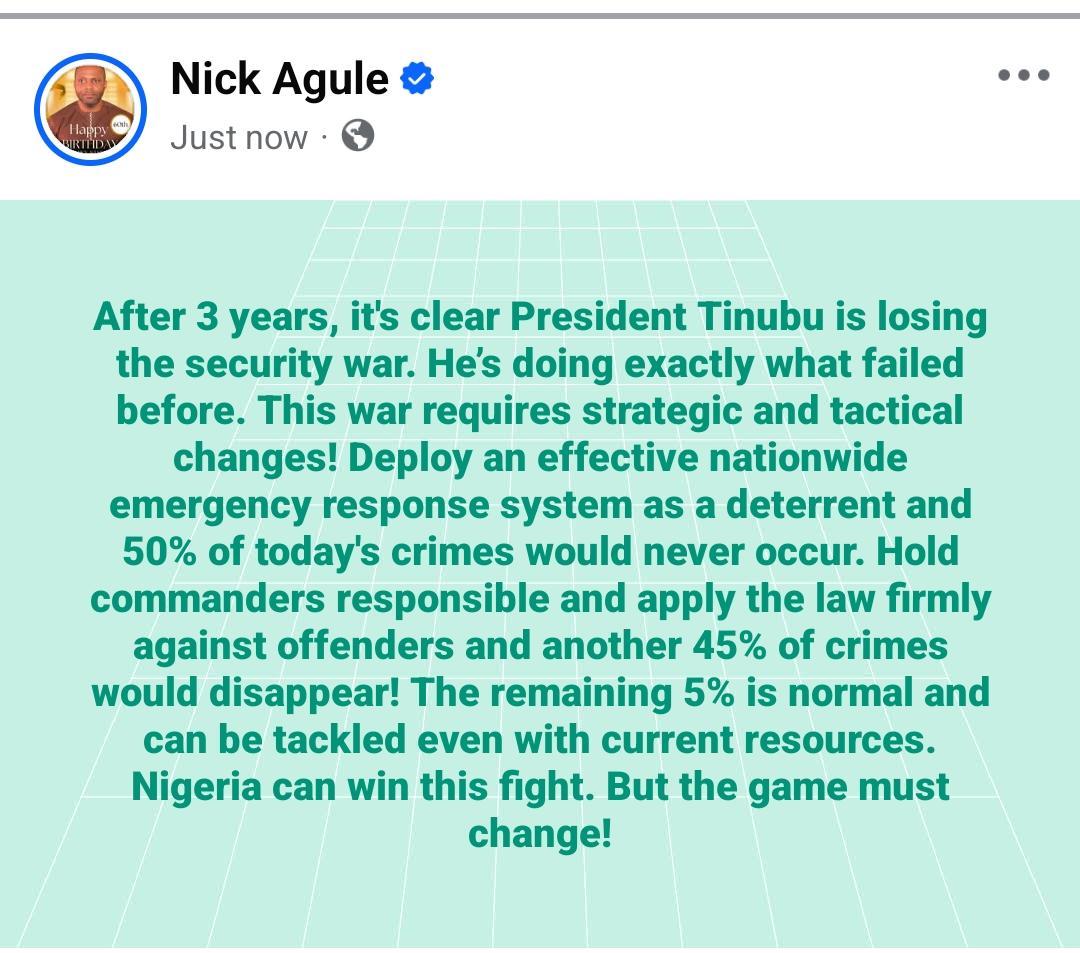
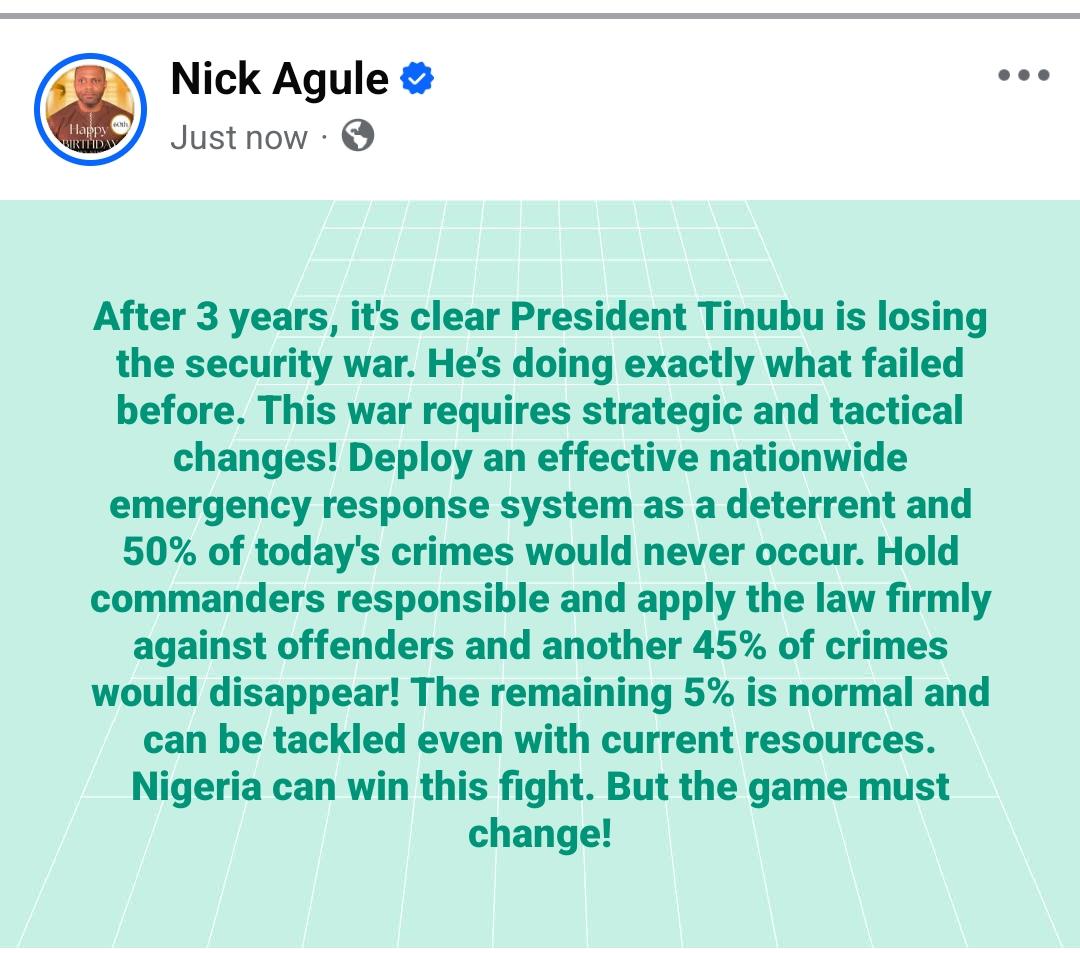
*Rethinking Security in Nigeria: Why Our Current Architecture Cannot Deliver Safety and the Single Reform That Can* Nick Agule Email: nick.agule@yahoo.co.uk X: @Nick Agule Facebook: Nick Agule, FCA 20 March 2026 Nigeria has never lacked presidential directives, high‑level meetings, or changes in military leadership. Since assuming office, President Tinubu has taken a long list of visible actions: - He removed the service chiefs, Inspector‑General of Police, and other security heads inherited from the Buhari administration. - He later relieved his own appointed service chiefs as well. - He appointed a new Inspector‑General and reshuffled the security hierarchy. - He has held repeated strategy sessions with the security chiefs. - He issued a stern warning in Makurdi, demanding results. - He ordered service chiefs to relocate to Maiduguri at the height of renewed insurgent activity. - He presented the largest security budget in Nigeria’s history. In 2026 it is a whooping N5.41 trillion (about 10% of the total budget) on security alone. 15 years ago, this was the total FG budget! Yet the outcomes on the ground tell a different story: - More farmers are abandoning their homes and entering IDP camps. - Killings continue across multiple regions. - Kidnap victims remain in captivity for weeks or months. - Boko Haram and ISWAP have resumed bombings. - Even military bases, supposedly the most fortified locations, are being attacked successfully. If military installations are vulnerable, what hope exists for unprotected civilian communities? This contradiction points to a deeper structural failure. The problem is not effort. It is not funding. It is not even leadership turnover. The problem is a single missing link: *Nigeria is using a security architecture designed for armed robbery to fight terrorism, banditry, insurgency, and mass criminality.* The architecture is outdated, reactive, fragmented, and incapable of delivering deterrence. *The Core Structural Problem: A 1970s Security Model in a 2026 Threat Environment* Nigeria’s security system is built around grouped formations, static checkpoints, and slow, manual communication channels. This model assumes criminals operate in small numbers, at predictable times, and in limited spaces. That may have worked for armed robbery in the 1970s & 80s. It cannot work for: - Mobile insurgent cells - Bandit groups operating across forests in groups numbering dozens or hundreds. - Kidnapping syndicates with logistics networks - Terrorists using motorcycles, drones, and rapid movement in their hundreds. - Attacks on villages 20-50 km from the nearest police or military post The result is predictable: the system is overwhelmed because it is designed for the wrong kind of threat. When a checkpoint is manned with only 3-5 officers, it isn’t just vulnerable, it is the product of a system that has already failed. No security architecture built on such thin deployment can withstand a hundred armed terrorists or bandits. The officers on the ground are left with two impossible choices: disappear into the bush to avoid certain death, or be overrun to pay the supreme price immediately if they attempt to fight. We have lost thousands of fine officers needlessly in this manner. Neither outcome is a reflection of their courage; it is a reflection of a state that sends them out without numbers, backup, intelligence, or equipment for today's security threats! *The Missing Reform: A National Emergency Response System* Every successful security architecture in the world rests on one foundation: *rapid response.* Nigeria does not have an effective response system with national coverage.
English
0
1
1
41
Nick Agule, FCA
Nick Agule, FCA@NickAgule·
*Long‑Term Structural Reforms* 1. Privatise NNPCL. 2. Revive and commercialise steel plants. 3. Connect the entire country by rail. 4. Develop hydro resources for power, irrigation, water supply, fisheries, and tourism. 5. Cultivate all arable land and build full agricultural value chains. 6. Develop domestic gas by piping gas to all residential, commercial and industrial premises. *Conclusion* Nigeria is being hit hard by a crisis it didn’t cause, but it doesn’t have to leave its people unprotected. The global energy shock has exposed how fragile our systems are with no strategic oil reserves for buffers and how urgently we need smarter, faster, and more compassionate leadership response must be. With oil revenues rising and citizens struggling, this is the moment for government to act in providing immediate relief, stabilising the economy, and building long‑term resilience. Survival must come first. Prosperity can only follow when Nigerians are no longer left to weather global storms on their own. _Nick Agule (nick.agule@yahoo.co.uk) is a public affairs analyst_
English
0
0
0
13
Nick Agule, FCA
Nick Agule, FCA@NickAgule·
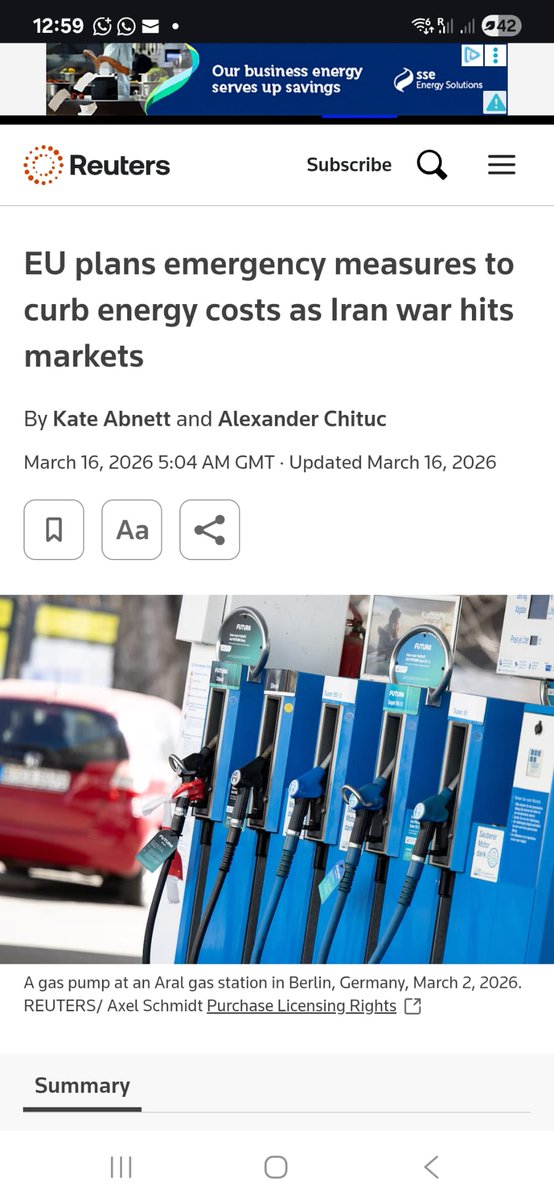
*Survival Before Prosperity: Nigeria Must Act in the Iran - US War* Nick Agule Email: nick.agule@yahoo.co.uk X: @NickAgule Facebook: Nick Agule, FCA 19 March 2026 *Introduction* The US/Israel - Iran war has shaken the entire world, and the first place everyone is feeling it is at the fuel pump. Crude oil has jumped from the $60s to touch $120. Energy prices are rising everywhere, but people’s incomes are not. Families are struggling, and the cost of living is climbing fast. Across the world, governments are taking emergency steps to protect their citizens, releasing strategic oil reserves, stabilising prices, and putting safety nets in place. Nigeria, despite being a major oil producer, has no strategic reserves at all. In a global crisis like this, that is a dangerous weakness we can no longer ignore. Fuel price increases hit Nigerians harder than most countries. We use fuel not only for transportation but also for electricity, whether through gas‑powered plants or the generators in our homes and businesses. When fuel prices rise, transport becomes more expensive, electricity becomes more expensive, and the entire economy feels the shock. This crisis shows why Nigeria must urgently invest in renewable energy - hydro, wind, and solar - so our survival and energy security is not tied to fossil fuels entangled in global conflicts we cannot control. *The Government’s Visible Absence and Silence* Since the war began, Nigerians have received little to no clear communication from federal, state, or local governments about how they plan to cushion the impact. Meanwhile, government revenues are rising sharply. Nigeria could earn up to N30 trillion in unexpected oil windfalls from this crisis. Yet citizens are still left to carry the burden alone. Below are practical steps that can protect Nigerians now and build resilience for the future. *Immediate Action: Remove All Government Fees on Fuel* With oil prices soaring, government revenues are already higher than expected. The first relief Nigerians should feel is the removal of all government fees and charges on fuel, including NMDPRA fees and every other levy that pushes pump prices up. *Short‑Term Measures* *1. Introduce a temporary, consumption‑based fuel subsidy* Subsidies should go directly to motorists at the pump, based on the litres they buy. Subsidising through refineries or middlemen only creates opportunities for diversion of products and corruption. An option for pump-based fuel subsidy is for the government to provide transport operators with fuel discount cards with limits that allow them to buy fuel at reduced prices directly at the pump. *2. Expand palliatives across all levels of government* With increased revenues, the FG, states, and LGAs should provide targeted support in: - Education - Healthcare - Social housing - Tax credits for low‑income households *3. Support public transport run by private operators* Government can issue discounted travel cards to workers and low‑income earners to travel on buses enjoying discounted fuel. Citizens simply tap and ride. *Medium‑Term Measures* *1. Restore security so farmers can return to their farms* Clearing bandits from agricultural zones will boost food production, reduce food costs and create millions of jobs to achieve food security. *2. Build a national emergency‑response system* A functional 999 service with real rapid‑response capacity will reduce crime, improve safety, and support economic growth. *3. Repair refineries to increase domestic supply* Producing more fuel locally will introduce competition and reduce pressure on prices. *4. Fix the power sector to reduce dependence on fuel* Reliable electricity will reduce generator use and lower demand for petrol and diesel and hence lower costs of fuel.
Nick Agule, FCA tweet media
English
1
0
0
56
Nick Agule, FCA
Nick Agule, FCA@NickAgule·
Listen to a Director in the federal service...A while GL 17...Na wao!!!
English
0
0
0
19
Nick Agule, FCA
Nick Agule, FCA@NickAgule·
*6. Domestic gas must be developed at scale* Nigeria needs to pipe gas to homes, businesses and industries. Gas is the country’s most abundant transition fuel, and widespread access would cut energy costs and stimulate manufacturing. *Illustrations of private‑sector turnaround where government failed* Telecoms offers a clear illustration of what happens when government steps back and the private sector is allowed to lead. NITEL, despite decades of state ownership and budgetary allocations, could barely provide 500,000 active telephone lines with GDP contribution of 0.1%. Once the sector was liberalised, private operators invested more than $100 billion and expanded access to over 220 million active lines with 15% GDP contribution. The same pattern is visible in refining: the Dangote refinery has shown that what seemed impossible for the government‑run NNPCL was simply a matter of capital, competence and incentives. There are countless other examples across banking, aviation, petrochemicals, and infrastructure, including projects like the Keffi - Makurdi road, where private investment succeeded after years of public‑sector stagnation. *Conclusion* Nigeria does not lack committees, agencies or special‑purpose vehicles; it lacks the capital, discipline and private‑sector dynamism required to build and operate modern infrastructure at scale. GAMCO may succeed in improving coordination around grid assets, but it cannot overcome the structural reality that government ownership has chronically underfunded and mismanaged the very systems it seeks to reform. Real progress demands a decisive shift away from state‑led operations toward private‑sector operators with the financial muscle, technical competence and performance incentives to deliver results. _Nick Agule is an energy expert_
English
0
0
0
23
Nick Agule, FCA
Nick Agule, FCA@NickAgule·
*Nigeria Needs Capital, Not Committees: Why Only Bold Privatisation Can Fix the Power Sector and the Economy* Nick Agule Email: nick.agule@yahoo.co.uk X: @NickAgule Facebook: Nick Agule, FCA 6 March 2026, President Tinubu (through the Chief of Staff) inaugurated the incorporation committee of the Grid Asset Management Company (GAMCO). GAMCO is a special-purpose company approved by the Federal Executive Council (FEC to: - Manage and optimise national grid assets - Unlock stranded power (electricity generated but not delivered to consumers) - Improve transmission efficiency and grid stability - Provide a focused, professional structure for grid asset oversight The 11‑member committee includes senior officials from: - The Presidency - Ministry of Power - Ministry of Finance - Bureau of Public Enterprises - Transmission Company of Nigeria (TCN) *Capital not Committees* Every initiative aimed at expanding Nigeria’s available power supply deserves recognition. However, the foundational assumption behind the proposed GAMCO framework is incorrect. _*"The initiative will address the problem of underutilised government power assets caused by operational inefficiencies and transmission limitations.”*_ The dominant constraint in the power sector is not operational inefficiency; *it is capital inadequacy.* The FG, operating with a $40 billion budget that is itself unlikely to be fully funded, simply lacks the fiscal capacity to undertake the scale of investment required to modernise and expand the national grid. Creating GAMCO alongside TCN does not resolve this structural financing gap. If TCN cannot attract the required capital under government ownership, it is unclear how GAMCO, another government‑linked entity, would fare any differently. The pathway to sustainable improvement is straightforward: transfer the operatorship of TCN to a financially robust and technically competent private‑sector entity, under a structure that may or may not include equity transfer. What matters is operational control, investment capacity, and performance accountability, not the ownership label. Anything short of this will reproduce the same outcomes: chronic supply deficits, escalating tariffs, and continued system instability. *Private Sector - the Driver of Modern Economies* President Tinubu showed real boldness in removing fuel subsidy and moving toward a unified exchange rate. But reform cannot stop at these two steps. With his private‑sector background and the reality of chronically low government revenues, the President was expected to push Nigeria decisively toward a private‑sector‑led economy by opening up the key engines of growth: *1. NNPCL must be privatised* The national oil company remains a major drain on public finances. Privatisation would unlock value trapped in refineries, gas plants, pipelines and upstream assets, while ending decades of inefficiency and opacity. *2. The power sector needs a full reset* A nation cannot industrialise on 5,000 megawatts. Transmission, distribution and generation require deep restructuring with competent and well capitalised private operators taking the lead, backed by clear regulation and accountability. *3. Steel plants* should move to private hands Without domestic steel production, every product with iron or steel content must be imported. Privatisation is essential to revive Ajaokuta and other steel assets and anchor a real industrial base. *4. Railways must be liberalised* The Nigerian Railway Corporation delivers speeches, not trains. It is unacceptable that the Federal Capital is linked by rail to only one of 36 state capitals. Private participation is needed to build, operate and maintain a modern rail network across the nation. *5. Security must be restored to reclaim farmlands* Bandits and terrorists must be decisively defeated so that millions of hectares of abandoned farmland can return to productive, mechanised agriculture.
Nick Agule, FCA tweet media
English
1
0
0
53
Nick Agule, FCA
Nick Agule, FCA@NickAgule·
President Tinubu ended the fuel subsidy on 29 May 2023 with just 4 words - fuel subsidy is gone! However, with the current crippling fuel prices, Section 14(2) of the Constitution obligates the President to ensure the welfare and economic well-being of Nigerians. In that context, part of the oil windfall should be directed toward cushioning the burden on citizens. At the same time, the President’s patience with NNPCL should not be indefinite. The time has come to utter just 6 words - Refineries management shifts to private sector! _Nick Agule is an energy expert_
English
0
0
2
19
Nick Agule, FCA
Nick Agule, FCA@NickAgule·
*When Global Oil Markets Shake, Nigeria Feels It: The Case for a Temporary Subsidy* Nick Agule Email: nick.agule@yahoo.co.uk X: @NickAgule Facebook: Nick Agule, FCA 10 March 2026 The recent conflict in Iran, which has disrupted an estimated 20% of global crude oil supply, has pushed international prices above $100 per barrel for the first time in more than 6 years. Although Nigeria is geographically distant from the Middle East, the impact is immediate and unavoidable. Crude oil is traded on a unified global market; when supply tightens anywhere, prices rise everywhere. Refineries, whether the Dangote Refinery or those supplying Nigeria through imports, must now purchase crude at these elevated prices and will inevitably pass the additional cost on to consumers. This is the channel through which the crisis reaches Nigerian households and businesses. *Economic Consequences for Nigeria* *1. Fiscal Gains for the Federation* Nigeria’s 2026 budget is benchmarked at $64.85 per barrel, yet crude recently traded near $120 and remains above $90. This price surge translates into significantly higher-than-expected revenues for the Federation. In the short term, this strengthens fiscal buffers, improves macroeconomic indicators, and provides government with a rare opportunity to stabilise the economy. *2. Rising Domestic Costs* We face a double-edged sword because the same price surge that has improved the Federation revenues has sharply increased the cost of petroleum products. Petrol now sells for as high as N1,500 per litre in some up-country regions, while diesel approaches N2,000 per litre. These increases ripple through the economy: - Transport costs for workers and businesses rise. - Food prices escalate due to higher logistics costs. - Nigeria’s generator-dependent economy faces higher production costs thus higher prices of products and services. - Households, without corresponding wage increases, absorb the full burden. The result is a squeeze on disposable income and a deepening cost-of-living crisis. *A Case for a Temporary, Targeted Fuel Subsidy* Given the scale of the oil windfall, President Tinubu is expected to consider a temporary and tightly controlled subsidy to cushion citizens. Such a measure would require the concurrence of state and local governments through the National Economic Council and the Council of State, since funding would come from the Federation Account. Crucially, this proposed subsidy differs fundamentally from the discredited system previously dismantled by the President with just 4 words - fuel subsidy is gone!. The old regime paid subsidies on imported cargoes, many of which were never delivered or were smuggled out, creating vast opportunities for fraud. The new approach would subsidise only the fuel actually dispensed to consumers: - Registered filling stations sell at a subsidised pump price. - Pump data provides verifiable evidence of sales. - Government reimburses the difference between market price and regulated price. For example, if the market price is N1,300 and the subsidy is N500, the station sells at N800 and claims N500 based on recorded pump volumes. This model aligns subsidy payments with real consumption and significantly reduces leakages. *Why This Matters Now* Countries with strategic petroleum reserves are already deploying them to protect their citizens from the global shock. Nigeria lacks such reserves. A temporary, well‑designed subsidy may therefore be the most effective mechanism for transferring part of the oil windfall directly to Nigerians, stabilising prices, and preventing deeper economic hardship.
Nick Agule, FCA tweet media
English
2
1
2
74
Nick Agule, FCA
Nick Agule, FCA@NickAgule·
PENGASSAN warns that suspending the fund will threaten long-term exploration. But after decades and billions of dollars spent, not a single barrel of crude has been produced from any frontier basin. Nigeria cannot continue funding wasteful exploration while other oil-producing nations are investing petroleum revenues into renewable energy and diversified economic assets - Qatar’s 20% ownership of British Airways is a prime example. *Soul Searching for PENGASSAN NNPCL* The nation has entrusted enormous assets and resources to NNPCL. What has been the return? • Refineries: Dead, causing decades of fuel scarcity, adulterated products, fires, and thousands of preventable deaths. PENGASSAN made running refineries look like rocket science which Dangote refinery has demystified. • Gas plants: Dead, forcing Nigeria to import gas while flaring continues unabated, harming health and the environment. • Pipelines: Dead, leading to road destruction, tanker explosions, and inflated product prices. • Upstream: Underperforming, while peers like Saudi Aramco produce over 10 million barrels per day and Petrobras exceeds 4 million. *Conclusion* Every PENGASSAN NNPCL meeting should begin with a minute of silence for the countless Nigerians who have died or suffered due to the collapse of national assets under their watch. They must also reflect on the lost opportunities for national development. PENGASSAN NNPCL must stop fixating on Federation revenues. Instead, they should focus on reviving refineries, gas plants, pipelines, and upstream assets so that- like NLNG - they can contribute dividends to the Federation Account rather than draining it. _Nick Agule is an energy expert_
English
0
0
0
25
Nick Agule, FCA
Nick Agule, FCA@NickAgule·
*Right of Reply: Misrepresenting the Facts - Why the PENGASSAN NNPCL Branch Statement Creates Confusion, Not Clarity* _Nick Agule_ _Email: nick.agule@yahoo.co.uk_ _X: @NickAgule_ _Facebook: Nick Agule, FCA_ _26 February 2026_ A public statement attributed to the Petroleum and Natural Gas Senior Staff Association of Nigeria (PENGASSAN), NNPCL Branch, requires a factual response. The statement is riddled with contradictions, misinterpretations, and outright falsehoods that risk misleading the public. *1. On Direct Remittance of Royalties and Taxes Under PSCs* PENGASSAN contradicts itself. It claims that all royalties and taxes are fully remitted to the Federation Account, yet simultaneously admits that part of these revenues is used by NNPCL to service debts on behalf of the government. When did NNPCL assume the role of the Debt Management Office? The correct process is straightforward: • NNPCL must remit 100% of all proceeds to the Federation Account. • Debt service should be appropriated through the national budget, not deducted at source. This is precisely the constitutional order that brings transparency and accountability in the management of the Federation's revenues restored by the Executive Order. *2. On Misrepresentation of the 30% PSC Profit Oil/Gas Management Fee* PENGASSAN’s interpretation of the Executive Order is incorrect. The Order clearly states that NNPCL receives 30% of profit oil and profit gas, not 30% of total PSC revenue. Nowhere does the Order alleged that NNPCL retains 30% of the Federation’s entire oil revenue. By insisting otherwise, PENGASSAN is constructing a strawman argument, perhaps to inflame public sentiment. PENGASSAN further argues that NNPCL receives only 1.05% of gross PSC revenue, implying the amount is insignificant. But the issue is not the size. It is the constitutional principle. Even if the amount were 0.000001%, it is still Federation revenue and must be remitted in full as mandated by section 162(1) of the constitution. PENGASSAN also claims that in other countries, governments fund their national oil companies through profit oil. But what has NNPCL achieved with decades of such funding? • Refineries: dead • Gas plants: dead • Product pipelines: dead • Upstream assets: limping Meanwhile, national oil companies elsewhere - Saudi Aramco (Saudi Arabia), Petrobras (Brazil), Petronas (Malaysia), Equinor (Norway) etc - pay massive dividends to their governments and drive national development. NNPCL argues that the management fee helps it recover costs incurred on behalf of the Federation. If so, NNPCL should invoice the Federation, not unilaterally take 30% of profit oil and profit gas without transparent accounting. No institution- Auditor-General of the Federation, National Assembly, Petroleum Ministry, or even the Presidency - has full visibility into NNPCL’s books. NNPCL further claims that removing the 30% fee will hinder its ability to fund critical operations. But NNPCL is a limited liability company. It should raise capital like NLNG and other commercially run entities. Accessing the capital market would force transparency and end inefficiencies such as paying refinery staff who refine zero barrels of crude. *3. Misleading Claims About the 30% Frontier Exploration Fund* PENGASSAN asserts that the 30% Frontier Exploration Fund under Section 9 of the PIA does not go to NNPCL. This is false. Section 9(5) explicitly empowers NNPCL alone to utilise the funds in the frontier exploration escrow account, subject only to appropriation by the National Assembly. In practice, NNPCL spends these funds without meaningful legislative oversight. It took months for the National Assembly to compel the GMD to appear, and even then, he provided no substantive information.
English
1
1
3
35