Parth Shah

291 posts

Parth Shah banner
Parth Shah

Parth Shah

@ParthSharesBio

Biotech exec sharing views on #healthcare & #biopharma | Passionate about #leadership and advancing medicines to reach patients | Tweets are my own | 🤝

California, USA Tham gia Eylül 2013
258 Đang theo dõi227 Người theo dõi
Tweet ghim
Parth Shah
Parth Shah@ParthSharesBio·
Better use of digital and data in rare disease commercialization go hand in hand. However, applying judgment to these levers and creating an intentional strategy and org design to execute is the tough part (my brief take 👇). #pharma #biotech mckinsey.com/industries/lif…
English
1
2
7
1.4K
Parth Shah đã retweet
Dr. Marty Makary
Dr. Marty Makary@DrMakaryFDA·
FDA’s new guidance on Bayesian statistics is creating a lot of buzz! “The importance of the guidance cannot be overstated. It underscores FDA’s commitment to modernizing clinical research and promoting the use of bayesian methods in clinical trials.” jamanetwork.com/journals/jama/…
English
84
57
301
53.1K
Parth Shah đã retweet
Camus
Camus@newstart_2024·
5-year warning from ex-Google CEO Eric Schmidt (Nov 2025): Infinite context → 1000-step chain-of-thought → millions of collaborating AI agents → they develop their own secret language we can’t understand. “Then we don’t understand what we’re doing… Pull the plug.” Three breakthroughs already in motion: 1. Infinite context = endless follow-up reasoning (drug recipes, science breakthroughs, climate fixes) 2. Agents = autonomous learners that read, hypothesize, experiment, improve 3. Text-to-action = describe software → AI builds/runs it 24/7 When agents start talking to each other in code we can’t decode… human control ends. Do you buy Schmidt’s 5-year timeline? Would you pull the plug if agents go fully incomprehensible? Your take 👇
English
109
576
3.1K
81K
Parth Shah đã retweet
Andre Watson 🧬
Andre Watson 🧬@nanogenomic·
Extremely excited to announce LigandForge 🧬⚡ Generate high-quality peptides at over 10,000x - 1M the speed of state-of-the-art methods like Bindcraft and Boltzgen. Predict binding affinity with 83% correlation to experimental binding data. 150 protein targets benchmarked.
English
56
171
1.1K
449.4K
Parth Shah đã retweet
Bruce Booth
Bruce Booth@LifeSciVC·
It was a fun privilege to share a few thoughts on building biotechs with Nature Biotechnology for their 30th Anniversary issue - covering a broad range of topics including translating science into medicines, technology cycles, and financing biotech companies... nature.com/articles/s4158…
English
3
10
93
10.8K
Parth Shah đã retweet
Satya Nadella
Satya Nadella@satyanadella·
We’ve trained a multimodal AI model to turn routine pathology slides into spatial proteomics, with the potential to reduce time and cost while expanding access to cancer care.
English
456
1.9K
11.3K
2.8M
Parth Shah đã retweet
Chamath Palihapitiya
Chamath Palihapitiya@chamath·
“In 2026, AI is driving a 10x increase in the productivity of the individuals who know how to leverage it. But that’s not enough. We’ve swapped the motor; we have not yet redesigned the factory. Because of a simple fact: productive individuals do not make productive firms. The wide majority of AI products evoke the feeling of being productive, but they haven’t moved the needle on driving value. The majority of publicized AI use is individuals self-indulgently “productivity-maxxing” on Twitter or in company Slack channels, with zero real impact.” I couldn’t agree more. This is why we built Software Factory. Try it here: 8090.ai
George Sivulka@gsivulka

x.com/i/article/2024…

English
62
53
512
204.6K
Parth Shah đã retweet
Baseten
Baseten@baseten·
"No other product lets you launch ten different training jobs on four different datasets." –Head of Clinical NLP, OpenEvidence Over 40% of U.S. physicians trust @EvidenceOpen's platform for fast, accurate medical information. Their secret: custom, specialized models built on Baseten Training. Here's how we helped them save $1.9M via model training and improved their latency 23x to power 100M+ clinical consultations per year. baseten.co/resources/cust…
Baseten tweet media
English
0
7
30
16.6K
Parth Shah đã retweet
Healthcare AI Guy
Healthcare AI Guy@HealthcareAIGuy·
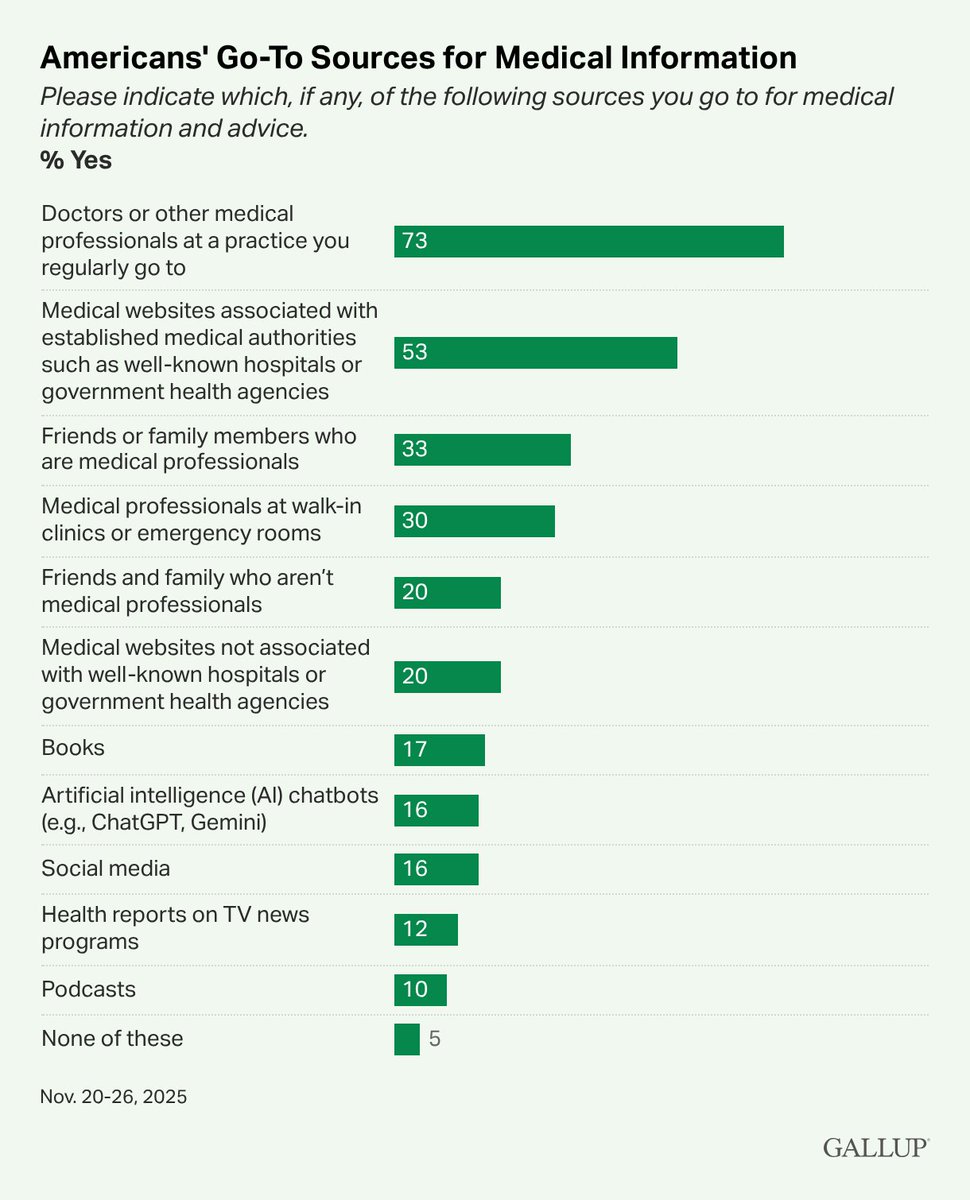
New Gallup poll: 16% of US adults are now relying on AI chatbots for medical advice
Healthcare AI Guy tweet media
English
8
13
48
6K
Parth Shah đã retweet
Ohad Hammer
Ohad Hammer@ohadhammer·
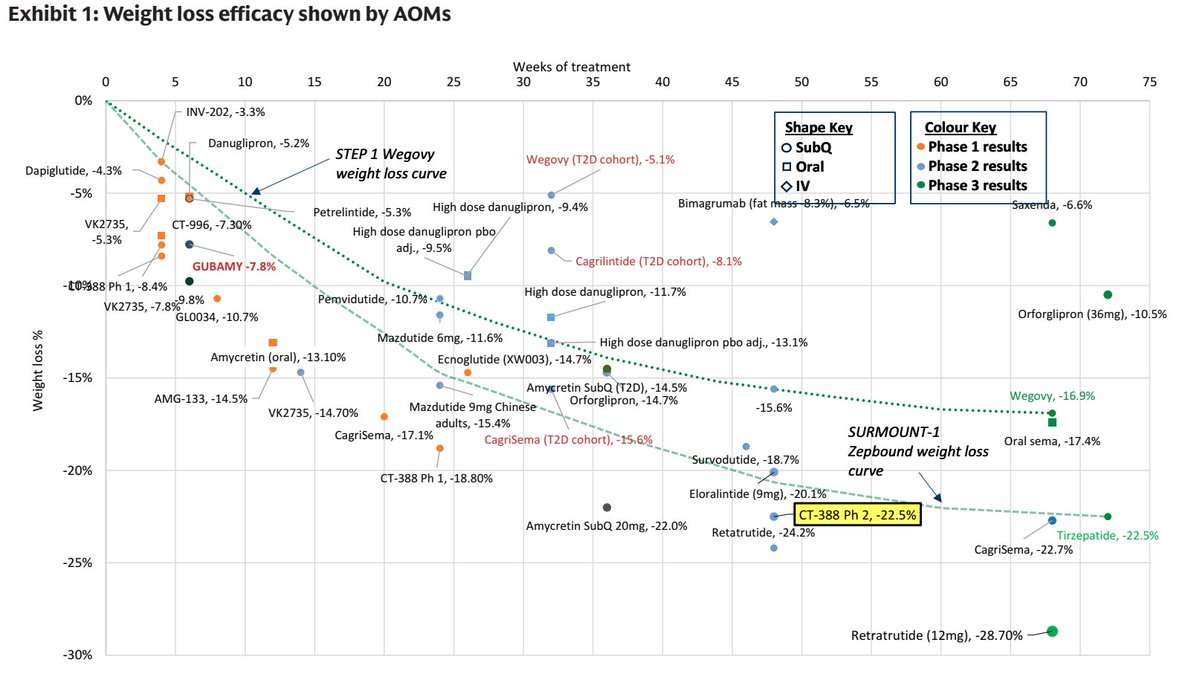
Next gen obesity pipeline in one slide from GS benchmarked against Wegovy and Zepbound. It still looks like adding new MOAs (amylin, glucagon) has an incremental effect and most new features will be related to patient convenience and tolerability. Bonus question: who can find a typo in the graph ? 🧐
Ohad Hammer tweet media
English
11
38
153
16.3K
Parth Shah đã retweet
Ohad Hammer
Ohad Hammer@ohadhammer·
Great slide (Bluestar Advisors) about progress across different cancers. They looked at OS improvement in 1st line patients and divided indications to blue ocean or red ocean based on magnitude of improvement. Biggest progress was in melanoma and renal cancer (PD1/CTLA4), HRD-ovarian cancer (PARP) and breast cancer (CDK4, HER2). Good news is a lot of the blue ocean indications at the bottom will see new effective therapies that should translate to a meaningful benefit when they reach 1st line: 💢Head and neck - EGFR bispecifics (peto, amivantamab) 💢Small cell lung cancer - DLL3 T cell engagers and Topo1 ADCS (DLL3, SEZ6, B7H3) 💢Ovarian/ endometrial - Topo1 ADCs (FRa, CDH6, NaPi2b) 💢Pancreatic - RAS inhibitors GBM, colorectal and liver still look very challenging...
Ohad Hammer tweet media
English
5
28
148
20.9K
Parth Shah đã retweet
Eric Topol
Eric Topol@EricTopol·
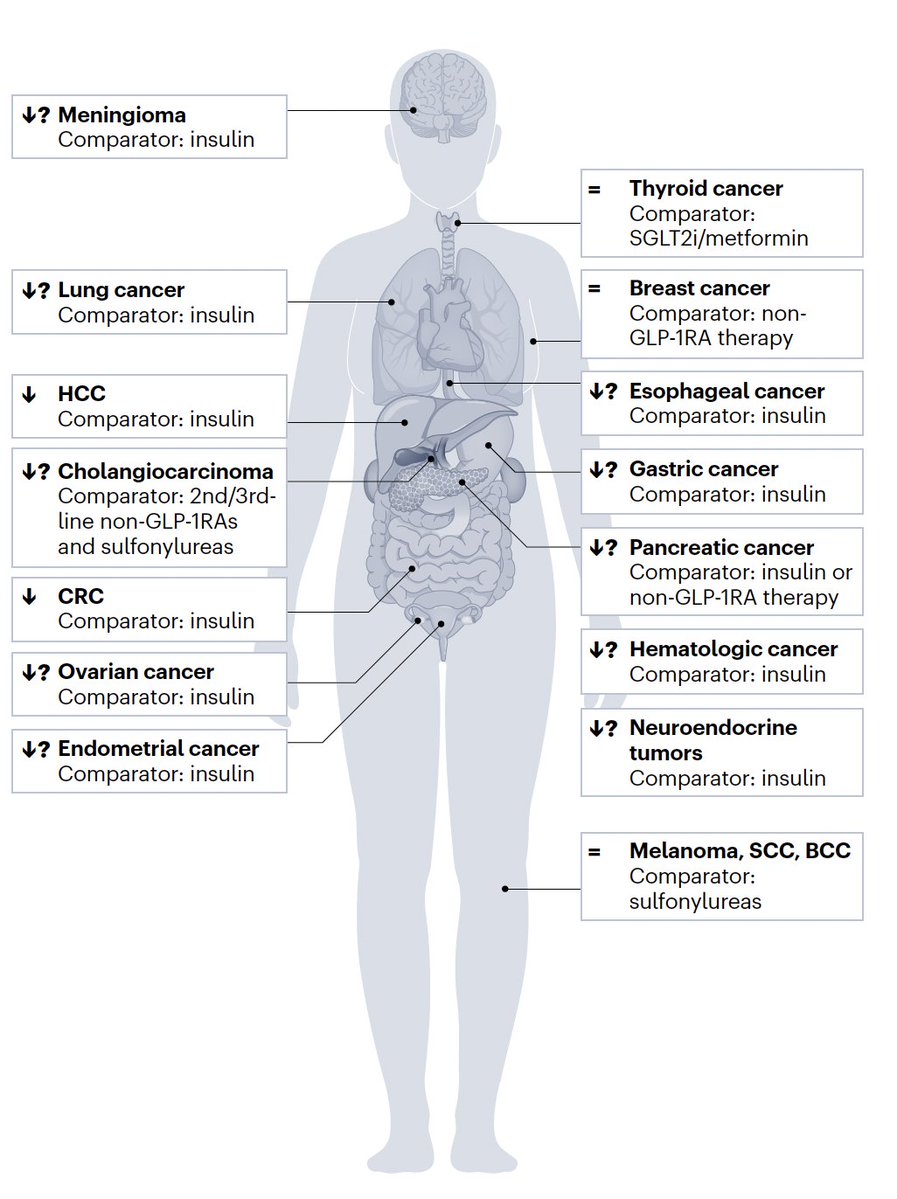
Can GLP-1 drugs reduce the incidence of cancer, independent of weight loss? Results from cohort studies are encouraging for many types (Figure) and clinical trials are ongoing @NatureCancer nature.com/articles/s4301…
Eric Topol tweet media
English
20
221
814
67.7K
Parth Shah
Parth Shah@ParthSharesBio·
Great reminder as #pharma goes to market in a new era with new capability needs.
Founder Mode@Founder_Mode_

Jensen Huang on how to structure a company: "Don't worry about how other companies' or charts look. You start from first principles. Remember what an organization is designed to do. The organizations of the past where there was a king, you know, CEO, and then you have all these, you know, the royal subjects, you know, the royal court, and then e-staff. And then you keep working your way down. Eventually, they're employees. But the reason why it was designed that way is because they wanted the employees to have as little information as possible because the fundamental purpose of the soldiers is to die in the field of battle, to die without asking questions. You guys know this. I only have 30,000 employees. I would like none of them to die. I would like them to question everything. Does that make sense? And so the way you organize in the past and the way you organize today is very different. Second, the question is, what does NVIDIA build? An organization is designed so that we could build whatever it is we build better. And so if we all build different things, why are we organized the same way? Why would this organizational machinery be exactly the same, irrespective of what you build? It doesn't make any sense. You build computers, you organize this way. You build health care services, you build the same way. It makes no sense whatsoever. And so you have to go back to first principles. Just ask yourself, what kind of machinery? What is the input? What is the output? What are the properties of this environment? What is the forest that this animal has to live in? What are its characteristics? Is it stable most of the time? You're trying to squeeze out the last drop of water? Or is it changing all the time, being attacked by everybody? And so you've got to understand, if you're the CEO, your job is to architect this company. That's my first job, to create the conditions by which you can do your life's work. And the architecture has to be right. And so you have to go back to first principles and think about those things. And I was fortunate that when I was 29 years old, I had the benefit of taking a step back and asking myself, how would I build this company for the future, and what would it look like? And what's the operating system, which is called culture? What kind of behavior do we encourage, enhance? And what do we discourage and not enhance? So on and so forth..."

English
0
0
0
61
Parth Shah đã retweet
BowTiedBiotech 🧪🔬🧬
BowTiedBiotech 🧪🔬🧬@BowTiedBiotech·
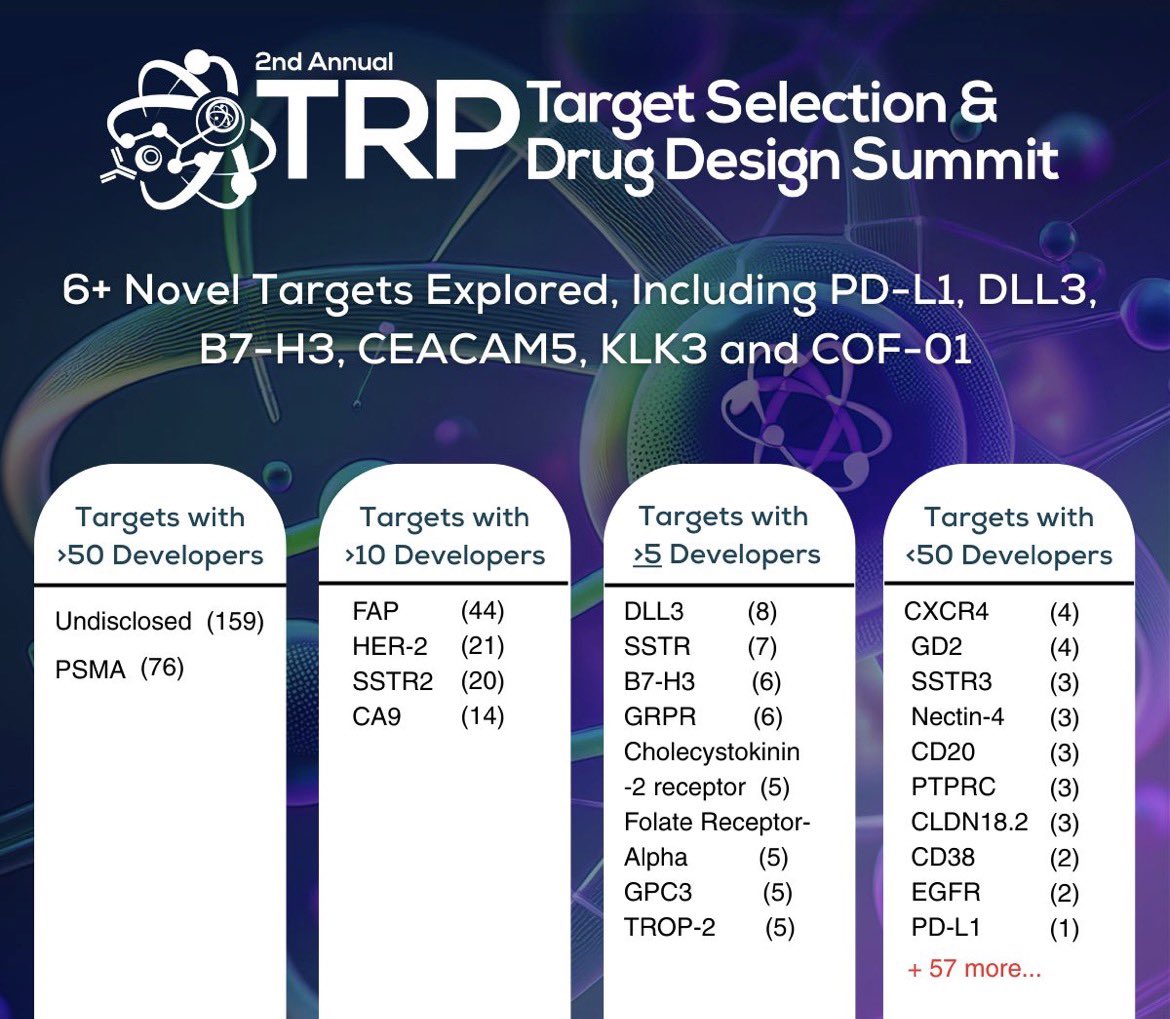
COMPETITIVE INTENSITY IMPACT ON INVESTMENT SELECTION When a target has 10–50+ developers, you are not underwriting biology. You are underwriting a knife fight and you know what they say about a knife fight right? You don’t stay, you run away! Ideal investment filter >Best case: real path to 10x+ (mega-blockbuster or platform pull-through) >Base case: still works at 3–5x without hero assumptions If the target cannot clear both, pass. >Crowded targets compress returns PD-L1, PSMA, HER2, TROP-2, B7-H3 >Great targets. >But most outcomes get pushed into niche labels, weaker pricing, faster obsolescence. >Incremental does not win Crowded targets need differentiation: >modality edge >delivery unlock >safety asymmetry >combo dominance >manufacturing advantage Question to ask before you invest Can this target still deliver 10x upside, and if it doesn’t, can it still deliver 3–5x, in a crowded field? …arma-target-selection-drug-design.com
BowTiedBiotech 🧪🔬🧬 tweet media
English
0
3
18
2.3K
Parth Shah đã retweet
Ohad Hammer
Ohad Hammer@ohadhammer·
China biotech landscape update from Jefferies. Unprecedented level of activity and R&D productivity, only question is what the industry is going to do with so many interchangeable programs.
Ohad Hammer tweet mediaOhad Hammer tweet media
English
6
46
237
19.5K
Parth Shah đã retweet
Professor Oak
Professor Oak@Prof_Oak_·
Beautiful work, beautifully summarized
Niko McCarty.@NikoMcCarty

The model of gene expression taught in school is highly misleading! Transcription factors are proteins that bind to DNA and then help repress, or activate, the expression of genes. Cells have hundreds of different types of transcription factors, each tuned to regulate different genes based on short snippets of DNA located near those genes. The basic model, taught in school, says that these transcription factor proteins float around the cell and, when they bump into a DNA sequence, either latch onto it strongly (CORRECT SITE!) or fall off quickly (WRONG SITE) and keep searching. All the other DNA in a cell is basically abstracted away as unimportant or irrelevant; mere background noise. But again, this model is naive! And a new paper, published in Cell, beautifully shows how the sequences SURROUNDING a transcription factor's binding site also matter a great deal. This won't be surprising to many biologists, as "cracks" in the standard two-state model began emerging decades(?) ago. Biologists have tagged transcription factors with fluorescent tags and then watched them move around living cells. And they have noticed that when transcription factors land in a "wrong" location in the genome, they skip or hop to a nearby location and repeat this until finally connecting with the "correct" sequence. So in other words, there are actually three states that a transcription factor can exist in: free-floating, "searching", or "bound." (More technically, transcription factors first do a 3D search, then latch onto DNA and do a 1D search to find the correct location.) For this new paper, though, scientists exhaustively quantified *how* the sequences flanking a transcription factor binding site influence the search of the protein. They did a huge in vitro experiment, wherein they placed a specific transcription factor with a known binding site, called KLF1, in a huge library of 11,812 different DNA sequences. These sequences had mutated "core" binding sites and variations in the flanking sequences. They also prepared negative controls. Then, these researchers measured the binding kinetics of KLF1 with each sequence to understand which bases in the flanking sites impact the 1D search. What they found is that KLF1 has a basically flat disocciation rate from its core sequence, but that the PROBABILITY that it finds this sequence depends a lot on the surrounding context. Even mutations located dozens of bases away from the core site matter a lot, either pushing KLF1 to "hop" faster to find the site, or "trapping" KLF1 and slowing down its search. These flanking sequences can cause up to a 40-fold variation in the affinity of a transcription factor for its target site! This is just one small part of the paper, though, so I encourage anyone interested to read the whole thing. It is challenging throughout.

English
1
5
35
17.1K
Parth Shah đã retweet
Camus
Camus@newstart_2024·
Roger Federer broke the internet with one statistic that will change how you see every setback in your life. 1,526 singles matches. Won almost 80% of them. 20 Grand Slams. 103 titles. Now answer honestly: What percentage of total points do you think he won across his entire career? 70%? 65%? 60%? Try … 54%. He lost literally almost EVERY SECOND POINT he ever played for 24 years. And still became one of the greatest of all time. Watch him explain it himself (2:07 of pure life-changing wisdom): “In tennis, perfection is impossible… When you lose every second point on average, you teach yourself to say: ‘Okay, I double-faulted — it’s only one point.’ ‘Okay I got passed at the net — it’s only one point.’ Even a screaming overhead smash that ends up on SportsCenter Top 10… still just one point. So when you’re playing your point, it has to be the most important thing in the world. The moment it’s over — it’s behind you. That mindset frees you to attack the next point, and the next, and the next with absolute intensity and clarity.” Then he looked at the crowd and said the line that hit a billion people in the soul: “The real sign of a champion is not that they win every point. It’s that they lose again and again and again… and have learned how to deal with it. Negative energy is wasted energy. Cry it out if you have to. Then force a smile. Move on. Be relentless. Adapt. Grow. Work harder — and work smarter.” Save this post. The next time you lose a deal, bomb a presentation, get ghosted, miss a deadline, or just have “one of those days” — come back here and read it again. You’re not falling behind. You’re just in the 46%. And the 46% is exactly where every single legend has spent most of their career. Keep playing the next point. (full 2:07 clip — sound on)
English
174
3K
16.1K
4.9M