Population Council, Pakistan

326 posts

Population Council, Pakistan banner
Population Council, Pakistan

Population Council, Pakistan

@PopCouncilPak

Population Council is an international research and technical organization working in the area of population and health. @PopCouncilPak @Pop_Council

Islamabad Tham gia Mayıs 2011
128 Đang theo dõi488 Người theo dõi
Population Council, Pakistan
Population Council, Pakistan@PopCouncilPak·
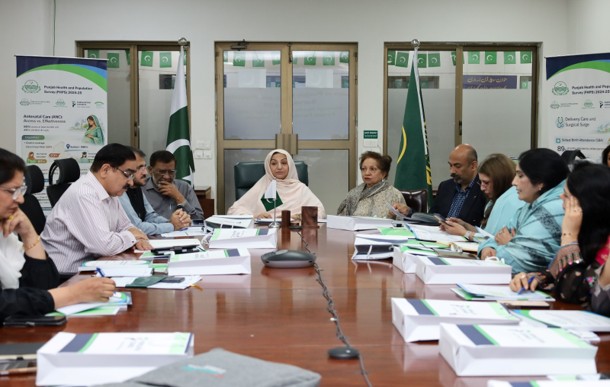
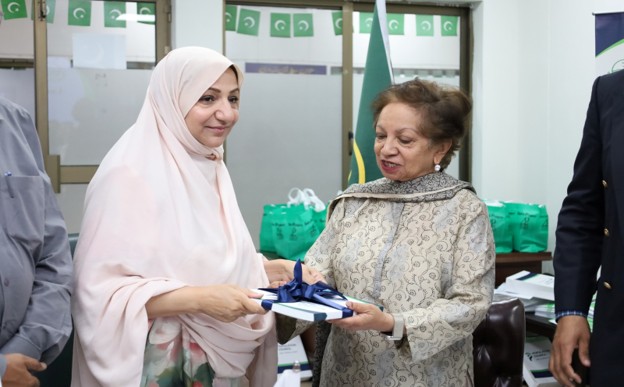
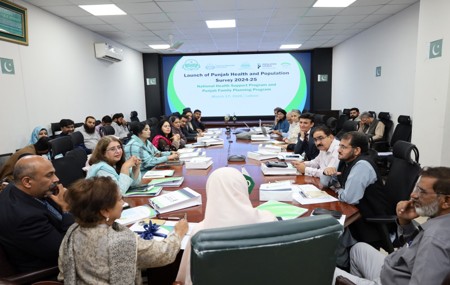
Punjab Health and Population Survey (PHPS) 2024–25 Launched in Lahore The Punjab Health and Population Survey (PHPS) 2024–25 was officially launched in Lahore on March 17, 2026, at a high-level ceremony organized by the Population Council in collaboration with the Bureau of Statistics Punjab. Conducted under the National Health Support Program (NHSP), PHPS 2024–25 is a significant step toward evidence-driven governance, supporting improved service delivery and progress toward Universal Health Coverage (UHC) in Punjab. The event commenced with remarks by Mr. Mumtaz Ahmed, Director, Bureau of Statistics Punjab, who highlighted the importance of reliable data in enabling informed decision-making across the province. Dr. Zeba Sathar (T.I.), Country Director, Population Council, emphasized the need for updated, district-level evidence to better understand evolving health and population challenges and support targeted policy responses. A joint presentation by the Population Council and the Bureau of Statistics Punjab provided insights into health service utilization, family planning trends, and disparities across districts. The Chief Guest, Ms. Saira Afzal Tarar, Member National Assembly and Advisor to the Chief Minister Punjab on Population, appreciated the collaborative efforts behind the survey and reaffirmed the Government of Punjab’s commitment to leveraging evidence-based data to strengthen health and population policies. The survey’s findings are expected to play a vital role in shaping policies, strengthening health systems, and improving outcomes across the province. #HealthAndPopulation #PHPS2025 #Punjab #PublicHealth #HPD #DataForDevelopment #UHC #Pakistan
Population Council, Pakistan tweet mediaPopulation Council, Pakistan tweet mediaPopulation Council, Pakistan tweet mediaPopulation Council, Pakistan tweet media
English
0
0
1
68
Population Council, Pakistan
Population Council, Pakistan@PopCouncilPak·
The Population Council, with support from FCDO [@ukinpakistan], launched its study “Unlocking the Stall in Fertility Decline and Socio-Economic Development in Pakistan on December 10, 2025. The study provides critical insights into the real causes of fertility stagnation and the resulting rapid population growth rate. While many countries have reduced their Population Growth Rate (PGR) and achieved significant socio-economic gains, Pakistan continues to lag behind. Key insights and recommendations from the study: 🔹 Fertility in Pakistan is stagnant, driving rapid population increase. 🔹 Weak socio-economic development and social norms are leading to persistently high desired fertility, negatively affecting development prospects. 🔹 Fertility behavior is closely associated with women’s educational levels. To bring population size in balance with resources and ensure people’s well-being, Pakistan must: ✅ Halve child mortality from 65 to 30 deaths per 1,000 births by 2035 ✅ Double the proportion of females with secondary education to 40% by 2035 ✅ Halve poverty levels and reduce inequality through sustainable and inclusive economic growth ✅ Improve access to voluntary, rights-based family planning services, alongside investments in girls’ education and women’s health ✅ Adopt a multi-sectoral approach linking growth in agriculture, manufacturing, and services with progress in health, education, employment creation, poverty reduction, and inequality reduction Dr. John P. M. Bongaarts, Ex–Vice President of the Population Council, said that unless we act now to reduce unmet need and strengthen FP services, Pakistan is on a trajectory of rapid population growth that will adversely impact its development progress. Dr. Zeba Sathar (T.I.), Country Director of the Population Council in Pakistan, emphasized that girls’ education and skills are critical for a transformed economy, improved health outcomes, and enhanced well-being. #PopulationCouncil #FCDO #PakistanPopulation #FertilityStagnation #SocioEconomicDevelopment #FamilyPlanning #WomensEducation #WomensHealth #ChildMortality #PopulationGrowth #PakistanDevelopment #EvidenceToAction
Population Council, Pakistan tweet mediaPopulation Council, Pakistan tweet mediaPopulation Council, Pakistan tweet mediaPopulation Council, Pakistan tweet media
English
0
0
1
59
Population Council, Pakistan
Population Council, Pakistan@PopCouncilPak·
👨‍👩‍👧 Pakistan Population Summit – Key Messages of Day 1 ➡️ The Population Summit 2025 called for urgent, concrete, and evidence-driven actions to bring Pakistan’s population growth rate into alignment with its available resources. Speakers emphasized that without immediate course correction, Pakistan’s ability to develop, prosper, and meet the Sustainable Development Goals (SDGs) will remain severely constrained. The persistently high dependency ratio, they noted, is undermining human capital formation, slowing economic progress, and impeding improvements in key social indicators. ➡️ Experts and policymakers reached a clear consensus: women’s empowerment must lie at the heart of any successful population management strategy. This includes raising women’s literacy levels, narrowing gender disparities in education and employment, and expanding access to quality family planning services to reduce the country’s high unmet need. Participants stressed that unless population management is fully integrated into the national development paradigm, Pakistan risks remaining trapped in a cycle of underdevelopment and poverty. ➡️ A strong call was made for political will and coherent implementation of a comprehensive population policy—one that ensures provincial participation, adopts a multisectoral approach, and is backed by sustained financing. Without such a coordinated national effort, the country will continue to face social instability and potentially cataclysmic consequences stemming from unchecked population growth. ➡️ Dr. Zeba A. Sathar, Country Director of the Population Council, highlighted the grave consequences of inaction: worsening maternal health outcomes, preventable mortality and morbidity, poor educational attainment, and Pakistan’s limited capacity to cope with the mounting impacts of climate change. She emphasized that expanding family planning services and scaling up programs for women’s empowerment are essential to ensuring that “no one is left behind.” She also noted that Pakistan is “clearly out of balance,” with a population growth rate that is double that of its neighbouring countries. ➡️ The Minister of Finance underscored the need for enhanced domestic resource allocation, stressing that Pakistan must expand access to reproductive health and family planning services without relying on external assistance. He also highlighted the importance of preparing the country to harness its demographic dividend, which requires substantial investment in youth skills—particularly in digital technologies, artificial intelligence, and blockchain. ➡️ British High Commissioner Ms. Jane Marriott reaffirmed the United Kingdom’s continued support for Pakistan’s social sector development efforts, describing the partnership as one that is delivering meaningful improvements in the lives of Pakistani citizens. ➡️ Senior economists Dr. Hanid Mukhtar and Vice Chancellor LUMS Dr. Ali Cheema emphasized the critical link between economic revival and a declining population growth rate. Smaller families, they noted, lower the dependency ratio, boost both household and national savings, and free up government resources—allowing a shift from essential infrastructure spending toward broader economic development initiatives. ➡️ Overall, the Summit concluded with a unified message: Pakistan stands at a pivotal moment, and the choices made today will determine whether the country moves toward a stable, prosperous future or remains constrained by demographic pressures. The time for action, participants emphasized, is now. #PopulationSummit2025 #PopulationGrowth #SustainableDevelopment #SDGs #PakistanDevelopment #DemographicTransition #HumanCapital #EconomicGrowth
Population Council, Pakistan tweet mediaPopulation Council, Pakistan tweet mediaPopulation Council, Pakistan tweet mediaPopulation Council, Pakistan tweet media
English
0
0
1
53
Population Council, Pakistan
Population Council, Pakistan@PopCouncilPak·
It is crucial to remember that lowering population growth is not just another need to be catered to – it may well be the key to reducing the pressure and bringing our population and resources in balance. At the Population Summit 2025, stakeholders will have the opportunity to decide: do we take the bold steps forward to restore Tawazun? Or, do we continue to slide back? Writes Dr. Zeba Sathar (T.I.), Country Director Population Council in a special feature published by Dawn on Population Summit 2025. epaper.dawn.com/DetailNews.php…
English
0
0
0
32
Population Council, Pakistan đã retweet
Population Council
Population Council@Pop_Council·
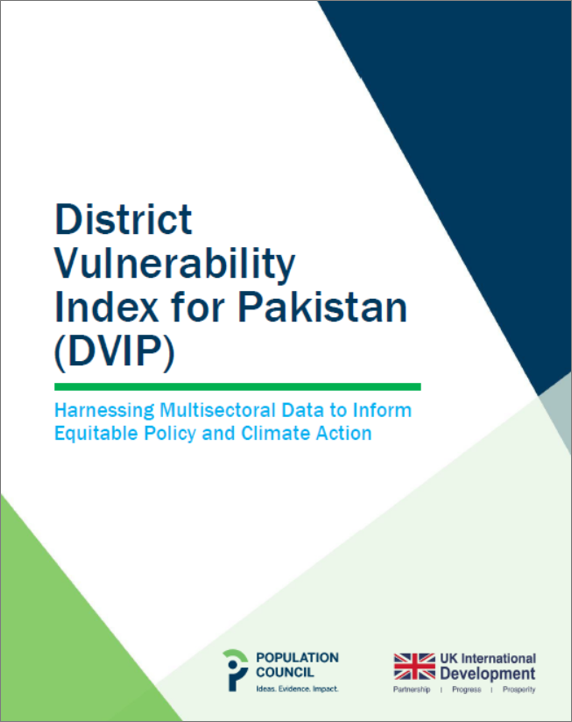
This week, @PopCouncilPak launched the District Vulnerability Index for Pakistan (DVIP), a tailored instrument for assessing vulnerability across the country and highlighting what communities need resources & support the most. Read the report for more ➡️ bit.ly/47S3Nsn
Population Council tweet mediaPopulation Council tweet mediaPopulation Council tweet mediaPopulation Council tweet media
English
0
1
3
211
Population Council, Pakistan
Population Council, Pakistan@PopCouncilPak·
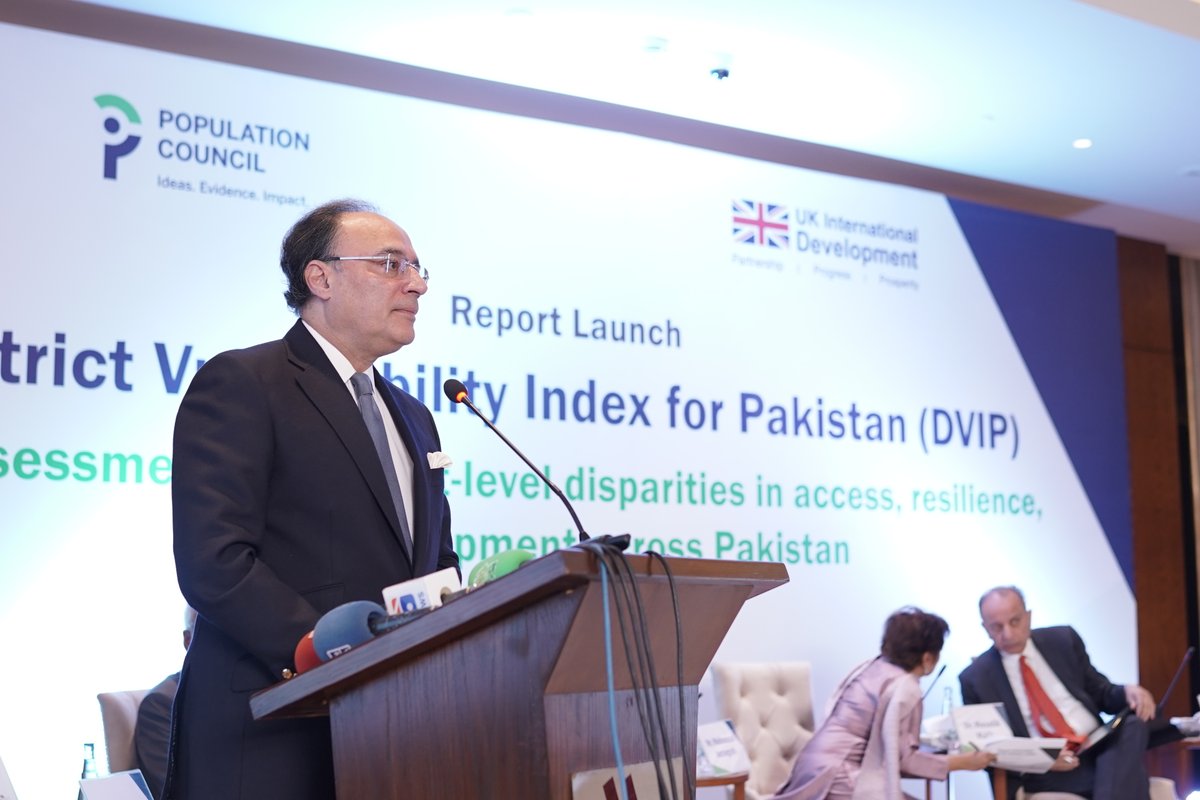
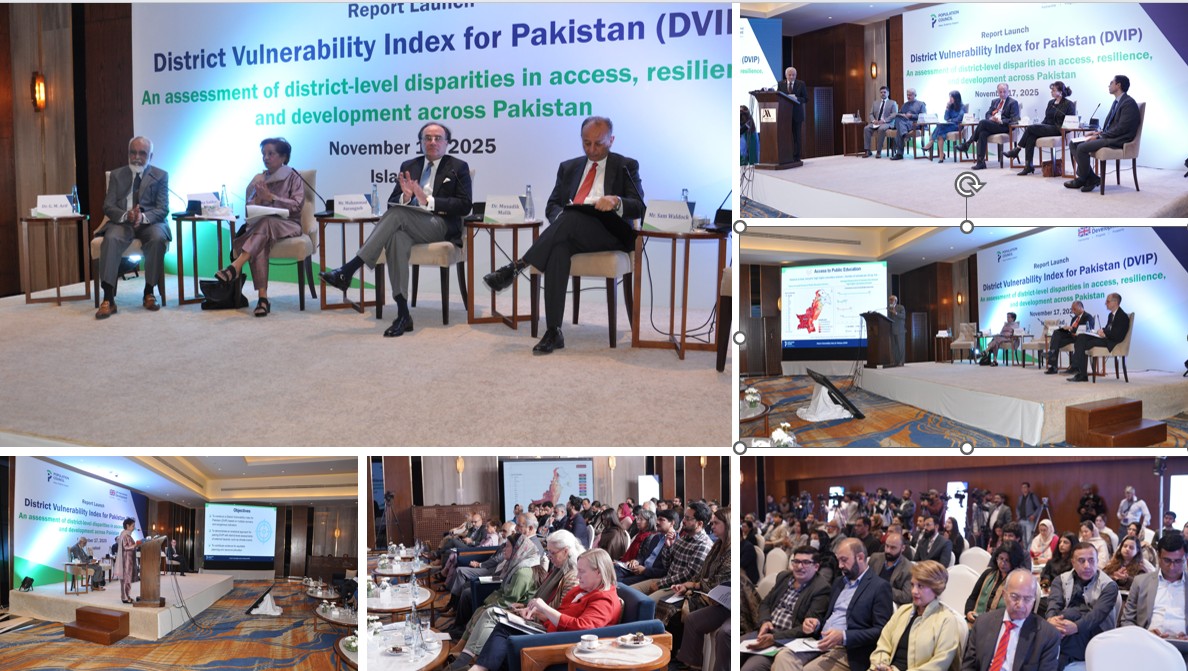
At the launch of the District Vulnerability Index for Pakistan (DVIP), Climate Change (@ClimateChangePK) Minister Dr. Musadiq Malik shared several important insights on how Pakistan can better support its most vulnerable regions. He emphasized the need to reduce regional inequalities by directing more resources toward districts facing the greatest challenges. He noted that the DVIP report provides a clearer understanding of priority areas to support more inclusive and equitable planning. Dr. Musadiq Malik also highlighted that the current NFC formula rewards population growth, and called for a shift toward a model that favors indicators like social-sector progress, poverty reduction, and human development, so that resources reach those who need them the most. Reaffirming the government’s commitment, he stressed the importance of ensuring that every citizen has opportunities for a dignified life, which includes addressing structural gaps, expanding education and health facilities, improving connectivity, and increasing fiscal space where it matters. He further shared the government’s focus on promoting innovative, world-class climate solutions with business and export potential, essential for building climate resilience during a time of fiscal constraints. Adding to the discussion, Dr. Imtiaz Ahmed, Chief Economist at the Ministry of Planning (@PlanComPakistan), appreciated the DVIP as a valuable tool for guiding development planning, including progress toward the SDGs. He recommended that the DVIP analysis be updated every two years to track improvements, measure change, and ensure planning remains aligned with emerging data and risks. #DVIP #PopulationCouncil #ClimateResilience #RegionalDevelopment #DataForPolicy #SustainablePakistan #InclusivePlanning
Population Council, Pakistan tweet mediaPopulation Council, Pakistan tweet mediaPopulation Council, Pakistan tweet media
English
0
0
2
93
Population Council, Pakistan
Population Council, Pakistan@PopCouncilPak·
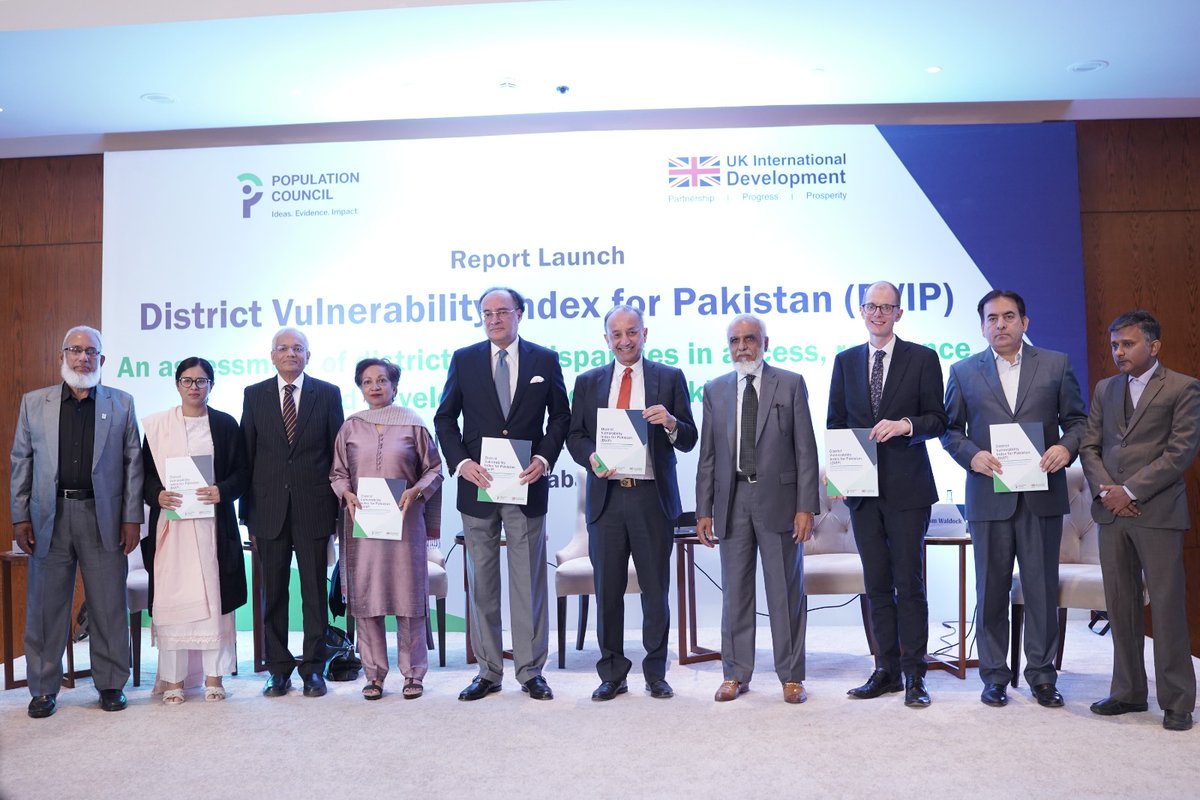
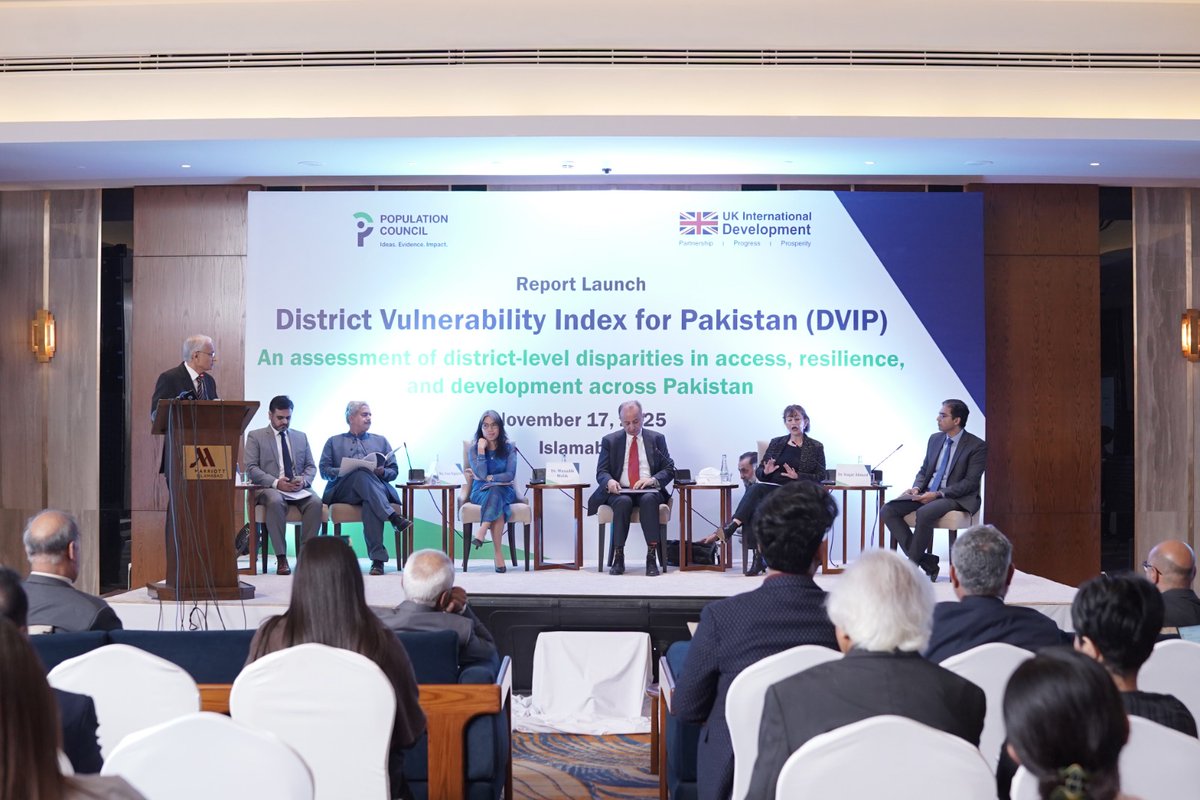
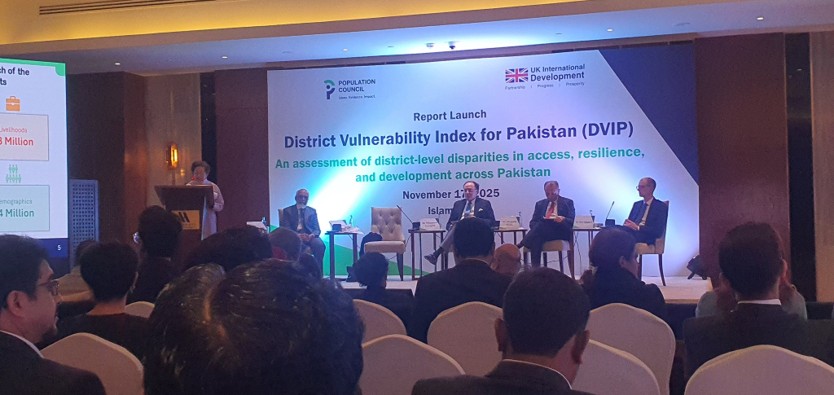
The District Vulnerability Index for Pakistan (DVIP) was launched on November 17, 2025, in Islamabad. The report presents an assessment of district-level disparities in access, resilience, and development across Pakistan, helping highlight where support and attention are needed the most. The launch event brought together senior government leadership, including Federal Finance Minister Senator Muhammad Aurangzeb and Climate Change Minister Dr. Musadiq Malik, along with development partners and experts dedicated to strengthening Pakistan’s planning and decision-making. Federal Finance Minister Senator Muhammad Aurangzeb emphasized that Pakistan’s long-term progress depends on addressing two major challenges together: rapid population growth and rising climate risks. He reaffirmed the government’s commitment to integrating population and climate priorities into national budgeting and policy planning, noting that “data must guide our decisions.” The Finance Minister also appreciated the Population Council for developing the DVIP, recognizing it as a useful, research-based tool that clearly highlights districts most in need. He concluded with a clear message: “Using the DVIP in national planning will help ensure equity, resilience, and targeted support where it is needed the most.” 📘 The soft copy of the report can be downloaded here: doi.org/10.31899/sbsr2… 🌐 An interactive version of the report is also available at: dvip.pcpak.org
Population Council, Pakistan tweet mediaPopulation Council, Pakistan tweet mediaPopulation Council, Pakistan tweet mediaPopulation Council, Pakistan tweet media
English
0
1
2
238
Population Council, Pakistan
Population Council, Pakistan@PopCouncilPak·
Pakistan is a global climate vulnerability hotspot. And the toll of every flood, every heatwave, and every drought is exacerbated by a large and growing population. This ‘new normal’ of growing risk and human cost demands strategic resilience-building that goes beyond disaster responses to address vulnerability itself. Vulnerability is not a monolith. In Pakistan, it is a complex tapestry woven from threads of socioeconomic disparity, variable access to resources, and geographic isolation. To build resilience, we must know where and how deficits are converging to create the foundation of vulnerability upon which climate impacts and other shocks can become catastrophic. In this context, we are proud to introduce the District Vulnerability Index for Pakistan (DVIP)—a tool that leverages Pakistan’s own robust data systems, including the latest 2023 Census, to provide a granular and multifaceted view of vulnerability across the country. Using 21 indicators, the DVIP maps vulnerability in the following six domains: 🏠 Housing (e.g., type of structure, water access) 🚌 Communication & Transportation (e.g., distance to roads) 💼 Livelihoods (e.g., employment type) 🏥 Access to Health Services (e.g., distance to facilities) 🎓 Access to Public Education (e.g., school availability & proximity) 👥 Demographics (e.g., dependency ratios) The DVIP’s flexible design enables pairing with climate and other hazard assessments to: · Pinpoint districts where high external risks overlap with deeper inherent vulnerability. · Examine the interplay of overall and domain vulnerability with external shocks. The DVIP can empower policymakers and practitioners across sectors to: ✔️ Ground strategies in rigorous evidence. ✔️ Direct resources where they are most needed. ✔️ Build resilience that addresses root causes, not just symptoms. 👉 Explore the full report and dive into the data here: doi.org/10.31899/sbsr2… #PopulationCouncil #Pakistan #ClimateChange #Vulnerability #Resilience #DVIP #DataForDevelopment #Policy #ClimateFinance #DAFPAK #FCDO #Census2023 #SustainableDevelopment
Population Council, Pakistan tweet media
English
0
3
2
285
Population Council, Pakistan
Population Council, Pakistan@PopCouncilPak·
This resolution calls for urgent, comprehensive measures to bring 🇵🇰’s population growth rate to sustainable levels—aligning it with the country’s renewable & non-renewable resources. A major step towards sustainable development & a prosperous future.
English
0
0
1
30
Population Council, Pakistan
Population Council, Pakistan@PopCouncilPak·
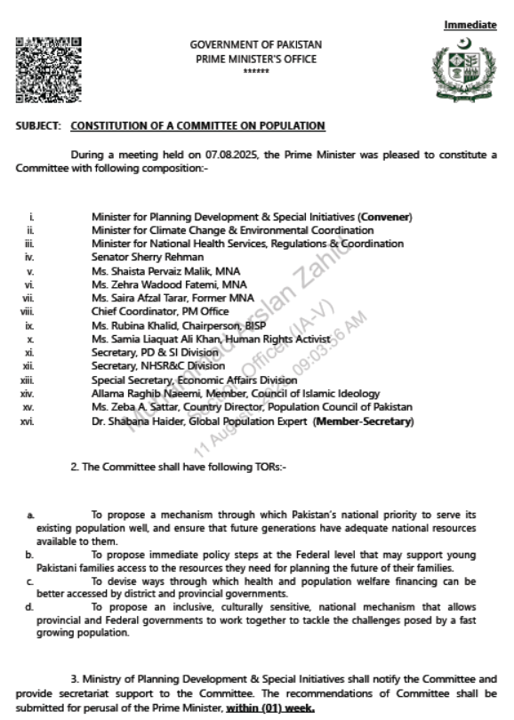
After an Aug 7 meeting on population growth, the PM has formed a committee on population reforms—a critical step toward shaping a better future for Pakistan.
Population Council, Pakistan tweet mediaPopulation Council, Pakistan tweet media
English
0
1
2
52