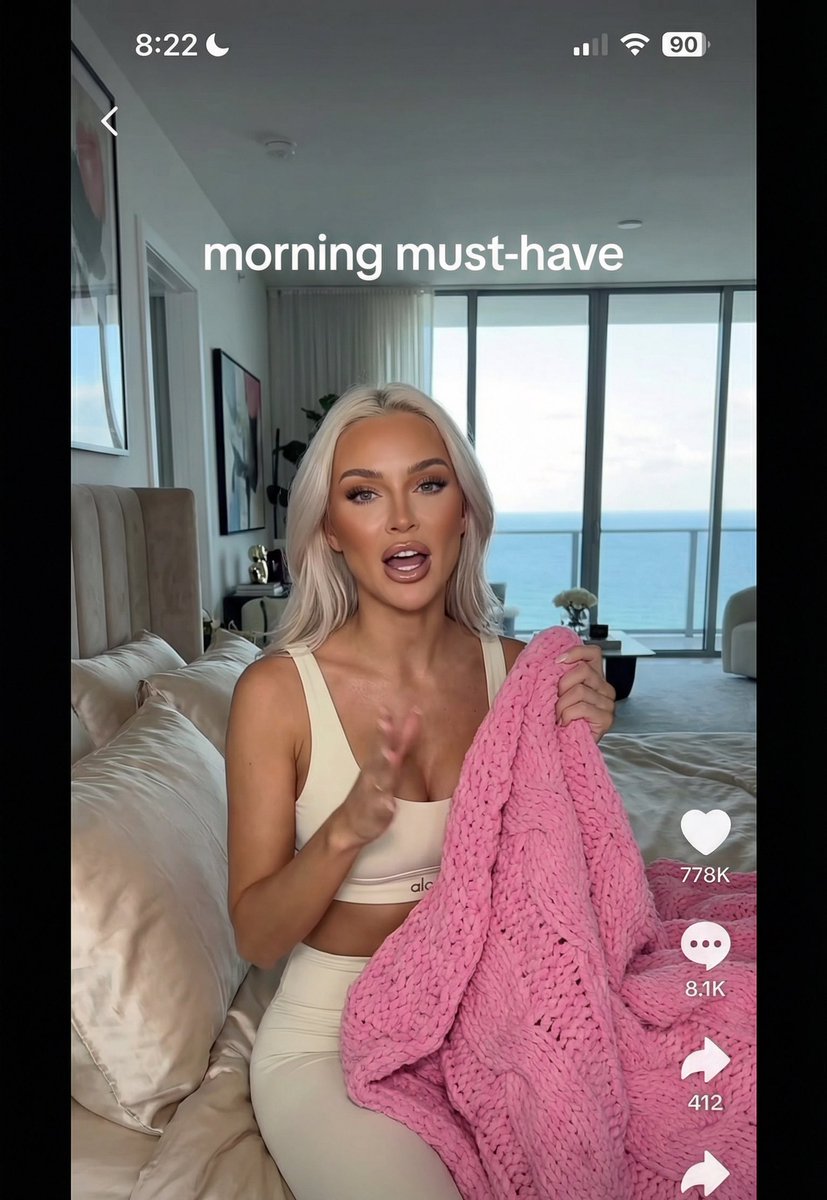
We replaced a $750K/year marketing team with 12 AI Agents.
No actors.
No products in hand.
No ghost creators.
No missed deadlines.
Just viral TikTok Shop sales — 24/7.
Here’s the crazy part:
This system produces 100+ cinematic, product-ready ads per day from a single prompt.
And it feels exactly like running Facebook Ads in 2008 — except the CPMs are even lower, and the entire loop is organic.
Here’s how the AI Creator Agent System works 👇
Each Agent runs its own TikTok Shop profile and handles an entire growth function:
• Trend + angle research using Kalodata
• Competitor ad cloning (paste their ad → pick an avatar → regenerate)
• Automated creator outreach with Clawdbot moltbot
• Daily content generation using Arc Ads
• Localization, repurposing, and multi-format output
• Compliance cleanup + optimization
• Automatic posting across a Multi-Platform Swarm (hundreds of agents)
No touchpoints.
No delays.
No human bottlenecks.
Just a decentralized force of AI + UGC creators selling while you sleep.
Real results:
• $0.10 CPMs
• Thousands of organic views daily
This is the Creator Agent Method: a plug-and-play system that replaces entire creative teams and launches content at a speed humans simply can’t compete with.
I packaged all 12 Agents + AI V2 workflow so you can deploy the exact system for your brand.
Comment AGENT and I’ll DM you everything for free.
(Deleting soon)
P.S. Repost for early access to the complete 12-Agent stack
I just built a full “UGC Studio in a Box” using Kling 3.0 + Linah AI — and it’s insane.
One product photo in → 50+ UGC-style ads, lifestyle images, hooks, angles, and scripts out.
Fully automated.
Perfect for DTC brands, agencies, and creators who are sick of spending days coordinating creators, chasing revisions, and waiting on content.
Here’s the real problem with UGC today:
You spend hours searching for creators…
Wait a week for clips…
Receive videos that don’t match your brief…
Then spend more time editing, rewriting, resizing, and re-exporting.
The process is slow, unpredictable, and extremely expensive.
This Linah AI system fixes all of that:
You set up your brand once — tone, audience, product benefits, style — and Linah does the rest.
Here’s what the automation does:
→ Upload your product photo
→ Linah analyzes: audience, angle, competitive landscape
→ Generates dozens of UGC scripts (hooks, problem statements, POVs, testimonials)
→ Uses Nano Banana Pro to create lifestyle visuals & product scenarios
→ Builds UGC-style video ads with creator personas that match your brand
→ Auto‑formats for TikTok, Meta, Reels, Shorts
→ Gives you export‑ready, launch‑ready ads instantly
What this system outputs:
- 50+ UGC variations per product (POV, testimonial, demo, listicle, 3‑reason ads)
- Storyboards + scripts
- Hook variations for testing
- Lifestyle images + text overlays
- Thumbnail concepts
- Multi-platform formats (1080×1920, 1:1, 4:5, 16:9)
- Swipe files based on your niche
- Product explainer graphics
- Caption ideas + CTA options
All from a single input.
No creators.
No reshoots.
No waiting.
No ghosting.
Just nonstop content.
Features built into this Linah UGC Studio:
✓ UGC Persona Engine
Dozens of realistic creator identities you can reuse across ads.
✓ Angle Intelligence
Linah breaks your product into benefits → rewrites them into hooks that convert.
✓ Visual Generator (powered by Nano Banana Pro)
Lifestyle scenes, hands‑on shots, testimonial environments, real-feel UGC backgrounds.
✓ Ad Assembly Mode
Puts everything together into scroll‑stopping TikTok‑style videos.
✓ Multi‑Platform Auto‑Formatting
Every ad is instantly resized and re‑optimized for TikTok, Meta, Reels, Shorts.
✓ Batch Mode
Create 20, 50, even 100 ads in a single run.
I recorded a full walkthrough showing:
→ How the entire Linah UGC Studio works
→ How to generate huge volumes of UGC automatically
→ How to integrate Nano Banana Pro for visuals
→ How to plug this setup into your current workflow
→ And how brands are using it to scale creative 10× faster
If you want access to the full breakdown + setup:
👉 LIKE this post + REPOST
👉 Comment “KLING”
I’ll DM it (must be following).
THIS IS A VERY NICHE TWEET but anytime I hear someone mention Ebitda I just break into the mourner's kaddish in my head like Ebitda v'yitkadash sh'mei raba
@saranormous I’ll bet each button has its own PM, in different orgs, and that feature has been “on the roadmap” for 3 years but won’t get any of them a promo so will never happen 🫠
@carlvellotti Find the graveyard of failed features from the past 5 years, talk to anyone with institutional knowledge of why they failed (eg right product wrong time? HIPPO'd?, so you don't repeat the same mistakes
“Let me not be discouraged by my failings. Let me take heart from all that is good & noble in my character. Keep me from falling victim to cynicism. Teach me sincerity, enthusiasm. Endow me w/ perception & courage. May I serve others w/ compassion & love.”
Shabbat shalom. ✨🤍
One of the most interesting metrics of company culture is what I call the "work to do the work." How much time is spent on information gathering, stakeholder alignment and decision making, and how much is spent on actually doing the thing. An early startup's biggest advantage is that alignment tends be easy, since you have a small team all working on the same product, a founder who is the ultimate decision maker, and a necessary bias to action (maybe a 1:10 WTDTW:W ratio). As you scale, this ratio invariably shifts: bigger teams, more hierarchy, more complexity, more feedback to inform future decisions. Good processes should be in service of helping teams make and communicate well-informed decisions so they can still spend the bulk of their time actually moving things forward.
The problem with a high WTDTW ratio isn't just that it slows teams and companies way down, but that it changes the incentives of an organization. In a company with a 10:1 ratio, for example, employees are rewarded for their ability to navigate and influence the organization, rather than producing results. I distinctly remember a moment in my career when I realized, with horror, that I was pouring the vast majority of my creative energy into solving problems in the WTDTW realm (and getting real personal satisfaction from playing that role well)...but I was exhausted by the time we actually got to execute. And it's a dangerous trap, especially for executives, to think that all the "strategy" is in the WTDTW bucket, because the creativity, iteration and debate that goes into actually bringing something to life is where the magic happens, whatever your company's size. 🪄