
Web Club

3.8K posts

Web Club banner
Web Club

Web Club

@WebClubCo

Applying technology, systems and networking to grow a global community of like minded individuals, entrepreneurs and freelancers.

Melbourne - Australia Tham gia Aralık 2014
803 Đang theo dõi856 Người theo dõi
Web Club đã retweet
Alex Olim
Alex Olim@alexolim_·
TLDR: - Build the product with marketing in mind - product and distribution are one - Positioning > features; get the frame right before you build more - The market will tell you what to build if you listen; let viral videos rewrite your product - Rebuild your screens until users can "get it" instantly - Nurture your creators and make them feel like part of the team
English

1
2
21
5.6K
Web Club
Web Club@WebClubCo·
@HedgieMarkets The biggest bubble is our lifetime. Can't wait for the pop. Billions & trillions valuations yeah right!!
English
0
0
0
58
Hedgie
Hedgie@HedgieMarkets·
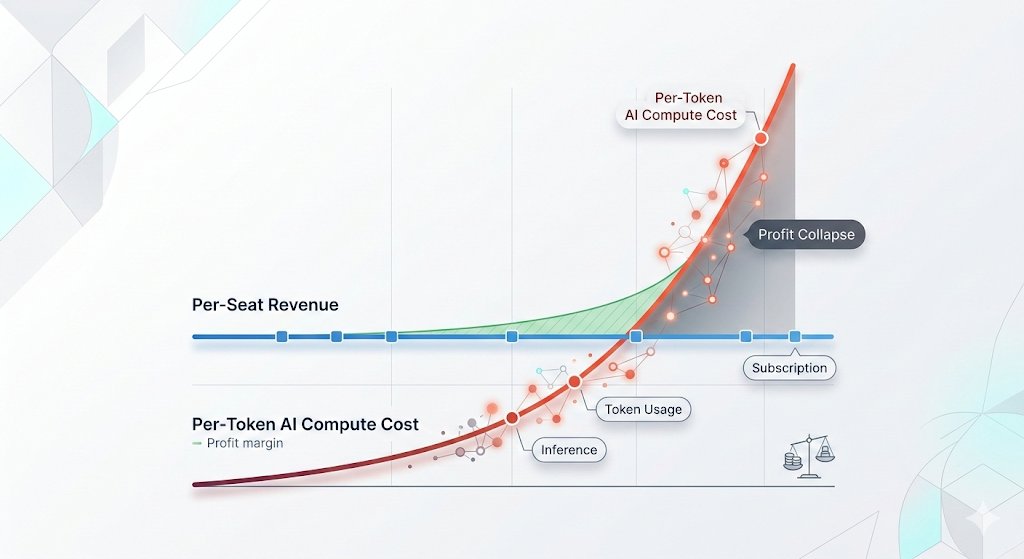
🦔Microsoft canceled its internal Claude Code licenses this week after token-based billing made the cost untenable, even for a company with effectively infinite cloud resources. Uber's CTO sent an internal memo warning the company burned through its entire 2026 AI budget in just four months. American AI software prices have jumped 20% to 37%, and GitHub (owned by Microsoft) is dropping flat-rate plans for usage-based billing across its products. My Take The AI subsidy era is ending in real time. The same company that put $13 billion into OpenAI and built the Azure infrastructure powering most of Anthropic's compute just looked at the bill from a competitor's coding tool and decided it was not worth paying. That is not a productivity failure on Anthropic's end. Token-based pricing is forcing every enterprise customer to confront the actual cost of running these models at scale, and the number turns out to be far higher than the flat-rate experiments suggested. This ties directly to my Gemini Flash post yesterday. Anthropic, OpenAI, and Google all raised effective prices in the last six months. Enterprises that built workflows assuming AI costs would keep falling are now watching annual budgets evaporate in months. Two outcomes look likely from here. Either enterprises scale back AI usage to fit budgets, which slows the revenue ramp the labs need to justify their valuations ahead of IPOs, or the labs cut prices and absorb the losses, which makes the unit economics worse at exactly the wrong moment. Both paths land in the same place, the numbers stop working, and somebody has to take the writedown. Hedgie🤗
Hedgie tweet media
English
1.1K
4K
20K
8.3M
Web Club đã retweet
starmex
starmex@starmexxx·
GREG ISENBERG JUST INTERVIEWED A SOLO FOUNDER WHO MAKES $1,000,000 A YEAR BUILDING AI AGENTS FOR REAL ESTATE AGENTS the agents cost $5,000 to $10,000 a month per client. boring industries pay the most. real estate, insurance, manufacturing, legal. they have money and they hate using ai he uses obsidian as his second brain because notion can't run agents that actually do work for him his entire stack: granola, trello, loom, superhuman, asana, codex, hermes, orgo, composio, agent mail. gpt 5.5 by default. claude opus for long coding sessions 99% of the market doesn't know what an ai agent is yet. that's the moat. you don't need to be the smartest. you need to be the one who calls them first the full breakdown is in the 45 minute video and it's worth every minute bookmark this and read the article below
leopardracer@leopardracer

x.com/i/article/2056…

English
82
198
2.3K
489.9K
Web Club
Web Club@WebClubCo·
@gregisenberg All speculative but viable. Like any start-up ideas are nothing without reach and luck.
English
0
0
0
71
Web Club đã retweet
GREG ISENBERG
GREG ISENBERG@gregisenberg·
The 36 BIGGEST startup opportunities right now 1. biggest b2c: solving loneliness. third spaces, community apps, IRL 2. biggest b2b: managed AI employees for businesses 3. biggest overlooked: elder tech. 70 million boomers who want products that make them happier & healthier 4. biggest mobile: action apps that do things, not apps you stare at 5. biggest trades: matching platforms for electricians, plumbers, HVAC. supply shrinking 6. biggest consumer social: small social. group chats as products, no feeds, no ai slop 7. biggest ecommerce: agents that recommend products you'll like, shop, buy for you 8. biggest creator: live shows and unscripted content 9. biggest edtech: AI tutors that adapt through conversation 10. biggest SaaS: pay-per-outcome pricing 11. biggest auto: AI service advisor for dealerships. answers the same 15 questions 24/7 12. biggest talent: training non-technical people to operate agents 13. biggest boredom: curated offline experiences delivered to your door. kits, games, challenges. anti-screen products 14. biggest spiritual: the need for belonging is exploding, new formats of spiritual get togethers 15. biggest wellness: longevity biomarkers you actively manage 16. biggest mobile: action apps that do things, not apps you stare at 17. biggest one to solve ai slop: digital verification that you're a real human. every platform will need this within 2 years 18. biggest infrastructure: agent permissions, security, audit trails 19. biggest media: AI native media companies. build distribution, sell products later. 20. biggest parenting: family ops automation. forms, scheduling, logistics 21. biggest accounting: bookkeeping agents that charge per transaction 22. biggest fashion: brand-owned resale. every brand wants to control their secondary market 23.biggest hobbies: adult learning for joy. pottery, woodworking, drawing. 24. biggest skincare: at-home diagnostics. scan, get a protocol, track progress 25. biggest agriculture: precision farming tools for small farms. enterprise version exists, family farm doesn't 26. biggest pest control: subscription pest prevention instead of reactive treatment. the model flip that lawn care already made 27. biggest regulated: on-device AI. healthcare, legal, finance open up when data stays local 28. biggest gaming: AI characters with real memory and relationships 29. biggest dating: agent-mediated matchmaking 30. biggest fitness: adaptive coaching that rewrites your program daily 31. biggest travel: autonomous trip planning and rebooking 32. biggest food: personalized nutrition based on blood work and gut biome 33. biggest pet: health monitoring. $140B industry, almost no tech 34. biggest defense: AI-native security and compliance tools 35. biggest robotics: physical AI. $30 brains on existing hardware 36. biggest nostalgia: products that feel analog. vinyl, paper, handmade. counter-positioning against AI everything
English
251
417
3.4K
338.3K
Web Club đã retweet
Chamath Palihapitiya
Chamath Palihapitiya@chamath·
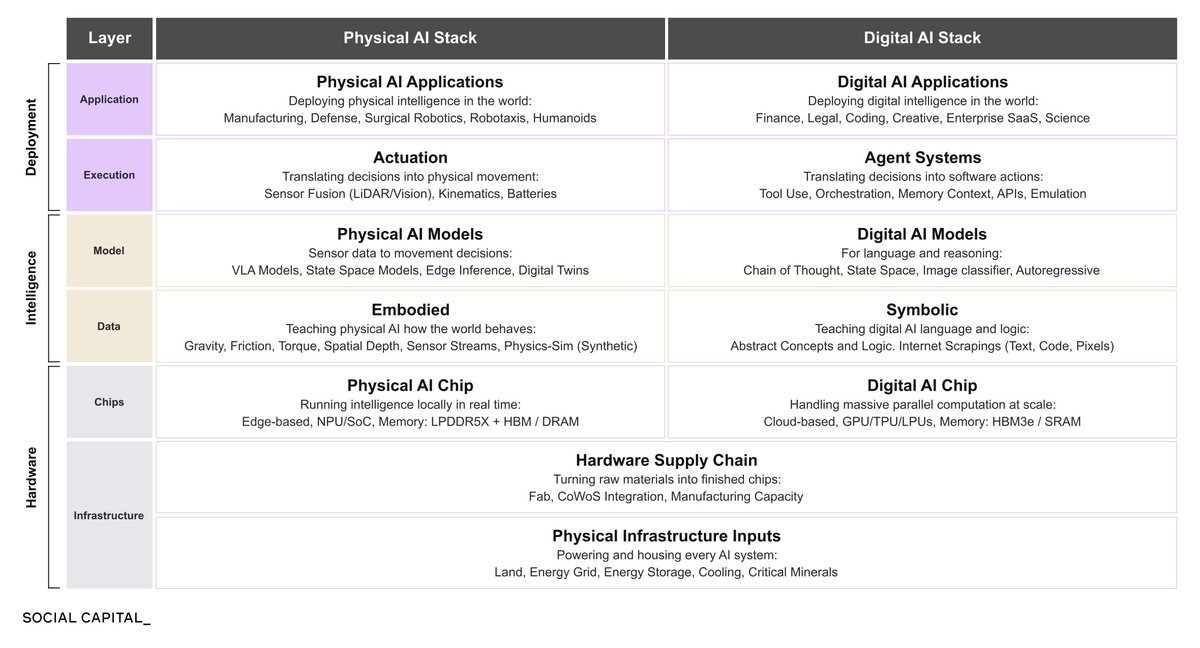
A framework to understand how value accrues across the AI stack. This is a blueprint for understanding what builds AI into its pragmatic parts: what each layer is, where it ends, and where value is accrued. So here’s how you can think about it: 1. Layer 1 - Infrastructure Before any AI model trains or any robot moves, an industrial foundation must exist. Land, energy grids, cooling systems, critical minerals, and fabrication facilities. Infrastructure is the constraint that all the other layers depend on. 2. Layer 2 - Chips Transistors that are etched onto silicon wafers using extreme ultraviolet light. This is what allows both physical and digital AI to take an input, process it, and return a predictive output. The more transistors that fit on a chip, the more computation it can perform. 3. Layer 3 - Data Both digital and physical models train on data. Digital models train on text, code, and images; physical models train on gravity, friction, depth, and sensor streams. The more accurate the data, the more accurate the output. 4. Layer 4 - Models A model is a system that learns from examples. Feed it enough examples of inputs paired with correct outputs, and it adjusts its internal structure until it can predict correct outputs on inputs it has never seen before. LLMs represent a specific class trained on text. They learn by processing billions of examples of human language, developing the ability to write, reason, summarize, and generate code. 5. Layer 5 - Execution This is what lets models take actions on behalf of users. The execution layer lets models pursue objectives through sequential action: observing the environment, reasoning about the next step, acting, and looping until the goal is reached. 6. Layer 6 - Application All of the AI Stack’s revenue originates at the application layer, then goes to the layers below. Every dollar paid for AI is paid for an outcome, a task completed, and an answer delivered. Nobody wants H100s for their own sake. They want H100s because someone, somewhere, wants to run an application. These are the different layers that make up the entire ecosystem of AI. We did a full study on the AI stack. If you want to read about it, head over to my Substack (chamath.substack.com/p/the-ai-stack)
Chamath Palihapitiya tweet media
English
105
221
1.6K
162.2K
Web Club đã retweet
GREG ISENBERG
GREG ISENBERG@gregisenberg·
I'm giving away a FULL course on how to build a managed AI agent business solo using Hermes Agent, Orgo, Obsidian, Codex, Claude Code etc. Here's everything (47 minutes): 1. The offer: unlimited agents, unlimited usage, all infrastructure and security included. The customer gets a digital employee. They never think about tokens or models. You handle everything. 2. Don't niche down too fast. Try marketing agencies, law firms, insurance, manufacturing, real estate. See where the market pulls you. Then go vertical. Diverge first, converge later. 3. Every executive has the same problems regardless of industry. Too many emails, too many meetings, too many follow-ups, too many open loops. Solve those first. Then layer in vertical-specific skills. 4. The stack: Hermes Agent for the agent harness. Codex or Claude Code desktop to build and configure. Orgo for cloud computers so every agent lives in its own sandbox. Composio for one-click authentication across thousands of apps. Agent Mail to give every agent its own email. Obsidian for the knowledge base. 5. Use agents to build agents. Don't stress about setup. Use Claude Code or Codex to install and configure Hermes inside a VM. Use Perplexity MCP, Context7, and Exa for up-to-date docs. Your agent sets up your customer's agents. 6. GPT 5.5 is the best model right now. Efficient with tool calls. Doesn't eat tokens like Opus 4.7. For cheaper tasks, GLM 5.1 from ZAI is the best open source option. 7. Set up watchdogs for gateway crashes so they auto-restore. Have agents email you when cron jobs break or skills fail. Your customer should never have to tell you something is broken. 8. Get customers through content. If someone jumps on a call and already knows who you are and what you sell, that's the position you want. Content is the most leveraged thing you can do in 2026. 9. Keep scope tight. One to two requests at a time, delivered in under 48 hours. Use Trello for customer-facing project management. Send Loom updates at random hours to show you're always working on their agents. 10. If you can set up Claude Code, Hermes, or OpenClaw, you have a skill that 99% of business owners don't have and would pay $5k/month for. You're probably not giving yourself enough credit. shoutout to @nickvasiles from @orgodotai for coming back on @startupideaspod and sharing the full playbook. tools, stack, fulfillment, everything. this type of episode isn't shared anywhere on the internet. this is the alpha people keep for themselves. i will keep sharing if you keep watching. you could watch netflix or you can watch this (link below) youtu.be/BI-MNjm1tTQ?si… watch
YouTube video
YouTube
English
126
196
2K
191.7K
Web Club đã retweet
Cursor
Cursor@cursor_ai·
We’re introducing the Cursor SDK so you can build agents with the same runtime, harness, and models that power Cursor. Run agents from CI/CD pipelines, create automations for end-to-end workflows, or embed agents directly inside your products.
English
410
827
8.8K
3M
Web Club đã retweet
Okara
Okara@askOkara·
how to get the first 100 users for your startup 1. launch everywhere. product hunt, devhunt, betalist, peerlist, indie hackers, etc. if a platform lets you list your product, list it 2. leverage your network and cold outreach. email friends, former colleagues, and people in your extended network. reach out directly to potential users on linkedin or via cold email with a short, personalized one-sentence pitch 3. find reddit posts where people complain about problems you've solved. use our ai cmo to find relevant threads and generate replies (link in comments) 4. dm 10 to 15 ugc creators on tiktok or instagram. ask them to create content about your product, ideally from a fresh account. pay them a fixed fee ($15–$30 per video) plus performance incentives ($1k for 1 million views, etc). 5. figure out where your icp hangs out. are they active in specific groups/communities? do they read certain newsletters? listen to podcasts? follow specific creators? reach out to those people for paid promos. 6. stalk your competitors. find their top backlinks and submit your product to the same places. do it manually or use a tool, but just get it done. 7. show, don’t tell. most people won’t get it if you just explain the product. record a short demo using screen studio and post it on x and linkedin 8. every week there's a new trend going on x. hop on trends and plug your product 9. build in public. share early wins, bugs, things you’re learning. one post/ day won't move a needle. aim for 3-4x/ day if you can. okara ai cmo helps you stay consistent with content 10. find tweets going viral in your niche. reply with value and mention your product if it’s relevant
English
11
24
334
17.4K
Tibo
Tibo@tibo_maker·
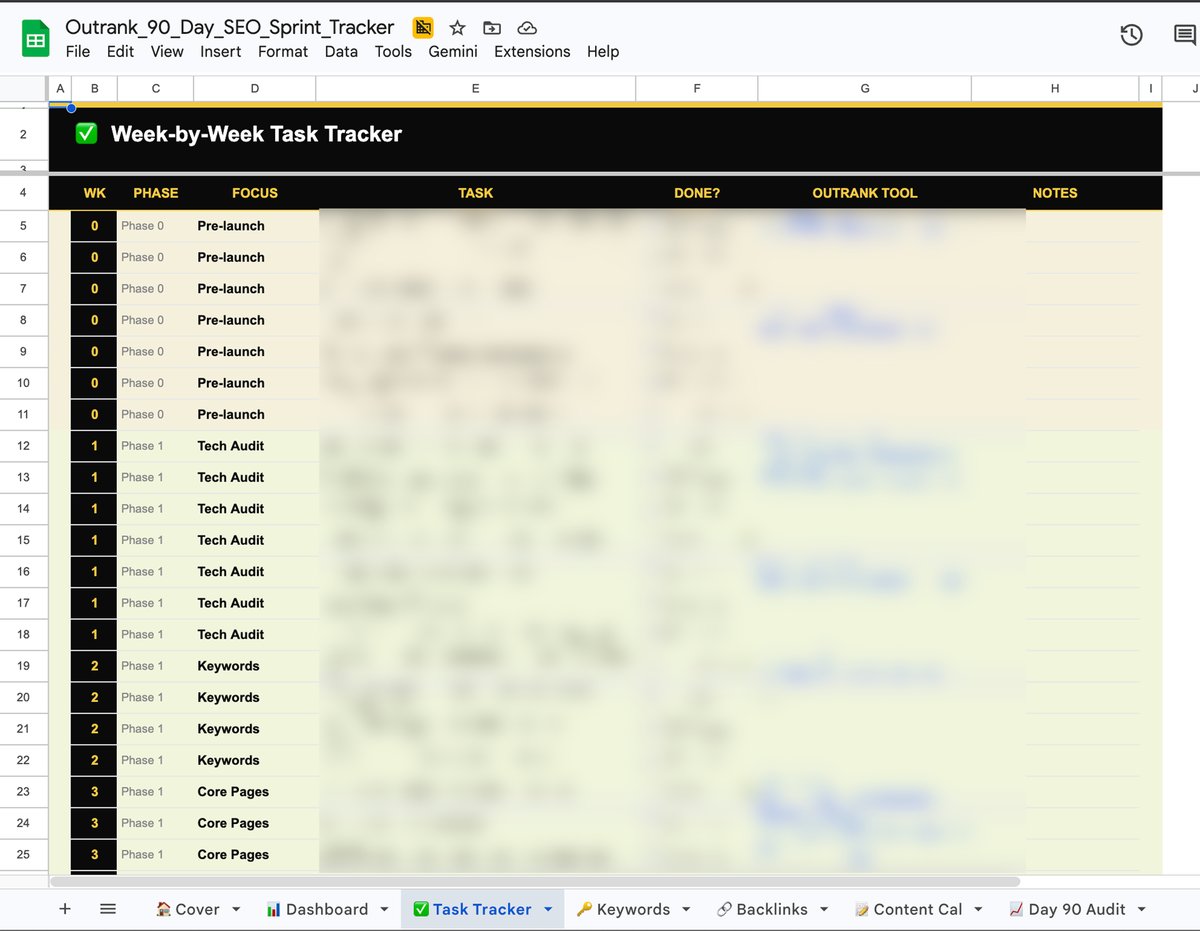
this is the exact SEO checklist I've used for every single product I've launched 20+ products, $8m exit and now $1m+ mrr SEO was the backbone of all of it 💪 here's the sequence: month 1: it's about making Google trust your site month 2: it's about building topical authority month 3: it's when you look at what's ranking position 8-20 in GSC and turn those into your biggest wins most makers skip the foundation and 6 months later they wonder why nothing's moving I put the exact week-by-week breakdown into a free 90 day sprint sheet - every task, in order, linked to the right tool comment SEO and I'll send it over 👇
Tibo tweet media
English
848
23
661
64.5K
Web Club đã retweet
Kappaemme
Kappaemme@Kappaemme1926·
CODEX SKILL TO BRUTALLY TEST ANY STARTUP IDEA! Most startup ideas sound good. This Codex skill tells you why they probably won’t work. Just give Codex your idea and it pressure-tests it for you -> finds the core assumption -> exposes fatal flaws -> checks if the problem is real -> maps real competitors -> plans your first 10 customers -> defines a 2 week MVP Install: npx --yes codex-startup-pressure-test-skill@latest 100% open source. Repo in bio
English
70
145
1.9K
490.8K