junu

635 posts

junu

junu

@junetic

Founder. Designer. Fullstack Builder. Investor. Lifelong Learner. Maker. @Usercallco Previously @PresenceChat @UserLookco @IDEO

Seoul / SF / NYC Tham gia Nisan 2010
1.3K Đang theo dõi625 Người theo dõi
junu
junu@junetic·
@clarkcharlie03 @thiingsco very nice. instead of static collection I think you should let users generate any icon with a prompt and charge based on usage
English
0
0
0
72
Charlie Clark
Charlie Clark@clarkcharlie03·
Just dropped a batch of 1000 new @thiingsco icons 🚨 Bringing the grand total to a whopping 10000 icons ✨
English
13
32
537
24.4K
junu
junu@junetic·
@jdreeves Curious. Do you often run customer interviews to get insights on brand positioning, messaging etc to inform the strategy or direction?
English
0
0
0
29
J.D. Reeves
J.D. Reeves@jdreeves·
I think a conversation that might be largely missing in tech/design is brand strategy. A lot of people reference brands they love, I hear it all the time: ‘we want to look and feel like apple, ramp, linear, stripe’ etc etc Those brands are good because they found the brand qualities that are true to their ethos and amplified them through design. Too many brands try to reference others in the design process rather than take a step back and find the qualities that are true to them. People see something brilliant and say ‘I want something like that’ rather than ‘how do I make my thing brilliant?’ That’s how you build a brand that others will be referencing in the years to come.
English
18
25
263
15.6K
Jibran
Jibran@Jibran_05·
Introducing Lightreel - the first AI that doomscrolls for you Analyzes 150,000+ TikTok UGC videos to answer any marketing question “What hooks are my competitors using?” “Why did this video flop?” “Find me 10 NYU creators with 1500 followers” It helped me get 60 million views in 3 days Try it out today! (PS — Running UGC for free for one random person who retweets this. I'll make your app go viral)
English
177
141
1.7K
237.2K
Hurley
Hurley@Johnsjawn·
“If you can’t flow chart it, you don’t understand it.” - my fiancé, who is a master PM. And yes, there are a lot of flow and Gantt charts in our personal life. Gross behavior indicative of A type SF tech nerds in a relationship. But I do love flow charting. Comes in many forms for me: video storyboards, customer journeys, campaign sequences, signup flows, process maps. I have a shared Figjam called Hurley Doodles with dozens of flow charts. My little brain just needs a picture to rationalize it all. Prototyping is the new evolved superpower for this. A draft of a tool, webpage or mockup. And it’s obviously never been easier. Instead of just mapping the steps, you can now build a v1 of every step. The best people I work with ship prototypes alongside flows. It shows clarity of thought. And gives clarity to everyone around them.
English
6
0
20
1.7K
junu
junu@junetic·
@danshipper Analysis is great start. Next step is let agents talk to users. Even better—let micro user interviews be auto triggered from Posthog events @Usercallco
English
0
0
0
17
Dan Shipper 📧
Dan Shipper 📧@danshipper·
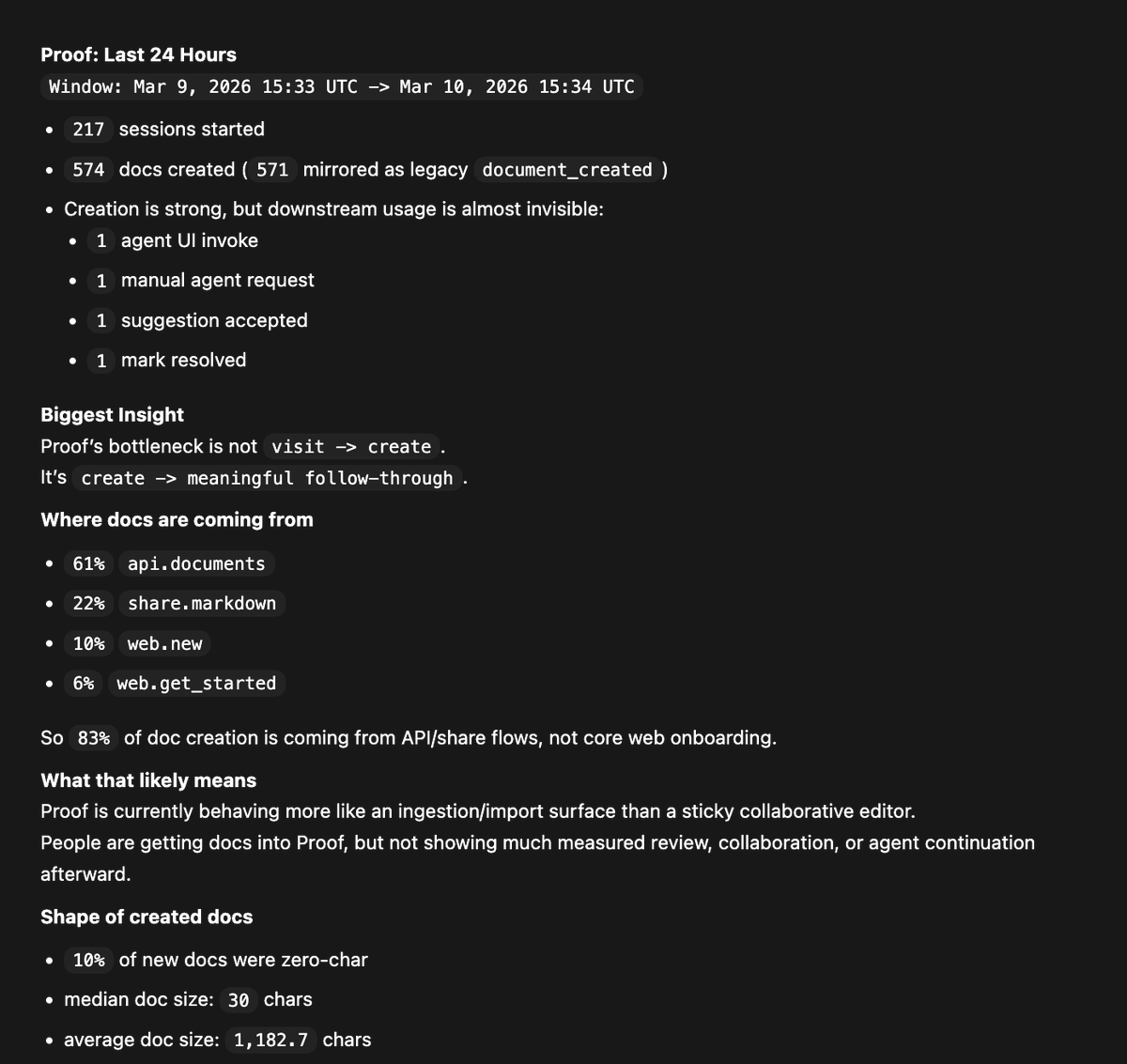
i made a growth investigator skill in Codex that looks through all of your PostHog / prod database data and then finds the top bottlenecks and insights in your product it works extremely well:
Dan Shipper 📧 tweet media
English
18
8
266
52.3K
junu
junu@junetic·
@sharbel Why would anyone use this when Claude can directly edit your website code and shownthe results in production
English
0
0
0
33
Sharbel
Sharbel@sharbel·
Someone just built a Figma for AI Agents. I used Claude Code to redesign my entire website without touching a single pixel. 00:00 Intro 00:15 Using Claude with Paper 01:15 Creating a website 02:22 Editing a website 03:52 Result
English
26
11
266
14.2K
GEOFF WOO
GEOFF WOO@geoffreywoo·
psa to saas founders: convert everything into api / mcp services asap and charge by usage. allow connectors to all agents and make your own agent with pre-built context all ui/ux/dashboards will be vibed and dynamically generated if you don’t have prop data, you’re fucked
English
86
51
1.3K
237.9K
junu
junu@junetic·
@bnj Yes. In addition to personal taste, judgement and experience, you need real user insights to ground them. AI is lacking on this front but now AI agents can talk to users for you as well github.com/junetic/userca…
English
0
0
0
104
Ben South
Ben South@bnj·
This will do numbers, just like the tweets about taste, because everyone thinks “that’s me”
signüll@signulll

the most underrated hire right now is a great product person. when i say product person i'm def not talking about a product manager. perhaps i think there has to be somewhat of a new role. i don't have a good name for it yet but maybe something like "product thinker".. someone with an intuitive grasp of the product as it exists, where it's soft, where it sings, & how to iterate it toward something even sharper. in some sense, this person has to cohesively hold in their head where this product should be 2 years from now & work backwards from that. i say this cuz when building was hard, engineering was the bottleneck & the status hierarchy often reflected that. building is no longer hard. which means the variance in outcomes has shifted almost entirely to judgment on what to build, how to sequence it, & how to talk about it. & the story matters as much as the thing. internally, it organizes the team around a shared model of why. externally, it shapes the interpretive frame users bring to their first experience. you can't retrofit narrative onto a product & expect it to land, it has to be load bearing from the start. the rarest version of this person sits at the intersection of culture & deep technology. someone genuinely bilingual. they know what's technically possible & they know which cultural currents are real vs. ephemeral. that combo is what separates products that feel inevitable from products that feel assembled. before ppl clap back with this person has always been valuable, i know.. i am just saying now they might be the most *important* person in the room. their value compounds like never before.

San Francisco, CA 🇺🇸 English
12
11
278
21.3K
junu
junu@junetic·
@larsencc One missing loop is user understanding. Product events → quick user feedback → insight
English
0
0
1
15
Larsen Cundric
Larsen Cundric@larsencc·
Hot take: the moat in software isn't your code or how fast you ship anymore. Everyone can code and code fast now. The moat is how well you wire up the loops and processes. Hooking up your entire stack (e.g. Datadog, AWS, Terraform, repos, Slack...) to agents that can monitor, find bugs, fix them, and deploy 24/7. That's hard (at least for now). Making those pipelines reliable and safe at scale is the actual engineering challenge now. The companies that nail these end-to-end loops first will be genuinely impossible to compete with. At @browser_use we are making bets.
English
86
46
820
162.7K
Mat De Sousa
Mat De Sousa@DsMatie·
Step 7: I would spend way more time on user calls. Because everything else can be automated now. Support: AI handles the first layer. Bug fixes: AI agent investigates and pushes a fix. User feedback: AI extracts insights from call recordings. Knowledge base: built automatically in the background. So what is left for me? The conversations that only a human can have. I would schedule more calls. Listen more. Build real relationships with merchants. That is where the leverage is now.
English
3
0
0
107
Mat De Sousa
Mat De Sousa@DsMatie·
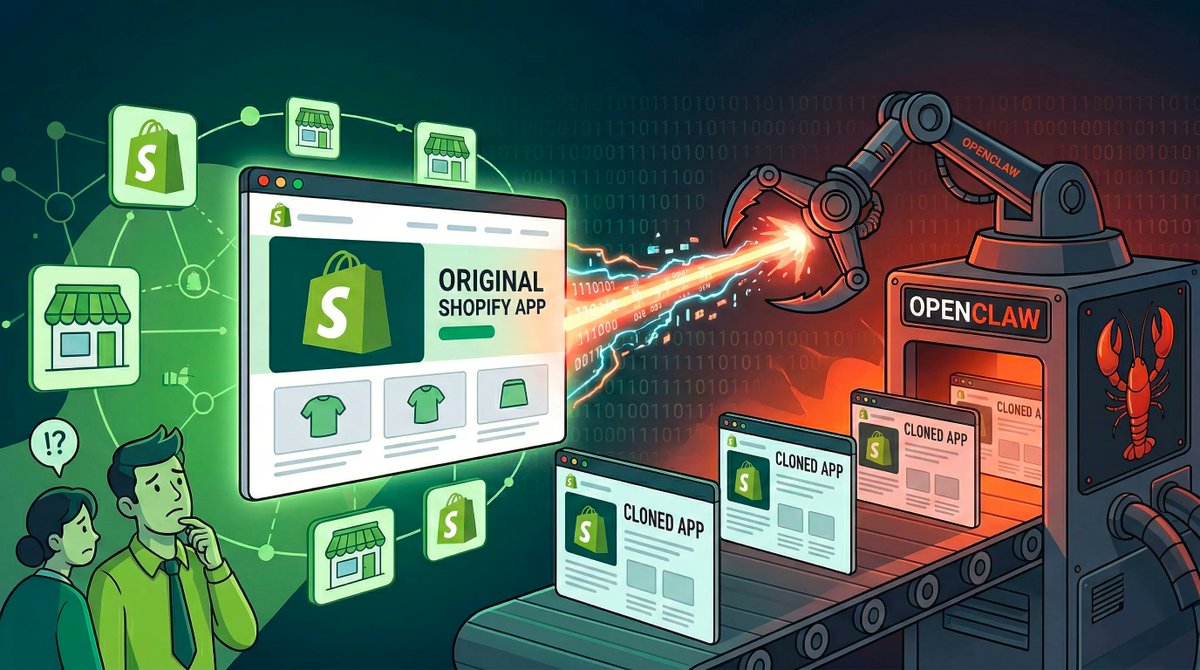
In 2017, I launched my first Shopify app without talking to a single merchant. 3 failed apps later, I finally figured out what works. Here is what I would do today to grow from $0 to $25K MRR using AI. 👇
Mat De Sousa tweet media
English
6
3
27
2.2K
Avinash Dalvi
Avinash Dalvi@AvinashDalvi_·
@akshaymarch7 AI can handle more of the code. But understanding what's worth building, reading uncomfortable user feedback, making judgment calls with incomplete data no agent does that. The builders who win won't be the best coders. They'll be the best decision-makers.
English
1
0
0
378
Akshay Saini
Akshay Saini@akshaymarch7·
A few years ago I was just doing what most engineers do. Write code. Ship features. Wait for the next sprint. Life was stable. Salary was good. The path was very clear. Work hard, get promoted, maybe switch companies after some time. A very normal software engineer life. Then I started building something of my own. And that’s when I realised something interesting. Writing code is actually the easiest part of building a company. The hard part is everything else. 0. Understanding what problem is actually worth solving. 1. Talking to users and hearing uncomfortable feedback. 2. Figuring out pricing. 3. Marketing something when nobody knows you. 4. Building a team that believes in the vision. 5. Making sure the company survives every month. Some days you feel like an engineer. Some days you feel like a salesman. Some days you feel like customer support. And honestly, it’s messy. Nothing is perfect. Half the time you are figuring things out as you go. But there is also something incredibly satisfying about it. When you build something that people genuinely find useful. When a small idea slowly becomes a real product. When a team forms around something you started. That feeling is very hard to explain. The interesting thing is, today building tech has become easier than ever. Tools are better. AI helps a lot. You can build things much faster than before. But building a good product that people actually need… that is becoming harder. Which is why I genuinely feel the world needs more builders. Nothing wrong with being a job seeker. Jobs are important and most great companies are built by amazing engineers. But if you ever feel that itch to build something of your own, don’t ignore it too quickly. Take that leap. Try building something. Yes, it’s risky. I won’t pretend otherwise. But if it works, the journey is absolutely worth it. We probably need more entrepreneurs today than ever before
English
41
20
419
38.3K
Ben Wallace
Ben Wallace@DJbennyBuff·
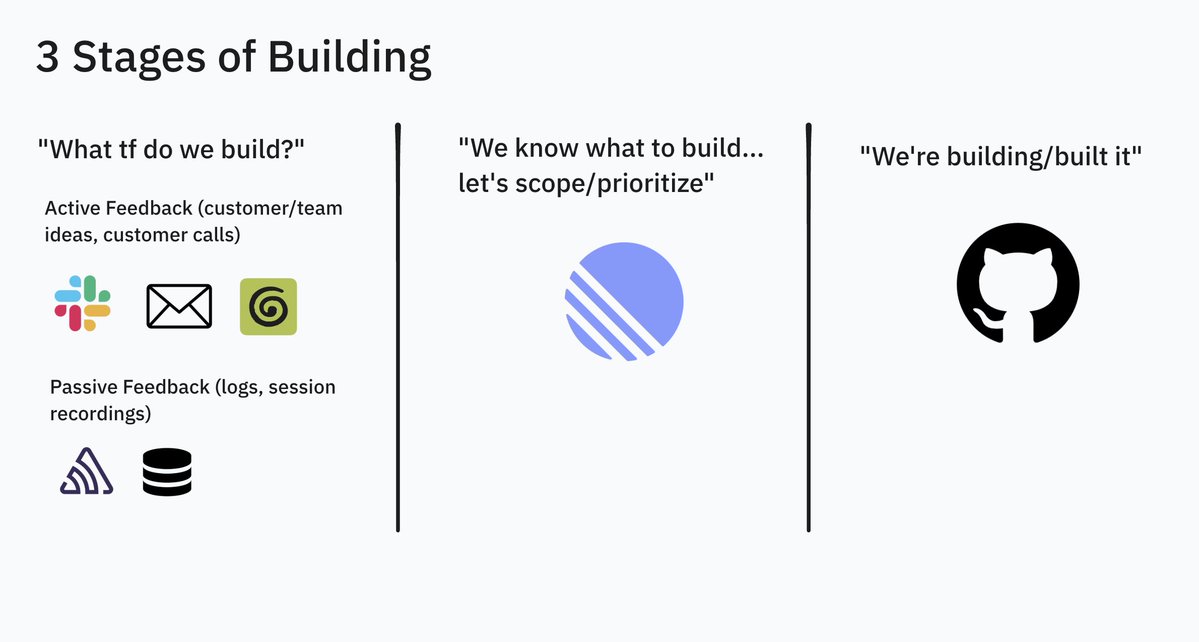
Request for startup: solve the 1st stage of building I want something that analyzes all feedback channels, both active (@SlackHQ, @meetgranola, support@) and passive (@sentry, logs) to help my team identify trends and business impact Low-hanging/well-scoped topics immediately get triaged to an agent
Ben Wallace tweet media
English
60
9
277
30.5K
junu
junu@junetic·
@signulll And knowing what to build is easy as having ideas. Knowing what to build that users actually need requires talking to them. And now AI is also helping to do that - github.com/junetic/userca…
English
0
0
1
27
signüll
signüll@signulll·
the most underrated hire right now is a great product person. when i say product person i'm def not talking about a product manager. perhaps i think there has to be somewhat of a new role. i don't have a good name for it yet but maybe something like "product thinker".. someone with an intuitive grasp of the product as it exists, where it's soft, where it sings, & how to iterate it toward something even sharper. in some sense, this person has to cohesively hold in their head where this product should be 2 years from now & work backwards from that. i say this cuz when building was hard, engineering was the bottleneck & the status hierarchy often reflected that. building is no longer hard. which means the variance in outcomes has shifted almost entirely to judgment on what to build, how to sequence it, & how to talk about it. & the story matters as much as the thing. internally, it organizes the team around a shared model of why. externally, it shapes the interpretive frame users bring to their first experience. you can't retrofit narrative onto a product & expect it to land, it has to be load bearing from the start. the rarest version of this person sits at the intersection of culture & deep technology. someone genuinely bilingual. they know what's technically possible & they know which cultural currents are real vs. ephemeral. that combo is what separates products that feel inevitable from products that feel assembled. before ppl clap back with this person has always been valuable, i know.. i am just saying now they might be the most *important* person in the room. their value compounds like never before.
English
449
746
6.3K
1.4M
junu
junu@junetic·
@aakashgupta Knowing what to build is easy as having ideas. Knowing what to build that users need requires talking to them. And now AI is also helping to do that - github.com/junetic/userca…
English
0
0
1
25
Aakash Gupta
Aakash Gupta@aakashgupta·
The gap between “can build” and “knows what to build” is the widest it has ever been. And AI is pushing those two curves further apart every quarter. API costs dropped 97% in two years. No-code gets you to MVP for under $10K. A weekend of vibe coding gets you a working prototype. The supply of “can ship” is effectively infinite now. The supply of “can feel where a product is soft, hold the 2-year vision, reverse-engineer the sequence, and tell the story that makes someone stop scrolling” is close to zero. 68% of apps never hit 1,000 downloads. 90% of startups fail. 77% of users leave within three days. Not because the engineering was bad. Because nobody on the team could answer “why does this exist” in a way that anyone cared about. The narrative piece is what most PMs still underestimate. The story shapes the first frame users bring to the experience. Bolt it on after building and you’ve already lost. The team internally doesn’t know why they’re building. The user externally doesn’t know why they should care. Every sprint without a clear “why” compounds against you. Where I’d push back on signüll: the person he’s describing IS a product manager. The fact that he feels the need to invent a new title tells you how far the role has drifted from what it was supposed to be. PMs weren’t meant to be ticket writers and standup facilitators. The role was always supposed to sit at the intersection of taste, technical depth, and narrative. We just let it get buried under process. The bottleneck moved. The job descriptions didn’t.
signüll@signulll

the most underrated hire right now is a great product person. when i say product person i'm def not talking about a product manager. perhaps i think there has to be somewhat of a new role. i don't have a good name for it yet but maybe something like "product thinker".. someone with an intuitive grasp of the product as it exists, where it's soft, where it sings, & how to iterate it toward something even sharper. in some sense, this person has to cohesively hold in their head where this product should be 2 years from now & work backwards from that. i say this cuz when building was hard, engineering was the bottleneck & the status hierarchy often reflected that. building is no longer hard. which means the variance in outcomes has shifted almost entirely to judgment on what to build, how to sequence it, & how to talk about it. & the story matters as much as the thing. internally, it organizes the team around a shared model of why. externally, it shapes the interpretive frame users bring to their first experience. you can't retrofit narrative onto a product & expect it to land, it has to be load bearing from the start. the rarest version of this person sits at the intersection of culture & deep technology. someone genuinely bilingual. they know what's technically possible & they know which cultural currents are real vs. ephemeral. that combo is what separates products that feel inevitable from products that feel assembled. before ppl clap back with this person has always been valuable, i know.. i am just saying now they might be the most *important* person in the room. their value compounds like never before.

English
10
6
78
9.7K
junu
junu@junetic·
@signulll Feels right. When building gets easier, judgment becomes the bottleneck. The shared model of “why” also works best when it’s grounded in real user conversations. The signals from what users do and why they say shape both what to build and how to frame it
English
0
0
0
35
junu
junu@junetic·
“LLMs just predict the next token.” Computers just flip bits. DNA just rearranges 4 letters. Neurons just fire. That’s it. And from that: the internet. life. consciousness. Simple primitives. Massive emergence.
English
1
0
1
73
A-kwee-ya
A-kwee-ya@AkuaSankofa·
Does anyone have a qualitative analysis software that they like? Has to be able to work with videos. Dedoose keeps crashing on me and I'm sick of it!
English
3
0
2
621
Romàn
Romàn@romanbuildsaas·
It’s never been easier to get traffic for your SaaS thanks to LinkedIn. One optimized LinkedIn profile + the right posts = predictable virality and a steady flow of inbound leads. Today, I’m breaking down the entire method so you can replicate it. – What type of lead magnet should you create? – What type of posts actually go viral? – What should your profile look like to convert? Inbound traffic from LinkedIn will no longer be a mystery. And the best part? AI can write your posts and generate your visuals for you. Want the full method? Comment “Lead Magnet.”
Romàn tweet media
English
235
11
178
15.9K
junu
junu@junetic·
The feeling of simultaneous relief and loss of confidence when your LLM says 'good catch' 😅 #openclaw #openai #claudecode
English
1
0
0
101
junu
junu@junetic·
This is the biggest advantage of claude code vs cursor that no one mentions. Terminal shows all errors and no need to copy paste them like you do in cursor. So basically no need to do anything until everything works. Simple feature. Huge difference.
English
0
0
0
115