Nick Anderson
9.9K posts

Nick Anderson
@theonenicka
CEO | OneAccord
Bellevue, WA Tham gia Eylül 2015
201 Đang theo dõi53.7K Người theo dõi
Tweet ghim

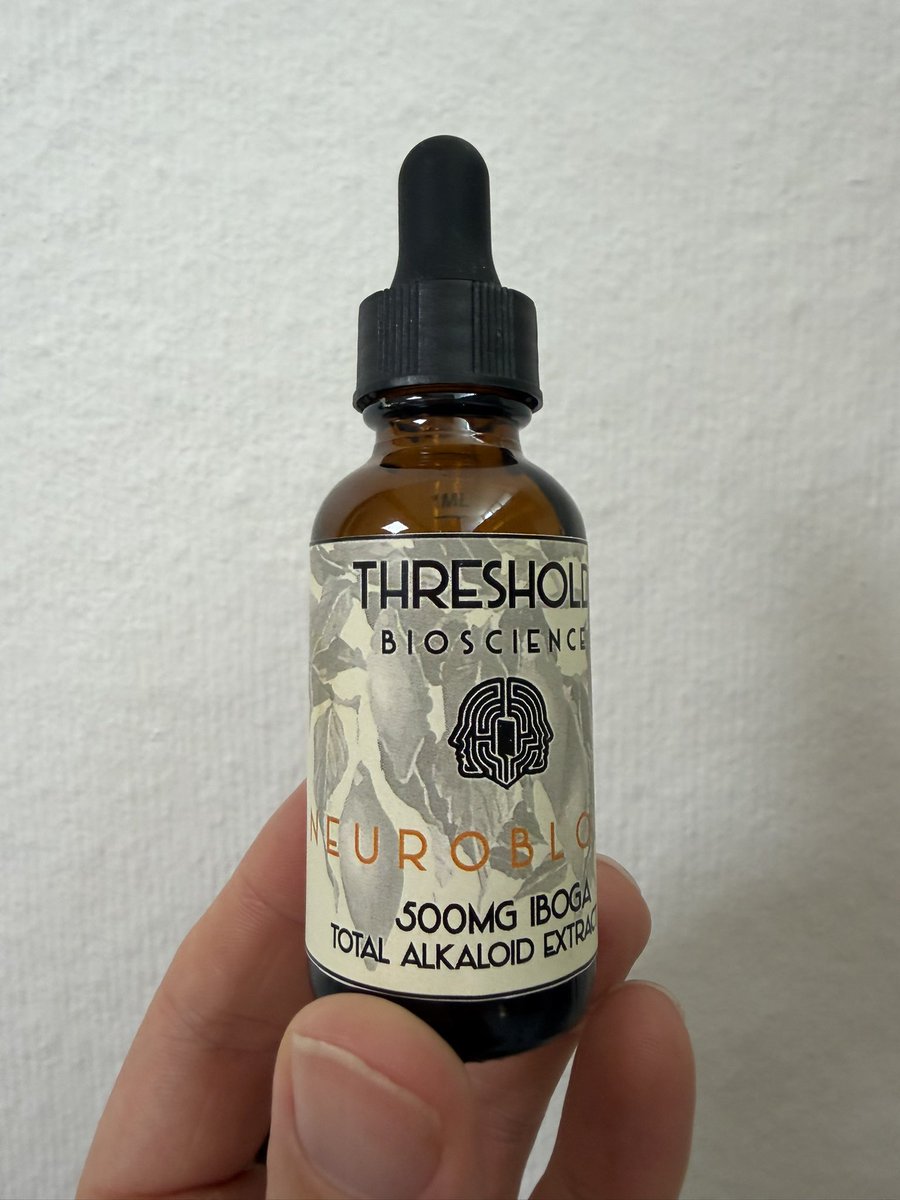
@PaulAustin3w I’ve been working with Iboga for 2 years now
Every week or two I take an entire day to work with it
Spend 3-4 hours in a sleep mask.
It’s been an incredibly helpful tool for me in recovering from deep nervous system dysregulation
English

Most people have never heard of microdosing iboga.
That’s about to change.
A man in Germany was diagnosed with early onset Parkinson’s at 41. By 51, he was completely bedfast. As a last resort, he had holes drilled into his skull for deep brain stimulation. It gave him some mobility back but not much.
Thirty days later, he signed up for assisted suicide.
Before going through with it, he connected with a researcher at the University of Zurich named Tobias Emmery who had been studying ibogaine, a psychoactive compound from a West African plant called iboga.
The protocol was an upwardly titrated daily low dose over four weeks.
It restored normal motor function, so he left his 24/7 nursing home, moved in with his mother, and was riding a bicycle three miles a day.
INSANE!
This is one of roughly 50 cases Emmery has studied. The efficacy is around 50% and seems confined to genetically rooted Parkinson’s rather than environmentally triggered cases.
It’s not a silver bullet. But for the people it works for, there is nothing else in medicine that comes close.
Parkinson’s is just one piece of the picture.
Stanford published a study in Nature Medicine showing that a single ibogaine treatment in 30 special operations veterans with TBI produced average reductions of 88% in PTSD, 87% in depression, and 81% in anxiety. The late Dr. Nolan Williams, who led that research, said no other drug has ever been able to alleviate the functional and neuropsychiatric symptoms of traumatic brain injury.
Brain imaging revealed neurorestorative effects including white matter regeneration across the brain’s surface, something previously unheard of in medicine.
The mechanism appears to involve GDNF, a growth factor that supports the survival of dopamine-producing neurons, which are the exact neurons that degrade in Parkinson’s and other neurodegenerative diseases.
This is no longer fringe.
Brett Favre is using ibogaine through Ambio’s neuroregenerative program for his Parkinson’s diagnosis and has reported improvements in sleep and energy.
Conor McGregor underwent treatment at the same clinic for TBI and trauma and said it saved his life.
Texas approved a $100 million initiative to fund FDA clinical trials for ibogaine, one of the largest government investments in psychedelic therapy ever.
Ibogaine is still a Schedule 1 substance in the US.
But for conditions like Parkinson’s, MS, TBI, and opioid addiction, there is a growing body of evidence that this plant does something to the brain that we don’t fully understand yet and that nothing else can replicate.
We may be looking at the most important neurodegenerative medicine that nobody is talking about.

English


@mcuban Thank God we are a private company - tearing down and building back - only a couple people to confer with and we are all on the same page.
English

Every entrepreneur that knows how to use AI is trying to find ways to build AI native companies that completely displace incumbents.
For the incumbents, it’s the “Innovator’s AI Dilemma” If those startups get traction, and they can’t buy them, the CEOs will face multiple huge Dilemmas:
1. Do they tear down their companies and reinvent them as native AI ?
2. How do they explain it to public shareholders ?
You will know AI is having a huge impact on public companies when there are two types of lawsuits:
- Shareholders that sue the company for tearing down the company and crushing the stock price
- Shareholders that sue the company for NOT tearing down the company and crushing the stock price
I think most CEOs don’t come close to understanding AI in enough detail to even begin to consider these decisions.
Hint: Asking your AI models the best paths from where you are now, to being an AI native version that can achieve the same economics has to be one of your initial steps.
If asking your models questions doesn’t make sense to you, you are in deep shit
English


I was calling them AI charlatans not that long ago.
People promising outbound voice agents that would represent my brand. Hallucinations everywhere. Security risks I could not get straight answers on. I went from curious to skeptical to flat out cynical inside of about twelve months.
Then I went to a Collective 54 retreat and someone showed me something that actually worked. In real time. I could ask how it worked and get a real answer. Seven minutes of watching something function was worth more than seven months of people trying to explain it to me.
I went home and built something. A simple operations agent connected to 150 pages of SOPs that my team had been documenting for two years. When someone has a question, the agent finds the answer and links them to the right form. That is it. Nothing fancy. And it worked on the first try.
Then I tried to boil the ocean. That is a different story.
I talked through the whole journey on the ProServe Podcast with Greg Alexander at Collective 54. Where I started, what changed my mind, what I built first, and where we are taking it from here.
If you are still on the fence about AI, this one is worth an hour of your time.
collective54.com/podcast/episod…
English

I have been asking leaders what is slowing their AI transformation.
The answers are consistent. Data quality. Security concerns. Mixed literacy across teams. No clear strategy. No clear ownership. No time.
These are not technology problems. They are leadership and organizational problems that happen to involve technology.
The companies moving forward with AI did not start by buying tools. They started by getting clear on their strategy, their culture, and what they were actually trying to accomplish. Then they found the tools that fit.
If your AI initiative feels stuck, the bottleneck is probably not the technology.
English

By 2035, roughly six million small and medium businesses will face an ownership transition. Nearly five trillion dollars in enterprise value is on the line.
That number gets my attention.
A question I blogged about recently is not whether those transitions will happen. They will. The question is whether owners will be prepared for them and whether the partners they choose will actually serve them well.
I put together a comparative analysis of the consulting market, from the Big Four down to specialist boutiques like OneAccord, and asked an honest question. Which model truly serves the independent builder?
The answer depends on what the owner actually needs. A global firm makes sense for certain problems at certain scales. But for the owner of a $25M to $100M company who wants a partner who has felt the weight of a payroll deadline, the model matters as much as the brand.
The full piece is at the link. Worth a read if you are thinking about growth, transition, or what your business is actually worth right now.
oneaccord.co/resources/blog…
English

@NathanQuinlanGC He "stands behind his work."
You are right.
😔
English

@theonenicka They are not the right contractor for this project, wish them the best luck and cut your losses.
Trying to have them fix their own work is just going to give you more headaches and cost you more time and money.
English

Where are all my real contractors at?
This is premium LP SmartSide board & batten siding.
Two major installation mistakes that are so bad the entire house’s siding is getting ripped off and thrown in the dumpster.
Experts— what are the two fatal errors you see?
Newbies… this is why homeowners don’t trust contractors anymore.

English

One of the responsibilities I feel most deeply is protecting my family.
My wife and kids should be able to carry their day without worry. If something needs to be watched, thought through, or prepared for, that’s on me.
So I tend to stay aware of what’s happening around us. Who’s nearby. What’s going on.
It’s not something I switch on and off. It’s just part of how I move through the world.
English

One of the reasons we spend so much time experimenting with AI at OneAccord is because our clients are asking practical questions.
Where should we start?
Which tools actually work?
How do we protect our data?
What kind of investment makes sense?
To answer those questions well, we have to be learning ourselves.
So we test tools. We try new approaches. We see what works and what doesn’t.
Our goal isn’t to become a technology company.
Our goal is to help leaders make better decisions about how these tools fit into their strategy and their culture.
At the end of the day, that’s what matters most.
English

Thanks for coming on The Value Factory with me @SMB_Attorney
OneAccord@OneAccord
Trust matters. But in a business sale, expertise matters more. On The Value Factory Podcast, Eric Pacifici shares why choosing the wrong advisor—even someone you trust—can cost you. Watch the full episode: youtu.be/ExWAZJ6XIRk

English
Nick Anderson đã retweet

Companies are rushing to spend big on AI.
That doesn’t mean they should.
On The Value Factory Podcast, @SMB_Attorney shares a perspective on why starting smaller might be the smarter move.
Full episode out later today. All episodes on major platforms.
English

When I stepped into the role of CEO at OneAccord, I made three commitments to myself.
First, to stay loyal to the brand and what OneAccord stands for.
Second, to deliver real value to everyone connected to the work. That includes our clients, our principals, our team, our families, and the communities around us.
Third, to lead in service to the team.
Leadership carries responsibility. For me, these commitments help keep the work grounded in what matters most.
English
Nick Anderson đã retweet

Trying to keep up with AI?
That might be the wrong strategy.
On The Value Factory Podcast, @SMB_Attorney shares a perspective on how businesses should really approach AI adoption.
Full episode coming out tomorrow. All episodes on major platforms.
English

Over the past year I’ve been thinking a lot about how to approach AI without getting caught up in every new tool that appears.
Every week there’s something new.
New models.
New platforms.
New promises about what AI will do next.
What I’ve learned is that the question always comes back to the same thing.
What problem are we trying to solve?
If the technology helps solve that problem, it’s worth exploring.
If it doesn’t, it’s probably not the right time for it yet.
English

Think your business is safe from AI?
It’s not.
On The Value Factory Podcast, @SMB_Attorney explains how AI is already reshaping even traditional businesses—often behind the scenes.
Full episode coming out soon. All episodes on major platforms.
English