
置顶推文
digpsy
17.9K posts


digpsy
@DigitalPsyche
🇺🇸🏴🇬🇧 “The psychoanalyst is the ambassador of a neglected reality - our inner life.” ~Wurmser "You have to earn your sanity." ~Carolla.
Midian. 加入时间 Temmuz 2011
392 关注393 粉丝
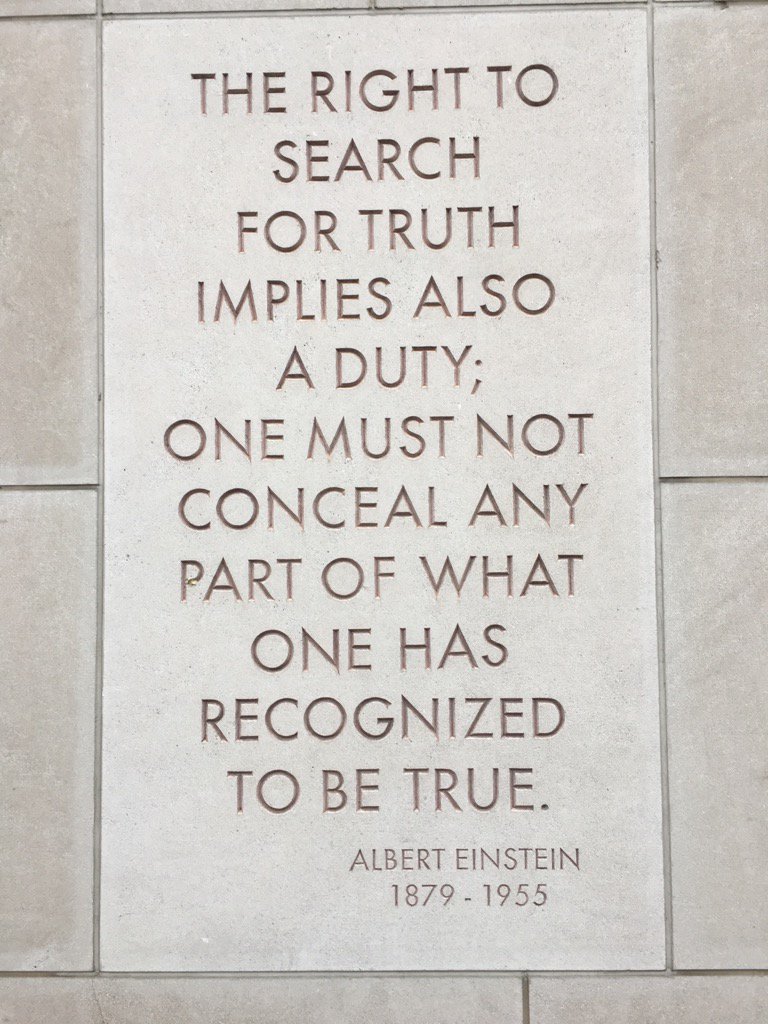
@NPC_0U812 @RealUnsweetDee Spooky for a party-trick.
While this is novel and fun, I’m skeptical of the article’s assumptions, for a few reasons.
Keep in mind the N for this project was 4. Four people’s fMRI data was used to inform and then test this process.
English



@JDHaltigan I drove past one today. It was a single elderly white woman in a wheelchair holding a sign.
English

Just clip after clip of white lib female after white lib female at these "No Kings" protests. It is a derangement of unprecedented proportion. A social contagion of feminized Leftist lunacy.
English
@Russwarne The anti-censorship point is well-demonstrated in the article comments where Cofnas and Boudry go back and forth.
Interactions like that are one of the best things about the internet.
English
@midasrockstar @FairyTailDragon @OrwellNGoode Eh, it was in his own home and I didn’t take it seriously at all. I took it as a hyperbolic display of paternal protection, more symbolic than anything else. I wasn’t scared.
English

@FairyTailDragon @DigitalPsyche @OrwellNGoode Yes because someone flashing their gun to scare you is completely okay in the civilized world. Jesus would LOVE people like you I'm sure
English


@DrWinarick What!? I had full semester courses in Research Design, Advanced Statistics, Multivariate I, and Multivariate II. We also had Theories of Measurement (psychometrics). This is in a clinical psychology Ph.D.
English

I don’t know who needs to here this but psychotherapy students in graduate programs whether social work, counseling, general or school psychology, undergrads or doctoral students all have the same course - experimental psychology and psychological statistics crammed into Research Design I and II or some other ways of saying the same thing with I and II. And they all have the same requirement, assignment, basis for demonstrating competence: the mock IRB proposal/mock APA formatted journal article.
English
@DoctorPerin You also can’t undo physical malformation from many years of working out incorrectly in 6-12 sessions.
English

This is one of the best analogies for developmental therapy I’ve read
Justin Skycak@justinskycak
You can’t cram mastery. You can’t go to the gym for 24 hours straight and expect to look like Thor the next day.
English
@midasrockstar @OrwellNGoode I was 24 and had been in the US for about a week lol
English
@GamewithDave No accounts or logins unless you wanted them. I played FFXI and SOCOM on that bad boy.
English


@midasrockstar @OrwellNGoode My ex father-in-law (a cop) did that to me. He took a round from the magazine, told me that’d be for me, and that his buddies would put me in the Everglades.
English
@OrwellNGoode Deadass if her father checks me with a gun on the first meet, that relationship ends right there.
English
@rogfoc @TolkienWorldG That was Viggo Mortensen as Aragorn during the scene when they believe Merry and Pippin were killed by the Uruk-hai.
English
@TolkienWorldG He also broke a toe kicking a helmet and his reaction in the film is real.
English

During the Battle of Helm’s Deep in The Two Towers, there’s a quick shot of a one-eyed Rohirrim soldier turning toward the camera.
The extra arrived on set wearing an eye patch. Peter Jackson asked to see what was underneath and then asked if he’d consider appearing in the film without it.
He was hesitant at first, but later said the moment helped him feel far more comfortable with his condition.

English
@benryanwriter Generally, if I can’t replace ‘trauma’ with ‘injury’ in what I want to say, I need to use a different word.
Exceptions are rare instances of professional signaling that will end once I’m licensed.
English

I would very much like to go a day without having to encounter the word “trauma.” We focus so intently on this concept to our detriment, at the expense of our resilience.
English
@RedGuitautist @elonmusk That’s such bullshit.
Shitty therapists think that way, not competent ones.
English



Reinforcing negative neural pathways via therapy or introspection is a recipe for misery. Don’t cut a rut in the road.
Marc Andreessen 🇺🇸@pmarca
My big conclusion from this week: Introspection causes emotional disorders.
English
@Curiouslycinna2 @madclownlove @JonathanShedler Highly competent psyotherapists often won’t bother with insurance. It’s too controlling and invasive.
I don’t plan on taking insurance once I’m licensed.
English
@Curiouslycinna2 @madclownlove @JonathanShedler I saw that documentary, Stutz.
It was interesting, unethical, and disturbing.
Therapy does work for specific things. It’s not a panacea. It’s been distorted into skills training, psychoeducation, and paid friendship.
Real psychotherapy is about psychological change.
English

There is rumination (repetitive, circular, goes nowhere)
There is self-examination leading to new understanding, self-awareness, and change.
They are not the same things.
They are impossible to confuse. One leads to stagnation, one leads to growth. Skilled psychotherapy is the latter, never the former.
It’s beyond me why some people seem so deeply invested in pretending they are the same thing.
It is a false starting assumption. If you reason logically from a false starting assumption, the conclusion will also be false.
Elon Musk@elonmusk
Reinforcing negative neural pathways via therapy or introspection is a recipe for misery. Don’t cut a rut in the road.
English
@Curiouslycinna2 @madclownlove @JonathanShedler Saul Rosenzweig coined the term “Dodo bird effect” in his 1936 paper “Some Implicit Common Factors in Diverse Methods of Psychotherapy”.
Keep it mind that the idea doesn’t negate the idea that technical factors do have an effect. It’s just that outcomes research is sketchy.
English

@madclownlove @JonathanShedler x.com/Curiouslycinna…
Honestly its complicated. I only knew about the controversy re Dodo Bird and that loads of therapy is directionless but provides something for people with spare cash. Claude filled in the rest. Hope its useful. Based on the references in the article.
Chiba-Chrome-Voidrunner@Curiouslycinna2
I am a total amateur in psychotherapy and I only heard of the dodo bird thign a while back. I hope the below is helpful, no idea if its right though (all via Claude and my prompting skills). --------------------- The short version of what you're walking into on that X thread: both Shedler and @Curioslycinna2 are reading the same data correctly but drawing different conclusions. The dose-response curve is real and log-linear (negatively accelerating). Shedler emphasizes the area under the curve keeps growing — more sessions, more total improvement. @Curioslycinna2 emphasizes the slope flattens — each additional session yields less measurable gain. The fight is about what to do with a flattening curve, and whether current measurement instruments stop capturing what matters in longer therapy. The Dodo Bird verdict itself is more complicated than either side lets on. About 69-80% of the studies in Wampold's landmark 1997 meta-analysis involved comparisons between different forms of CBT Papelesdelpsicologo, which could mask real differences between genuinely distinct modalities. And a 2014 updated meta-analysis found evidence of treatment differences for primary outcomes at termination PubMed, contrary to the original verdict. Expert View: Shedler's argument has a structural weakness that neither he nor his interlocutor on X seems to notice: his entire case for longer therapy rests on observational data that cannot distinguish "more therapy causes more improvement" from "people who improve stay longer." The Consumer Reports survey, the Morrison/Westen clinician survey, and even Lambert's OQ-45 tracking are all confounded by self-selection. The one study design that could settle this — a prospective RCT randomizing patients to different treatment durations — has essentially never been done at adequate scale. This isn't an accident; it's because both camps are afraid of the answer. Meanwhile, Curioslycinna2's point about rumination risk is clinically real but unsupported by any study in this set — it's a clinical intuition being deployed as if it were evidence. The honest position is: we genuinely do not know whether year-two therapy is causally beneficial, and the field has arranged itself to avoid finding out.
English

The demon loves playing question and answer games absolutely terrifying scene 😱😱.
You won’t believe what it did 😰😰😰
English

@psicoincognito @DoctorPerin We don’t target CBT specifically.
We just say “acronym therapies.”
English


There is a long history of clinical terms being transformed into insults by the general population. I’ve watched several terms change over the years, and not once did they change what those terms described. Language is arbitrarily applied, but it is not arbitrarily applicable.
Jade Stanton@jadethebpdcoach
The BPD label doesn't cause harm. PEOPLE cause harm and use the label as an excuse. I see no evidence to convince me removing/changing the label will solve this problem.
English