

Ignited 🦅
6.3K posts


People really aren’t aware of how poor Europeans are.
The most common salary in Spain is €1,298 per month.
An average apartment exceeds €250,000.
If you manage to save €250 per month, you’d need 1,000 months to pay for it.
That’s more than 83 years to buy yourself an apartment.
Is it really worth having public healthcare instead of private insurance when you have to live poor your entire life?
English
@Indian_Analyzer Ai based? This is prevelent in west for more than 2 decades
English

Nitin Gadkari: "AI based toll system will capture photograph of Number plate, calculate entry & exit point, & will directly DEDUCT TOLL from BANK A/C"🤯
Govt expects Toll collection to touch Rs 3.5–4 trillion in the near future, from current ₹85,000 Cr🎯
English

Vietnam taught me something India keeps missing about food.
There are problems with Indian food.
This is me eating a bánh mì (a french baguette turned into Vietnamese sandwhich) filled with vegetables and some meat.
Almost every staple dish there (pho, spring rolls, stir-fries) is loaded with vegetables + a solid protein source by default.
A pho (filled with noodles, soup, meat and vegetables) is so satiating that you don’t need anything for 3-4 hours.
Plus it’s super low in calories.
Protein + vegetables isn’t a ‘health choice’ there.
It’s just how food is built.
That’s the difference.
Indian food isn’t unhealthy because of spices or tradition.
It’s unhealthy because it’s grain heavy, vegetable less, protein optional and overcooked.
Too much rice or roti.
Too little fiber.
Vegetables boiled to a point where they lose a lot of their nutrients.
When balance is built into the cuisine, people don’t need discipline.
When it isn’t, people need constant control.
Health isn’t just personal responsibility.
It’s a cultural design.
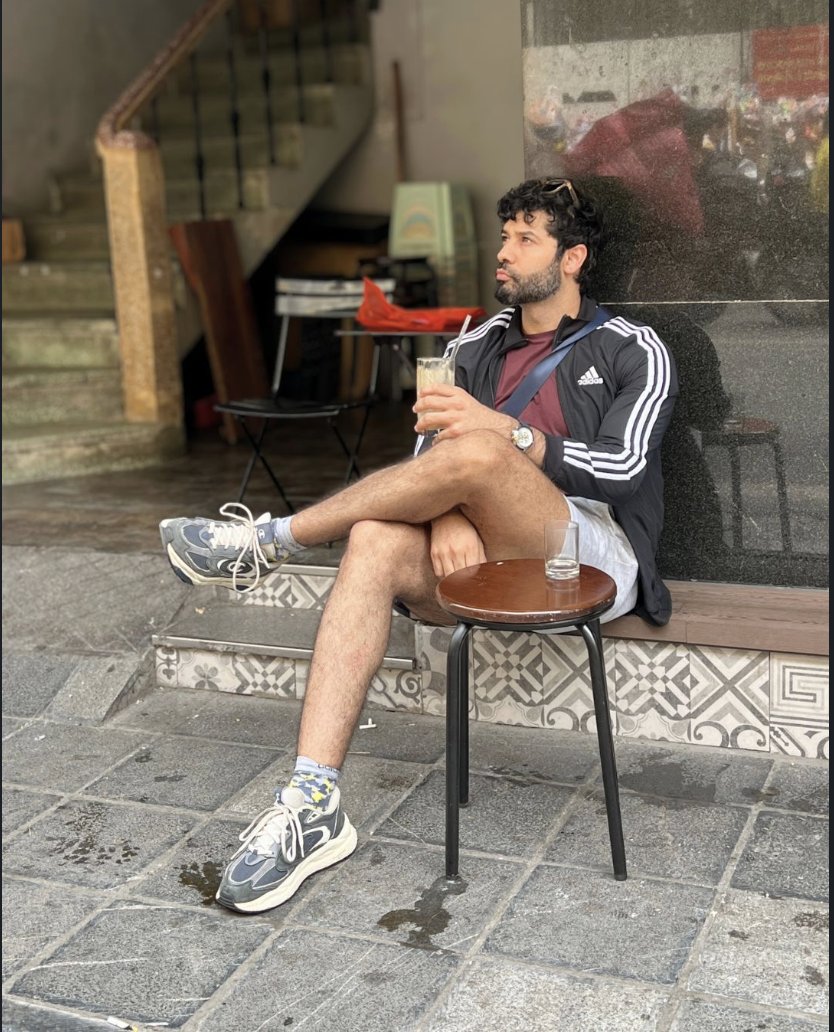
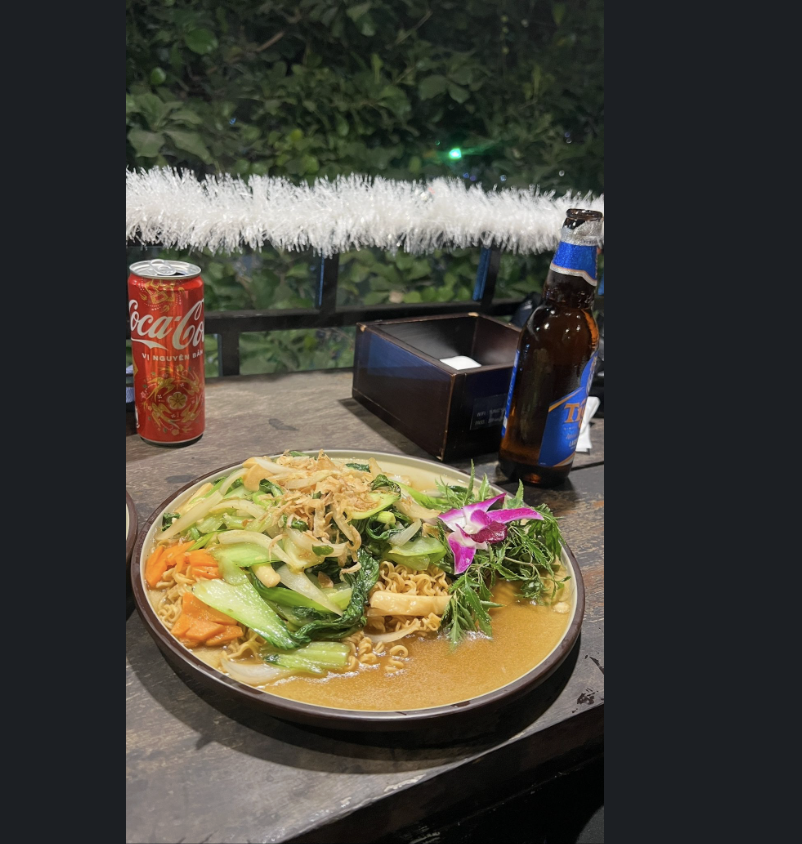


English

🚨A Peak Masculinity of Ranveer !
No 6 packs, No Clean chest , no protein shake grown body- but a strong Healthy Body with Hairy Chest and Healthy Skin : Sunny Deol, Dharmendra, Sanjay Dutt had this Natural body
Adithya dhar did lot of messaging in Dhurandhar !
English


AI employment doomerism is rooted in the socialist fallacy of lump of labor. It is wrong now for the same reason it’s always been wrong. More people really should try to learn about this. The AI will teach you about it if you ask!
(Hinton is a socialist. youtube.com/shorts/R-b8RR6…)

YouTube
Stephen Pimentel@StephenPiment
It’s easy to dunk on Geoffrey Hinton for his 2016 declaration that it was “completely obvious” that radiologists would have no jobs within 5 years, while in fact, the number of radiologists has grown. But this prediction was more than a simple mistake. It’s a synedoche for the entire discourse of AI timelines and doom.
English

The Greeks would disagree. As would Arabs, Turks, Mongols, Afghans, and even Timurids.
tweetsforupsc@factsforupsc
This is How Natural Fortress look like Iran Ground invasion is not easy
English

UAE says strait of Hormuz is not Iranian property, it will be opened now with multi-forces.
English

The people claiming OpenAI is broke are going to be very disappointed when they hit $50B ARR this year.
The scale of what’s coming still hasn’t sunk in for most people.
English

NRI Indians who are jumping on Conversion Rates are not realising What’s Happening With Them
GAME HO RAHA HAI
We Are Heading Towards a New World Order where Rules of The Game will be decided by
Bharat 🇮🇳 - the civilisation which invented Chess 👑
English
@ShaIenden To be clear: Iran has not closed the strait. Iran has never had the ability to close the strait. Do not fall for the propaganda.
English

@Schandillia Bosedk tum kyun uch rahe ho.. do minute me fuduon tumhare halwa tight hojati hai..
हिन्दी
Your cities are rubble.
Your leaders are dead.
Your economy is dust.
Hezbollah is homeless.
Hamas is buried.
Houthis are powerless.
But you “won”?
Sure. Congrats.
Furkan Gözükara@FurkanGozukara
BOMBSHELL: Iran officially declares it has broken the "false image of American invincibility" and announces readiness to form a massive new Middle East military alliance COMPLETELY EXCLUDING the United States and Israel. The geopolitical tectonic plates are shifting.
English
@ShivamVahia Living under a rock, are you? Or are you just a fat ass dumbo?
English

Only a dumb fucking fool would want to cycle in Mumbai's summer or monsoon. We don't really get winter, so that makes the climate hostile throughout the year.
Never understood this upper class dehati obsession with cycles.
Manas Muduli@manas_muduli
This is how cycle tracks should be in India, where everyone, including kids, can ride safely. Is this a possibility ever? At least in the next 50 years!!
English
@matkashbakihai Italian and sweet milky coffee? Are you sitting in a italian kafe in Gonda?
English

Elon Musk: "Optimus will be the world's best surgeon within three years
There will probably be more Optimus robots that are great surgeons than there are all surgeons on Earth"
English
@shiri_shh So it was Palantir who asked to bomb kids killing 175 of them. @PalantirTech - you ok with this?
English

Palantir AI + Claude was used to detect, prioritize, and strike over 1,000 targets in the first 24 hours of Operation against IRAN.
The success was so ridiculous, so game-changing, that the Pentagon didn’t even wait.
What used to be just a pilot project, just something they were testing out… suddenly became official, permanent, and everywhere.
Palantir is now the core AI brain of the entire U.S. military. It’s getting rolled out across ALL branches.
unusual_whales@unusual_whales
Pentagon to adopt Palantir AI as core US military system, per Reuters.
English
Open kitchens are meant for people who don’t know how to cook. The type who assemble salads or boil pasta in the name of “cooking”. No self respecting cook or gourmand has an open kitchen.
English
Bootlickers will do whatever masters ask them to do! Even if that means endangering their family!
Varinder Bansal 🇮🇳@varinder_bansal
I’m currently in Dubai, and here’s what I’m seeing on the ground. I flew from Mumbai via Emirates, and to my surprise, the flight was completely full. Some people argue that this could be due to fewer flights operating, but the reality is clear—people are still traveling to Dubai. It’s far from empty, contrary to what many social media narratives suggest. The contrast becomes visible after landing. The city definitely feels lighter—traffic is down significantly, and tourist presence is visibly lower. I would estimate traffic levels to be down by ~50%. Over the past two days, I’ve been out extensively—malls, restaurants, and meeting friends. Life, quite simply, is normal. We’ve been stepping out late in the evenings, and there is no visible fear among residents. People are going about their routines without hesitation. I visited Mall of the Emirates on Saturday evening, and it was bustling. Not overcrowded like peak tourist season, but certainly not a “ghost town” as often portrayed. Shops were active, some restaurants were full, and people were out enjoying themselves. Yes, expensive brands had less number of shoppers. But, daily coffee shops, Carrefour, Spinney's were super active. Yes, there are fewer people, and shorter wait times—but nothing close to the panic narrative circulating online. Areas closer to the airport, like Mirdif, have experienced more disruption. Residents there reported frequent drone sightings in the initial days, which understandably caused concern. However, even that seems to have normalized over time. In other areas—Downtown Dubai, Sheikh Zayed Road—the impact appears minimal. Occasional sirens or alerts do come through on phones as precautionary measures, but normalcy resumes within minutes. I also checked in on the real estate situation. At the higher end—villas above AED 20 million—there are signs of correction, roughly in the 10–20% range. But, deals are not getting closed in this segment as well. However, the mid-market segment (AED 2–5 million) remains relatively stable. Buyers are cautious, but sellers are equally unwilling to cut prices aggressively. It’s a classic wait-and-watch phase. So if someone claims Dubai real estate has crashed 50–60%, I’d say—take that deal immediately. General belief is that tourism will take time to recover, and those dependent on commissions—especially in sectors like real estate—will feel the pressure. Construction activity has almost come to a stand still. Smaller firms with stretched balance sheets and high leverage may struggle. In contrast, larger players with strong financial positions are likely to consolidate further and emerge stronger. Yes, Dubai feels different today—less crowded, less chaotic, and quieter due to fewer tourists. But it is far from being a ghost town. The city is functioning, people are working, and daily life continues. The overall sentiment is simple: cautious, but calm. No panic. Just a collective hope that the situation stabilizes soon. @DXBMediaOffice @DXB
English

Dal - Chawal combo gives you all the essential amino acids and required calories. Salad and vegetables give you necessary minerals and vitamins. It won’t give you muscular body but certainly a decent meal. Learn a thing or two about nutrition before commenting on it.
Sayantika@SayantikaSays
90% of the Indian families eat this food and pretend that they've eaten something very nutritious 🤡😭
English