Bryan Meyer

6.8K posts

Bryan Meyer banner
Bryan Meyer

Bryan Meyer

@doingmath

Working to make high school mathematics meaningful, enjoyable, and equitable

San Diego, CA 加入时间 Şubat 2012
502 关注2.6K 粉丝
Ralph Pantozzi
Ralph Pantozzi@mathillustrated·
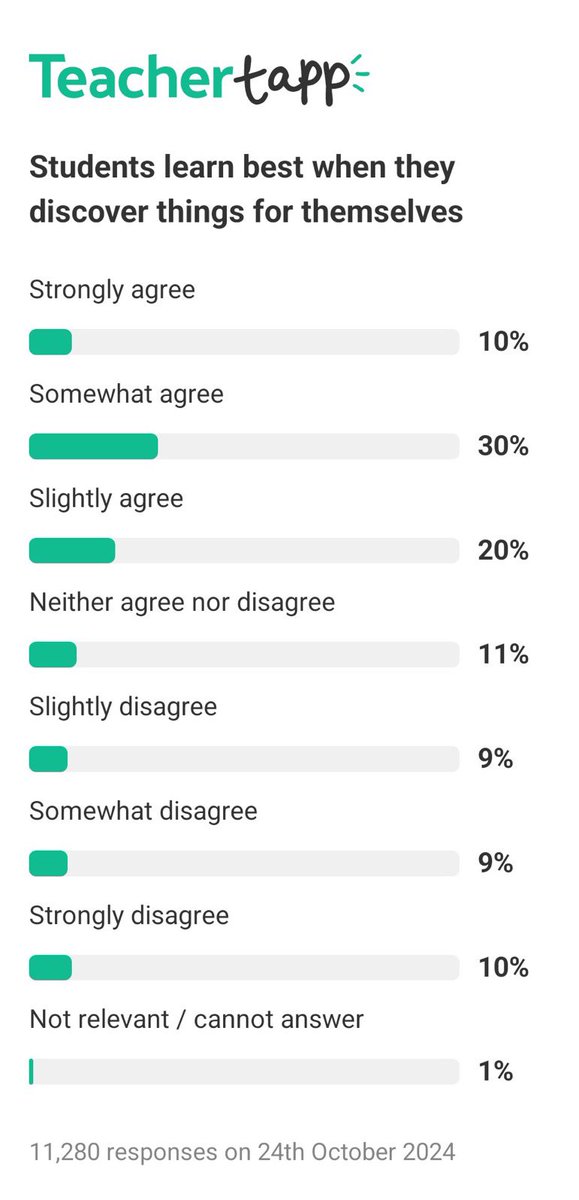
Yes, students do best when discovery is an integral part of their classroom experience. When teachers know how to set up these situations, it is effective for all students. #iTeachMath
Ralph Pantozzi tweet media
Dylan Wiliam@dylanwiliam

@BanjoBouchon @primarypercival That's my take. I'll concede that students are more likely to remember things they discover for themselves, but many students don't have time for this. Ultimately it's an equity issue. Teaching should be effective for all our students—not just those who find learning easy.


English
3
1
7
1.9K
Bryan Meyer
Bryan Meyer@doingmath·
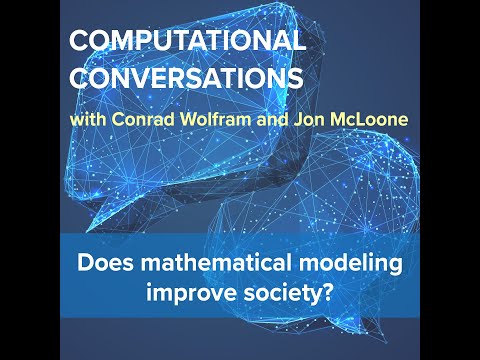
(High) school math is so out of touch… “There is a difference: How much math is there in the CURRICULUM and college? Or how much math is there in your REAL WORK as an engineer?” cc: @conradwolfram @nctm youtu.be/MhanyR5Rfk0
YouTube video
YouTube
English
0
1
3
347
Bryan Meyer
Bryan Meyer@doingmath·
@Dean_of_math I propose anyone engaging in this tired debate cite an ACTUAL lesson plan and ground their critique in actual details of the lesson.
English
1
0
2
142
Melissa D
Melissa D@Dean_of_math·
Dear world, “Discovery learning” is not a thing. Using inquiry or PBL does not mean that students are just left to their own devices. It’s a highly intentional approach that involves a great deal of planning, assessing and growing.
English
5
11
112
5.8K
Bryan Meyer
Bryan Meyer@doingmath·
@C_Hendrick What are recommendations based on #5 (performance =\= learning)? As in, what should teachers do about this in regards to assessment and grading practices?
English
1
0
0
291
Carl Hendrick
Carl Hendrick@C_Hendrick·
How learning happens in seven general principles ⬇️ 1. Working Memory Capacity is Limited: Our working memory, responsible for holding and processing information in real-time, has a limited capacity. This limitation means that when learners are exposed to large amounts of new information simultaneously, they may struggle to process it effectively. Focusing attention is essential because distractions or overload can lead to cognitive strain, reducing the ability to learn. Teachers can support this by breaking information into manageable chunks, allowing students to engage deeply with smaller parts before moving on to the next concept. 2. We Learn Through Meaning and What We Already Know: Learning is enhanced when new information connects to existing knowledge. When learners relate new content to things they already understand, they create a stronger foundation for retention and comprehension. This process, known as schema-building, helps students make sense of complex ideas by fitting them into an established framework. Teachers can facilitate this by introducing new concepts through familiar examples or linking them to relevant prior knowledge, making learning more meaningful and long-lasting. 3. Novices Think Differently Than Experts: Novices often approach tasks with means-end analysis or trial-and-error methods or simple strategies because they lack the knowledge to recognize patterns or apply sophisticated approaches. In contrast, experts draw on rich mental models, using prior experiences and refined techniques to solve problems more efficiently. This difference means that novices need structured guidance to develop these mental models over time. Teachers can help by gradually introducing students to expert strategies, enabling them to progress from basic skills to more advanced understanding. 4. To Remember, We Need to Forget: Storage strength is the measure of how well information is embedded in long-term memory, indicating its durability over time. Retrieval strength is the ease with which information can be accessed from memory at a given moment, which fluctuates based on recent use and context. Unlike storage strength, retrieval strength is influenced by context and interference from other information. To remember something long-term, it’s essential to boost its retrieval strength, which can be achieved by actively retrieving the information. Unlike passive studying, retrieval requires you to recall the item on your own, strengthening memory more effectively, especially when the retrieval is challenging. This principle explains why strategies like interleaving (alternating topics) and spacing (spreading out sessions) are so effective. By allowing time for slight forgetting, these methods make retrieval harder, ultimately enhancing memory retention. This “adaptive forgetting” is crucial for retaining core concepts. 5. Learning ≠ Performance: A high test score or good performance in the classroom doesn’t necessarily mean that true learning has occurred. Learners might perform well temporarily by memorizing facts or rehearsing specific methods without understanding the underlying concepts. This principle highlights the difference between short-term performance and deep, long-term learning. Effective assessment should look beyond scores to evaluate true comprehension. The rate of assessment matters which is why regular checking for understanding is so important. Teachers can use open-ended questions, application tasks, and reflective discussions to gauge whether students genuinely understand the material. 6. Achievement Leads to Motivation: Success in learning (however small) can foster a positive cycle of confidence, self-efficacy, and motivation. When students achieve their goals, even in small steps, they are more likely to believe in their ability to succeed in future learning tasks. This sense of accomplishment encourages them to take on new challenges and persist through difficulties. Teachers can support this cycle by setting attainable goals, providing regular feedback, and celebrating incremental progress to reinforce students’ confidence and motivation. 7. Learners Are Bad at Knowing How to Learn: Many students are unaware of effective learning strategies, often relying on passive techniques like re-reading, highlighting, or cramming. These methods feel productive in the short term but are less effective for long-term retention. Evidence-based strategies like retrieval practice, spaced learning, and interleaving have been shown to improve memory and understanding, but students may need guidance to adopt these methods. Teachers can enhance learning outcomes by teaching students about these techniques and encouraging their use, helping students develop more efficient and powerful study habits. (Thanks to @MrAlexKoks for the design)
Carl Hendrick tweet media
English
10
211
594
95K
Bryan Meyer
Bryan Meyer@doingmath·
@rastokke As a HS teacher, I used to hear colleagues say this same kinda thing…blaming the middle schools. Instead, I’ve started to ask middle schools: “what are the pressures you feel about preparing kids for high school? What can we do at the HS level to lessen that for you?” Try?
English
1
0
0
76
Anna Stokke
Anna Stokke@rastokke·
On Friday, my episode is specifically focussed on the transition from high school to university math. Many students think they're prepared, but find they're not. We'll discuss what we're observing at the university level, the background knowledge that's needed to succeed, etc.
English
6
11
49
3.5K
Bryan Meyer
Bryan Meyer@doingmath·
@jedediyah I can’t seem to find these (your?) machine learning resources on the page?
English
0
0
0
62
Bryan Meyer 已转推
Melissa D
Melissa D@Dean_of_math·
Instead of marking that math task, consider looking at it, finding examples of interesting student work, sharing those examples with the class, and continuing the learning. No marking. No writing. Just learning.
English
1
14
48
2.1K
Bryan Meyer
Bryan Meyer@doingmath·
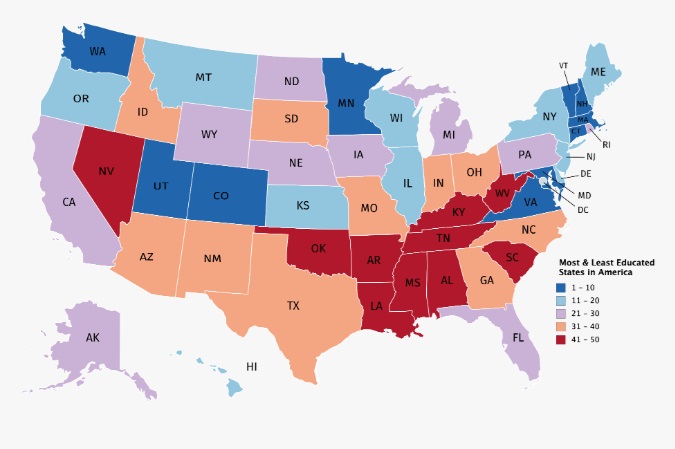
@BisforBerkshire Education levels probably correlate strongly with income level, as does life expectancy (I would imagine). So this seems like a map of avg income level more than anything?
English
0
0
0
132
Jennifer Berkshire
Jennifer Berkshire@BisforBerkshire·
Pretty startling to see how closely these maps of life expectancy and education levels track.
Jennifer Berkshire tweet mediaJennifer Berkshire tweet media
English
12
48
114
8K
Bryan Meyer
Bryan Meyer@doingmath·
@minilek @CAgovernor Further, the 3-year curriculum should illustrate how the standard HS math content can be taught conceptually and how it is connected to meaningful issues in the world (it can integrate data science and other modern maths into the core content rather than as distinct courses)
English
1
0
1
121
Bryan Meyer
Bryan Meyer@doingmath·
@minilek @CAgovernor I suggest the development of a 3-year HS math curriculum that prepares students to be ready for a calculus class in their 4th year (leaving Calc open to ALL students who are in grade level in 9th grade; this is very rare now).
English
1
0
1
82
Jelani Nelson
Jelani Nelson@minilek·
Today I spoke at a joint oversight hearing by the Assembly Committee on Ed and Higher Ed about math education requirements for university admission. It looks like the @CAgovernor office has some explaining to do.
English
10
24
131
17.3K
Bryan Meyer
Bryan Meyer@doingmath·
@DavisTeaching I know there will be problems with all such tests, but I still think it would be a huge improvement for someone to create a prototype of a new exam that reflected the modern needs of high school mathematics education (and allowed much fuller access to all types of tech tools)
English
1
0
0
48
Bryan Meyer
Bryan Meyer@doingmath·
@DavisTeaching It’s wild to me how many people accept the test as the driver of policy and practice. There was a large opt out movement a while back (which I think got squashed because they started monetarily penalizing districts?); we need something like that again.
English
1
0
1
127
Ryan Davis
Ryan Davis@DavisTeaching·
Standardized testing is one of the biggest shams in education. Every conversation derived from it is as meaningless as the arbitrarily-, ill-, & poorly- defined and constantly moving target that testing is - a din of nothingness, nonetheless endlessly destructive
Courier Journal@courierjournal

Some proficiency rates stayed the same or improved statewide, while science scores decreased across all grade levels. courier-journal.com/story/news/edu…

English
2
12
31
2.1K
Bryan Meyer
Bryan Meyer@doingmath·
@minilek @tomloveless99 All Boaler stuff aside, it is a weird claim to say something needs improving so that we can bomb people and extract resources from the earth.
English
0
0
2
161
Jelani Nelson
Jelani Nelson@minilek·
Math-Ish also continues to claim 2.8 years of learning from a 4-week youcubed summer camp, which has been repeatedly debunked by @tomloveless99 (see e.g. ams.org/journals/notic… and educationnext.org/californias-ne… -- someone from youcubed responded at educationnext.org/stanford-summe…)
Julia Steinberg@juliasteinberg

Dylan Rem of @StanfordReview reviews @joboaler's Math-Ish. "Her “ish” approach doesn’t work when developing a flight trajectory for a missile, or drilling into a mountainside to extract lithium." stanfordreview.org/jo-boalers-mat…

English
6
16
58
31.2K
Bryan Meyer
Bryan Meyer@doingmath·
@TracyZager Crazy how much this aligns with my own personal and professional experiences. Thanks for sharing! For whatever it’s worth, I’m wrestling with the same questions. Wish I was at the conference to connect with you. Hope a path emerges for you…and happy to connect any time. ❤️
English
0
0
0
77