ryan

256 posts

ryan banner
ryan

ryan

@ryanchern

information @capitola_xyz | prev: @solana | podcast: https://t.co/l7DgfAYfJD

加入时间 Ağustos 2016
722 关注1.4K 粉丝
ryan
ryan@ryanchern·
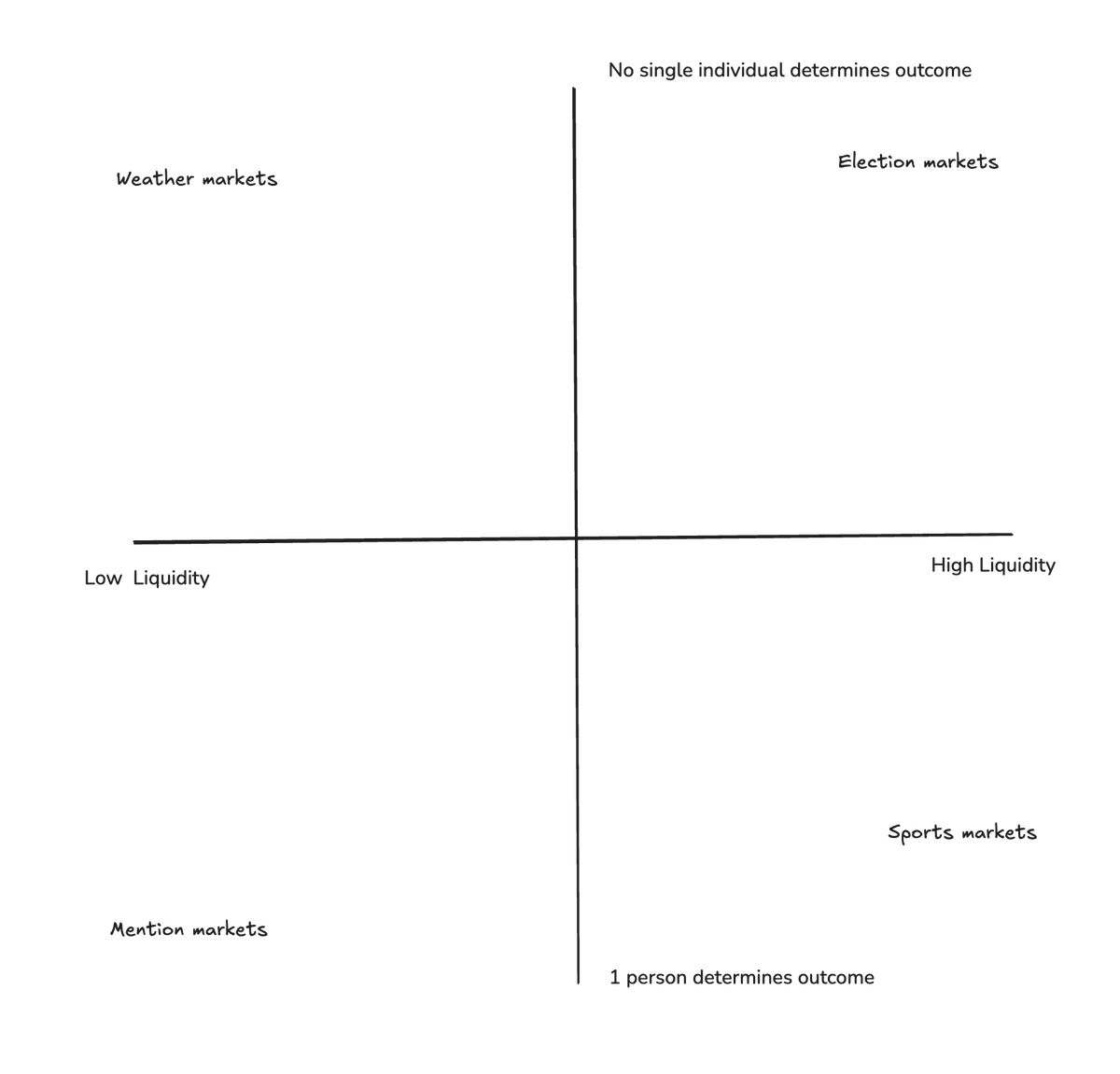
@alanwu The set of players and referees on the field determine the outcome. In certain games, a single player making a shot or a referee's call determines the outcome, regardless if it was earnest or insider.
English
0
0
1
25
alan
alan@alanwu·
@ryanchern How come sports markets are in the “1 person determines outcome”? Makes sense specifically for 1v1 sports and player props though
English
1
0
2
68
ryan
ryan@ryanchern·
On improving prediction market interfaces as better information platforms: Prediction market sites get 40M+ monthly site visits. Over 95% of these visitors only observe the markets and never submit a trade. People visit prediction markets to consume the current probabilities of different outcomes occurring. However, the sites only display the midpoint or last traded price as the displayed probability. The design space to contextualize these probabilities is heavily under-explored. It requires significant context to decipher how much to trust a market's current price. Factors you might look at include: 1. Order book (most sites only show you the current state of the order book) 2. Volume (24hr and total) 3. Account addresses of the top holders (profiles showing their past trades or if it is a fresh account) Different markets have various baseline amounts that people intuitively get a sense for as they spend more time looking at prediction markets. Currently, displayed probabilities are just raw midpoint prices or last traded prices, which can lead to incorrect conclusions about market accuracy, as the relationship between liquidity, volume, and accuracy is not 1:1. Markets can be categorized along the following axes: - Market liquidity (low liquidity <> high liquidity) - Degree of individual control (single-actor-driven outcome <> diffuse/multi-causal outcome) Whether a market is low liquidity or high liquidity is path dependent and depends on cultural interest and platform subsidies (e.g. lots of people really care about sports and want to trade it in size, therefore many trading firms have spent billions in research to price these events). Markets whose outcomes are determined by a single individual are subject to adverse selection. This doesn't mean that people aren't willing to trade these markets today (either due to personal utility functions or platform subsidies), but order books are usually very thin even if they have low spreads. These informational interfaces will become increasingly important as prediction market context diverges: 1. More market categories + markets with unique dynamics 2. Changes to the underlying trade ordering and execution systems (first-come first-serve, batch, etc.) The surface area of prediction market-native metrics, scoring functions, and visualizations is unexplored. No prediction market site today offers a differentiated product experience for consuming prediction market information. Repackaging prediction market prices with LLM-generated text is not the correct form factor.
ryan tweet media
English
1
0
9
468
ryan
ryan@ryanchern·
Markets on what is actually real today would be quite useful.
ryan tweet media
English
0
0
2
217
ryan
ryan@ryanchern·
The best way to predict the future is to build it.
English
0
0
3
179
ryan
ryan@ryanchern·
@alz_zyd_ Lots of context isn't yet in LLMs, especially at the idea frontier, and the vast majority of your life is dictated by other humans. For now, only talking with LLMs will often give unhelpful feedback.
English
0
0
1
306
alz
alz@alz_zyd_·
"Writing is important because it helps you think" Writing is an inefficient and antisocial way to think. The best way to think is to debate ideas with other smart people. Talking with an LLM pretty much replicates this, and is thus a strictly better way to think than writing
English
173
18
207
40.7K
roon
roon@tszzl·
“fake work” and “bullshit jobs” has been fantastically wrong and misleading for understanding the modern world. a much better understanding is of a global economy where minor skill differences and improvements lead to monumentally different outcomes, and the marginal hour of work has never been more measurable or useful after the advent of even moderately effective talent allocation systems and the variability of reward based on effort and skill, people have engaged much harder in a red queen rat race across the world. this is why the Chinese ‘cram schools’ exist and why ‘yuppie striverism’ is a thing and why people trade off later family formation for working more so often. while overall work hours are slightly down, they are actually up for high earners (nber.org/digest/jul06/w…) I see it in the marginal effect with my friends now after the advent of claude and codex: they are actually working harder now than they ever have before. this is due to a personal Jevon’s paradox where they see that the value of their time has increased dramatically, that they can get a lot more visible work done towards goals they care about than they used to after requests from their customers the labs are doing things like inventing dispatch which lets you monitor work and manipulate your computer from your phone, on top of prior changes like having always on communications (slack). You hear about people launching codex jobs from their phone the moment they have an idea and reviewing them later no clue how long this lasts but the most immediate impact of co-existing with the machine state is higher productivity and higher visibility which leads to more work hours
English
129
150
2.5K
302.4K
ryan
ryan@ryanchern·
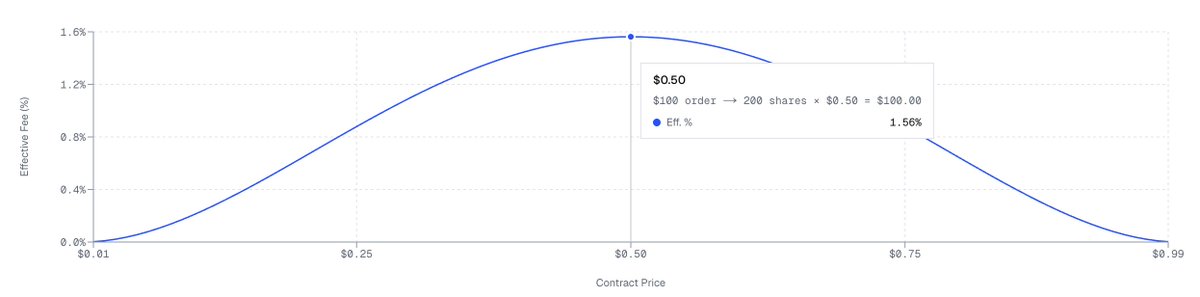
Polymarket's new fee structure creates the explicit incentive to call the splitPosition() function on markets and sell the shares below $0.50 to incur the minimum trading fee. - Buying 100 shares of YES @ 80c according to the Finance category fee schedule incurs a fee of $0.512. - Buying 100 shares of NO @ 20c incurs a fee of $0.128. If you want to go long YES @ 80c, you can either: 1. Directly buy YES shares 2. Call the splitPosition() contract, splitting $100 --> 100 YES + 100 NO shares for free, then sell 100 NO @ $0.20 Directly buying YES shares translates to 4x higher fees. For a $100,000 notional taker order, this is a $480 difference. Creating microstructure games like these further hurts retail traders who almost certainly are not aware of this dynamic. In addition to the downstream market quality effects this imposes, one could argue this shouldn't even be in Polymarket's first-order interest as this is a lever third party interfaces can implement and capture this spread.
ryan tweet media
English
15
18
255
37.1K
ryan
ryan@ryanchern·
@no__________end Counterintuitively, regulation will incentivize and increase innovation into other applications of prediction markets that are less legible, but more valuable long-term.
English
2
0
1
1.3K
Matt Liston
Matt Liston@no__________end·
I co-founded Augur, the first decentralized prediction market, and was founding CSO of Gnosis, the second. Polymarket still runs on Gnosis contracts. I'm glad prediction markets finally broke through. But I'm not going to pretend that what's being scaled right now is what we built these systems to do.
English
68
85
1.2K
105.7K
Henry Lau
Henry Lau@setofsevens·
@ryanchern Guessing this is the Kalshi fee equation charted out?
English
1
0
1
62
ryan
ryan@ryanchern·
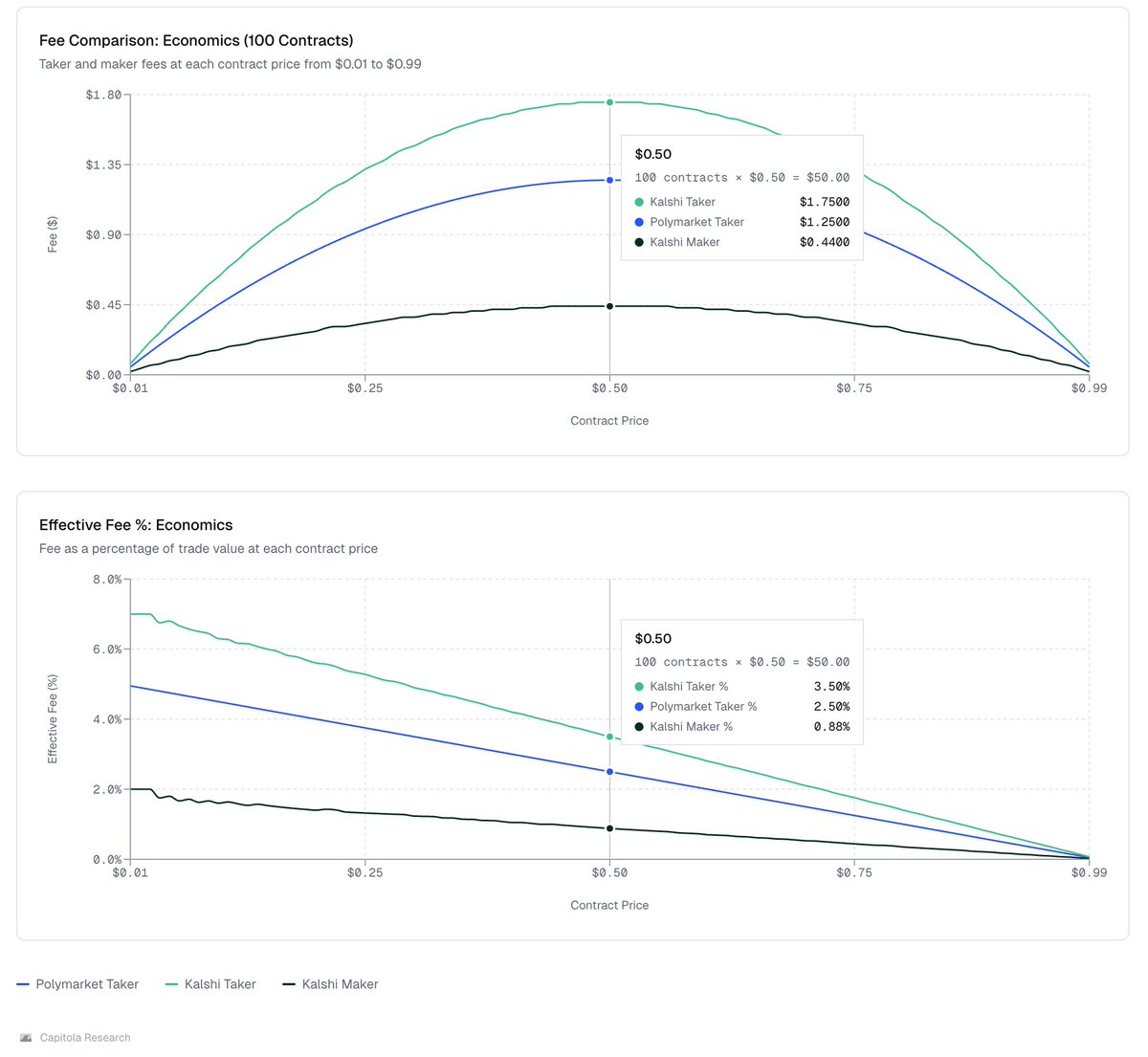
For an asset class with bounded payout structures, we are currently in a high, albeit temporary, equilibrium. Axiom and other trading terminals charge between 0.5-1% with much more public backlash. Mindshare for prediction markets still far outpaces market structure.
ryan tweet mediaryan tweet media
English
1
0
7
491
ryan
ryan@ryanchern·
As bots + agents proliferate, platforms will transition away from global first-come-first-serve reservation systems to platforms price discriminating based on platform reputation. It's unlikely people will tolerate a global bidding system where slots get sold to the highest bidder, even though this increases allocative efficiency. Instead, users/agents will see dynamic pricing + availability as platforms attempt to estimate where they lie on the demand curve and prevent scalpers. One example is Uber extending dynamic pricing and targeted incentives to the driver side to rebalance supply and demand, improving reliability (while also enabling Uber to optimize for revenue and take rate).
ryan@ryanchern

If everyone has a resy bot, does anyone have one?

English
0
0
4
379
ryan
ryan@ryanchern·
The day we spend more on models than on housing will mark the first day of the real metaverse.
English
0
0
5
266
ryan
ryan@ryanchern·
Crazy to think that I've already: - coded the most I'm going to code - driven the most I'm going to drive - Google'd the most I'm going to Google Last holdout for me is writing. Don't think I've hit that inflection point yet.
English
0
0
9
465
ryan
ryan@ryanchern·
Permissionless liquidity sponsorship is a step in the right direction. Will be keeping track of the short/medium-term equilibrium between platform vs public incentives, along with the second-order consequences of anyone being able to sponsor and capture incentives.
Mustafa@mustafap0ly

sponsoring market rewards is now open to all users 😛 add rewards to any market to get the liquidity for the size you want to trade. permissionless market deployment and creator fees next...
English
0
1
12
1K
ryan
ryan@ryanchern·
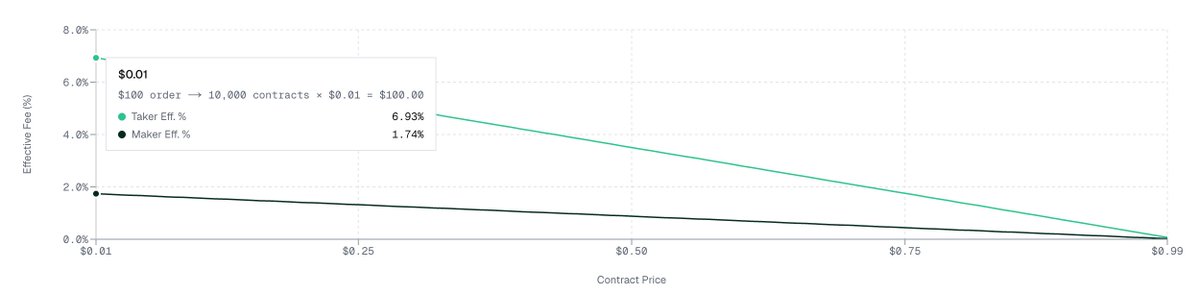
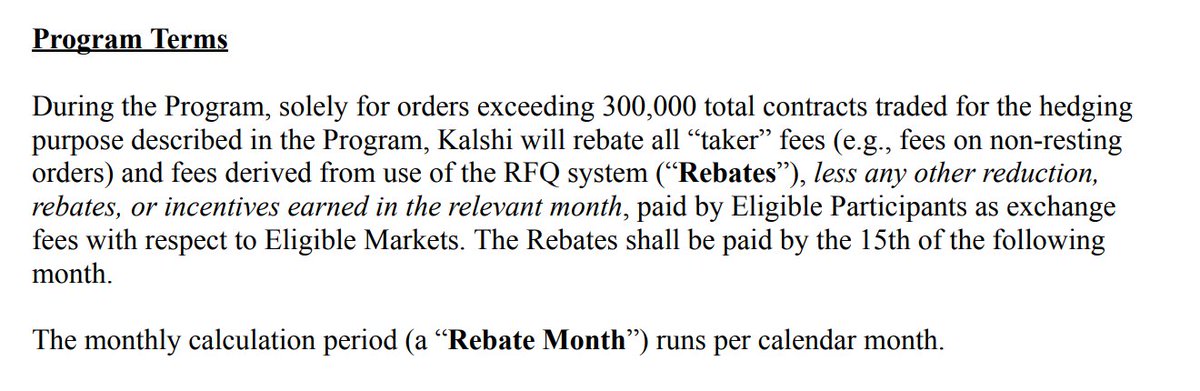
The sportsbook rebate hedging program is an early signal of non-traditional assets naturally aggregating into a global liquidity pool. Betdex and Monaco were onchain attempts that failed, leading us to the current local equilibrium. The rebate program suggests the market views a 7% taker fee as too high in equilibrium. There is nothing that requires the global pool to be censorship-resistant or permissionless. One dominant global liquidity pool for assets enables everyone to have access to the same data without obfuscation. Extending this model to other financialized assets enables better coordination and transparency around systemic risk.
ryan tweet media
English
0
0
10
392