swollenlikezyzz.eth

8.5K posts

swollenlikezyzz.eth banner
swollenlikezyzz.eth

swollenlikezyzz.eth

@shockingClit

piece of shit /// intern @flash_fortune

加入时间 Mart 2022
2.4K 关注231 粉丝
置顶推文
swollenlikezyzz.eth
swollenlikezyzz.eth@shockingClit·
it was a psyop set up from the beggining
English
3
0
13
25.4K
swollenlikezyzz.eth 已转推
Appart Design
Appart Design@AppartDesign·
Property in Tuscany 🇮🇹 Price: 864 000$
Appart Design tweet mediaAppart Design tweet mediaAppart Design tweet mediaAppart Design tweet media
English
9
28
379
28.2K
swollenlikezyzz.eth 已转推
Sajeel Purewal 🇨🇦 🇵🇰
Build Robots Build Drones Build Hexapods Build Glasses Build Radios Build Clocks Build Rovers Build Wearables Build Rockets Build Exoskeletons Build Sensors Build it all blueprint.am
English
15
171
1.3K
51.8K
swollenlikezyzz.eth 已转推
Bitcoin Teddy
Bitcoin Teddy@Bitcoin_Teddy·
This is what a house should look like, not those cold looking offices 😭
Bitcoin Teddy tweet media
English
74
427
7.2K
112.6K
swollenlikezyzz.eth 已转推
Armaan Sidhu
Armaan Sidhu@realarmaansidhu·
A Waterloo undergrad just built the first working implementation of Google's most disruptive AI paper. In one week. Memory stocks crashed. Investors got it exactly backwards. TurboQuant compresses the KV cache — the part of an AI model that eats your GPU memory during long conversations — from 16 bits down to 3 bits per value. 5x compression. Near-zero quality loss. No retraining needed. Drop it into any existing model and it just works. Micron, SK Hynix, Samsung, SanDisk all dumped 3-6% in a single day. Wall Street's logic: if AI needs less memory, sell memory stocks. That logic has been wrong every single time in the history of computing. This is Jevons paradox — the 160-year-old principle that says when you make a resource more efficient, you don't use less of it. You use more. Coal engines got efficient, coal consumption exploded. Bandwidth got cheaper, data consumption went vertical. Storage got dense, we filled it with 4K video. Every time. Here's what TurboQuant actually does to demand. A 70B parameter model that used to need a $10,000 workstation to run at long context? Now runs on a $1,500 consumer GPU. A model that choked at 32K tokens? Now handles 100K+. A smartphone that could barely run a 3B toy model? Now runs 7-13B with thousands of tokens of usable context. You didn't reduce demand. You just made AI accessible to a billion more devices. Every one of those devices now needs memory. Every user who couldn't run local AI before now can — and will. And every developer who hits the new ceiling will immediately ask for more. Anirudh BV — a student at UWaterloo — took Google's paper, wrote 2,000 lines of CUDA, and had it running on Nvidia's Blackwell B200 within a week. From pseudocode to live generation from compressed memory. If a college kid can ship this before most corporate labs, the adoption curve isn't years out. It's already here. The investors who sold memory stocks on this news will be buying them back within two quarters. Efficiency doesn't kill demand. It creates the demand that didn't exist yet.
Armaan Sidhu tweet mediaArmaan Sidhu tweet media
anirudh bv@anirudhbv_ce

I implemented @GoogleResearch's TurboQuant as a CUDA-native compression engine on Blackwell B200. 5x KV cache compression on Qwen 2.5-1.5B, near-loseless attention scores, generating live from compressed memory. 5 custom cuTile CUDA kernels ft: - fused attention (with QJL corrections) - online softmax -on-chip cache decompression - pipelined TMA loads Try it out: devtechjr.github.io/turboquant_cut… s/o @blelbach and the cuTile team at @nvidia for lending me Blackwell GPU access :) cc @sundeep @GavinSherry

English
11
52
671
76.6K
swollenlikezyzz.eth 已转推
Nikola
Nikola@nikolacupic·
Semaglutide alone (one single peptide) generated $34.6 billion in sales in 2025. OpenAI hit $20B revenue that year. So a single peptide out-earned ChatGPT by 1.7x. And that's before Eli Lilly's tirzepatide, which added another $25B.
GIF
Nikola@nikolacupic

x.com/i/article/2038…

English
8
22
358
43.1K
swollenlikezyzz.eth 已转推
NICK
NICK@nickrgrs·
biggest lesson from this $1B 1 person company situation is... VOLUME 800 fake doctors bro mass proof, mass content/ads, MASS VOLUME u must be chad ramming high frequency messaging into the market VOLUME MAXXING
Kekius Maximus@Kekius_Sage

BREAKING 🚨: This is Matthew Gallagher, who made 800+ Facebook accounts for fake doctors to advertise on Facebook — and went on to build a GLP-1 telehealth company with just $20,000, AI, and only one full-time teammate: his brother. It generated $401M in 2025 and could reach $1.8B in 2026.

English
14
26
469
39.7K
swollenlikezyzz.eth 已转推
XLadyGlow
XLadyGlow@xladyglow·
Luxury Container Cliff House Build Overlooking River 🏝️😍
English
7
192
1.2K
219.2K
swollenlikezyzz.eth 已转推
Saamir Mithwani
Saamir Mithwani@ssaaammiirr·
Hot take: the Medvi story has nothing to do with AI. A guy built a $1.8B company with 2 people. Cool. But strip away the AI headline and look at what's underneath: Telehealth subscriptions. I've been in this space. I've seen the numbers up close. The LTVs are borderline unfair compared to every other business model. Traditional ecom: $50 AOV, maybe $80 LTV if you're lucky, 20% returns, warehouse headaches, margin compression. Telehealth: $200+/mo, $1,200-2,400 LTV, pharmacy ships direct, no inventory, no returns, recurring revenue. AI made him efficient. Telehealth made him a billionaire. Those are two very different things. And the craziest part? He only did weight loss. ONE vertical. ED alone is a $5B+ market. Hair loss. Hormones. Peptides. Anti-aging. Skincare. Mental health. Each one of these is a billion dollar telehealth company waiting to be built. The reason more people haven't done it is the infrastructure is brutal — doctors, pharmacies, compliance, prescriptions, patient management. That's why you need a platform like Rimo.co. Full stack telehealth OS. Everything you need to launch a brand like this without building it from scratch. AND YOU OWN ALL YOUR DATA AND TOKENS The next wave of billionaires is coming out of telehealth. Not SaaS. Not ecom. Telehealth. rimo.co
nic carter@nic_carter

first vibecoded billion-dollar company?

English
24
45
534
89.6K
swollenlikezyzz.eth 已转推
elvis
elvis@omarsar0·
Building a personal knowledge base for my agents is increasingly where I spend my time these days. Like @karpathy, I also use Obsidian for my MD vaults. What's different in my approach is that I curate research papers on a daily basis and have actually tuned a Skill for months to find high-signal, relevant papers. I was reviewing and curating papers manually for some time, but now it's all automated as it has gotten so good at capturing what I consider the best of the best. There are so many papers these days, so this is a big deal. You all get to benefit from that with the papers I feature in my timeline and on @dair_ai. The papers are indexed using @tobi qmd cli tool (all of it in markdown files along with useful metadata). So good for semantic search and surfacing insights, unlike anything out there. I am a visual person, so I then started to experiment with how to leverage this personal knowledge base of research papers inside my new interactive artifact generator (mcp tools inside my agent orchestrator system). The result is what you see in the clip. 100s of papers with all sorts of insights visualized. I keep track of research papers daily, so believe me when I tell you that this system is absolutely insane at surfacing insights. This is the result of months of tinkering on how to index research and leverage agent automations for wikification and robust documentation. But this is just the beginning. The visual artifact (which is interactive too) can be changed dynamically as I please. I can prompt my agent to throw any data at it. I can add different views to the data. Different interactions. I feel like this is the most personalized research system I have ever built and used, and it's not even close. The knowledge that the agents are able to surface from this basic setup is already extremely useful as I experiment with new agentic engineering concepts. I feel like this knowledge layer and the higher-level ones I am working on will allow me to maximize other automation tools like autoresearch. The research is only as good as the research questions. And the research questions are only as good as the insights the agents have access to. Where I am spending time now is on how to make this more actionable. I am obsessed about the search problem here. The automations, autoresearch, ralph research loop (I built one months ago) are easier to build but are only as good as what you feed them. Work in progress. More updates soon. Back to building.
Andrej Karpathy@karpathy

LLM Knowledge Bases Something I'm finding very useful recently: using LLMs to build personal knowledge bases for various topics of research interest. In this way, a large fraction of my recent token throughput is going less into manipulating code, and more into manipulating knowledge (stored as markdown and images). The latest LLMs are quite good at it. So: Data ingest: I index source documents (articles, papers, repos, datasets, images, etc.) into a raw/ directory, then I use an LLM to incrementally "compile" a wiki, which is just a collection of .md files in a directory structure. The wiki includes summaries of all the data in raw/, backlinks, and then it categorizes data into concepts, writes articles for them, and links them all. To convert web articles into .md files I like to use the Obsidian Web Clipper extension, and then I also use a hotkey to download all the related images to local so that my LLM can easily reference them. IDE: I use Obsidian as the IDE "frontend" where I can view the raw data, the the compiled wiki, and the derived visualizations. Important to note that the LLM writes and maintains all of the data of the wiki, I rarely touch it directly. I've played with a few Obsidian plugins to render and view data in other ways (e.g. Marp for slides). Q&A: Where things get interesting is that once your wiki is big enough (e.g. mine on some recent research is ~100 articles and ~400K words), you can ask your LLM agent all kinds of complex questions against the wiki, and it will go off, research the answers, etc. I thought I had to reach for fancy RAG, but the LLM has been pretty good about auto-maintaining index files and brief summaries of all the documents and it reads all the important related data fairly easily at this ~small scale. Output: Instead of getting answers in text/terminal, I like to have it render markdown files for me, or slide shows (Marp format), or matplotlib images, all of which I then view again in Obsidian. You can imagine many other visual output formats depending on the query. Often, I end up "filing" the outputs back into the wiki to enhance it for further queries. So my own explorations and queries always "add up" in the knowledge base. Linting: I've run some LLM "health checks" over the wiki to e.g. find inconsistent data, impute missing data (with web searchers), find interesting connections for new article candidates, etc., to incrementally clean up the wiki and enhance its overall data integrity. The LLMs are quite good at suggesting further questions to ask and look into. Extra tools: I find myself developing additional tools to process the data, e.g. I vibe coded a small and naive search engine over the wiki, which I both use directly (in a web ui), but more often I want to hand it off to an LLM via CLI as a tool for larger queries. Further explorations: As the repo grows, the natural desire is to also think about synthetic data generation + finetuning to have your LLM "know" the data in its weights instead of just context windows. TLDR: raw data from a given number of sources is collected, then compiled by an LLM into a .md wiki, then operated on by various CLIs by the LLM to do Q&A and to incrementally enhance the wiki, and all of it viewable in Obsidian. You rarely ever write or edit the wiki manually, it's the domain of the LLM. I think there is room here for an incredible new product instead of a hacky collection of scripts.

English
113
355
3.7K
340.4K
swollenlikezyzz.eth 已转推
Andrej Karpathy
Andrej Karpathy@karpathy·
LLM Knowledge Bases Something I'm finding very useful recently: using LLMs to build personal knowledge bases for various topics of research interest. In this way, a large fraction of my recent token throughput is going less into manipulating code, and more into manipulating knowledge (stored as markdown and images). The latest LLMs are quite good at it. So: Data ingest: I index source documents (articles, papers, repos, datasets, images, etc.) into a raw/ directory, then I use an LLM to incrementally "compile" a wiki, which is just a collection of .md files in a directory structure. The wiki includes summaries of all the data in raw/, backlinks, and then it categorizes data into concepts, writes articles for them, and links them all. To convert web articles into .md files I like to use the Obsidian Web Clipper extension, and then I also use a hotkey to download all the related images to local so that my LLM can easily reference them. IDE: I use Obsidian as the IDE "frontend" where I can view the raw data, the the compiled wiki, and the derived visualizations. Important to note that the LLM writes and maintains all of the data of the wiki, I rarely touch it directly. I've played with a few Obsidian plugins to render and view data in other ways (e.g. Marp for slides). Q&A: Where things get interesting is that once your wiki is big enough (e.g. mine on some recent research is ~100 articles and ~400K words), you can ask your LLM agent all kinds of complex questions against the wiki, and it will go off, research the answers, etc. I thought I had to reach for fancy RAG, but the LLM has been pretty good about auto-maintaining index files and brief summaries of all the documents and it reads all the important related data fairly easily at this ~small scale. Output: Instead of getting answers in text/terminal, I like to have it render markdown files for me, or slide shows (Marp format), or matplotlib images, all of which I then view again in Obsidian. You can imagine many other visual output formats depending on the query. Often, I end up "filing" the outputs back into the wiki to enhance it for further queries. So my own explorations and queries always "add up" in the knowledge base. Linting: I've run some LLM "health checks" over the wiki to e.g. find inconsistent data, impute missing data (with web searchers), find interesting connections for new article candidates, etc., to incrementally clean up the wiki and enhance its overall data integrity. The LLMs are quite good at suggesting further questions to ask and look into. Extra tools: I find myself developing additional tools to process the data, e.g. I vibe coded a small and naive search engine over the wiki, which I both use directly (in a web ui), but more often I want to hand it off to an LLM via CLI as a tool for larger queries. Further explorations: As the repo grows, the natural desire is to also think about synthetic data generation + finetuning to have your LLM "know" the data in its weights instead of just context windows. TLDR: raw data from a given number of sources is collected, then compiled by an LLM into a .md wiki, then operated on by various CLIs by the LLM to do Q&A and to incrementally enhance the wiki, and all of it viewable in Obsidian. You rarely ever write or edit the wiki manually, it's the domain of the LLM. I think there is room here for an incredible new product instead of a hacky collection of scripts.

English
1.8K
4K
36.6K
9.1M
swollenlikezyzz.eth 已转推
Nick Durham
Nick Durham@pnickdurham·
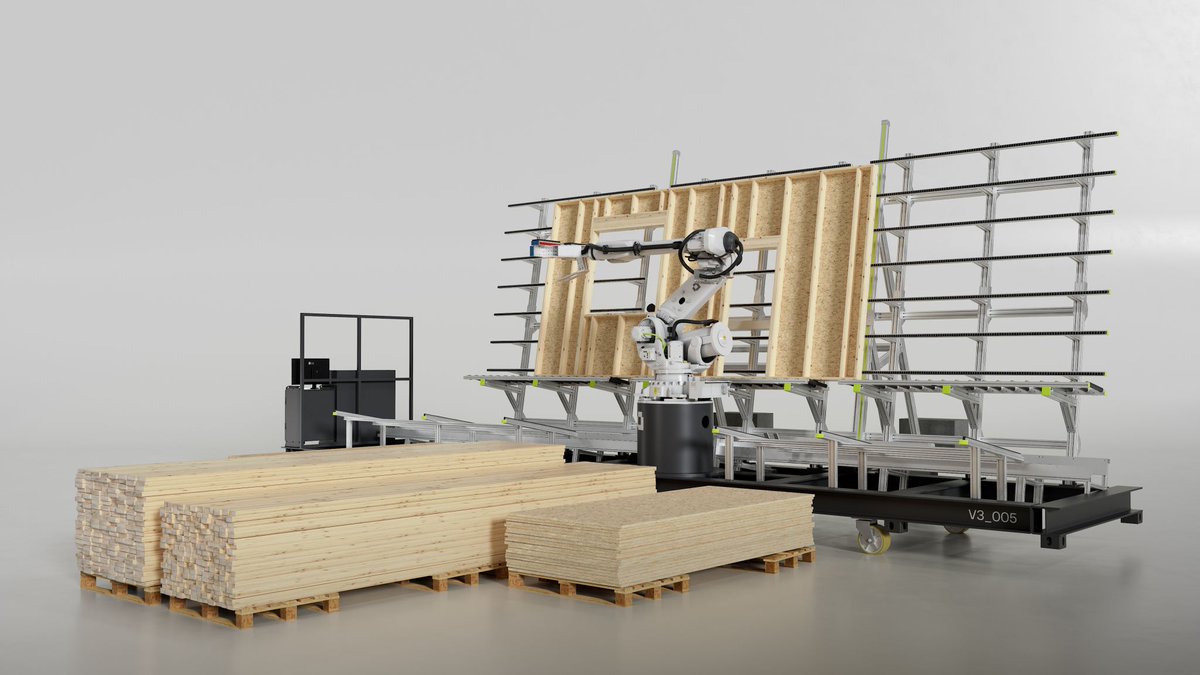
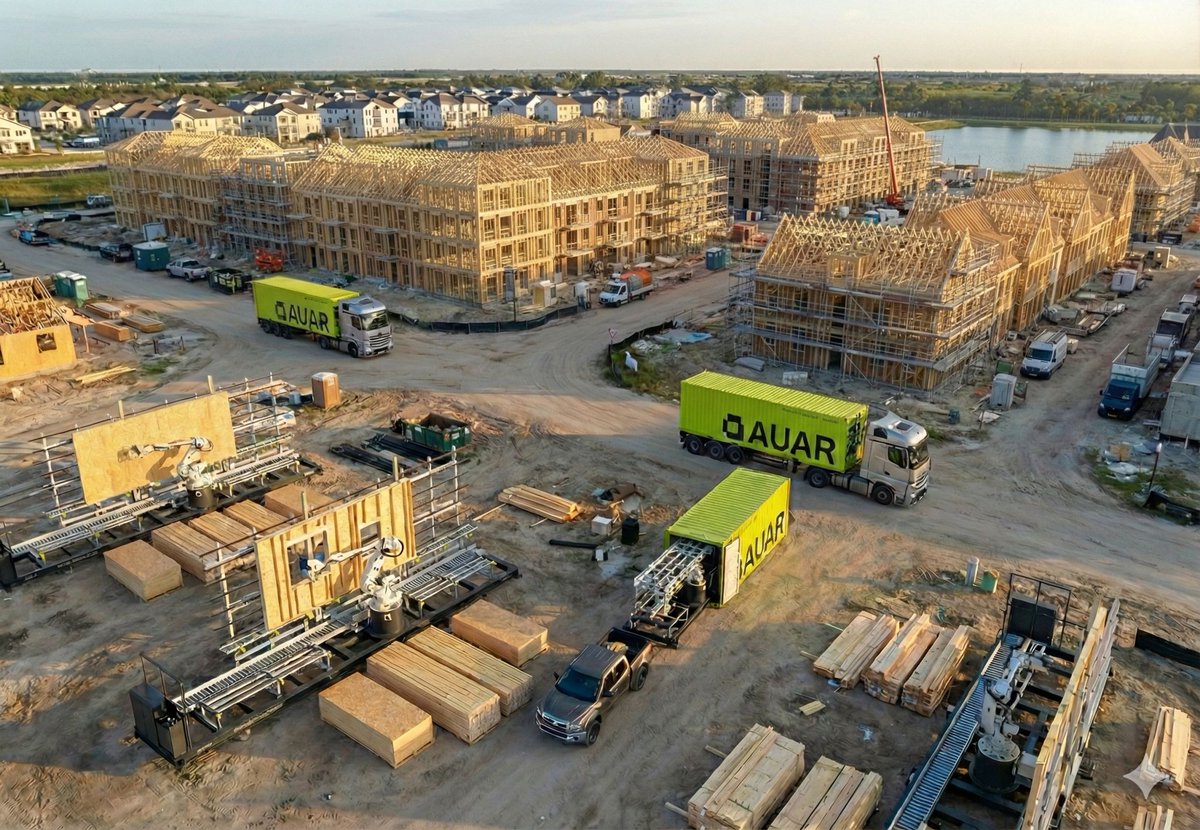
The most expensive way to build a house is in a factory. Prefab housing costs more than building by hand. After centuries of attempts, new technology waves, literal robots working in factories, and billions of dollars, it's crazy that's still true. We've tried vertical integration down to the nail, we've tried automated factories, we've tried reimagining the wall itself, we've tried panel plants from large building product companies. Since the 1970s, we've seen over 30 prefab companies in the US alone take a swing. When they inevitably fail, the value narrative quickly changes to "production capacity" "efficiency" and "quality." Cop out answers, respectfully, because cost has always been the reason one ventures into prefab. What have we learned from the collective trauma of centuries of failure? What assumptions can we question? One common thread is the belief that production must be centralized ala manufacturing environments. Scale comes from centralization, of course. However, in construction, centralized factories run into three huge constraints. 1/ CapEx. A traditional factory can cost $25M+ and needs high utilization for decades to amortize. Housing starts can swing 30-40% cycle to cycle so being able to withstand periods when demand slows and fixed costs don't is nonnegotiable. When demand inevitably picks up favorably, the factory is also limited and can't chase it. 2/ Transport. Finished wall panels are bulky, fragile, and expensive to ship. Kitting is promising, however the more finished the product, the bigger the risk. A fixed factory is locked inside a ~150-200 mile delivery radius. Panelizers, for example, need ~180 plants just to serve a fraction of the US market. 3/ Capacity mismatch. Builders need flexible, local capacity that flexes their pipeline. Factories need standardization and steady volume. These needs are always at odds. As a result of these constraints, 85% of US residential construction buys manual stick-frames. A shippable microfactory is an attempt to try something new in prefab. Instead of shipping bulky wall panels from a distant plant, you ship the factory itself and do construction on-site. The factory is located on or near the job site, so transport costs for finished components drop to nearly zero. And when the project ends, the factory moves to the next one or the next builder. Need 50 homes? Deploy one unit. Need 500? Deploy a fleet. Capacity matches the pipeline, not the other way around. Seems promising enough, right? A few companies are running with this concept. @GillesRetsin and AUAR sell structural framing capacity. They ship a containerized robotic cell to your jobsite, integrate with your design process, and fabricate a full home's structural shell in under 8 hours (roughly 80% less framing labor than a manual crew). The builder never owns the factory. AUAR owns and deploys it, and the builder pays per unit of output. CapEx goes to literal zero. @AGampel1 and Cuby Technologies are doing shippable microfactories but taking a full vertical integration approach. They JV with a developer and deploy a ~$10M microfactory that produces a complete kit of parts, foundation through finishes. Their first US factory is launching in Nevada tied to a 3000+ home pipeline. (the 3DP companies are also an example of this, shipping printers to jobsites, but we'll leave them in a separate category for now)
Nick Durham tweet mediaNick Durham tweet mediaNick Durham tweet media
English
70
60
602
72.8K
swollenlikezyzz.eth 已转推
Mikronous
Mikronous@mikronous·
Στο Μεγανήσι « Ένα νησάκι στη σκιά της Λευκάδας με μαγική θέα στο Ιόνιο και μια κρυμμένη κατοικία»
Mikronous tweet mediaMikronous tweet media
Ελληνικά
14
26
220
20.1K
swollenlikezyzz.eth 已转推
Tech Tech China
Tech Tech China@techtechchina·
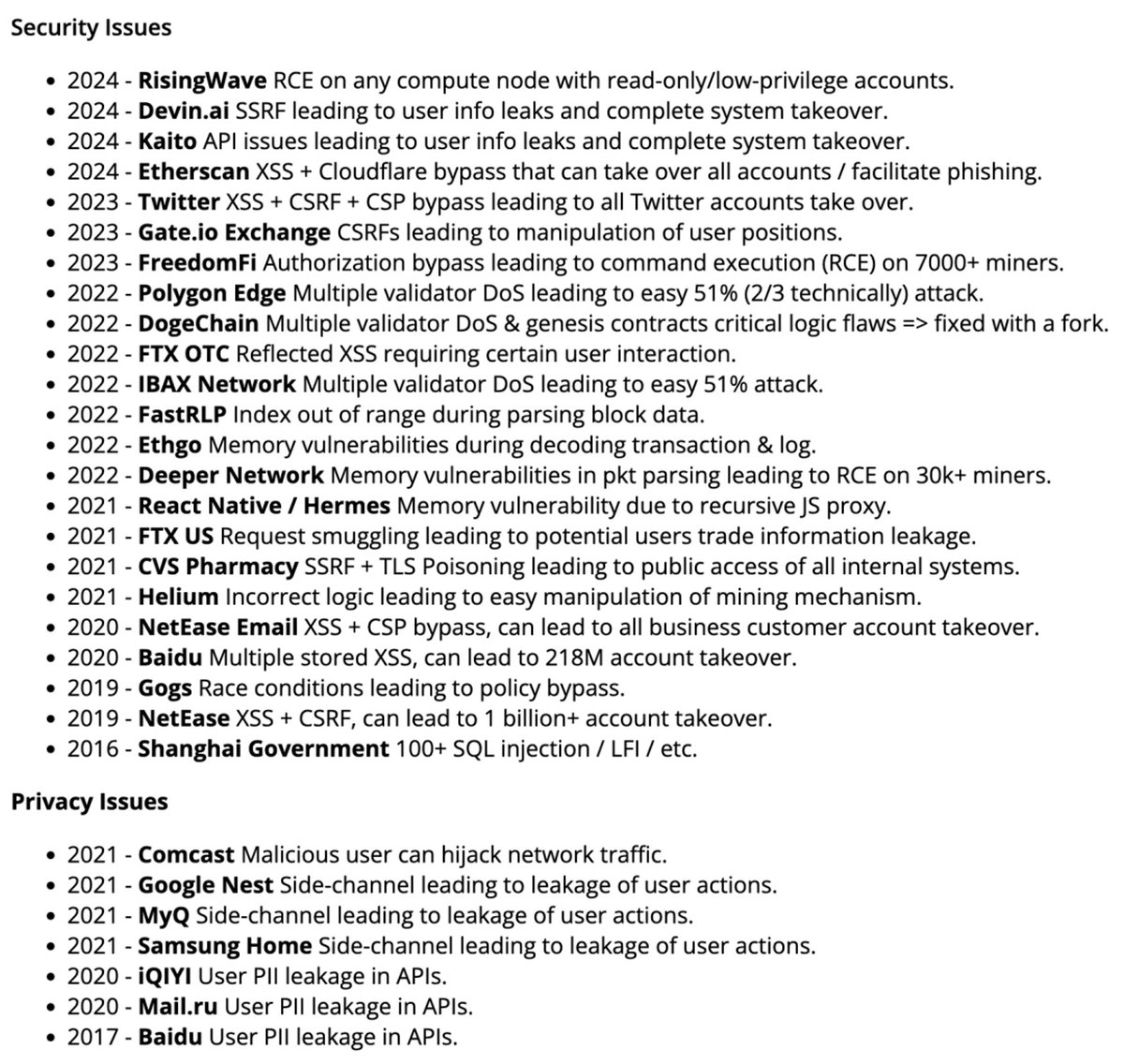
A few facts:   1️⃣ The person who pulled 510k lines of #Claude Code source code from a 60MB source map is a 25 years old boy From China. 2️⃣ His LinkedIn: UCSB in 3 years, 4.0 GPA. His comment:"too easy." Dropped out of Berkeley PhD after 2–3 years. Comment:"lol." 3️⃣ White hat. Found bugs in X, Chrome. $1.9M in bounties. 4️⃣ He called out Anthropic last year for scraping user code under the guise of "safety reviews." 5️⃣ After the leak, his take:"Claude's code is nowhere near as interesting as OpenCode's."
Tech Tech China tweet mediaTech Tech China tweet mediaTech Tech China tweet media
English
57
292
3.4K
378.4K
swollenlikezyzz.eth 已转推
Dave Font
Dave Font@davefontenot·
Introducing 997.ai The residency for repeat unicorn chinese founders Based in Shenzhen. First batch this Fall. DM if there’s a founder you think we should meet
Dave Font tweet media
English
67
22
536
59.4K
swollenlikezyzz.eth 已转推
Mr living
Mr living@living001155211·
What a wonderful life this can be! Some like me, this is there dreams ✨️
Mr living tweet media
English
2
15
103
1.6K