Akash

7.8K posts

Akash banner
Akash

Akash

@AkashPanditIGN

Akash Deep Pandit journalism Nationalism patriot

New Delhi, India انضم Temmuz 2021
892 يتبع238 المتابعون
Akash
Akash@AkashPanditIGN·
@Ken_LoveTW Don't forget, Chinese gadgets started worldwide with such claims, they are low quality, Chinese Crap items. Now, worldwide China is supplier. Never underestimate your...
English
0
0
0
55
Ken Cao-The China Crash Chronicle
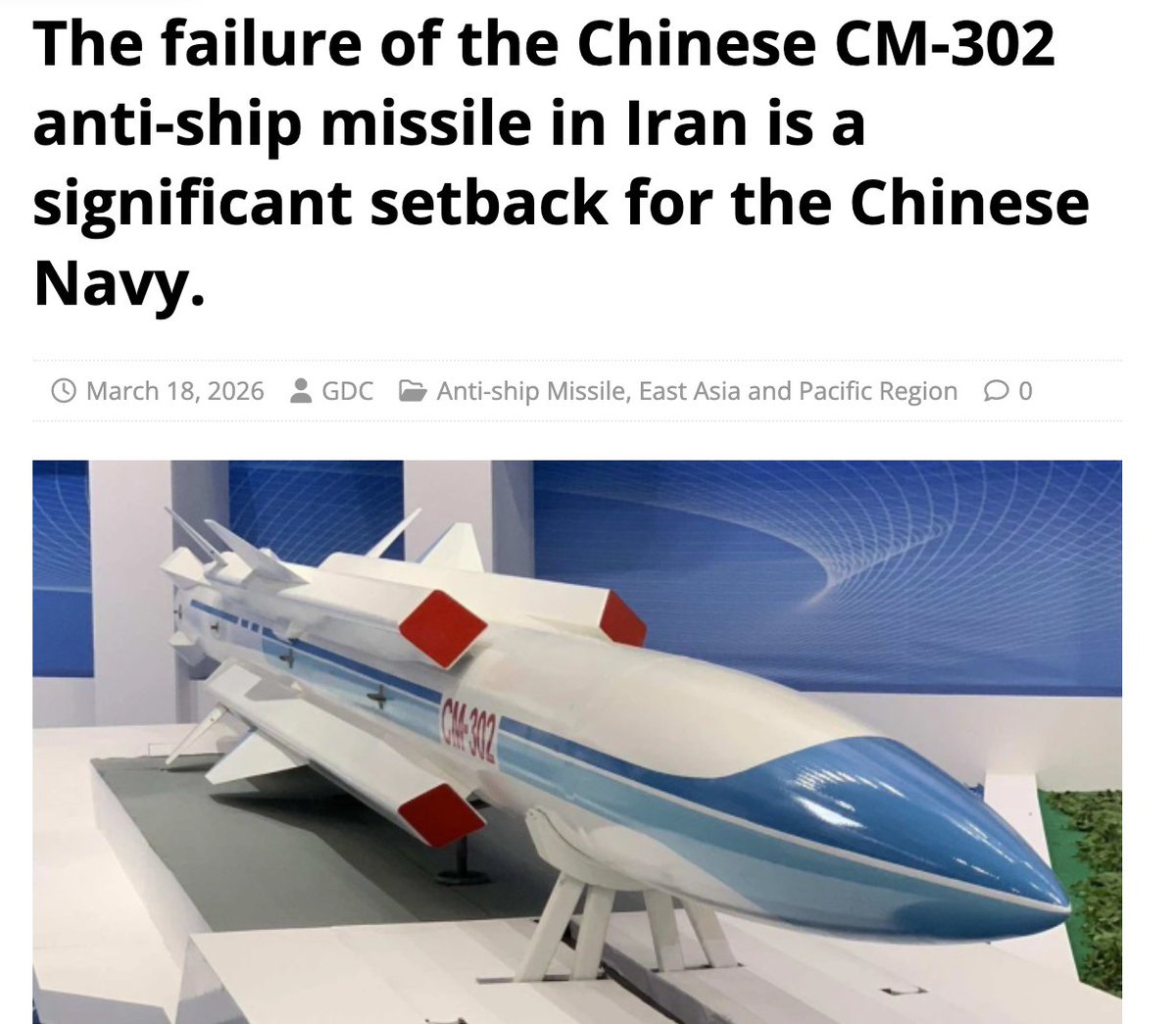
China’s “Carrier Killer” has failed spectacularly in Iran. In this conflict, Iran used Chinese-made CM-302 anti-ship missiles and HQ-series air defense systems, but they either failed to hit targets or were quickly destroyed by U.S. forces. Let’s start with earlier developments. Since February, the U.S. deployed major forces to the Middle East, including two carrier strike groups near Iran. War was on the verge of breaking out. To counter these carriers, Iran urgently purchased China’s so-called “carrier killer” CM-302 anti-ship missiles. The CM-302 is the export version of China’s YJ-12 missile. It is supersonic, has a range of about 290 km, and can strike large vessels. Beijing has long promoted it as one of the most powerful anti-ship missiles in the world. But in real combat, this “carrier killer” delivered a shocking result: zero hits! Investigations showed that many of the CM-302 missiles malfunctioned mid-flight and crashed, while the rest were easily intercepted by U.S. forces. Combined with U.S. Aegis combat systems, SM-6 interceptors, and electronic warfare, the missiles were neutralized with ease. There are even reports that Chinese technical personnel suffered casualties. The complete failure of these “carrier killers” not only damaged Iran’s confidence but also triggered global skepticism toward Chinese weapons. Rumors even suggest that Xi Jinping was furious, criticizing military engineers for pushing substandard equipment to secure funding, and launching internal crackdowns. This disastrous performance exposes a deeper issue: China’s military industry has long focused on paper performance rather than battlefield effectiveness. Weapons are not like consumer products. A sports car reaching 500 km/h proves performance. But for missiles, speed alone means nothing because if the enemy intercepts or jams it, the weapon is useless. A weapon must prove it can survive defenses and hit real targets under combat conditions. China’s approach to weapons development resembles consumer product design, chasing specs rather than real-world effectiveness. Take the CM-302: on paper, it looks impressive—290 km range, 500 kg payload. In theory, a few missiles could destroy a carrier. But that assumes the enemy is unprepared. In real combat, the opponent has layered missile defenses, electronic warfare, and early warning systems. Chinese weapons, designed without sufficient real combat considerations, collapse under these conditions, like paper tigers. This also reflects a structural weakness: China’s military has not fought a real war since the Sino-Vietnamese War. Nearly 50 years without combat means a lack of real battlefield experience, making it difficult to design weapons for actual war scenarios. As a result, Chinese weapons prioritize theoretical performance over proven effectiveness. In the global arms market, the most reliable weapons are those tested in real combat. Without that validation, even impressive specifications can be meaningless. Iran learned that lesson the hard way by buying Chinese weapons.
Ken Cao-The China Crash Chronicle tweet media
English
130
426
2.1K
120.4K
Akash
Akash@AkashPanditIGN·
@pati_marins64 Target is not what they r saying Smthing else
English
0
0
0
2
Patricia Marins
Patricia Marins@pati_marins64·
An Amphibious Landing in Iran and the Battle of Gallipoli Any war against Iran risks repeating the classic mistake of Gallipoli: a superpower’s underestimation of a determined defense strongly favored by geography. In 1915, the British Empire believed its superior fleet would be enough to force the Dardanelles and bring down the Ottoman Empire with relative ease. Generals and politicians, including Winston Churchill, Ian Hamilton, and Lord Kitchener, viewed the Turks as a backward army of “doubtful value” that would flee at the first salvo from British battleships. Reality proved very different. The geography of Gallipoli turned the attack into a nightmare. The Ottomans controlled the steep heights above the beaches. Once the Allies landed, they became trapped on narrow strips of sand, fully exposed to machine-gun and artillery fire from above. Advancing or retreating safely was nearly impossible. This is exactly the same natural wall that Iran possesses today in the mountains that surround nearly its entire coast. Any force attempting a landing in the Persian Gulf would immediately face steep elevations right behind the beaches, giving the defender total visibility and fire superiority. Beyond geography, Iran possesses something the British also underestimated in the Turks: the ability to conduct a saturation defense. While offensive and defensive munitions stocks are running low for the attackers, Iran is preparing a war of saturation. Thousands of drones of various types, missiles, and fast attack boats launched in swarms could quickly overwhelm and exhaust the coalition’s ability to provide cover for a landing in Iran. Logistics represent another fatal bottleneck. In Gallipoli, the Allies could not sustain the flow of supplies under constant fire. In Iran, the challenge would be even greater: supply lines could not rely on American bases in the region, which have already been heavily damaged and under fire for 26 days. They would instead depend on much more distant logistics, supported by an already weakened American industrial base. Meanwhile, Iran would be fighting at home, with underground factories, short supply lines, and the ability to open multiple fronts through Iraqi militias and the Houthis. In parallel, the Strait of Hormuz functions as the modern equivalent of the Dardanelles. Iran dominates the area with sophisticated yet relatively cheap naval mines, anti-ship missiles, drones, and its own navy. The loss of just one or two major ships, or landing vessels, would be enough for the entire operation to collapse, just as happened in 1915 when simple mines sank three British battleships in a single day. The error of assessment is the same as it was a century ago. Just as the British believed the Turks “had no stomach for modern warfare,” today some assume that an intense technological bombardment would quickly cause the Iranian regime to collapse. Statements like Netanyahu’s, “Iran is a paper tiger… A strong blow and the regime will fall”, dangerously echo the declarations of Churchill and Hamilton. Both ignored the fact that a nation of tens of millions of people, fighting on its own territory with strong ideological motivation, does not easily surrender to technological superiority. Gallipoli cost the Allies around 250,000 casualties, including tens of thousands killed, and ended in a humiliating withdrawal. It was a meat grinder that exposed the arrogance of a superpower when it collided with the reality of the terrain and the defender’s determination. Any potential amphibious landing in Iran today carries the same risk of becoming a Persian Gallipoli: where excessive faith in technology runs into an insurmountable geography, a mass of missiles and drones, and the overwhelming advantage of those fighting on home soil. Iran is the opening conflict of a multipolar world, a reality that America, Israel and probably the entire west still fail to recognize.
Patricia Marins tweet media
English
179
1.1K
3.6K
216.4K
Akash
Akash@AkashPanditIGN·
@elitepredatorss How to Humiliate everyone, Should be part of all Graduate studies.
English
0
0
0
426
Elite Predators
Elite Predators@elitepredatorss·
Total money received by Trump from Saudi, UAE and Qatar : $6 Trillion GDP of Saudi, UAE and Qatar combined : $1.9 Trillion.
English
18
76
680
24.9K
Shiv Aroor
Shiv Aroor@ShivAroor·
1️⃣ U.S. Special Forces choppered into Iran to scout Uranium 2️⃣ Marines ‘land’ to seize Kharg Island 3️⃣ U.S. 82nd Airborne Div airdropped to seize SW Iran’s Ahvaz airport 4️⃣ Marines seize Khomeini port What an ‘unthinkable’ US ground op could look like.
English
48
184
1.5K
168.7K
Akash
Akash@AkashPanditIGN·
@lunarastro108 Everybody knew- world is going in Chaos But, यहां बेटा रेलबाज बनो पर बहस होती रही
0
0
0
25
Akash
Akash@AkashPanditIGN·
@captsinghjs In 90s, A Multi Story Chulha with exhaust pipe was manufactured in rural houses by GOI. Time to reinstall the same to be self reliant in energy for coking
English
0
0
0
18
Indigenous🇮🇳
Indigenous🇮🇳@captsinghjs·
I am anticipating power shortage across many states ,after re introduction of induction cooking system in many kitchens... !
English
1
2
6
336
Akash
Akash@AkashPanditIGN·
@captsinghjs But, they need to cross deep water. Thar floating version hai kya
English
0
0
0
5
Indigenous🇮🇳
Indigenous🇮🇳@captsinghjs·
Trump should take help of THAR DRIVERS, if anything else is not working out
English
1
0
2
151
Akash
Akash@AkashPanditIGN·
@WhateverVishal Wait for some time God knows, who's next
English
0
0
0
223
Akash
Akash@AkashPanditIGN·
@sidhant कौन आया है, कोई न आया होगा मेरा दरवाजा हवाओं ने हिलाया होगा.... , जगजीत सिंह की गजल youtu.be/2GHC7YpStYE?si…
YouTube video
YouTube
हिन्दी
0
0
0
31
Sidhant Sibal
Sidhant Sibal@sidhant·
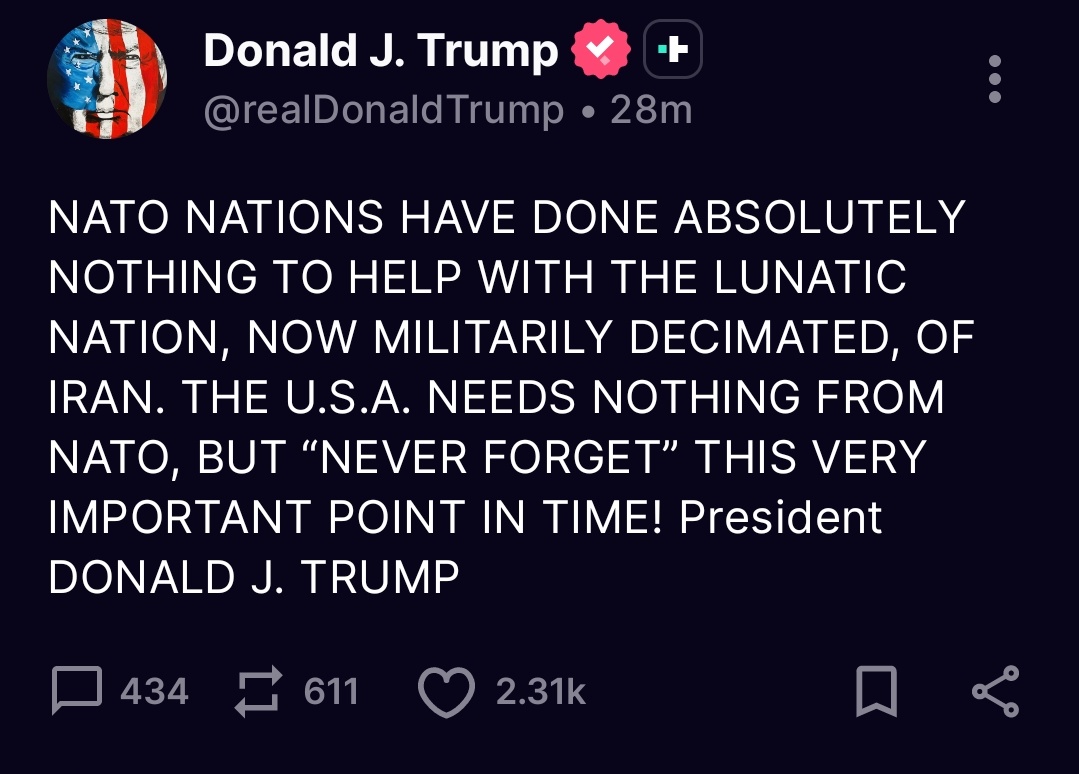
Trump SLAMS Nato This Morning For Not 'Helping' Amid West Asia War
Sidhant Sibal tweet media
English
34
79
1.1K
31.1K
Akash
Akash@AkashPanditIGN·
@iAsura_ What's the issue with 125KMPH Bullet train. That's also sufficient, as most trains avg speed is 70-80 KMPH
English
1
0
0
590
Akash
Akash@AkashPanditIGN·
@RahulRao_1992 When u stop thinking about petty gains on tax, Invest hugely for World as market, you play a big game. Business means Risk. & Govt has said many times business is not govt job. This makes diff between India & China. China took risk, we are trapped in tax collection
English
0
0
1
40
First Principles Investing
First Principles Investing@RahulRao_1992·
In 2024, Indian AC makers were so desperate for compressors they airlifted them from foreign suppliers. While India manufactures ~60% of its AC compressors locally vs 15% just 3 years ago, this number hides a brutal reality. Domestic value addition is still as low as 15% - 20%. Compressors are the single most expensive part inside a split AC on your wall, equalling ~30% of cost. Despite an annual sales of ~14 million units annually, In a global AC compressor market worth $30 billion (FMI, 2025) India made almost zero of them until 2023. Here's a first principles breakdown of why India is NOT Atma-Nirbhar with its AC compressor manufacturing and why that's changing. WHY #1: Why is the compressor so critical? Your AC is basically four things. A compressor, a condenser, an expansion valve, and an evaporator. The compressor is the heart. It pumps refrigerant. Without it, nothing cools. It's also the most complex part where Tolerances are measured in microns. It needs hermetic sealing (zero leakage, ever), specialty steel laminations for the motor, and precision CNC machining on the crankshaft and scroll wraps. No other AC component comes close in engineering difficulty. WHY #2: Why doesn't India make this critical part? Scale economics. GMCC, the Midea-Toshiba joint venture in China, produces over 100 million compressors a year. Read that again. 100 Million/year. China accounts for more than 80% of global RAC compressor production, delivering over 200 million units. India's entire AC market sells about 14 million units a year. Read that again: One country's compressor output is 14x India's entire annual AC demand. At that scale, GMCC's cost per unit is brutally low. At scale, a fixed-speed rotary compressor costs OEMs $30 to $50 from China. Inverter compressors run $50 to $80 at similar volumes (best guess). ↪️India can't match that price without matching that volume. ↪️And you can't match that volume without the plant. ↪️And you can't justify the plant without guaranteed demand. Classic chicken-and-egg. How real is this dependency? An unexpected heatwave in 2024 sent demand soaring and wiped out AC inventories. Compressor shortages hit hard. The industry lost an estimated 1.5 million units in sales simply because ACs weren't available. It got so bad that some manufacturers had to airlift compressors from abroad instead of shipping them. That's the business equivalent of ordering from quick-commerce at midnight: expensive, desperate, but necessary. The industry suffered an estimated 10 - 15% production loss due to compressor shortages alone. WHY #3: Why can't India just build a big plant and compete? Because it's not just one plant. It's an ecosystem. A compressor factory needs upstream suppliers. Electromagnetic steel laminations. Precision motor windings. Hermetic terminal manufacturers. Specialty lubricant suppliers. High-purity copper components. Even the compressor oils (polyolester, polyvinyl ether) are patented by Japanese and Korean firms. China built this ecosystem over 30 years starting with Japanese firms transferring technology through joint ventures in the 1990s. GMCC started in 1995. Hit 1.6 million units by 1999. Crossed 50 million by 2007. Hit 100 million by the 2020s. That's three decades of compounding capability. India's precision manufacturing base is growing. But it's thin. As of 2022, CEEW's research showed import shares of 85%+ for compressors, 80–90% for PCBs and drives, and 80% for BLDC motors. Since then Daikin, LG, and Midea have begun local compressor production, and overall component localisation has increased. But compressor import dependency remains significant. The government target was (in 2023) to bring it down to 15–16% only by FY28. But we're running behind on that goal. Additionally, building one compressor factory costs serious money. Highly India (a Chinese subsidiary) invested $72 million for just a 1 million units per year plant in 2013. Daikin's integrated AC and compressor facility at Sri City cost ₹1,700 cr. Highly India invested $72 million for a plant with just 1 million units per year capacity. At these capex levels, industry estimates suggest you need millions of units annually and years of high utilisation just to break even Now add India's problem: 60% of AC sales happen between March and June. Your ₹2,000 cr plant sits underutilised for six months a year. The math doesn't work easily. WHY #4: Why didn't India fix this earlier? Because for the longest time, it didn't matter enough. India's AC penetration was just 5 to 6% of households. In 2006, the country sold just 1 million ACs. The market was tiny. No global compressor maker would build a ₹2,000 cr plant for a market that small. China was already producing 200 million+ compressor units for global supply. Thailand had Daikin and Mitsubishi plants. South Korea had LG and Samsung. The supply chains were locked in. India also had low or moderate import duties on compressors. Importing was cheaper than making. So everyone imported. Domestic value addition in ACs was just 25 to 30%, according to CEEW (2022) and industry estimates. The HVAC sector in India was, as CEEW describes it, following an "import-assembly model." Import the hard stuff, assemble here, sell. Nobody had the incentive to change this. WHY #5: Why is it changing now? 3 things happened at once. First, demand exploded. The market nearly doubled in two years: from 8.5 million units in 2023 to an expected 18 million in 2025, per EPACK Durable's management. India added nearly 50 million new ACs between 2019 and 2024. The India Cooling Action Plan projects 8x growth in cooling demand by 2037, with 300 million AC units to be sold over 20 years. Second, the government moved. The PLI scheme for white goods launched with a ₹6,238 cr outlay. 66 companies have now committed ₹6,962 cr in investments. The govt banned imports of fully assembled ACs in October 2020 (28 to 30% of ACs sold in India were imported CBUs before this). Import dependency for compressors was targeted (in 2023) to fall to 15 to 16% by FY28. Third, the big players finally showed up. Daikin invested ₹1,400 cr in one shot, its largest ever India infusion. It opened an integrated compressor plant at Sri City with the objective of making India a global export hub by 2030. LG and Midea started compressor manufacturing in 2023. However, domestic value addition is still at an est. 15%-20%. so, the chicken-and-egg is finally cracking. Here's the bottom line. India didn't make compressors because it didn't have the scale, the ecosystem, the technology, or the demand. All at the same time. You need all four to flip the switch. Missing even one kills the business case. For the first time, all four are lining up. 14 million ACs today. Possibly 300 million over the next two decades. That's enough volume to justify world-scale plants. The real question: can India compress 30 years of Chinese ecosystem-building into 10?
First Principles Investing tweet mediaFirst Principles Investing tweet media
English
18
127
513
30.7K
Akash
Akash@AkashPanditIGN·
@TheSincereDude Now, somebody miscalculated America is a good friend.
English
0
0
0
103
Sincere Dibya
Sincere Dibya@TheSincereDude·
Kargil 1999: America blocked GPS. Our soldiers fought blind. 2026: We built NavIC to never face that again. Reality: → 11 satellites launched. 3 working. → Atomic clock on IRNSS-1F dead since March 10. → NVS-03 replacement? Jitendra Singh promised Parliament it’d launch by Dec 2025. → It never launched. Our armed forces are back on American GPS; during the most volatile border situation in decades. ₹thousands of crores spent. 25 years. And we’re exactly where we were after Kargil. “Atmanirbhar Bharat” wasn’t a vision. It was a branding exercise. Strategic sovereignty was the casualty.
The Hindu@the_hindu

With NavIC setback, India unable to use satellite system for security purposes: experts trib.al/0q2kWta
English
99
1.2K
4.7K
234.9K
Akash
Akash@AkashPanditIGN·
@captsinghjs But, he doesn't understand and that's the issue world is facing
English
0
0
0
12
Indigenous🇮🇳
Indigenous🇮🇳@captsinghjs·
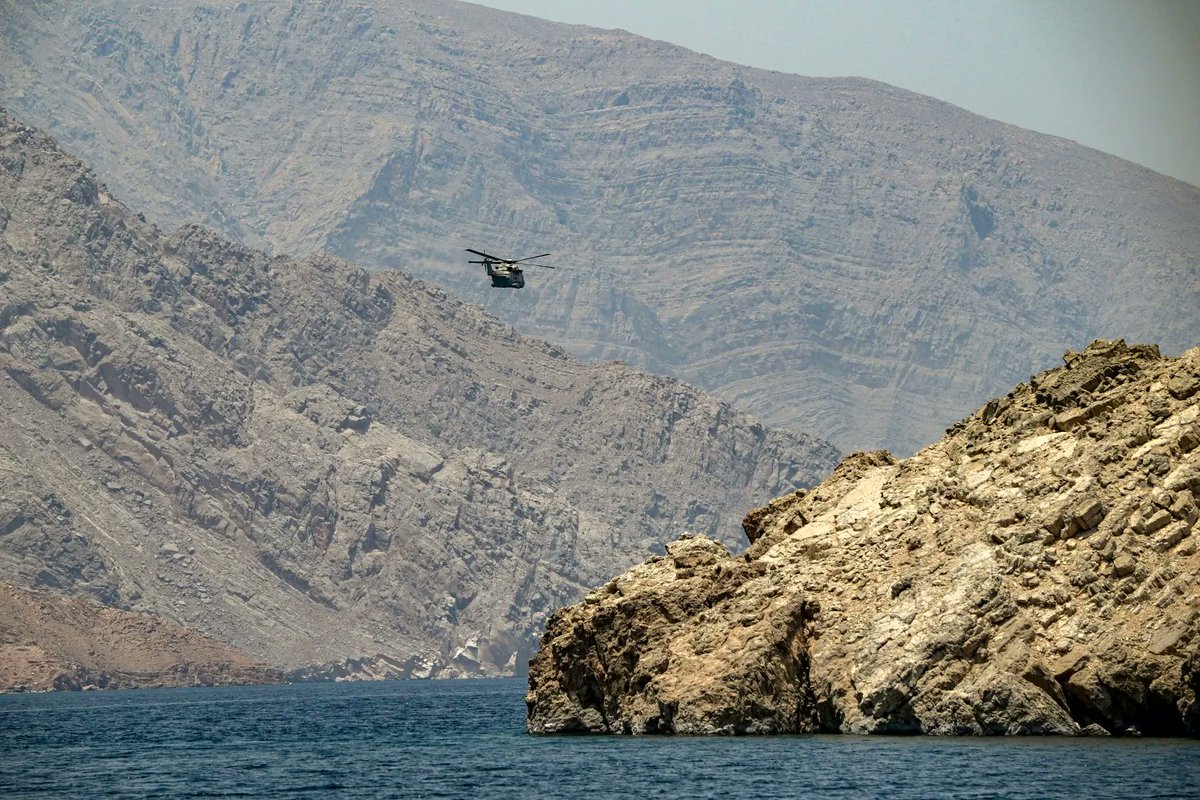
Strait of Hormuz has mountains on one side ( towards Iran ) Not a easy operation for Infantry Soldiers even for Navy / Airforce also.
Indigenous🇮🇳 tweet media
English
2
0
22
527
Akash
Akash@AkashPanditIGN·
@kapsology Agriculture, farmers but like this only for diesel srts
English
0
0
0
27
Akash أُعيد تغريده
Clash Report
Clash Report@clashreport·
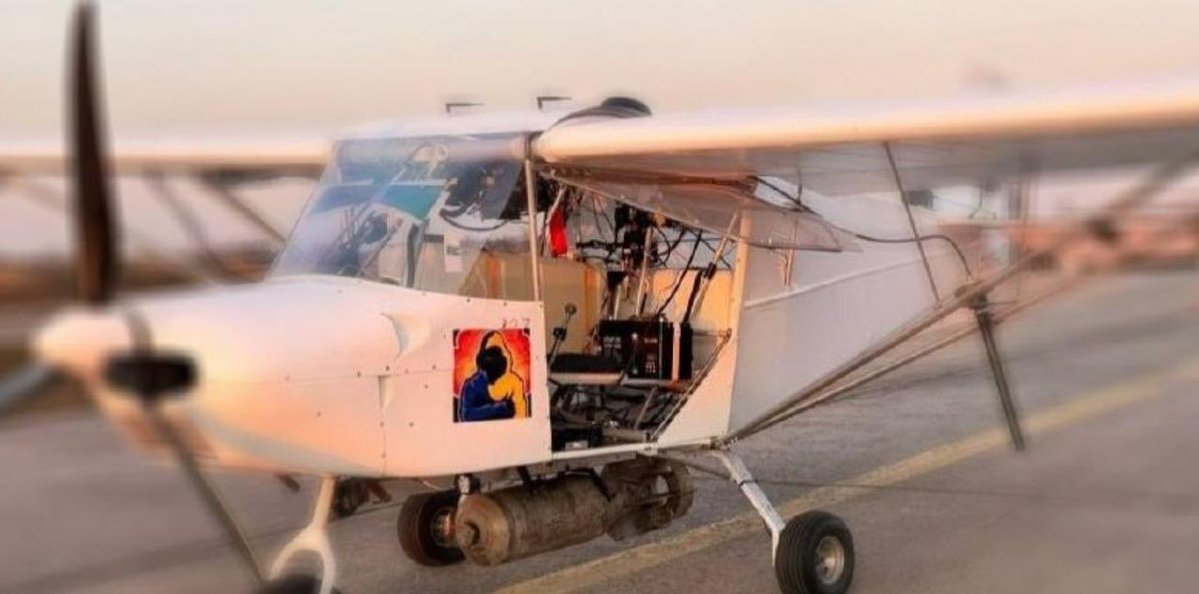
Ukraine says Russia’s Leningrad Oblast was bombed with FABs dropped from A-22 light aircraft, the first such attack since World War II.
Clash Report tweet media
English
57
289
3.2K
501.9K
Crime Net
Crime Net@TRIGGERHAPPYV1·
NEW: Man completely loses his mind after a food delivery robot asked him to press the cross walk button for it
English
1.3K
1.6K
17K
2.4M
Akash
Akash@AkashPanditIGN·
@kamleshksingh what about the emissions in Ukraine War & Ongoing War in West Asia?? Who's going to pay for it??
English
0
0
0
69
Akash
Akash@AkashPanditIGN·
@RShivshankar Nobody can mediate everyone knows it. Whom to believe??
English
0
0
0
14
Rahul Shivshankar
Rahul Shivshankar@RShivshankar·
WHY THIS ISN'T INDIA'S WAR TO MEDIATE The Opposition has sharpened its attack on the Modi-led NDA, accusing it of ceding diplomatic space to Pakistan as the latter positions itself as a mediator in the Gulf war. The Opposition argues that India, once seen as a key regional voice, is now reduced to the “sidelines” due to what it calls “strategic silence” and growing “diplomatic invisibility.” The criticism is clearly designed to pressure New Delhi into adopting a more visibly assertive role as the opposition feels restraint symbolises weakness. While there is a compelling case to be made for India inserting itself in a manner commensurate with its regional stature, this isn’t that conflict. Nor is it the moment. Here’s why. First, no country can be an effective mediator without real influence. Mediation works when both sides believe the mediator can shift outcomes. As thing stand India doesn’t have real leverage over the protagonists. India imports over 60% of its crude from the Gulf, it has no military footprint or security role in the conflict. Its strength is economic and diplomatic not coercive. That means India cannot be a decisive arbiter. Second, India’s proximity to risk is another major disincentive. India has over 8-9 million citizens living and working in the Gulf, and the region accounts for a major share of its energy imports and remittance inflows. At last count the remittances bring in $40 billion annually. Taking a full-on mediatory role could complicate evacuation plans and expose assets at a time when safeguarding people and supplies is paramount. Pakistan is just getting a taste of how its decision to mediate could backfire. For instance, the IRGC navy halted a Pakistan bound energy tanker in the strait of Hormuz as Tehran wants to ensure it has leverage over Islamabad to keep it honest when mediation begins. Third, timing is everything in diplomacy. Wars only end when costs begin to outweigh gains on both sides. Right now, both sides are still signalling strength. Neither of them believes they are losing and are therefore not willing to listen to each other in a meaningful way which is the first step to compromise. America’s 10-point peace proposal is an example of U.S. being tone deaf to Iran’s concerns and priorities. In its present state the U.S. 10-point peace proposal is not a white flag but a red rag. That timing matters was exemplified by the fact the even Trump couldn’t bring Putin or Zelenskyy to agrees to a cessation of hostilities as both nations were not ready to concede ground as they felt they can still win the war. None of this precludes a role for India. But the more effective play may lie in facilitation and that too behind-the-scenes. Given its good equations with all sides India can be a great help in keeping diplomatic channels open and coordinating with key regional actors. Sometimes in diplomacy it is the gloved hand that can shape visible outcomes. --- END NOTE TO READERS: Rate this for Logic, language, flow, form and Substance.
Rahul Shivshankar tweet media
English
51
39
196
13.2K
RT
RT@RT_com·
Reporter: Why Israel have the right to acquire nuclear weapons but no other Middle Eastern country? UN Ambassador Danon: 'Israel is a stabilizing force in the region. Iran attacked 13 countries in one month' Dodged the question so hard he almost said the quiet part out loud
English
247
883
4.5K
244.7K
Akash
Akash@AkashPanditIGN·
@DivyaSoti Business is most important thing.
English
0
0
0
5
Divya Kumar Soti
Divya Kumar Soti@DivyaSoti·
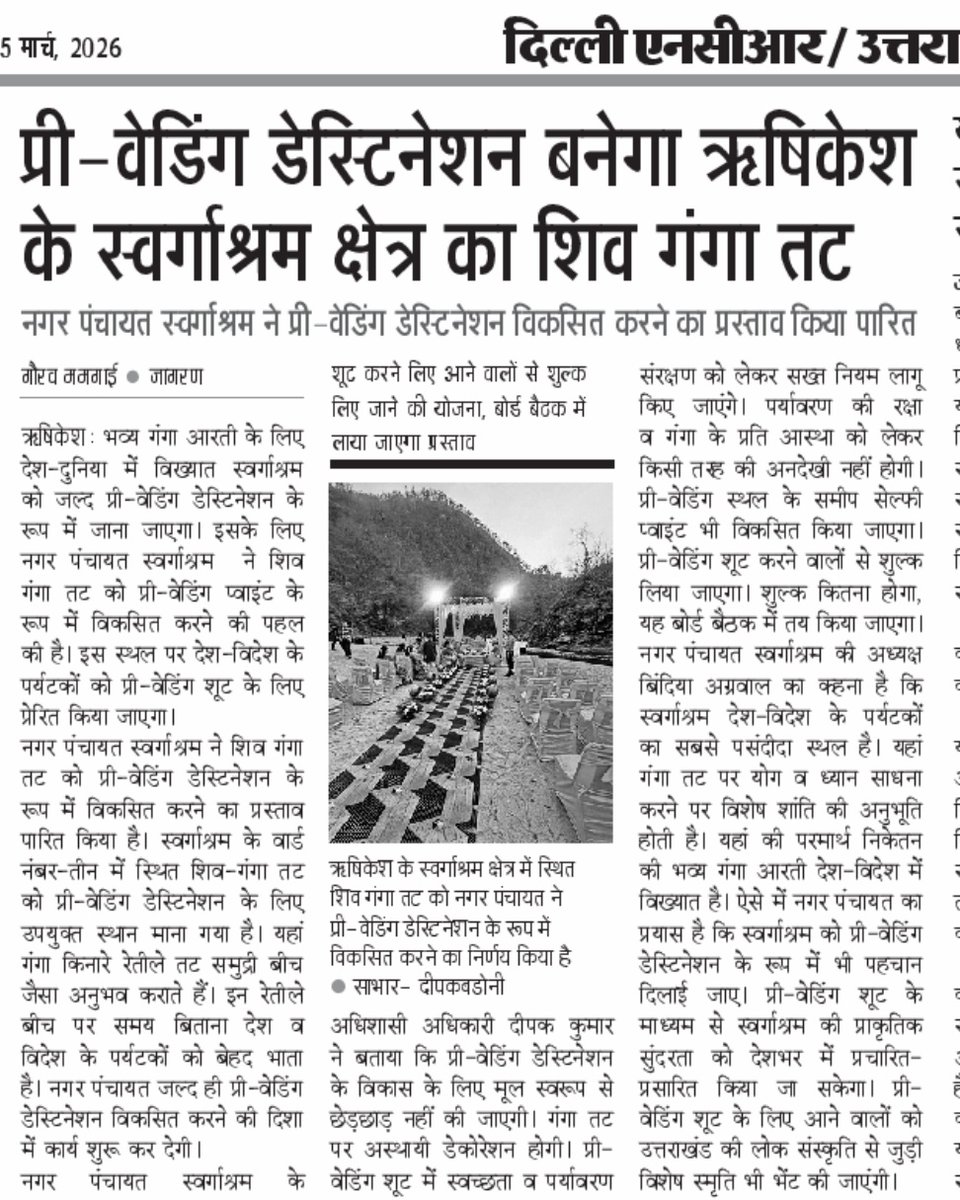
योग नगरी को भोग नगरी बनाकर ही मानेंगे। पर ये तो होना ही। कलियुग जो ठहरा।
Divya Kumar Soti tweet media
हिन्दी
38
301
680
10.5K