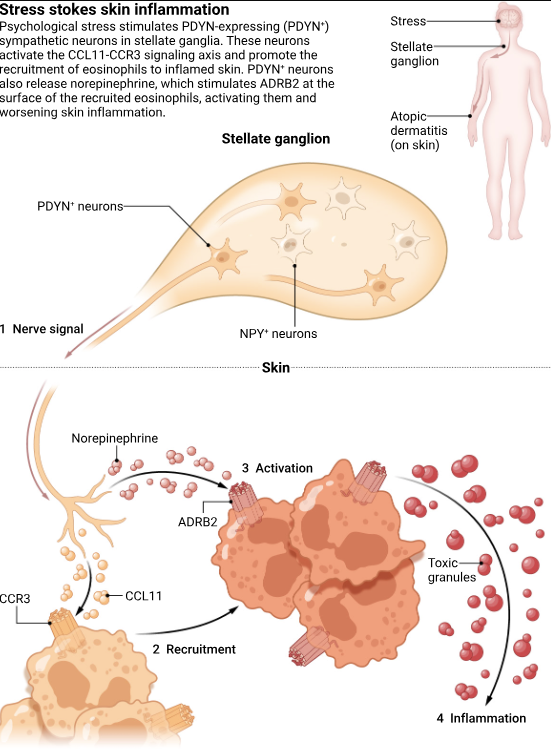

A new study from the Icahn School of Medicine at Mount Sinai reveals that major depressive disorder may share key immune abnormalities with inflammatory skin diseases—opening the door to new, targeted treatment strategies. Researchers identified overlap in the Th2 immune pathway, a mechanism well known in conditions like atopic dermatitis, and found that targeting this pathway could offer a novel, personalized approach to treating depression. The findings also highlight the potential of repurposing existing immunology therapies to address psychiatric conditions. “Given the successful translational approach in dermatology, we brought together experts across psychiatry, dermatology, and neuroscience to assess whether a targeted treatment strategy could work in major depressive disorder,” says James Murrough, MD, PhD. Read more mshs.co/3PbENpb