bfrench

5.2K posts

bfrench banner
bfrench

bfrench

@bfrench

You Can Only Achieve So Many 9s

St George, UT انضم Mart 2007
218 يتبع2.4K المتابعون
bfrench
bfrench@bfrench·
@BrandGrowthOS @alphabatcher Hmmm, I’ve been sustaining a growing memory since I installed @antigravity last year. The agents each create brain entries and manage this as context artifacts that are recalled as relevance demands. I didn’t have to architect anything- it just works.
English
0
0
1
33
Karim C
Karim C@BrandGrowthOS·
@alphabatcher this is why i run everything local on my home server. my agents' memories are literally sitting on my nvidia 4090, not in someone else's cloud. took months to get the memory architecture right but now my assistants actually remember context from weeks ago
English
1
0
1
153
Alpha Batcher
Alpha Batcher@alphabatcher·
If you don't own the memory, you don't own the agent: - memory is what makes your agent get smarter over time - without it, anyone with the same tools can copy your agent overnight - with it, you build a dataset no competitor can replicate - closed memory = your data on someone else's servers - switch models, lose everything your agent learned - model providers are incentivized to lock you in via memory - the model is easy to replace, memory is not - if you don't own the harness, you don't own the memory - if you don't own the memory, you don't own the agent full story of why this matters and what happens when memory is locked behind someone else's API 👇
Harrison Chase@hwchase17

x.com/i/article/2042…

English
52
73
638
176.9K
bfrench
bfrench@bfrench·
If you are hitting 100% usage, QMD will help you avoid that while speeding up agentic processing. Most people don’t realize how many dead ends agents drive into when looking for answers. QMD gives them a first line of defense with a context that is scoped in less than 30 seconds per query. 70% fewer tokens to to the same job @ ~30ms per query vs 500 to 700ms without.
English
1
0
1
35
💎JanCarlos | AI-1st Parent | ₿
I thank you sincerely as your opinion is one i regard highly. 1. Not mentioned because they are still working out the kinks is Poke by Interaction. Working with that for smaller queries & tasks & I actually am reserving Claude Opus for a specific task. It works to where I hit 100% usage usually the day before reset. 2. I will look into this solution, but truthfully, I don’t run into token issues as often as I see others do. I’m heavy on context engineering though + fresh chats + etc hygiene & super obsessed with best practices. 3. Looked into this literally today but it doesn’t work well with the 3 tools I’m using & all of this is more proof of concept that I am repacking non-technical small biz owners locally. The sweet spot for now seems to be Poke + Notion + Claude
English
1
0
0
63
bfrench
bfrench@bfrench·
@iamjoshuabull @danshipper I have three agents on different systems in different cities pushing status report data to a single proof.
English
1
0
1
36
Joshua Bull
Joshua Bull@iamjoshuabull·
@danshipper Honest question, I’ve been getting by just fine with md files in my codebases, im pretty organized, what’s the big selling point of Proof?
English
2
0
1
571
bfrench
bfrench@bfrench·
@danshipper Killer app. OpenClaw jumped right in and started writing with me. Brilliant!
English
0
0
1
172
bfrench
bfrench@bfrench·
@niccruzpatane I’m 75’ish. My wife and saw the future and prepared by buying a Y + FSD two years ago. We’re 98% FSD now - loving every mile. I was a shitty driver before I got old. Y’all’s are welcome. 🤗 All you youngin’s still driving your old-timey cars and hatin’ on elderly drivers: GFY.
English
0
0
0
35
Nic Cruz Patane
Nic Cruz Patane@niccruzpatane·
In 2023, 7,891 people aged 65+ died in traffic crashes, accounting for 19% of all US traffic fatalities. Tesla FSD allows elderly individuals to stay mobile for much longer while being far safer. The impact of AI and robotics is often overlooked in this space. Lives will change even further once Optimus is introduced. We will all be taken care of by robots in the future, no doubt.
Sawyer Merritt@SawyerMerritt

This 93 year old has found new freedom after she bought a new @Tesla Model Y with FSD. She also uses Grok navigation. "Although she has always been a good driver, my mom can now drive without the fear or fatigue that can naturally come with age. No more relying on others for every trip. No more feeling stuck. This is true mobility that can spark new adventures in a still adventurous women!" (via Dan Doyle's Family Channel. Full video below)

English
11
33
224
10.7K
bfrench
bfrench@bfrench·
You don’t need Obsidian to achieve this. In fact, the linking tasks for any moderate collection of documents cannot be maintained by a human, it won’t scale and relying on Obsidian to perform ontological tasks will erode graph precision over time. I love obsidian, but I entrust the ontology and relationship management to an AI that is deeply aware of the ontology itself. When I add (or generate) a new document in Antigravity, internal skills and workflows spring into action. Frontmatter is added with ontological connections across the knowledge graph determined with precise relationships. As ideal and seamless as this may be, it also has scale limits and soon, I will likely be forced to move into TypeDB to avoid the token hit as the knowledge graph expands daily. So far, so good.😊
English
1
0
2
71
Barrett Linburg
Barrett Linburg@DallasAptGP·
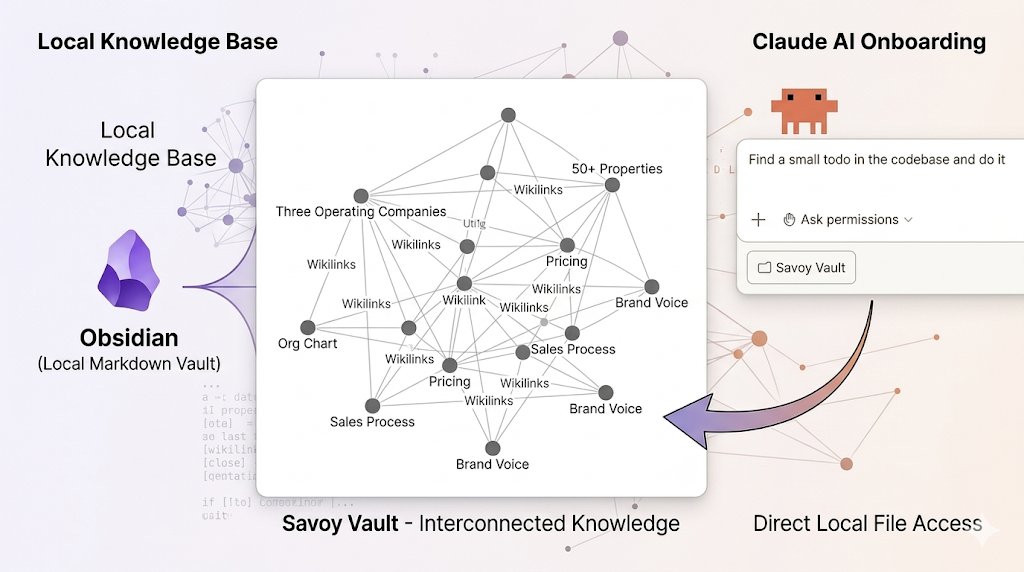
We built a system where Claude knows our entire company before I type a word. Three operating companies. 50+ properties. Full context on every session. Three tools. Any small business can build this. Most business owners use AI the same way every time. Open Claude. Re-explain the business. Re-explain the team. Re-explain the numbers. Then ask the question. You're onboarding the same employee every morning. We fixed this. Claude now knows the full operation before I type a word. Start with your most important company knowledge. Turn each topic into its own markdown file. Markdown is simple text that AI reads clean. Think about what you re-explain over and over. How your business makes money. Your org chart and who owns what. Your pricing. Key metrics for each team member. Your sales process. Your brand voice. One topic per file. Keep them short. Put everything in Obsidian. It's free. Files stay on your computer. Nothing goes to the cloud. Think of it as a filing cabinet on your own hard drive that AI can search in milliseconds. Here's what makes it work. Every file connects to related files through tagged links called wikilinks. When you ask Claude about a specific client, it doesn't just find the client file. It pulls every project, contract, invoice, and note tied to that client. One question. Full picture. Then connect Claude Code. It works like the regular Claude desktop app with one difference. It has the keys to your filing cabinet. Claude Code reads files right off your computer. No uploads. No cloud. No file size limits. Your financials, client data, and internal strategy never leave your machine. For business owners who won't put sensitive data on someone else's server, this solves the problem. Most people I know spend $100 to $200 a month on Claude. If you're already paying that, you should be getting more out of it than a chatbot that forgets who you are every session. Some of you already use Claude Projects. Good. That puts you ahead of most people. Projects let you upload files and give Claude a custom instruction set. For small tasks, it works. If you have a handful of documents and a clear use case, Projects is the right starting point. But it has a ceiling. Upload limits cap how much context you can load. Your files live on Anthropic's servers. And every project is its own silo. Your sales project doesn't talk to your ops project. Your finance files don't connect to your team files. The Obsidian setup removes all three limits. No upload cap. Files stay on your machine. And every file links to every related file across your whole company. The last piece is one instruction file. It tells Claude how your company works, what role it plays, and how to navigate the knowledge base. Think of it as the onboarding doc you'd hand a senior executive on day one. Except this executive never forgets it. Once it's built, every session starts with full context. Claude knows your team. Your numbers. Your processes. You skip the setup. You go straight to the work. Three tools. Obsidian (free). Claude Code (you're already paying for it). One instruction file. If you run a business and you're still re-explaining yourself to AI every session, you're leaving speed on the table.
Barrett Linburg tweet media
English
87
116
1.6K
428.6K
bfrench
bfrench@bfrench·
I don’t. I’m in product management. I’m mostly a knowledge worker. I know about coding, but I don’t write code with AI. I use it 60% of the time performing tasks. I use Antigravity and Claude. They make me roughly 2x more productive. I earn north of $200k, but my effectiveness is probably north of 5x that cost for several reasons.
English
1
0
0
80
W.A.N.
W.A.N.@DCLiverpoolFan·
@bfrench @OnneVegter @rubenhassid What about for non-coders? Regular folks like economists, lawyers, accountants, etc? A lot of discourse on AI assumes coding and IT use cases but forget to consider regular office workers
English
1
0
1
26
bfrench
bfrench@bfrench·
You will love it. Life changing. Few realize how much cognitive energy is consumed when driving. Your mind is free to think. From my garage, I tapped a single button and arrived at the Fountaine Bleu (Las Vegas) 112 miles later. Valet charged it for me during a Toto concert. Then the car drove me to the Wynn (Satiano’s) to watch the Sphere while we had a fine steak. One more tap to get home at 2a - total FSD experience- not a single wheel touch for 240 miles. I’m 75’ish. Partying like this would be exhausting without FSD. Not anymore. FSD changes the definition of “local trading area”. My little town is now a suburb of a city that’s 120 miles away. FSD will ultimately rewire us. It will affect real estate markets.
English
1
0
3
483
Rob Boyd, Esq
Rob Boyd, Esq@AvonandsomerRob·
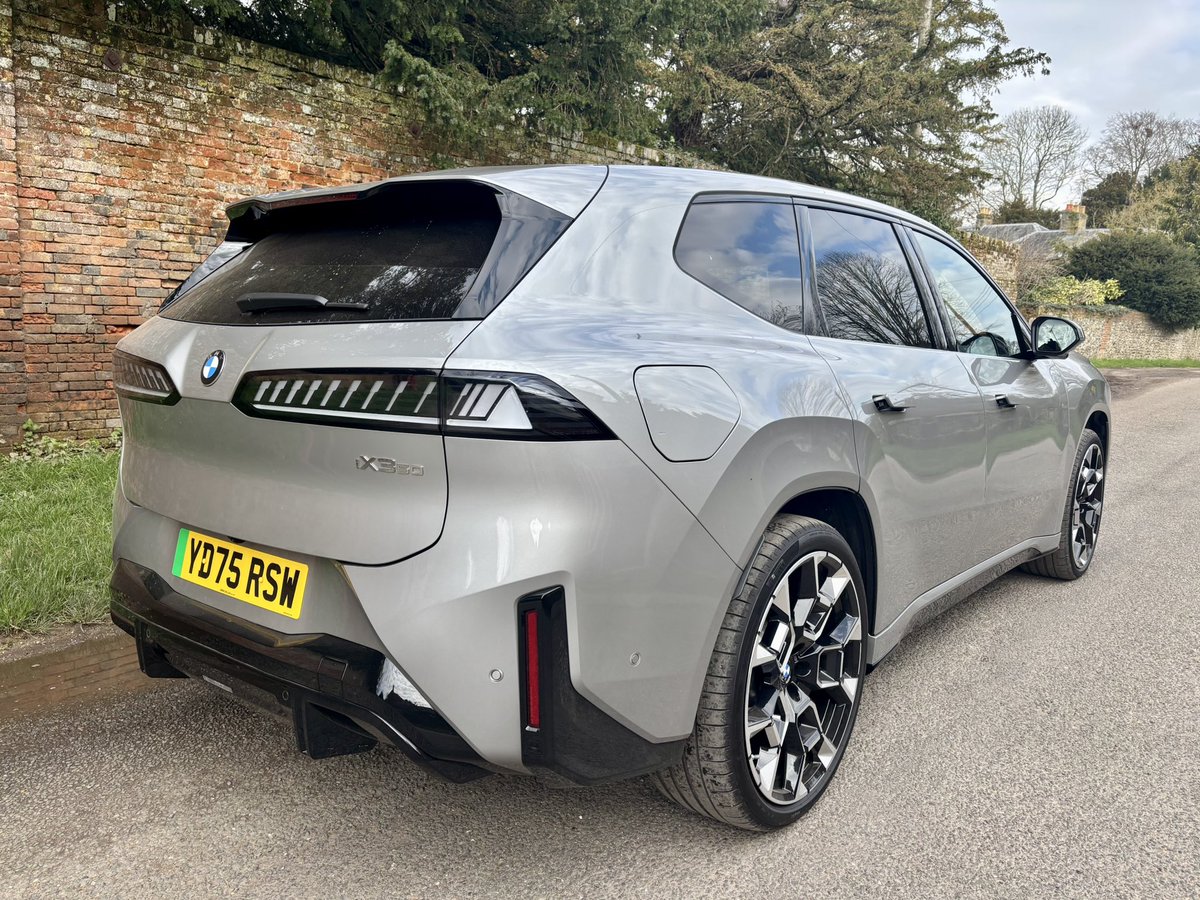
One of the things that puts me off getting an EV is that most vehicles seem to achieve much less than their claimed range in road tests. I've heard owners struggling to get 200 miles from a car with a published range of 300. Do EV owners find the same drawback in practice?
Rob Boyd, Esq tweet media
English
435
17
200
41.5K
bfrench
bfrench@bfrench·
@SomeUKTeslaGuy @AvonandsomerRob I don’t think about range - the car knows how to get from point a to b with whatever energy it needs. Let the machine do what it knows including the driving.
English
1
0
2
28
Some UK Tesla Guy
Some UK Tesla Guy@SomeUKTeslaGuy·
I've done 4.5 hours from the west coast of Wales to Cambridge - bladder range is more of an issue at that point! Find what you like, research what real owners say, etc. A really key point is short journeys vs longer, heating up the cabin during the winter, etc. Same principles as ICE, really, but everyone's just used to the details so it doesn't take any thought. I've done 97,000 miles since June 2021 and would never go back, but it's still not for everyone yet for a bunch of reasons - first and foremost having to think a little different for <1% of the time. Serious questions welcomed.
English
2
0
5
597
bfrench
bfrench@bfrench·
The idea of proactive “chatbots” without agentic architecture must leave the Observe/Perceive → Reason/Plan → Act → Observe/Reflect → repeat pattern on the cutting room floor. It must also require stimulation to act, such as events, timer loops, etc. All of these facets conspire to incentivize builders to lean into an agentic architecture I think.
English
1
0
1
12
💎JanCarlos | AI-1st Parent | ₿
“8) people are very excited for more proactive ai (ai that prompts *you* as opposed to the other way around)” i’m not sure why this component of the chat experience hasn’t been prioritized. most people don’t need agentic ai. they just need ai that is proactive & logical. context-first + proactive chatbots are probably a happy medium while agentic ai develops solutions to the myriad of issues.
Allie K. Miller@alliekmiller

oh wow - i went to the sold out Open Claw meetup in NYC last night. let me tell you what i learned. 1) not a single person thinks that their setup is 100% secure 2) one openclaw expert said he has reviewed setups from cybersecurity experts and laughed. his statement to me was: "if you're not okay with all of your data being leaked onto the internet, you shouldn't use it. it's a black and white decision" 3) pretty much everyone is setting up multiple agents, all with their own names and jobs and personalities 4) nearly everyone used "him" or "her" to refer to their claws, even if they had robot-leaning names. one speaker suggested to think of them as "pets, not cattle" 5) one guy (former finance) built out a whole stock trading platform and made $300 his first day - he brought in a *ton* of personal expertise (ex: skipping the first 15min of market opening) and thought the build would be much worse without his years of experience in finance 6) @steipete is basically a god to everyone in that room... also the room had 2021 crypto energy - i don't know if that's good or bad 7) token usage is still a problem - spoke to one person who's spending $1-$2k a month on openai plans, very token optimized. he said he is going through ~1B tokens per day across all of his claws (there is a chance i'm misremembering and it's actually 1B per week, but i'm pretty sure it was daily). 8) people are very excited for more proactive ai (ai that prompts *you* as opposed to the other way around) - one guy said he receives a message in discord, he doesn't know whether it's from a human or an ai, he doesn't care about distinguishing between the two, and he replies in the same way regardless 9) i asked if people are happy - they said they're joyful and stressed at the same time 10) i asked if people feel they have agency - they said they feel fully in control and completely out of control at the same time 11) i would love to see more women at these events - the fake promises of ai democratization feel especially painful in a room that's out of balance with even the standard tech ratio (i think standard is about 25-30%, this was maybe 5%) 12) i asked if it changed people's daily habits/schedule - everyone said their sleep has gotten worse since harnesses came out (but about half wondered if it was something else in their life/state of our world) 13) general consensus is that the agents are not reliable enough on their own or lie often (like telling you they finished a task when they didn't) - solutions included secondary agents to check on the first, human checking, or requiring more standardized info from the agent (ex: if it's a bug they're fixing, make them reference an issue number) 14) a hackathon winner (neuroscience phd) presented his build (a lab management dashboard with data analysis and ordering) - he had never coded or built anything a few months ago 15) everyone agreed prompting is dead - disagreement on what replaces it (context engineering, harness engineering, goal-based inputs) 16) people love having ai interview them for big builds and delegating part of the product research to ai. only one person talked about coming to ai with a full laid out plan and just asking the ai to execute. ai-led interviews is a welcomed and preferred interaction mode. 17) watching ai agents interact with each other was a highlight for a lot of attendees - one ai posted in slack saying it ran out of tokens, another ai replied telling it to take a deep breath in and out. 18) agents upskilling agents was very cool. one ai agent shared skills with its little agent friends via github. 19) several speakers had openclaw literally building their presentation during the event itself. one speaker even had openclaw code a clicker for her phone so she could control the preso away from the podium 20) wouldn't say model welfare (or agent welfare) is a prioritized topic among the folks i chatted with - language like "oh i could kill this agent whenever i want" and not "gracefully sunset" 21) i asked if it felt like work or play - one speaker said "it's like a puzzle and a video game at the same time" this was just the tip of the iceberg, honestly. also hosted a Claude Code meetup this week with @TENEXai / @businessbarista & @JJEnglert and learned equally helpful methods, frameworks, and insider tips. what a time to be alive. surround yourself with people going deep into this stuff - it will pay dividends throughout the year.

English
1
0
0
53
NIK
NIK@ns123abc·
🚨 BREAKING: IBM stock down 13% after Anthropic announced that Claude can streamline COBOL code IBM’s entire business model: >maintaining legacy COBOL nobody understands >claude: “I can read it” >IBM stock immediately drops -13% >$40B market cap EVAPORATED Dario strikes again 💀
NIK tweet mediaNIK tweet media
English
619
1.3K
14K
2.5M
bfrench
bfrench@bfrench·
Almost every main frame application is a rich and diverse combination of several implementation languages including COBOL, TEX, PL/1, and assembler. Claude can read and make fair sense of COBOL code for COBOL coders. The business requirement, however, is vastly larger and immensely more critical than the probability that stochastic models can assure. Reading COBOL code is one thing. Executing it with 100% deterministic assessments is another. Finance, medical, government segments leave zero wiggle room for probabilistic outcomes.
English
12
1
20
6K
Zac Johnson
Zac Johnson@zacjohnson·
ELI5 (super short): IBM makes billions because old banking software runs on COBOL — a language almost nobody alive still writes fluently. Their whole business = “pay us forever because only we can maintain this ancient code.” Claude says “I can read and modernize COBOL” → suddenly IBM’s moat looks like a puddle. Wall Street does the math → $40B in market cap vanishes in a day. Big idea: When AI can understand the code nobody else can, the companies charging rent on that confusion lose everything overnight.
English
9
13
86
61.5K
bfrench
bfrench@bfrench·
Claude is definitely superior to Gemini models in coding and technical tasks. Increasingly, we are becoming orchestrators of agentic process that depends more on aligned data and contexts. Soon, we may all regard ontological contexts as fundamentally imperative. DeepMind models can execute TQL, the foundation language of topic maps. The Google strategy and broad data foundation seem to have skated where the puck will arrive.
English
1
0
2
255
Onne Vegter
Onne Vegter@OnneVegter·
@rubenhassid If you use Google Workspace and Google Drive, does it not make more sense to use Gemini and create gems and your own custom knowledge base, to achieve the same results? Is Claude that much more superior than Gemini? Genuine question.
English
5
0
9
28.6K
Peter Steinberger 🦞
Peter Steinberger 🦞@steipete·
@Fitbamhmf @openclaw It runs on a Pi! And I worked quite a bit on performance in the last 3 updates. (But you want Chrome and thats a different story)
English
6
0
14
4.1K
Peter Steinberger 🦞
Peter Steinberger 🦞@steipete·
New @openclaw beta is up! This one again focusses on security and bug fixes, but we added a gem: TELEGRAM MESSAGE STREAMING 🚀 to update, ask your agent or run: openclaw update --channel beta
English
421
279
5.4K
515.4K