

Scott Becker
1.1K posts
Scott Becker
@sbecker
Founder of Olio Apps, a full stack software consultancy https://t.co/otWCRDYTMG
انضم Mayıs 2007
619 يتبع337 المتابعون

Real-talk: I'm starting to trust GPT-5 high reasoning more than Claude Code Opus for coding. 🫣
English

I built a dumb little thing for keeping vibecodes and experiments a little bit more organized and sane to find
I've had too many folders littered all over the place and could never find them again. This solves it.
GIF
English
Scott Becker أُعيد تغريده

Been feeling this for year: drinking is far less cooler today than when I was 18.
So many of my buds don't drink or drink very little.
And most work events or parties, don't serve alcohol (or very little).
In 2012-2019...this was different. Getting drunk at work events was the norm.
Sheel Mohnot@pitdesi
Gallup: US drinking is at its lowest since they started recording 85 yrs ago Biggest declines: White people, women, Republicans. Mostly health-driven. @bryan_johnson well done.
English
I’ve largely stopped drinking, with rare exceptions when hanging out with friends who do. Helps that my wife stopped drinking and some friends have as well. Thanks to prevalence and growth of good tasting NA beer, that’s generally what I go for.
Sheel Mohnot@pitdesi
Gallup: US drinking is at its lowest since they started recording 85 yrs ago Biggest declines: White people, women, Republicans. Mostly health-driven. @bryan_johnson well done.
English

Scott Becker أُعيد تغريده

Yes. A few miscellaneous thoughts.
(1) First, the new bottleneck on AI is prompting and verifying. Since AI does tasks middle-to-middle, not end-to-end. So business spend migrates towards the edges of prompting and verifying, even as AI speeds up the middle.
(2) Second, AI really means amplified intelligence, not agentic intelligence. The smarter you are, the smarter the AI is. Better writers are better prompters.
(3) Third, AI doesn’t really take your job, it allows you to do any job. Because it allows you to be a passable UX designer, a decent SFX animator, and so on. But it doesn’t necessarily mean you can do that job *well*, as a specialist is often needed for polish.
(4) Fourth, AI doesn’t take your job, it takes the job of the previous AI. For example: Midjourney took Stable Diffusion’s job. GPT-4 took GPT-3’s job. Once you have a slot in your workflow for AI image gen, AI code gen, or the like, you just allocate that spend to the latest model.
(5) Fifth, killer AI is already here — and it’s called drones. And every country is pursuing it. So it’s not the image generators and chatbots one needs to worry about.
(6) Sixth, decentralized AI is already here and it’s essentially polytheistic AI (many strong models) rather than monotheistic AI (a single all-powerful model). That means balance of power between human/AI fusions rather than a single dominant AI that will turn us all into paperclips/pillars of salt.
(7) Seventh, AI is probabilistic while crypto is deterministic. So crypto can constrain AI. For example, AI can break captchas, but it can’t fake onchain balances. And it can solve some equations, but not cryptographic equations. Thus, crypto is roughly what AI can’t do.
(8) Eighth, I think AI on the whole right now is having a decentralizing effect, because there is so much more a small team can do with the right tooling, and because so many high quality open source models are coming.
All this could change if self-prompting, self-verifying, and self-replicating AI in the physical world really gets going. But there are open research questions between here and there.
Aaron Levie@levie
The view that imagines AI wiping out jobs or causing some overnight shock to the system doesn’t contemplate that companies are a made up of a series of bottlenecks. When AI accelerates work in one area, you run into a bottleneck somewhere else. As any individual workflow gets more efficient, the ultimate productivity gain is still constrained by some other part of the system. And usually it’s the case that that part of the system will not have inherently seen the same impact of AI efficiency, which means humans are still doing the work. Take almost any process in an enterprise and you can see how this plays out. If AI Agents generate leads for the sales team, the bottleneck will be humans to have conversations with those customers. And if the leads are good, that will mean more sales hiring. If AI Agents generate more code, you will eventually be bottlenecked by the engineers that can review and incorporate that code into production. You can quickly see how this scales to any process in an organization. Economists and others tend to totally miss how work actually happens in a company; it’s not a series of wholly independent tasks, but instead highly interdependent tasks that all link to each other across a system. This is of course the natural rate limiter of AI efficiency gains, but also the reason why humans will still be doing so many jobs in the future.
English
As an adult, you forget how crazy written english is - until you teach a kid to read, and have to explain all the exceptions to the pronounciation rules. Like the words "centipede" (c is an s!), "rough" (gh is an f!), "could" (l is silent)
English
The future is already here
Simon Kalouche@simonkalouche
Pretty amazing. Waymo surpasses Lyft and on track to pass Uber in next 12 months
English
Scott Becker أُعيد تغريده

The only durable moat in technology is relentless execution
English
Scott Becker أُعيد تغريده

How much of NYC would you need to cover in solar panels to turn it into a net exporter of electricity?
NYC uses about 50 TWh of electricity per year.
NYC has ~780 square kilometers of land area, and a GHI of 4 kWh/m^2/day, giving a primary solar resource of ~1,100 TWh/year - more than 20x electricity demand.
Let's assume we only place panels over existing impervious surfaces on buildings and parking lots.
(the impervious part of the first 45.5%)
That brings our area to 261 sq km and our solar resource to 380 TWh/year.
With 23% efficient panels and 14% system losses (for dust, inverter losses, etc.) we get 75 TWh/year.
We would need to cover ~2/3 of the impervious surfaces in the "buildings & lots" category to generate as much electricity as NYC consumes.
This leaves open all existing sidewalks, streets, parks, vacant land, airports, etc. and doesn't include any vertical surfaces which could allow for capture of a larger fraction of NYC's primary solar resource.
The power density of solar PV is high enough to turn the densest city in the U.S. into an exporter of electricity.

English
Business is the most fun game!
Nick Huber@sweatystartup
Another thing. What you’ll find when you start a business is that you aren’t doing any of that stuff you loved anyway (if you’re doing it right). It’s hiring, firing, managing, selling, finance, systems. And you start to fall in love with the game of business.
English
The Apple web payment decision is definitely a regulatory inflection that opens up new biz. Great info in this thread and counter arguments. Reminds me of recent MFM podcast discussion with @thesamparr @stephsmithio about changes in the law that reshape the landscape.
Gergely Orosz@GergelyOrosz
Here’s one reason Apple fought tooth and nail to disallow web payments for apps: Because Apple’s IAP is bad in many ways, and *so many* apps will move to web-based payments now not mainly because of the 30% Apple fee, but because of how bad IAP is. Let me give you examples:
English
Scott Becker أُعيد تغريده

One of the most important things engineers can do is set up their designers’ development environments
English
@typesfast Design? “It’s really more of an instinct, I think, than anything else.”
English

Tariffs on semiconductors and electronics will be introduced in about a month, according to U.S. Commerce Secretary Lutnick.
Those products were exempted from tariffs just yesterday. The whole system seems designed to create paralysis.
English
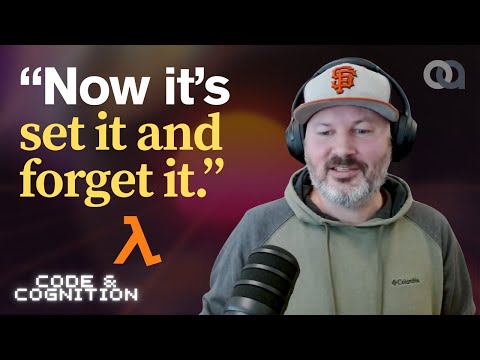
I'm excited to talk about the new podcast I'm starting with Olio Apps: "Code & Cognition". In our first episode we talk with Dustin Herboldshimer about AWS Lambda auto-scaling. You can find it on YouTube and Spotify. Would love to hear what you think.
English