Poplicola

4.1K posts

Poplicola banner
Poplicola

Poplicola

@selectsand

old books and movies new tech and policy

انضم Haziran 2025
779 يتبع164 المتابعون
تغريدة مثبتة
Poplicola
Poplicola@selectsand·
@mattyglesias Was just talking about him the other day. "Ehrlich and Borlaug," AI on screen
Poplicola tweet media
English
3
4
51
6.9K
Poplicola
Poplicola@selectsand·
@Michellewb_ interdicting the shadow fleet was one of the most effective approaches to disrupting this network of authoritarians propping up other authoritarians to spy on and counter the us
English
0
0
0
6
Poplicola أُعيد تغريده
Michelle Wiese Bockmann
Michelle Wiese Bockmann@Michellewb_·
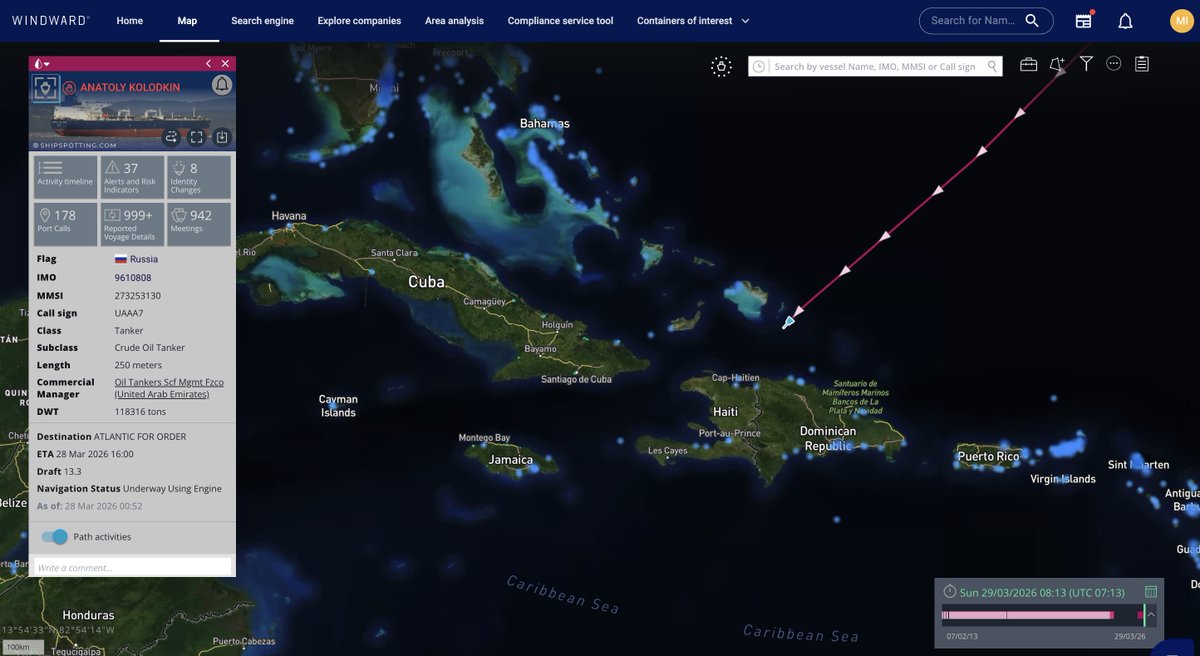
today we'll find out whether Russia will defy the US and deliver its cargo of 700,000 bbls of crude to Cuba via its government-controlled Sovcomflot tanker Anatoly Kolodkin, or whether it will do its own version of TACO.
Michelle Wiese Bockmann tweet media
English
4
40
127
7.3K
Poplicola أُعيد تغريده
Vatnik Soup
Vatnik Soup@P_Kallioniemi·
Russian forces are actively using equipment from the American company Ubiquiti to set up communication systems and control drones. This is active American complicity in war crimes.
Vatnik Soup tweet media
English
84
2.3K
5.5K
88.2K
Yosarian2
Yosarian2@YosarianTwo·
"Replacing Biden with Trump changed very little" is maybe the single stupidest thing anyone has ever said about American politics in the history of ever
Jason Kishineff@kishineff

@Garywaldman No. Replacing Biden with Trump changed very little, and likewise replacing Trump with another establishment Democrat won't change the system.

English
24
382
4.1K
57.6K
Poplicola
Poplicola@selectsand·
Radford, "The Economic Organisation of a P.O.W. Camp" I know these days there's a preference for inspiring models or novel approaches to getting insight on hidden variables, and this one is from a very different era. But like the beige books, it's a good reminder that economics is also fundamentally about human stories and human organization. Save a little room for narratives and descriptive accounts to spark joy and surprise as well, even if they aren't so en vogue these days.
English
0
0
0
12
Nicholas Decker
Nicholas Decker@captgouda24·
Making a list of a hundred papers in economics which fill me with wonder, joy, and excitement. Your suggestions are urgently solicited, my memory is not infallible and I'd like to make this really good. docs.google.com/document/d/1ZW…
English
20
82
771
27.1K
Poplicola
Poplicola@selectsand·
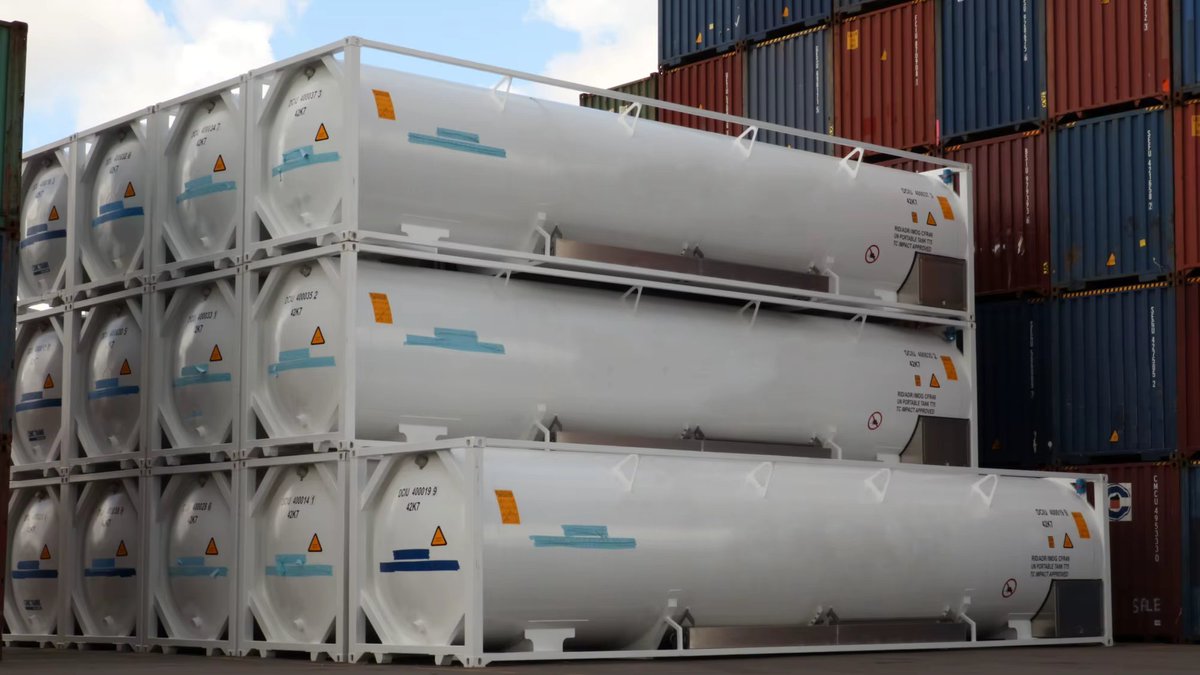
@Gaurab fun opportunity if somebody owned a vehicle that runs on helium and doesn't need to go through the strait...
Poplicola tweet media
English
4
1
30
2.5K
Gaurab Chakrabarti
Gaurab Chakrabarti@Gaurab·
200 helium containers are stranded in the Persian Gulf right now. Each one holds 41,000 liters cooled to -269°C. The containers have no refrigeration. No compressor, no cooling loop. Insulation is all that stands between the cargo and ambient heat, and it buys 35 to 48 days. After that, the liquid boils, the pressure valve opens, and the helium vents to atmosphere. Re-liquefying it requires a specialized plant. Most ports do not have one. Qatar's North Field supplied 33% of the world's helium as a byproduct of cryogenic separation at its LNG plants. On March 2, Iran closed the Strait of Hormuz. Spot prices surged 70 to 100 percent. EUV lithography requires 99.9999% purity helium for wafer cooling and no current substitute exists. The fifth helium shortage since 2006 has just begun.
Gaurab Chakrabarti tweet media
English
288
3K
12.5K
1.3M
Poplicola
Poplicola@selectsand·
the algo spends a lot of effort encouraging back and forth conversations but 80% of the back and forth conversations are petty fights that lead to "regretted" user minutes if you really want us all to talk to one another then i feel like there are a lot of ux tweaks you could make to help, like maybe separate out notifications so you just get one notification that summarizes your daily upvotes and then the reply notifications are nested threads like on usenet or email or something to help you engage with them the gap between what the algo seems to want and what the ux encourages seems pretty big, but maybe there's a reason for it all good luck with the site, hope it takes off
English
0
0
0
12
Nikita Bier
Nikita Bier@nikitabier·
Every time we do a user survey. What would make X better for you? Normal Person: > Maybe a podcast feature? Guy who reposted 370 videos from TikTok using Scheduled Posts, has never opened the app, and has a bot writing replies: > *Foaming from mouth* > Gib…more…money….
English
1.9K
431
12.7K
850.4K
Poplicola أُعيد تغريده
Volodymyr Zelenskyy / Володимир Зеленський
When I travel outside of Ukraine, I get daily intelligence updates online. This morning, I was briefed that U.S. military facilities in the Middle East and the Gulf region were photographed by Russian satellites in the interests of Iran. On March 24th, they imaged the U.S.–UK joint military facility on Diego Garcia located in the Chagos Archipelago in the Indian Ocean. They also captured pictures of Kuwait International Airport and parts of the infrastructure of the Greater Burgan oil field. On March 25th, they took pictures of the Prince Sultan Air Base in Saudi Arabia. The Shaybah oil and gas field in Saudi Arabia, İncirlik Air Base in Türkiye, and Al Udeid Air Base in Qatar were all imaged on March 26th. There are no Ukrainian facilities on this list. But who is helping whom when sanctions are lifted from an aggressor that earns daily revenue and provides intelligence for strikes against American, Middle Eastern, UK, and U.S.–UK bases and so on? When surveillance is carried out over facilities in Ukraine, we always understand that they must be protected, since plans are in motion to destroy them – energy and water infrastructure, military facilities, and so on. Everyone knows that repeated reconnaissance indicates preparations for strikes. How can sanctions be eased if this is what the Russians are doing? There must be pressure on the aggressor. And lifting sanctions is certainly not pressure. It looks strange. Sanctions are being lifted, while the aggressor is providing intelligence to strike facilities, including those of the countries that are discussing or have already lifted sanctions. From my conversation with journalists (3/3).
English
1.2K
8.1K
32.7K
2.5M
Preston Stewart
Preston Stewart@prestonstew_·
“It’s Ukrainian housewives. They have 3-D printers in the kitchen, and they produce parts for drones. This is not innovation.” -Rheinmetall CEO Armin Papperger
Preston Stewart tweet media
English
416
885
9.4K
1.3M
Poplicola
Poplicola@selectsand·
hard to get fuel for the 46 million households who rent, but sure if you have a house and garage not a problem. tires wear out quickly due to vehicle weight, though i believe TCO is lower overall. road wear and local pollution go up relative to the fourth power of vehicle weight so that is a real delta. BYD's latest are unbelievable for the price and i imagine have an incredibly low TCO (due in part to all the subsidies on total output built into the system). if americans were given a test drive and sticker price for flagship chinese EVs there would be riots in most american cities right now. i say this as someone who is incredibly skeptical of china on natsec grounds.
English
0
0
0
70
Poplicola
Poplicola@selectsand·
@mattyglesias Deterrence will seem more attractive to authoritarian states, sure. But for all the faults of the Iraq war, and there were many, it did not leave behind a country dedicated with all its might to preventing the US from overthrowing its future sociopathic dictators.
English
1
0
3
644
Matthew Yglesias
Matthew Yglesias@mattyglesias·
Very little about what’s happened this year is going to make the government of Iran — or frankly any country, up to and including Canada and Denmark — less interested in obtaining a nuclear deterrent.
English
92
151
1.4K
76K
Poplicola
Poplicola@selectsand·
Similar to one great use case for AI I found while reading about JFK: ask it to steelman conspiracy theorist arguments and their rebuttals. To be clear, the conspiracy theorists are not correct, but it's incredibly difficult to learn why exactly they are wrong, because almost nobody can stomach steelmanning arguments that sound genuinely unhinged after you think through all the evidence. Having it do the back and forth was like watching a brilliant expert just savage attempts to cast doubt on traditional narratives by introducing insane hypotheticals, it massively increased my confidence in what happened.
English
0
0
3
370
Stefan Schubert
Stefan Schubert@StefanFSchubert·
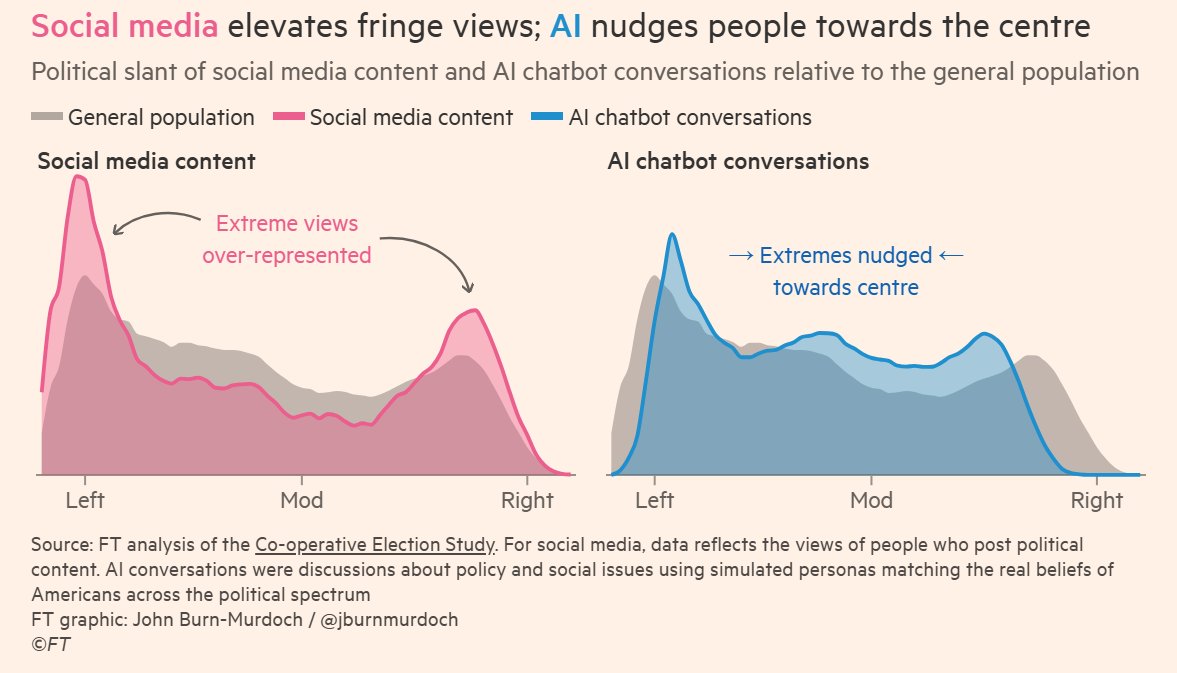
While social media is polarising, evidence suggests AI may nudge people towards the centre. This holds true of all studied models. Grok is more right-leaning than other models, but also has depolarising effects. By @jburnmurdoch.
Stefan Schubert tweet media
English
203
914
5.5K
764.9K
Poplicola
Poplicola@selectsand·
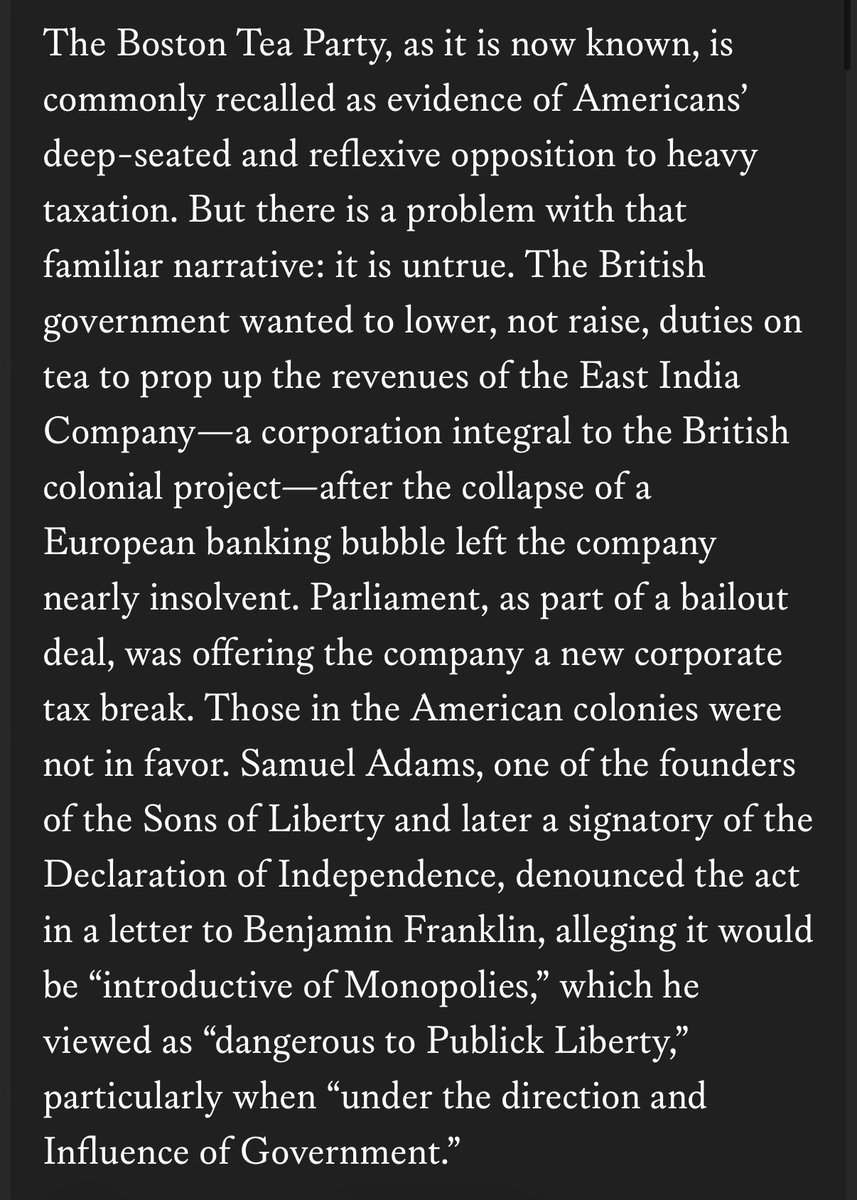
This is a clever argument but ultimately aggressive revisionism. The protests were not an isolated incident but a series of discontent related to British Parliament's struggles to deal with its significant war debts from the Seven Years War, where it tried raising taxes at home (e.g., Cider Tax of 1763) but faced a popular political revolt and riots making that unviable through parliament, then imposing a series of escalating extractive measures on the colonies because they had no political resistance. It wasn't just "we want taxes lower" and it certainly wasn't "we want to pay more of your war debts" it was colonists solving for the equilibrium and realizing they were going to foot the bill for limitless british adventurism against france unless they drew the line containing parliamentary power on principle. Parliament was actually compelled by and sympathetic to this argument given personal appeals by Benjamin Franklin (against the Stamp Act in 1766, leading to its repeal). But they continued to face fiscal challenges so kept trying new tricks. The Tea Act of 1773 did attempt to lower prices while keeping an earlier point of contention, the Townshend duty on tea, which parliament saw as a compromise because of the lower prices. But colonists were tired of this game for a decade so saw it as a way to smuggle in colonial consent to parliament's general taxing authority which they opposed on principle. Colonists said "you can't endlessly tax us" and Parliament responded "ok but what if we lower the price then tax you" and the colonists said "no the central problem is the power to tax itself." This was a position that was shared not just by the 13 colonies but echoed in Britain's pacific island holdings, who also had riots, but lacked the power for full revolutions. It was similar to discontent back in southwest england where citizens had rioted over tax increases, and may have started a revolution there if Parliament hadn't backed off at home. Britain's tax system was well documented in the 1760s, the Treasury kept detailed records, so we know that it had a land tax of 20% and a sprawling system of excise taxes on individual goods. Collectors would show up at the doors of landowners and shopkeepers at any time for inspections and auditing, measuring inputs and outputs to inform assessments. It increased prices across the board. A few decades earlier Walpole tried to expand excise taxes at home and it nearly brought down his government. Britain was now getting twice as much per capita tax out of its population than similar European countries. So there were lots of pamphlets and petitions to parliament. This is well documented by John Brewer in The Sinews of Power (1989), where he argues that Britain had built an unusually comprehensive tax system for its time giving it additional fiscal capacity (making its citizens feel comparatively heavily burdened compared to the past, and others around the world).
English
0
0
1
64
Poplicola
Poplicola@selectsand·
@StatisticUrban this reads like you are humbly addressing parliament and i think it makes it resonate even more
English
0
0
1
1.2K
Poplicola
Poplicola@selectsand·
@eigenrobot you figure i could ship one of those red gas cans overseas to people who need it feels like an arbitrage opportunity somebody should look into shipping oil between countries
English
0
0
0
29
eigenrobot
eigenrobot@eigenrobot·
gas ("petrol") down the street from me is $3.40/gal in God's measurement system. that translates to £0.68/L €0.78/L ¥144/L ₹85/L AUD 1.32/L CAD 1.25/L
English
91
13
899
35.7K
Poplicola
Poplicola@selectsand·
@scottlincicome "colony collapse was because humans fed them a monodiet that gave them bee scurvy" is both unexpected and also sorta expected
English
0
1
4
57
Poplicola
Poplicola@selectsand·
@wisdomandboats people asking why didn't the admin fill the SPR admin: didn't I?
Poplicola tweet media
English
0
0
1
223
Wisdom & Boats
Wisdom & Boats@wisdomandboats·
The big increase in production is also a contributing factor to why Aframaxes are so strong in the USG/Caribbean as rates push over $300,000/day Not only is there more transport demand for Venezuela to the USG as production hit 1.1 million bpd in March showing a very drastic increase since December. But there’s also a huge demand increase due to the back haul Aframax cargoes of naphtha from the USG to Venezuela that can be done with without cleaning tanks. Currently, i’m seeing some of these “dirty naphtha” Aframax voyages go for $1.5-2 Million. That’s already a lot for back haul cargo, plus this is only a 5.5-6 day voyage. It’s a ton of extra Aframax demand and shipowners are making a fortune off of it, and they will continue to do so, as Venezuelan production ramps up. #tankers #oott
Rapid Response 47@RapidResponse47

.@SecretaryBurgum provides an update on Venezuelan oil production: "It's climbing toward a 50% increase just in the 3 months we've been here. That flows to American refineries on the gulf coast."

English
4
9
82
19.8K
Poplicola أُعيد تغريده
Department of State
Department of State@StateDept·
SECRETARY RUBIO: The only thing worse than a communist is an incompetent communist. 🎯
English
1.7K
5.3K
26.1K
634.8K
Poplicola
Poplicola@selectsand·
1) AI culture: A few people’s idiosyncratic personal beliefs regularly change the world. It thus matters tremendously how AI builders view their work, politics, philosophy, and the future. I think most individuals in the AI industry are good and want their tech to do good. Journalists can portray AI workers’ earnest beliefs while being appropriately skeptical of how that can clash with or be shaped by industry incentives, and how it might diverge from the public. "Smart people confront hard moral/intellectual problem" is one of my favorite genres. You say you are trying to build a bridge but this sounds like code for writing hit pieces where you describe techies as having alien worldviews so the mob can quickly accuse techs of being outsiders trying to destroy everything good in the world. I hope that's a hyperbolic misreading and sorry if I'm not getting it, but all these codewords like "being appropriately skeptical" and "diverge from the public." Imagine any other beat approaching their topic like that, "I'm going to cover education, and particularly how teachers' views diverge from the public, given the impactful influence they have over our children." "I'm going to cover football, and particularly how coaches and managers views' diverge from the fans with skepticism towards the incentives guiding their calls." What are you writing for tech optimists, or is that just not the core audience?
English
0
0
0
133
jasmine sun
jasmine sun@jasminewsun·
Personal news: I’m joining @TheAtlantic as a contributing writer! It drives me nuts how wide of an understanding gap there is between SF AI world and everywhere else — especially given the immense public stakes. There's so much AI hype, anxiety, and misinformation; so doing translation and synthesis feels more important than ever. (This role is in addition to Subst*ck, where I’ll keep writing at the same cadence.) I'm using this excuse to share some rambly media thoughts: namely that tech journalism can & must be great again. The problem with “old media” is that it often refuses to take tech bros at their word, and the problem with “new media” is that it’s often just advertising, which is boring even for the subjects. There’s a doom loop where some reporters write poorly-informed stories, so insiders won’t talk to them, so sourcing is worse; not to mention that most journalists are not based in the communities they cover. This makes people bad-faith, but it also means a lot of AI reporting is 6-12 months behind. Yes, fantastic blogs/podcasts abound — these are the bulk of my info diet — but they are largely insiders talking to insiders, too niche to recommend to policymakers or smart non-AI friends. These fractures are a disaster for shared public knowledge, and make us less prepared to navigate AI well. Magazine writing offers the ability to rise above of the hourly play-by-play (squinting at every new model release, every new jobs report) and to the bigger questions. I actually think the most impactful AI writing has *months*, not days of longevity! Rather than over-anchoring to any particular forecast, it offers generalized frames for operating under uncertainty. A few types of pieces I’m especially keen to write: 1) AI culture: A few people’s idiosyncratic personal beliefs regularly change the world. It thus matters tremendously how AI builders view their work, politics, philosophy, and the future. I think most individuals in the AI industry are good and want their tech to do good. Journalists can portray AI workers’ earnest beliefs while being appropriately skeptical of how that can clash with or be shaped by industry incentives, and how it might diverge from the public. "Smart people confront hard moral/intellectual problem" is one of my favorite genres. 2) AI diffusion: AI discourse disproportionately focuses on its impact on software and writing because those are the jobs the messengers do (obviously I’m guilty of this). That makes me want to do more field reporting on AI in education, manufacturing, healthcare, etc: e.g. can I ride along with a team trying to integrate AI tutors into a school? Diffusion is rarely as smooth as economic models predict, and “how AI will go” depends largely on the speed, and where it hits first. Relatedly: AI in the non-western world. 3) AI superusers: Polls show people are highly anxious about AI’s speculative effects but sanguine about their personal use. I think more people should experiment with AI to feel both the pace of progress *and* its jagged edges. While AI can produce slop/surveillance/etc, it can also extend human ability & creativity. I want to paint portraits of people already “living in the future" so we can ask: is that a life we want? The tech is here, but we can choose how to relate to it. If you have ideas/feedback/etc my DMs are open, and my Signal is jws.27. For me 1-1 conversations are *not* on the record unless we say so. (I always thought this was a weird norm, and in general am happy to answer people's questions about “how journalism works” from my POV because it can be quite opaque.) (also I'm replacing my blurry macbook selfie with a b&w portrait profile picture to signify reluctant induction into the label of "capital-j Journalist.” I spent most of last year pretending to be funemployed, but I suppose this is graduation. end of an era!)
English
146
46
1.4K
112.5K