
Post

Christian Catalini
Christian Catalini@ccatalini·
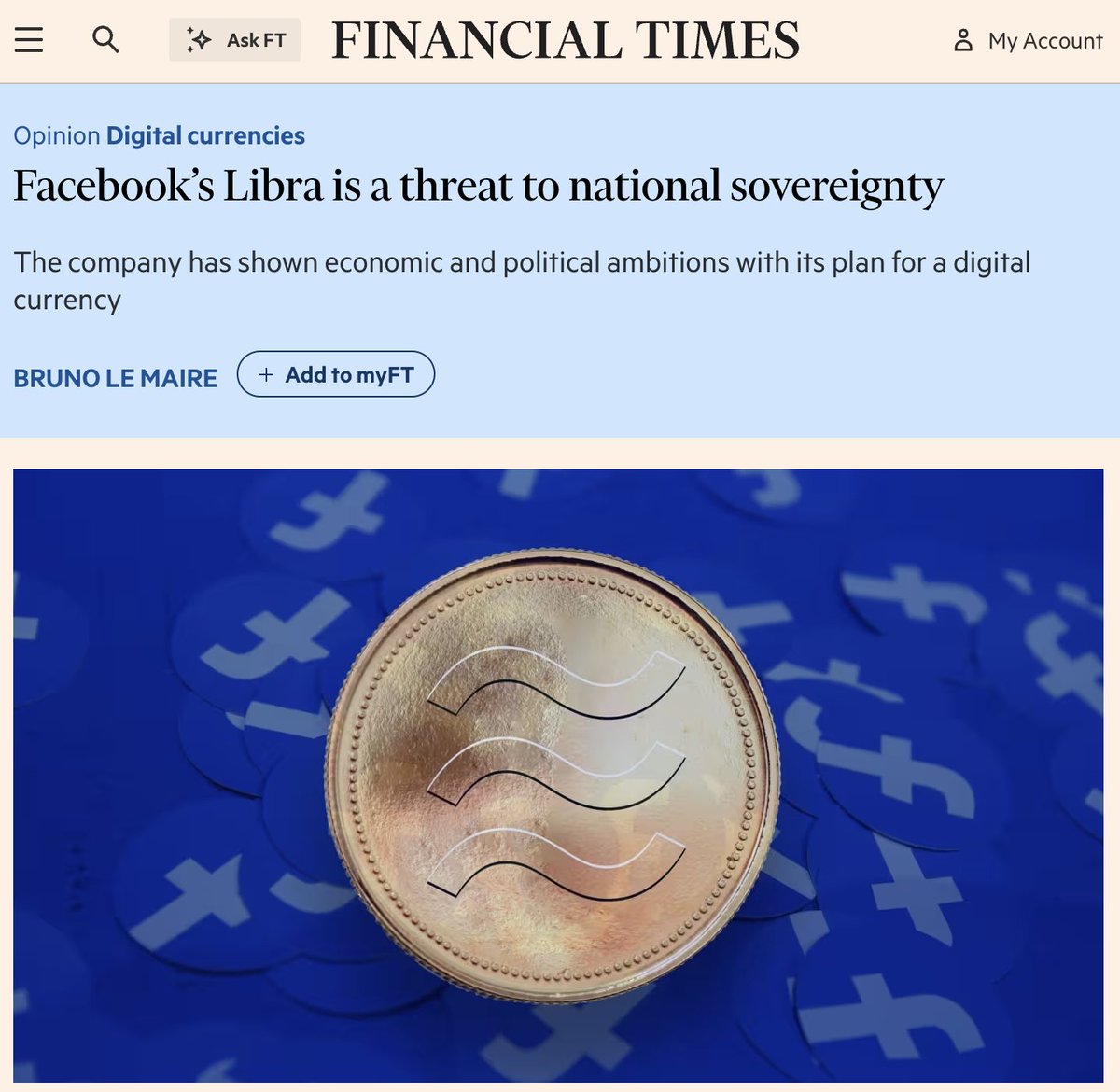
1/ @Stripe just pulled back the curtain on @tempo, its corporate blockchain, and the pitch is a classic. You get an all-star team, state-of-the-art tech, an impressive roster of partners—including one of the card networks the whole thing is designed to replace—and "neutrality."
Christian Catalini tweet media
English
116
297
2K
539.7K
Christian Catalini
Christian Catalini@ccatalini·
2/ The price for this grand bargain? Just handing the fintech giant the keys to global payments. If this gives you a powerful sense of déjà vu, you're not alone. The only question is if Stripe can write a different ending for the movie Meta already showed us.
English
4
0
221
22.2K
Christian Catalini
Christian Catalini@ccatalini·
3/ There's a cliché in tech and finance that being too early is indistinguishable from being wrong. Looking back on Libra, the stablecoin project I helped design inside Meta, I can confirm we weren't just early; we were also comically, spectacularly wrong.
English
5
15
280
23.9K
Christian Catalini
Christian Catalini@ccatalini·
4/ We had a bad case of Silicon Valley hubris—the belief that elegant code can simply wish away centuries of financial regulation. We announced our plan to reinvent money with the subtlety of a foghorn, giving every incumbent on the planet time to find their pitchforks.
English
8
2
190
25.6K
Christian Catalini
Christian Catalini@ccatalini·
5/ And to top it off, we handed our political opponents a gift-wrapped narrative: a "basket of currencies" that let them paint us as Bond villains coming for the dollar and the euro.
Christian Catalini tweet media
English
3
3
140
20.2K
Christian Catalini
Christian Catalini@ccatalini·
6/ There is a simple story one could tell about why Stripe will succeed where Libra failed. A story of better timing, a better brand, and the wisdom of being a second mover. In this story, Tempo is the inevitable winner.
English
2
2
134
17.8K
Christian Catalini
Christian Catalini@ccatalini·
7/ The political climate, after all, is radically different today. @Stripe's brand isn't emerging from the wreckage of a scandal like Cambridge Analytica. And they get to learn from our very public mistakes.
English
2
1
112
16.5K
Christian Catalini
Christian Catalini@ccatalini·
8/ So, case closed? Not quite. The problem is that this entire bull case is based on a fundamental misreading of what actually killed Libra.
English
2
2
113
16.2K
Christian Catalini
Christian Catalini@ccatalini·
9/ The Wrong Autopsy—The popular story is that Libra was a regulatory train wreck. The reality is that we were on the verge of becoming the most buttoned-up, regulator-friendly crypto project on the planet.
English
2
2
123
15.8K
Christian Catalini
Christian Catalini@ccatalini·
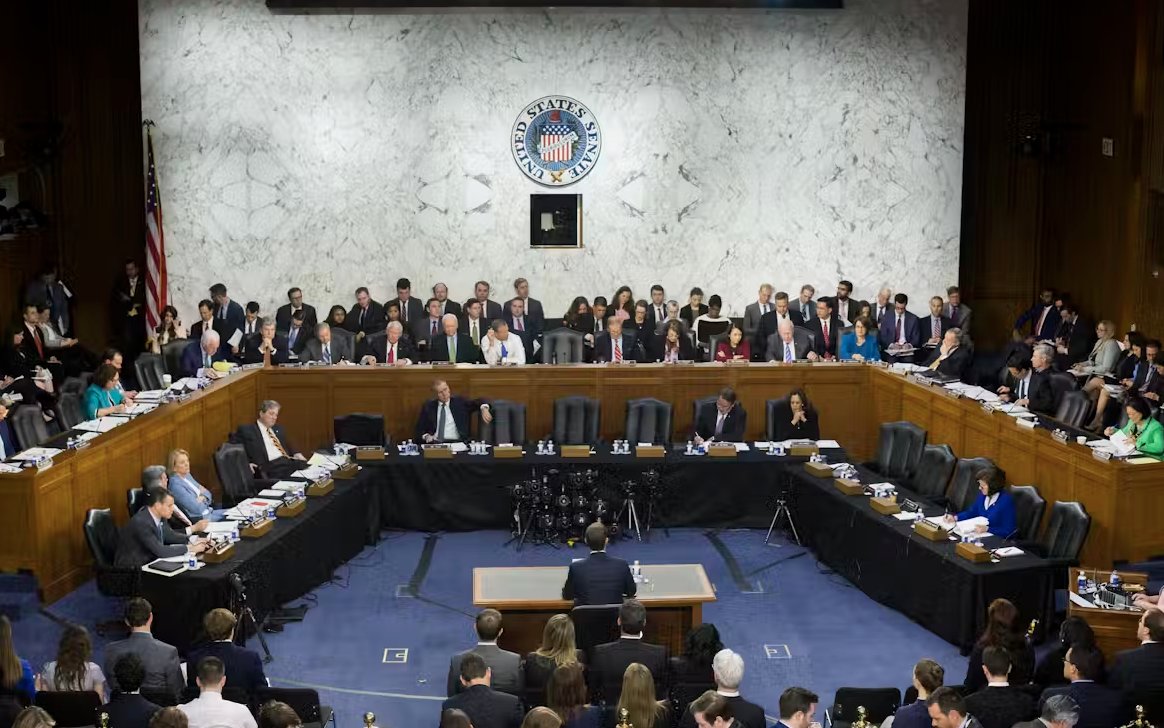
10/ We approached it with the seriousness of building—in the regulators' own view—potential systemic financial market infrastructure.
Christian Catalini tweet media
English
2
2
93
15.4K
Christian Catalini
Christian Catalini@ccatalini·
11/ Despite a rocky start, we eventually had a US Treasury veteran at the helm: Stuart Levey, a man who knew the D.C. rulebook by heart. We were in weekly dialogue with every central bank that would take our call.
English
7
3
105
14.3K
Christian Catalini
Christian Catalini@ccatalini·
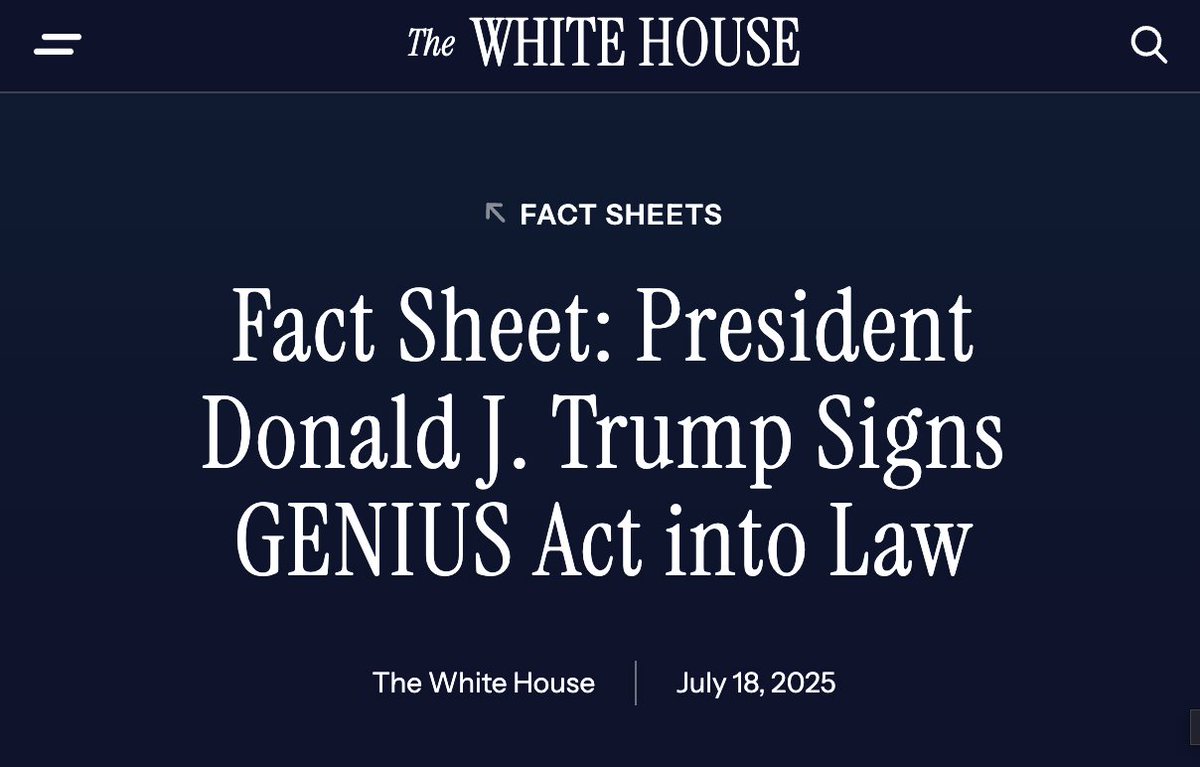
12/ The legal framework we helped build is now, ironically, the basis for the GENIUS Act. We even had the notoriously meticulous Swiss regulator FINMA ready to give us the green light.
Christian Catalini tweet media
English
3
5
139
17.2K
Christian Catalini
Christian Catalini@ccatalini·
13/ We got so close you could taste it: Libra’s license was physically sitting on the desk of FINMA’s president, waiting for a signature. And then Janet Yellen entered the chat. x.com/davidmarcus/st…
David Marcus@davidmarcus

How Libra Was Killed. I never shared this publicly before, but since @pmarca opened the floodgates on @joerogan’s pod, it feels appropriate to shed more light on this. As a reminder, Libra (then Diem) was an advanced, high-performance, payments-centric blockchain paired with a stablecoin that we built with my team at @Meta. It would’ve solved global payments at scale. Prior to announcing the project, we spent months briefing key regulators in DC and abroad. We then announced the project in June 2019 alongside 28 companies. Two weeks later, I was called to testify in front of both the Senate Banking Committee and the House Financial Services Committee, which was the starting point of two years of nonstop work and changes to appease lawmakers and regulators. By spring of 2021 (yes they slow played us at every step), we had addressed every last possible regulatory concern across financial crime, money laundering, consumer protection, reserve management, buffers, and so much more, and we were ready to launch. We had worked on a slow rollout of a limited pilot that some members of the Fed’s Board of Governors were supportive of. At last, Chair Jay Powell was ready to let us move forward in a limited way. The story, as I heard it, is that Jay Powell was told by Treasury Secretary Janet Yellen at one of their biweekly meetings that allowing this project to move forward was “political suicide,” and she would not have his back if he let it happen. I wasn’t in the room when this conversation happened, so take these words with a grain of salt, but effectively this was the moment Libra was killed. Shortly thereafter, the Fed organized calls with all the participating banks, and the Fed’s general counsel read a prepared statement to each of them, saying: “We can’t stop you from moving forward and launching, but we are not comfortable with you doing so.” And just like that, it was over. One essential point is worth making here. There was no legal or regulatory angle left for the government or regulators to kill the project. It was 100% a political kill—one that was executed through intimidation of captive banking institutions. That was the hardest part of this story for me personally. Not that we had failed, but that America, this country I immigrated to and became a proud citizen of because of its rule of law and value system, behaved in such a way for political reasons. It was a very tough pill to swallow. The bright side of the story, though, was the many learnings from this wild ride. By the end of the project, we had made so many concessions to get a thumbs-up that the whole design of the network became a Frankenstein of our initial ambitions. We also learned the biggest lesson of all, which is that if you’re trying to build an open money grid for the world—eventually moving trillions of dollars a day, designed to be here 100 years from now—you have to build it on the most neutral, decentralized, unassailable network and asset, which, hands down, is Bitcoin. And now this is what many of us who went through this scarring journey are building together at @Lightspark. And this time, we won’t stop until we get it done!

English
2
6
141
21.4K
Christian Catalini
Christian Catalini@ccatalini·
14/ This leads us back to Stripe, and a question that hangs over the entire project: can it avoid repeating Libra's fate? What happens when the antibodies of the financial system—the powerful incumbents—identify Tempo as a new threat and begin to swarm? x.com/patrickc/statu…
Patrick Collison@patrickc

Introducing @Tempo. At Stripe, we care about high-throughput, low-latency payments use cases. As the use of stablecoins (and crypto more broadly) grows across Stripe, Bridge, and Privy, we found that existing blockchains are not optimized for them. For example, it's valuable for real-world financial applications that fees be denominated in a fiat currency that makes sense to the user, but existing blockchains denominate their fees in blockchain-specific tokens. Batch transfers are very useful in payments, but much less important in trading. Bitcoin does ~5 TPS; Ethereum does ~20 TPS, some (like Base and Solana) get to ~1k TPS, but Stripe peaks at >10k TPS. And so on. As such, we decided to incubate Tempo, a new blockchain, in partnership with Paradigm. We think of Tempo as the payments-oriented L1, optimized for high-scale, real-world financial services applications. Tempo is an independent company, with Stripe and Paradigm as the first investors. To ensure that Tempo serves a broad array of needs, we're excited to be working with Anthropic, Coupang, Deutsche Bank, DoorDash, Lead Bank, Mercury, Nubank, OpenAI, Revolut, Shopify, Standard Chartered, and Visa as initial design partners. We will start with an independent and diverse validator set, and plan to move towards permissionless validation. Tempo will have a built-in stablecoin AMM to enable platform neutrality with respect to different stablecoins, and Stripe itself will of course continue to work with many chains as first-class partners. We hope that Tempo makes it easier for things like payment acceptance, global payouts, remittances, microtransactions, tokenized deposits, agentic payments, and more, to move onchain. The Tempo team is 15 people today, led by the terrific @matthuang. If you're interested in building Tempo, get in touch! And if you're interested in partnering, reach out to partners@tempo.xyz.

English
3
7
111
21.3K
Christian Catalini
Christian Catalini@ccatalini·
15/ What makes the situation fascinating is the paradox at its heart. After a decade of spectacularly failed attempts to build their own private blockchain clubs, the big banks are grudgingly coming around to the idea that open, permissionless networks are the only way forward.
Christian Catalini tweet media
English
16
30
289
56.2K
Christian Catalini
Christian Catalini@ccatalini·
16/ At the very same moment, a new generation of challengers, led by Stripe and Circle, are betting everything on the opposite idea: that the future belongs to slick, branded, proprietary chains. x.com/ccatalini/stat…
Christian Catalini@ccatalini

1/ 🚨 Can crypto scale without losing its soul? @stripe and @circle are both building their own chain! The question isn't speed or functionality—it's openness. Are we building an open protocol for money, or branded rails?
English
10
5
137
27.6K
Christian Catalini
Christian Catalini@ccatalini·
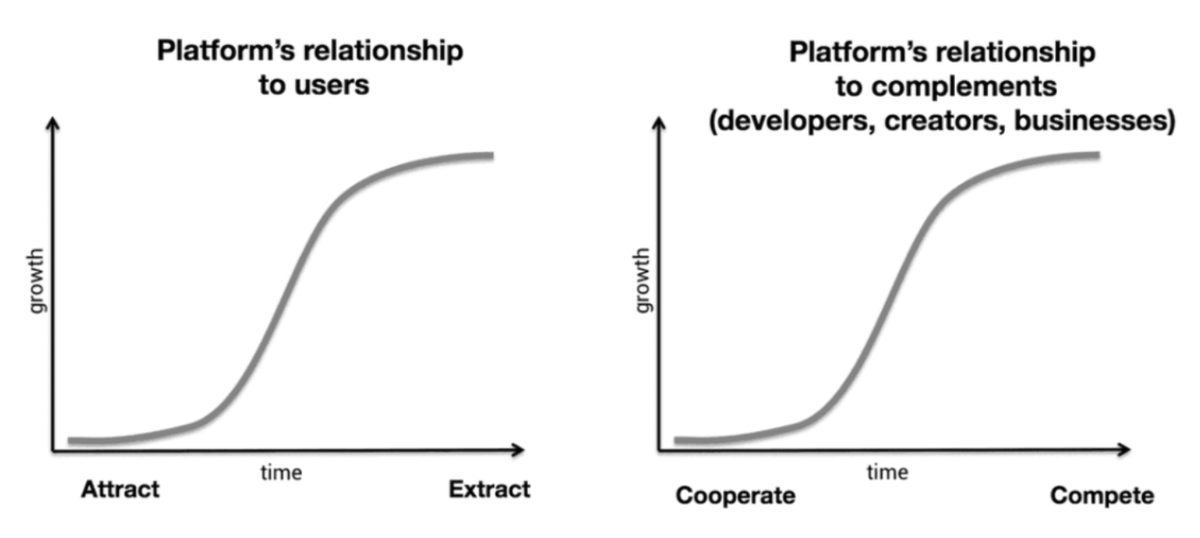
17/ The problem with corporate chains like Tempo isn't a matter of code—it's a matter of incentives. We already know the script. A tech player builds a network and promises fairness to get everyone on board.
English
2
7
158
18.8K
Christian Catalini
Christian Catalini@ccatalini·
18/ But once they have a captive market, the temptation to tilt the playing field becomes irresistible. Would a sane competitor bet its future on Stripe's promise not to eventually favor its own products?
Christian Catalini tweet media
English
4
30
231
17.2K
Christian Catalini
Christian Catalini@ccatalini·
19/ This isn't a new insight. It’s the very dilemma crypto was designed to solve. As @cdixon crystallized it, crypto’s purpose is to break this cycle of broken promises.
English
3
16
225
12.4K
Christian Catalini
Christian Catalini@ccatalini·
20/ It's the same fundamental economic truth we identified at MIT almost a decade ago: the only thing that truly separates crypto from the systems it aims to replace is that it's permissionless. Full stop.
Christian Catalini tweet media
English
9
49
349
65.1K
Christian Catalini
Christian Catalini@ccatalini·
21/ From the very beginning of Libra, my biggest concern wasn't the external fight with regulators, but the internal one. I was terrified we'd never win the debate to make the network truly permissionless. You have to understand, these are the brilliant engineers who build the most efficient centralized systems on Earth. They looked at our crypto ideals with a brutal, and not entirely incorrect, logic: why are we tying ourselves in knots to decentralize the database when the underlying asset is centralized? To them, it was an elegant solution in search of a problem.
Christian Catalini tweet media
English
3
9
154
13.2K
Stan Kladko 🇺🇦 🇺🇸 🇵🇹 ☮️
Well - every one is picking on @tempo guys today because they are just an easy target. At least they have a blockchain that other corp guys can join them to become decentralized. I do not see a reason why many corps cant run a decentralized chain. What about Base - can you criticize them too Christian ? They run on a single computer and will never decentralize.
English
0
0
0
76
David Lancashire 🟥
David Lancashire 🟥@dlancashi·
@ccatalini FYI that 51 percent attack is solved, permitting incentive compatible designs wiki.saito.io/en/consensus Solution is not compatible with permissioned POS designs w finality, so this distinction you are drawing is even more significant
English
0
0
0
199
First Coast Crypto 🏝
First Coast Crypto 🏝@1stCoastCrypto·
@ccatalini Didn’t take an MIT degree to know: Medieval Market Fairs were running “permissionless” centuries ago. Show up, trade, get witnessed. Hundreds of years later, Crypto Bros came along and put it on-chain. Great post btw! Solid read 🤝
English
0
0
0
106
Paylaş