Anna Reiser

47 posts

Anna Reiser

Anna Reiser

@AnnaReiserSPT

NAU DPT Class of ‘22

Flagstaff, AZ Beigetreten Ocak 2021
45 Folgt42 Follower
Anna Reiser retweetet
NAU Physical Therapy
NAU Physical Therapy@naudpt·
JOB ALERT: @naudpt is hiring! We are growing our team over the next several months and looking to fill 2 faculty positions. For more info, go to bit.ly/3sW1Jsh Share, Like, Forward to anyone you think might be interested in learning more. #nowhiring @APTAtweets
English
1
4
3
0
Anna Reiser
Anna Reiser@AnnaReiserSPT·
@RecarteAdabelle I think this is where advocacy groups are so important to convince insurance companies that the evidence supports these interventions. We can also stay up to date on EBP ourselves and talk about new ideas with our colleagues and patients! #PT582 #ARF
English
0
0
1
0
Anna Reiser
Anna Reiser@AnnaReiserSPT·
I think these changes could only come from reducing the for-profit nature of the healthcare industry. Sometimes insurance won't cover newer evidence-based treatments, so PTs have to result to using older methods that may not be as effective #ARF #PT582
English
1
0
1
0
Anna Reiser
Anna Reiser@AnnaReiserSPT·
@CanteraCaroline I remember the clinic where I worked using ultrasound on one pt who had calcium deposits after a shoulder injury. The PT said he wanted the US to break up the deposits to hopefully decrease pain. Not sure how common that is but it seemed like a creative use. #PT582 #CC
English
0
0
1
0
caroline cantera
caroline cantera@CanteraCaroline·
tonight in #PT582 we will be discussing the benefits of ultrasound..etc. Excited to see you all there!! Remember to hashtag #PT582 and #CC in your reply :))
caroline cantera tweet media
English
6
0
3
0
Anna Reiser
Anna Reiser@AnnaReiserSPT·
@Riley_shae98 Strengthening is important but so is the neuroplasticity component. I think you're on to something with watching the contraction, maybe this could be incorporated into some visualization techniques to improve athletic performance! #PT582 #RI
English
1
0
1
0
riley irwin
riley irwin@Riley_shae98·
@AnnaReiserSPT Anna, so true. Do you think strengthening muscles alone has a benefit in a sport? Does watching our muscles contract have a neural/brain benefit?
English
1
0
0
0
riley irwin
riley irwin@Riley_shae98·
Tibia honest, its going to be a great conversation tonight on Twitter!
riley irwin tweet media
English
5
0
2
0
Anna Reiser
Anna Reiser@AnnaReiserSPT·
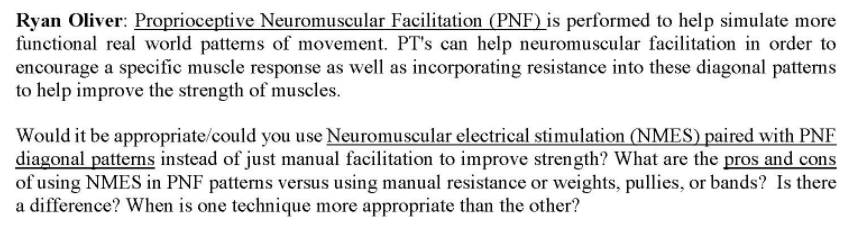
@RyanOli22855873 @NAUPT582 Maybe not necessarily strength but perhaps a greater awareness of their limbs moving in space and a more efficient/smooth pathway because of the NP component. It would probably be more measurable than manual contact because we can see the quantity of stim. #PT582 #RO
English
0
0
2
0
Ryan Oliver
Ryan Oliver@RyanOli22855873·
@AnnaReiserSPT @NAUPT582 Do you think there would be a dramatic increase in the patients strength if using stimulation since this is something we can manipulate and increase the voltage?
English
1
0
0
0
Anna Reiser
Anna Reiser@AnnaReiserSPT·
@kdavidnau I think I would recommend it in cases of muscle atrophy, such as following knee joint replacement surgery. As long as they don't have contraindications (kidney problems, blood sugar medication, etc) I would recommend it! #KD #PT582
English
0
0
0
0
Anna Reiser
Anna Reiser@AnnaReiserSPT·
@kdavidnau We typically think of using creatine for athletes who want to improve muscle performance, but I found this article about using it in conjunction with PT for patients with muscle atrophy. This could be helpful for rehab of post-op patients! #KD #PT582 ncbi.nlm.nih.gov/pmc/articles/P…
English
0
0
1
0
Anna Reiser
Anna Reiser@AnnaReiserSPT·
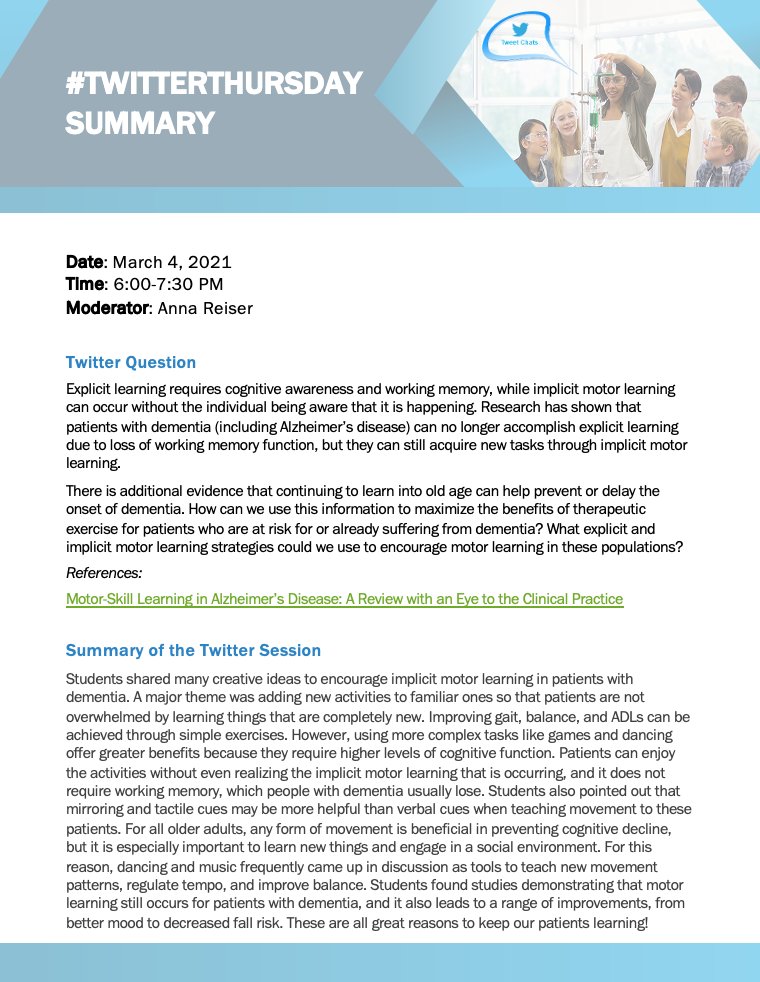
Thanks for a great discussion about implicit motor learning in patients with dementia! Let's keep our patients learning. #PT582 #AR
Anna Reiser tweet media
English
0
0
0
0
Anna Reiser
Anna Reiser@AnnaReiserSPT·
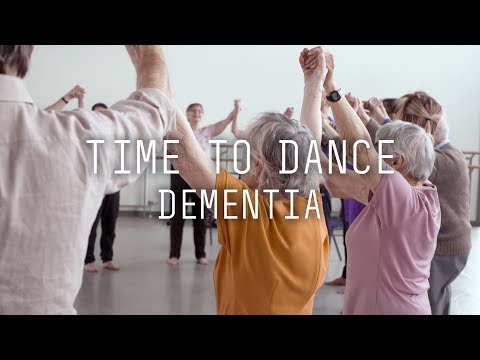
@JacquelineTorpy Love this! I think I've seen this video or something similar before. Dance can also be helpful for older adults to keep them learning and help prevent cognitive decline - I'm trying to get my parents to start taking dance classes as they get older. #PT582 #AR
English
0
0
2
0
Jacqueline Torpy
Jacqueline Torpy@JacquelineTorpy·
@AnnaReiserSPT Using dance can benefit dementia patients because it encourages movement and motor learning with music, tactile cues, and social interaction. This program explains how they can use dance as a form of non-verbal expression. youtube.com/watch?v=YI9sZO… #PT582 #AR
YouTube video
YouTube
English
1
1
2
0
Anna Reiser
Anna Reiser@AnnaReiserSPT·
How can we use implicit motor learning to help patients with dementia? Full question below. Ready for a great discussion! #PT582 #AR
Anna Reiser tweet media
English
9
1
2
0
Anna Reiser
Anna Reiser@AnnaReiserSPT·
@DBlair_NAUSPT Great point, I've seen videos where they have patients pretend to answer a phone and other activities to practice ADLs. Also would be beneficial to incorporate new actions with the older ones for greater learning. #PT582 #AR
English
0
0
1
0
Dylan Blair
Dylan Blair@DBlair_NAUSPT·
@AnnaReiserSPT #AR #PT582 Even if implicit learning is no longer possible for someone with dementia, performing task-specific activities should still invoke neuroplasticity and improve their ability to complete tasks even if they can't remember the specific task.
English
1
0
0
0
Anna Reiser
Anna Reiser@AnnaReiserSPT·
@AnnaLeighSPT It's also important to form connections with these patients over the things they do remember, such as stories from their past, because they can experience positive emotions and we want them to have a good experience! #PT582 #AR
English
0
0
1
0
Anna Leigh Weymann, SPT
Anna Leigh Weymann, SPT@AnnaLeighSPT·
@AnnaReiserSPT #PT582 #AR Yes exactly! Sometimes it's the only way to get patients in later stages of dementia moving! It also provides positive associations that could be implicitly learned. They may not know why, but when they go to PT part of them remembers that it is a fun place to be.
English
1
0
2
0
Anna Reiser
Anna Reiser@AnnaReiserSPT·
@RobertGorman18 Definitely, maybe initially use more partial practice because motor learning may not happen as quickly at the beginning. #PT582 #AR
English
0
0
1
0
Robert Gorman, PT, DPT
Robert Gorman, PT, DPT@RobertGorman18·
@AnnaReiserSPT #PT582 #AR Yes, further breaking down the pieces to these programs and altering the speed between transitions may help patients with dementia better cognitively grasps these movements.
English
1
0
2
0
Anna Reiser
Anna Reiser@AnnaReiserSPT·
@AnnaLeighSPT Love this idea Anna! I've seen videos of PTs incorporating music to regulate tempo of exercises, and even have their patients dance with them. Music stimulates the brain and can sometimes unlock memories too! #PT582 #AR
English
1
0
2
0
Anna Leigh Weymann, SPT
Anna Leigh Weymann, SPT@AnnaLeighSPT·
@AnnaReiserSPT #PT582 #AR Multimodal Cognitive Enhancement Therapy seems to be successful. A combination of cognitive trading, physical therapy, music therapy, reminisce training and more. These concepts can be applied to PT - playing their fav music goes a long way.
English
1
0
1
0
Anna Reiser
Anna Reiser@AnnaReiserSPT·
@CaitieBell1 Great point, complexity is vital for learning! What can we do if patients become frustrated by the complexity of the exercise? Some people have suggested incorporating things they are already familiar with. #PT582 #AR
English
1
0
1
0
Caitie Bell
Caitie Bell@CaitieBell1·
To delay the onset of dementia we should incorporate complexity into rehab programs. Mixing up the program makes the pt concentrate harder & promotes motor learning. If they are already suffering from dementia repetition & part practice may help implicit learning #AR #PT582
English
1
0
1
0
Anna Reiser
Anna Reiser@AnnaReiserSPT·
@TateTsingine Good connection Tate - what we call "muscle memory" is partly implicit motor learning. Which PNF techniques do you think could be helpful for this patient population? #PT582 #AR
English
1
0
1
0
Tate Tsingine
Tate Tsingine@TateTsingine·
#PT582 #AR Implicit motor learning is possible through repeated exposure without awareness. Like sports, it’s doing the movements over and over until it is like a reflex, with no thinking involved, which is similar to PNF. ncbi.nlm.nih.gov/pmc/articles/P…
English
1
0
0
0
Anna Reiser
Anna Reiser@AnnaReiserSPT·
@TsaiJames_ Good point, we can manipulate which familiar aspects we include in learning, and environment can be one of them. Do you think this makes these patients good candidates for at-home PT? #PT582 #AR
English
0
0
0
0
James Tsai
James Tsai@TsaiJames_·
@AnnaReiserSPT PTs can incorporate familiar aspects (setting, object, person) from retained implicit learning! We must be creative in creating these connections for interventions. It is possible that we can use this method to expand what is “familiar” too! bit.ly/3bfropG #AR #PT582
English
1
0
0
0
Anna Reiser
Anna Reiser@AnnaReiserSPT·
@McCarthyShealey Excellent idea, using their existing memories to help them learn new things may make the process easier. It can also help to have questions about familiar things they like to talk about so you can redirect them if they get frustrated or confused. #PT582 #AR
English
0
0
1
0
Shealey McCarthy, PT DPT
Shealey McCarthy, PT DPT@McCarthyShealey·
@AnnaReiserSPT #PT582 #AR 1 way we can engage new learning is by asking our older pts to dual task; ie teach them the new exercise & ask them to recite something they already know, like days of the week. They don’t realize what they are implicitly learning bc they’re focused on something else
English
1
0
0
0