
Angehefteter Tweet
BOB Armstrong
15.5K posts


BOB Armstrong retweetet

Scientists mapped the entire brain of a fruit fly. 130,000 neurons. 50 million connections. Every single wire accounted for.
Why does that matter? Because when they built a simulation based on that wiring and pressed play, the AI predicted the fly's behavior without ever being trained on it.
No data. No learning phase. The architecture itself was intelligent.
Think about that for a second. Most AI today works like cramming for an exam. Feed it billions of examples and hope it figures out the pattern. This is closer to how a newborn already knows how to breathe and swallow. Some intelligence is baked into the structure before learning even starts.
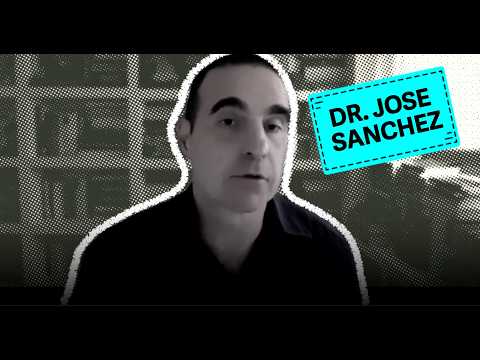
Dr. @josesanchezhb walks through the full simulation in this video. You can see visual data flow from the fly's eyes through processing centers to the motor system that controls walking and flying. All driven by the shape of the network, not training.
This is the science behind Neuraxon and what Qubic is building toward with Aigarth. Not bigger models. Smarter architecture. Systems where intelligence comes from organization, not just optimization.
youtu.be/PoujgJKyYKk
YouTube
English

@Srodland You're getting muted. Wishing you and Qubic best of luck 💚
English

🚨 Hot take on the $KAS community:
They’re like a wasp nest on full alert.
Drop even the smallest, most polite criticism, it doesn’t matter if it’s about fees, tokenomics, roadmap, or whatever, and the entire hive swarms out instantly. Stingers flying, no questions asked.
They don’t just go after big accounts either. Nah, they happily pile on random small accounts with barely any followers too; people like me and @TheFnAardvark who have just around 400 followers.
No acknowledgment.
No “fair point, let’s discuss.”
No self-reflection at all.
Just pure aggression, insults, “sTuDy KaSpA”, clown emojis, or calling you retard. Classic low-IQ coping when they don’t like hearing anything outside the echo chamber.
Kaspa community doesn’t like hearing this but the math is the math: stinging everything that moves, especially the little guys, doesn’t make your nest stronger. It just makes normal people scroll past and stay far away.
One day they’ll figure it out. Until then… enjoy the buzz, kings. 🐝
Change my mind.
#KAS #Kaspa #KASisCope
English


You can only hold one, which one would you pick?👇
• 🤖 Bittensor ( $TAO )
• ⚡ Kaspa ( $KAS )
• ⭕️ Render ( $RNDR )
• 🧠 Qubic ( $QUBIC )
• 🚀 Fetch AI ( $FET )
• 🧬 ICP ( $ICP )
• 💸NEAR ( $NEAR)
English
BOB Armstrong retweetet


👀 $Qubic
👀 If you don't understand this, trust me it's a paradigm shift.
👀 If you do understand it, you already know it's a paradigm shift.
👀 If you are working with it, let's push this paradigm shift.
youtu.be/PoujgJKyYKk?si…
YouTube
English
BOB Armstrong retweetet

@hus_qy @kaspabit @kuda_ch @michaelsuttonil ah, uPoW
How come that @c___f___b is always frontrunning everyone and everything?
x.com/zuqkaX/status/…
zuqka ױ@zuqkaX
Outsourced Computations in Qubic **Why a Compute Network Needs an Economy, Not a Puzzle** 🧵👇 **1/ The Real Point of Computation** Most distributed networks solve artificial problems. Hashing. Staking. Lottery mechanics. The work sustains the network but produces nothing of external value. Qubic asks a different question: If you already have thousands of machines online, why not use them for something people actually want? **2/ From Hashing to Real Jobs** Qubic’s compute layer is not tied to a single purpose. It is a pool of hardware that can be redirected. Outsourced Computations formalize this redirection. External tasks become first-class economic events, settled through the same system that runs the network. **3/ The Custom Mining Test** To prove the mechanism works, Qubic ran its Custom Mining test (the first Outsourced Computations POC): redirecting unused compute to Monero. The result surprised everyone. The network delivered substantial hashrate, at times a major portion of Monero's total, showing it can absorb, route, and sustain external work without breaking its internal cadence. It was not about Monero. It was about elasticity. **4/ Useful Proof of Work as a Resource Market** UPoW changes what “mining” means. Miners do not just solve one puzzle. They supply raw compute that the system can reassign. Aigarth (AI training) is one destination. External workloads are another. The miner is paid either way. The resource is compute. The market is Qubic. **5/ Why External Work Needs a Settlement Layer** Any open compute market faces the same problems: * Who gets paid? * Who performed the work? * Who verifies the result? * How do you prevent freeloading? Qubic’s architecture already answers these questions. Ranking, burns, attestations, and epoch boundaries turn compute into an accountable economic unit. **6/ The Next Step: Dogecoin Integration** While the early tests proved the routing model, the Dogecoin integration is now scaling the concept into entirely new territory. Dogecoin uses the Scrypt algorithm, requiring ASIC hardware. Qubic’s AI training runs on CPUs and GPUs. Because they don't compete for the same hardware, they operate fundamentally differently. **7/ Parallel Compute Streams** Doge mining will not run in alternating blocks or time-sliced cycles. It runs simultaneously with AI training. A Dispatcher translates external tasks from a Doge pool, routes them to Qubic miners, and returns completed work, all while UPoW continues uninterrupted. **8/ Decentralizing Share Verification** Instead of trusting a single pool operator to confirm that a share is legitimate, Qubic routes validation through its Oracle Machines. Computors independently confirm valid shares, creating a trustless, decentralized verification layer for external computational work. **9/ The Difference Between Now and Later** The earlier tests were existence proofs. Standard Outsourced Computations will integrate deeply. They will directly contribute to Computor rankings, quorum selection, and form an economic pillar of the network's security and incentive flow. **10/ A Decentralized Compute Surface** The goal is simple: Anyone should be able to submit work and have a distributed network execute it with accountable incentives and predictable settlement. Not a cloud. Not a rollup. A compute surface. Qubic is not outsourcing compute. It is turning compute into an open market. 🔗 Read more about the architecture here: * Dogecoin Mining: qubic.org/blog-detail/qu… * Outsourced Computations: qubic.org/blog-detail/ou…
English
BOB Armstrong retweetet
👀 $Qubic Forget what you know
dogegod@_dogegod_
Dogecoin active addresses have spiked to over 73,000, hitting a 3-month high. Indicating underlying network strength.
English
BOB Armstrong retweetet



BOB Armstrong retweetet


BOB Armstrong retweetet

Why $Qubic could realistically hit a $1 TRILLION market cap
Forget the hype here’s 5 simple reasons why this under the radar crypto could become one of the biggest in the world.
Current market cap?
Just $130 million.
$1 trillion would be huge… but the pieces are already in place.
1. It’s stupidly fast and completely free.
Most #blockchains are slow and charge fees (think gas on #Ethereum).
$Qubic?
Record breaking transactions per second and has zero fees ever.
Instant confirmations too.
It’s like if #Visa, but 100x faster and free for everyone perfect for everyday payments, apps, games, or #AI agents running non stop.
2. Miners actually do useful work
(not just waste electricity)
Normal mining = solving puzzles that do nothing.
$Qubic’s “Useful Proof of Work” makes miners train real #AI and mine coins like #Dogecoin ( Currently Live )
The network earns real money from this… which it uses to buy back and burn $Qubic tokens forever.
Mining literally makes your coins rarer.
3. The more people use it, the rarer it gets.
Every smart contract, #AI task, or oracle call on the network burns $Qubic permanently.
It’s built in deflation.
As adoption grows (which it will), supply shrinks automatically.
Most coins inflate.
This one does the opposite.
4. It’s powering the #AI future
Meet #Aigarth $Qubic’s own #decentralised #AI brain.
The entire network’s computing power is training it right now.
In a world where #AI is exploding, imagine a super smart, open source #AI that anyone can use without paying Big Tech.
No gatekeepers.
That’s massive real-world demand.
5. Built by a crypto legend who’s done it before
The founder @c___f___b created $NXT and co created $IOTA two projects that delivered insane returns in their day.
He’s not some random dev.
He solved the “blockchain impossible triangle”
(speed + security + #decentralisation)
in a way almost no one else has.
Look at the $1T+ giants already in the same #AI + compute + payments category:
- #NVIDIA ($4T+)
Dominates #centralised #AI hardware but it’s expensive, gated, and controlled by one company.
- #Microsoft ($3T+ #Azure/#OpenAI)
- #Alphabet/#Google ($3-4T)
Run massive cloud #AI empires but you pay fees and they own the gatekeepers.
- $Bitcoin ($1.3T) is the #crypto king for store of value but no built in #AI utility or feeless high speed transactions.
$Qubic is more superior because it’s fully #decentralised.
Anyone’s hardware can join and earn!
Mining turns energy into productive #AI
Training + network revenue (not waste)
Offers zero fee instant use (unlike cloud/gas fees)
Auto deflates with every transaction (unlike inflationary or static supplies)
Combines payments + #AI in one open network.
No middlemen, no paywalls, no central control just pure, scalable utility that grows stronger with adoption.
Bottom line:
$Qubic isn’t just another coin chasing hype.
It’s a high performance computing network that turns energy into intelligence, burns its own supply, and sits at the perfect intersection of #AI + #crypto but does it better than the centralized trillion dollar giants by being open, free, and self reinforcing.
You’re still super early.
Fading $Qubic is financial suicide!
And those non followers and doubters will be in disbelief.
#Qubic #Decentralised #Intelligence #AGI #Ai #BTC #ETH #InvestWisely #Free #Wealth #Gem #Hodl #iykyk

English
BOB Armstrong retweetet

🚀 Alright, $QUBIC fam!
🔥 Just fired up my Antminer L7 9300 and I'm now mining QUS!
🫡 I'll drop honest profit updates every single epoch!
🛠️ Let’s see those profits stack up!
📷 #DogeMeetsQubic #CryptoMining
Some connection issues being resolved during the week, so all hash rate info & other techy stuff will be updated shortly.
Who else is running ASICs on Qubic right now? Drop your setup below 👇

English
English

English
🚨 $Kas is getting exposed. You can read the full details here techleaks24.substack.com/p/a-factual-ac….
Shoutout to @zuqkaX for sending me this link.
The people behind it took millions from big investors but told everyone it was just a small community project. They started the chain with almost no notice then hit a major problem right away and quietly restarted it. After that they erased every single record of the first six months when most of the coins were being created at full speed. There is no way to check what really happened in that time and no complete history left to verify. On top of that the supply is being mined out so fast that nearly all of it will be out by the middle of next year while daily activity brings in almost nothing to pay the people running the network. The machines built just for this coin leave those miners stuck with heavy losses and no way to switch. This whole setup was never built to last.
It is now or never to rotate to $Qubic as a safer bet. Do yourself a svor and don’t let the bad guys win
English