ابو عبيدة
712 posts

@mohammed_hijab He publicly suggests that you may be a kafir, then when you smack him and treat him like your son, he wants to take it private 😂
English

I spoke with Adnan Rashid privately and we agreed to discuss these matters privately.
We clearly disagree on approach.
We will stop this public engagement and continue to resolve our differences by communicating privately.
English
ابو عبيدة retweetet

السلام عليكم ورحمة الله وبركاته @mohammed_hijab
A manhaj is not established by personal synthesis, selective affiliation, or self-defined balance. It is established by adherence to the Quran, the Sunnah, and the understanding of the Salaf of this Ummah.
To say “in creed I stand closest to al-Tabari” requires precision. Imam Muhammad ibn Jarir al-Tabari was from the great Imams of Ahl al-Sunnah, but the question is not merely which Imam one feels closest to. The question is: upon what usul did he stand, and how did the Salaf as a whole understand the divine attributes. This is not an area for broad slogans. It is an area of transmitted knowledge.
Likewise, in fiqh, facilitation is not an usul in itself. Taysir is legislated, but it is restricted by evidence. The Prophet chose the easier of two matters when both were lawful, not when one was weaker in proof. Ease in the Shariah is tied to dalil, not to modern utility or empowerment narratives.
As for calling oneself a centrist Sunni, this too needs clarity. Ahl al-Sunnah have never defined themselves through political independence, nor by distancing themselves from “states and factions,” but by their conformity to revelation and the inherited understanding of the Ahl Ilm.
The repeated criticism of the Najdi dawah often suffers from historical reductionism. If one critiques specific excesses or errors, that is one matter. But to conflate the أصل of that dawah, namely reviving Tawhid and combating grave worship, with every political event tied to it is neither academically rigorous nor just.
As for citing Sulayman ibn Abd al-Wahhab, Sulayman ibn Abd al-Wahhab, this matter is often selectively quoted and heavily decontextualised. The reality of his later position is more complex than polemical literature presents.
As for Ibn Abidin and Muhammad al-Shawkani, their criticisms were not blanket rejections of the أصل of Tawhid, nor were they endorsements of widespread grave practices. Precision matters.
And invoking Muhammad Nasir al-Din al-Albani while ignoring his clear defence of Tawhid al-Uluhiyyah and his praise for the revival of the call to pure monotheism gives an incomplete picture.
The way of Ahl al-Ilm is not to market oneself as balanced, but to submit to the balance already revealed by Allah جل جلاله. Truth is not measured by how psychologically sustainable it feels, nor by how broad a coalition it can build. Truth is measured by revelation, evidence, and the understanding of the earliest generations.
Unity is praiseworthy, but unity without boundaries becomes confusion. The scholars always differentiated between cooperation in common causes and erasing theological distinctions. This distinction is essential.
The danger today is that many public figures speak with the language of scholarship while bypassing its discipline. A student of knowledge knows that استقلال in study does not mean independence from the tradition. It means deeper rootedness in it.
The middle path is not found between extremes by personal intuition. It is found exactly where the Quran, the Sunnah, and the Salaf stood. That is the true mizan.
And beyond the theological and methodological discussion, there is a deeper matter that every student of knowledge must constantly return to, and that is the condition of the heart.
Knowledge is not merely positions, affiliations, or intellectual frameworks. Knowledge is humility before Allah جل جلاله, humility before the truth, and humility before those who carried this religion before us.
Allah جل جلاله said in the Quran that He does not love the arrogant and boastful. This is a principle that cuts through every age and every person. The one who presents himself as though he has independently arrived at a superior synthesis of Islam should pause and reflect. The path of truth is not discovered through self-construction. It is inherited through submission.
English
@mohammed_hijab @MrAdnanRashid @DisputesOf What an eloquent way to divert attention from talking about the rafidha
English
@YasinKa64213494 @doctor_rahmeh @TorahJews Not really the Quran doesn’t have genocidal verses whereas the bible doesn’t.
English

@doctor_rahmeh @TorahJews I completely agree with your points regarding Zionism. However, the problematic theological practices you mentioned can be found in any religion.
English
Can't sharpen a pencil during Shabbat but can bomb Gaza and invade Lebanon.
English
@mohammed_hijab @MrAdnanRashid maybe start by answering his 3 questions, what would ibn taymiyyahs answer be?
English
@mohammed_hijab @MrAdnanRashid adnan is asking you about 12vers, why are you asking him about rulers of the gulf, you know fully if he answered you they way you say he will will result in him not being able to travel, do umrah etc. dont be malicious bro.
English
@syedumar353190 @mohammed_hijab @MrAdnanRashid Yasir qadhi is pakistani, im holding accountable yawm a qiyama
English

@BaneNoname @mohammed_hijab @MrAdnanRashid Yasir qadhi went from a najdi to a liberal, hijab was never a najdi nor a liberal you bootlicker
English

@BaneNoname @mohammed_hijab @MrAdnanRashid Fear Allah stop fearing Zionist and yahuudi plants lil bro
Dansk
@mohammed_hijab @MrAdnanRashid Are you going to threaten him the same way you did to sh Muhammad Tarawneh.
English
@mohammed_hijab @MrAdnanRashid Is it worth burning bridges with all these sunni brothers and siding with a rafidhi. I certainly dont think so.
English
"Hijab himself becomes a kafir if..."
If you hold such strong views based on your strict adherence to the dawah that you follow, why did you refuse my on-camera offer for a face-to-face discussion in Malawi? Why remain cordial in person or on the phone, yet make extreme hypothetical chains of takfir publicly?
And if I become a kafir for this, do you make takfir of the Arab leaders who allowed Hindu temples to be built in their country? Answer directly
English
ابو عبيدة retweetet

No. The true people of Tawheed (Ahl ut-Tawheed) are defined by their absolute sincerity to Allah alone, their rejection of Shirk, and their adherence to the Sunnah. Their identity is not defined by a blanket desire to never perform Takfir.
If a Muslim upon Tawheed, see’s another person in his actions or beliefs abusing Allah’s Oneness, it is from his very Tawheed and gheerah of Allah’s Lordship that he disassociates himself from that person.
Muhammad Yasir Al-Hanafi@YasirAlHanafi
The true people of Tawheed are those who wish for others, especially Muslims, to remain upon Tawheed and not declare them disbelievers. Loving for others what you love for yourself is a significant aspect of Iman, as mentioned by our beloved Prophet ﷺ.
English
ابو عبيدة retweetet
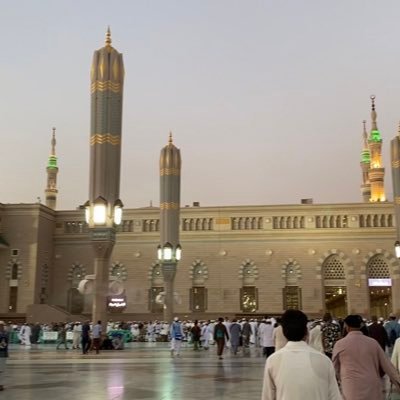
🧵 𝐌𝐞𝐠𝐚 𝐓𝐡𝐫𝐞𝐚𝐝: 𝐇𝐨𝐰 𝐑𝐚𝐦𝐩𝐚𝐧𝐭 𝐖𝐚𝐬 𝐒𝐡𝐢𝐫𝐤 𝐈𝐧 𝐓𝐡𝐞 𝐀𝐫𝐚𝐛𝐢𝐚𝐧 𝐏𝐞𝐧𝐢𝐧𝐬𝐮𝐥𝐚? 𝐓𝐡𝐞 𝐖𝐢𝐝𝐞𝐬𝐩𝐫𝐞𝐚𝐝 𝐓𝐞𝐬𝐭𝐢𝐦𝐨𝐧𝐲
A thread containing over 90 different sources, exposing the rampant practice of shirk, superstition and irreligiosity within the Muslim world before, during and after the time of Muḥammad Ibn ʿAbd al-Wahhāb.
[1] European explorers
[2] Muslim scholars, historians & travellers
[3] Opponents of Wahhābism
[4] Wahhābī testimonies

English
ابو عبيدة retweetet

This rock is older than the religion of Shias.
Mohammed@IKON1436
Saudi officials have found an inscription in Madinah dating to the early Islamic period bearing the name of Umar ibn al-Khattab رضي الله عنه. It reads: “Allah is the guardian of Umar ibn al-Khattab in this world and the hereafter.” “Laa ilaaha illa Allah.”
English
@5amrevival When you binge watched Sally in Morroco sipping mint tea
English


ابو عبيدة retweetet

هذه المرة يرد عليكم مؤسس حماس الشيخ أحمد ياسين وليس بلال البخاري 🌹

yara@yarraaa37
خايفة يطلعلي بلال بخاري اسا يقلي عم حرف بالقران ويفوتني عالنار. يلي عم يستل مين بلال لا ولا شي، مدير قسم مفاتيح الجنة عتويتر
العربية
ابو عبيدة retweetet

perhaps jewish people should stop carving the Star of David into Palestinian people's faces or selling stolen Palestinian land out of synagogues if they want people to not associate zionism with judaism
English
ابو عبيدة retweetet