Angehefteter Tweet

Compound
1.7K posts

@CompoundVC
Compound is a thesis-driven, research-centric investment firm leading seed rounds :: :: What we're currently reading @compoundarxiv | Not called Compound VC


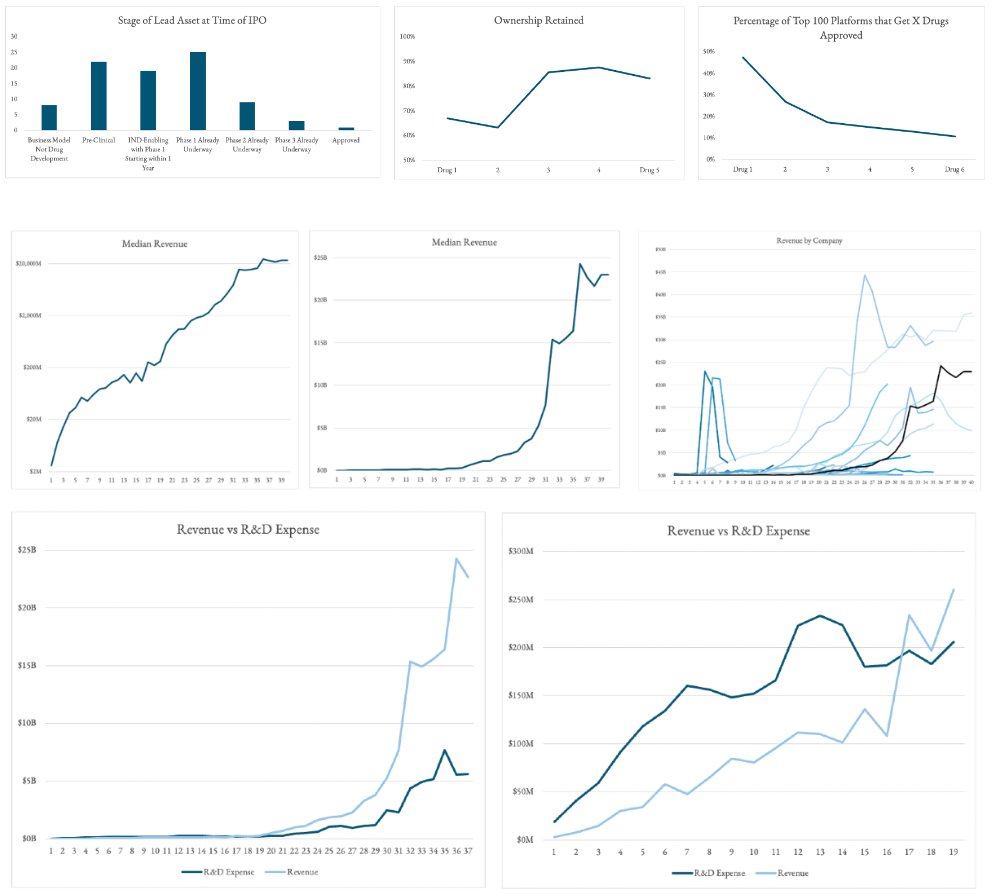
We @CompoundVC put together a biz model database with tons of detail on each to help you navigate We often meet founders with hammers looking for a nail Theyre spinning out their PhD work but dont know how to think precisely about the right biz model to maximize its translation

Biotech has a narrative void. Biotech has potential for much much more futuristic and positive outcomes than most other companies. But biotech founders largely miss the opportunity, don’t have priors to narrative building, or see it as a waste of time. If you’re building a company in biotech, we all know that will take a long time. So to keep people engaged, interested, and inspired by what you’re doing, you need to continue to remind them about what you’re doing and why it will pull the future forward. Not only this, but with biotech funding much diminished from ZIRP highs, it’s hard to raise money. Thus you’re competing with every company on science (given) but also narrative. I’ve seen even small launches, blog posts, and preprints change the trajectory of countless companies and I want you to benefit too. And because of this companies have opportunities to paint their version of the future or let others capture the attention in their vertical and take the talent and funding. Why narrative matters: Eyeballs on your work means that you have a higher ability to raise money, hire the best people, and get in front of customers. The other side is that if you don’t take up narrative space other founders will. Nucleus is famous for this where there’s more scientifically legitimate groups such as Herasight and Orchid, but not controlling the narrative means that there’s room for Kian at Nucleus to entirely control story of IQ embryo selection. The Far-UVC space has a high mindshare, controversial company, Nukit, which has allegations of unsubstantiated evidence. TLDR: if you don’t control the narrative, another company will. What Narrative is: - Distilled legibility of your vertical. - How your company will pull the future forward. - How the industry will reorient itself around you. - World building to bring people to the future your company will create. The best founders normally use all of these positionings while talking to different sets of investors, hires and customers and have a library of stories they add to as the company and its mindshare grow. Customers are normally compelled by distilled legibility (eg. what makes your protein designs better than X), whereas hires and investors will want more future building, value accrual, and world building positioning. Put another way, narrative is a way to increase your perception-to-reality ratio to raise more money and give your company a fighting chance for scaled success. Narrative makes Schelling points: We (especially @mhdempsey) have written a lot about category creation, delineating different properties that can lead to category creation such as technological moats, margin profiles, TAM expansion, industry turnover, and new markets. Expanding on this is the breakaway companies that are inextricably linked to categories such as “Palantir in government tech, Anduril in defense tech, OpenAI in frontier AI, Ginkgo Bioworks in Synbio, Recursion in computational bio, Bitcoin in crypto, Physical Intelligence in robotics, and more”. Distilled legibility has led all of these companies to become Schelling Points. How you get narrative capture: Write, post, have launch parties around model releases. Specifically the ways we see founders getting mindshare is by: - Releasing pre-prints. There are so many preprints by companies that it’s now become a standard of sorts. - Blogging about progress - @newlimit does an excellent job here releasing bi-monthly updates. Escalante blog also had great asthetic and opinion that circulated fairly far. - Writing the company’s masterplan. How success in one area begets new and bigger opportunities. This is now a trite example but Elon uses the vision piece to rebut the main critiques of the company, giving him more legitimacy for his goals. Brian Armstrong talked about how Coinbase will be worth more in the future than it is today. - Releasing internal communications. A famous internal memo at Slack came out about selling the innovation not the product and thinking about who you want your customers to become. This aligns employees and shows the world that you are building something different. From an internal founder memo at slack. If you're selling to Pharma, who do you want your Pharma customers to become? - Having launch parties to get persuadables onboard and understanding what you’re doing. The Boltz team is excellent at this and has launch presentations in multiple cities for every model release. - Launch videos for companies are becoming increasingly common. @themoldcompany and @alterego_io are great versions of this. You can also share launch videos for your high-impact advisors like @chaidiscovery . This is a call to action to please world build, please share your incredible progress, please share your master plans! The world will thank you.



Exciting news to kick off London Tech week: Londoners can now sign up to experience @wayve_ai autonomous rides on @Uber which are launching soon (pending final regulatory approval). 🇬🇧 Join our interest list today: uber.com/gb/en/autonomo…






As I’ve noted: every billionaire is retarded. If sh*t hits the fan, Argentinians will just kill him & take his stuff. If you had $20B you should build a compound in Appalachia, subsidize the ~5,000 ppl in town via a make work company that loses $20M/yr THOSE ppl will defend you