@Hercules_Defi @mstable_ @UnitasLabs @yearnfi @aave @compoundfinance @Morpho Plenty of choices, edge comes from allocation
English
DeFi Decoder
71.5K posts

@DeFiDecoder_
DeFi KOL || Threador🧵 ||| Exploring AI, DePIN, RWA, GameFi || Economist || Advice-Free Zone TG Channel: https://t.co/b22FdKt1qJ



Say goodbye to LARPers ILITY Hub is live A signal driven social platform where your wallet balance becomes your profile Major updates -Anonymous polls -Activity-based badges 🔗 Link in Bio

Agents are starting to execute, not just assist. But they can’t truly act without native money. USD1 is that missing layer — programmable, permissioned, and designed for a world where software moves capital as easily as it moves data. We’re kicking that off today with AgentPay.


USDR Discord is now OPEN! The Early Bird role is available for the first members joining the community. Don’t miss your chance to be part of the founding community. 🔗 Join & Claim now: discord.gg/usdr






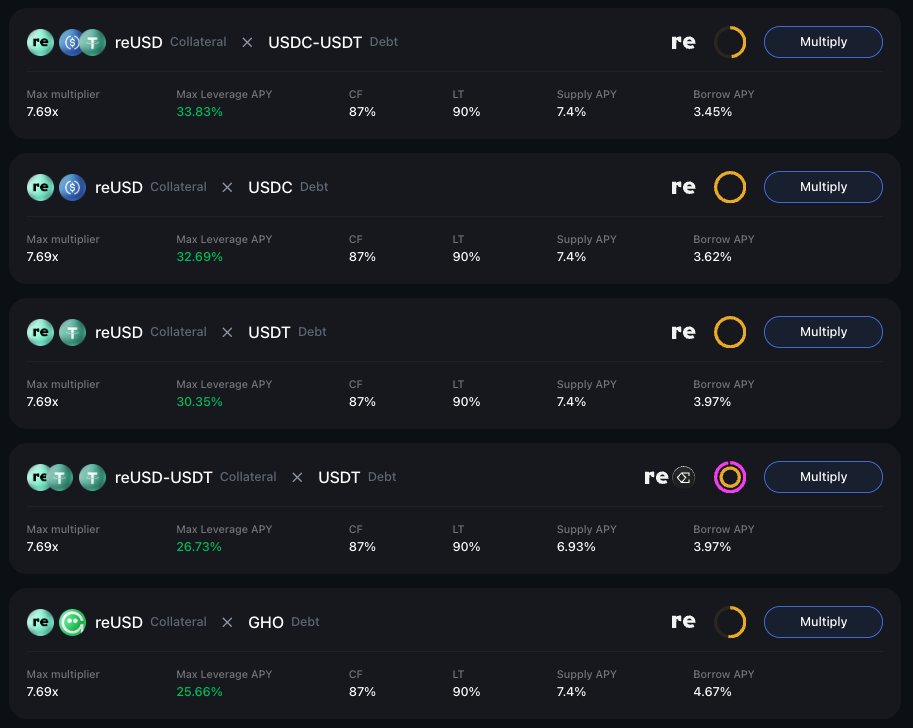
Launched reUSD on @0xfluid a few days ago, and now @re got • very deep and cheap DEX liquidity • 40% uptick in TVL • secured deployments on Plasma, Arbitrum, and Solana 👀 No other single protocol can bring all of this to stablecoin issuers Stay Fluid 🌊

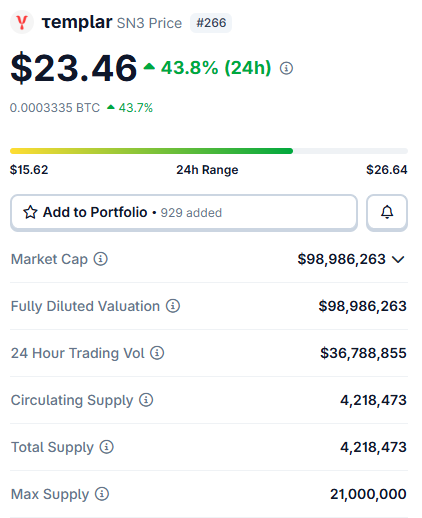
market been pretty loud about $TAO lately and especially about @tplr_ai. the 72B run made a lot of noise and SN3 became the center of attention across the Bittensor subnets. digging deeper, I realized Templar is just one piece of a bigger three-layer stack called @covenant_ai. it goes: Templar (SN3) for pre-training → @basilic_ai (SN39) for compute/deploy → @grail_ai (SN81) for RL and alignment. which is kinda wild if you think about it, because mega labs like OpenAI or Anthropic bundle all three stages inside one giant cluster. Covenant is splitting that pipeline across permissionless subnets where anyone with hardware can plug in. some quick details on the tech. they trained a 72B parameter model on a fully permissionless network. > ~70+ nodes training together > ~1.1T tokens processed > just using regular commodity internet and somehow it beat LLaMA-2-70B on MMLU (67.1 vs 65.6) under the same benchmark setup. the secret sauce is SparseLoCo. they compress the weight updates using sparsification, 2-bit quantization, and error feedback, which cuts comms overhead by 146x. that’s what allows random GPU miners on ~500Mb/s connections to participate in training without the network lagging out. Gauntlet scores every node's real contribution by checking the loss before and after, putting it all on-chain with an OpenSkill rating. which is why Templar (SN3) is suddenly attracting so much GPU participation. it’s commanding 5.62% of total TAO emissions, which already places it among the largest subnets in the network. miners want to train models → they need GPUs → compute demand rises → more $TAO gets staked into SN3 → emissions concentrate there → subnet alpha speculation pulls even more $TAO in. positioning as a competitor to OpenAI or Anthropic while sitting around ~$80M mcap. the upside is huge, especially with their next update "Crusades" turning SN3 into a Kaggle-style ongoing emissions competition for AI kernel research. but I think we should also keep an eye on Basilica (SN39) and Grail (SN81) too. Templar is the pretraining layer, but a real AI stack needs the other two layers. Basilica is the compute marketplace feeding the GPUs, and Grail is the post-training layer doing verifiable RLHF via cryptographic proofs. Covenant is pulling off a decentralized AI company. so SN3 might be the headline today, while SN39 and SN81 are prob the parts the market notices a bit later.




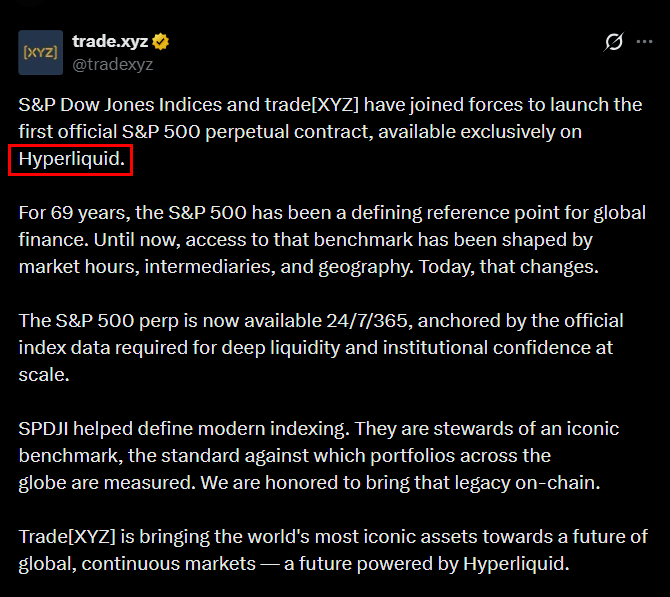
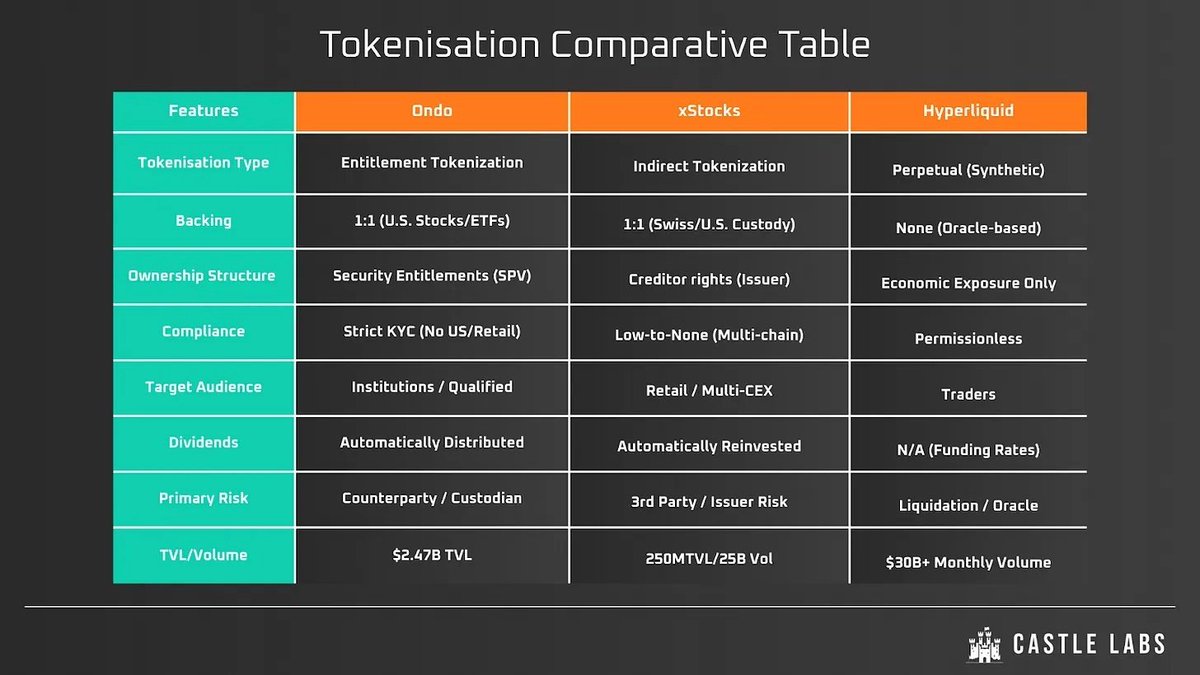
🔥 Why is $HYPE pulling ahead of its competitors? @HyperliquidX has entered the top 10 global perpetual exchanges. With daily volumes consistently reaching $5-9B, Hyperliquid is far ahead of Aster, Lighter, dYdX, GMX, and other emerging projects. Here’s why the gap keeps widening: 1/ Superior Open Interest Hyperliquid maintains an absolute leading OI of approximately $7-9.5B, higher than all other competitors combined. Competitors like Aster and Lighter saw a significant decrease in OI after TGE and airdrops. 2/ Expanding ecosystem Hyperliquid is evolving into a full stack derivatives chain: - HyperEVM allows developers to build lending, spot, and app offerings; HyperLend and Unit Spot are now available. - HIP-3 allows anyone to deploy perpetual contracts without permission (only staking 500k HYPE). - HIP-4 introduces outcome based contracts, prediction markets, and option like products. I see that competitors lack a robust permissionless mechanism like HIP-3, making product expansion and diversification difficult. 3/ Real revenue with aggressive buybacks - Daily fees ~3M+, cumulative fees > $1.15 billion. - The majority of revenue is used to buy back HYPE tokens -> creating a strong sink for the token. - Competitors have much lower transaction fees, typically only $100-300,000/day. 4/ Speed & experience nearly CEX - Hyperliquid runs on its own L1 platform HyperCore + HyperEVM with sub second finality & processing over 200,000 orders/second. - Competitors mainly run on L2 (Solana, BNB, Arbitrum…), so their speed and liquidity depth are still inferior during volume spikes. 5/ Operates 24/7 - Weekends and geopolitical events → traditional markets close, but Hyperliquid remains tradable → RWA volume explodes. - The RWA structure makes revenue less dependent on BTC sentiment than competitors 😬. Conclusion: I think it will be very difficult for any product to surpass Hyperliquid in the near future, just as Binance has dominated CEXs.