Shanu Mathew@ShanuMathew93
Three reports dropped in the last two weeks. All three land on the same thesis - the U.S. grid problem is partly a utilization and orchestration problem vs. purely a buildout problem. Shout out @TheBrattleGroup @FERC @energy_said @BrianJanous @CarolineBGolin @Stphn_Lacey
Brattle calcs that better use of existing infrastructure could unlock the equivalent of 100 GW of capacity (per the podcast's characterization of the findings) and save consumers $110-170B over a decade (similar to reports by Duke, Camus, etc.).
FERC's 2025 State of the Markets shows scarcity already clearing in prices. PJM capacity auctions hit the cap twice and still fell 6.5 GW short of reliability requirements. Wholesale electricity prices rose 25% YoY. 50 GW of data centers now in service.
Thunder Said Energy quantifies the operator side. A 2-3 year grid delay halves (-50%!) a data center's NPV. Flexible operation during the top 1% of grid-stress hours costs only ~6% of NPV. The math strongly favors accepting curtail-ability over sitting in the interconnection queue.
And the Open Circuit podcast with Brian Janous (Cloverleaf, ex-Microsoft) and Caroline Golin (NRG, ex-Google) puts it in operational terms. 60-80 GW of mega-projects have been announced with zero binding customer offtake. The workforce to build them at the pace required doesn't exist. And the regulatory structures to value flexible alternatives barely exist either.
Six overlapping themes across all four sources:
1) Load growth is real but "bankable load" is smaller than "headline load." AEP cut its 2032 forecast by 6.1 GW (15%) after filtering speculative data center demand.
2) The bridge power gap is the central tension. Hyperscalers plan on 18-24 month cycles. Utility infrastructure takes 5-10 years. DERs and flexibility tools deploy in 1-5 years. That timeline match is the whole value proposition.
3) Capacity scarcity is clearing in prices now. PJM and MISO auctions are repricing. 17 generating units (1.1 GW) canceled retirements after PJM's record auction. First beneficiaries of tightness are existing plants.
4) Gas is dominating the reliability fast lane. Regular interconnection queues are still 74% solar/storage. But in expedited and reliability-priority programs, gas runs 68-75% of selections across SPP, MISO, and PJM. Gas queue capacity rose 87% YoY.
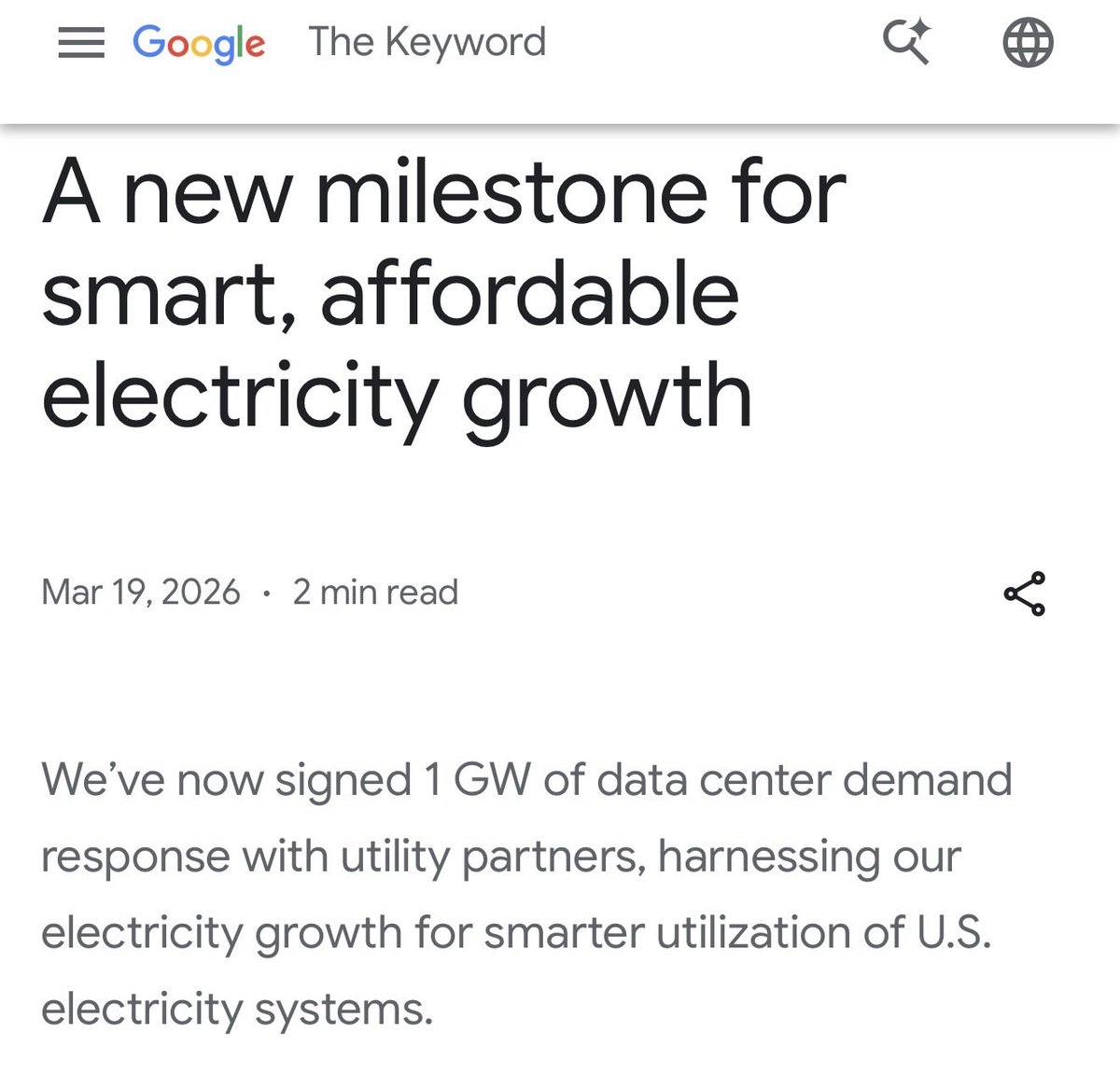
5) Flexibility evidence is building from multiple directions. Google has 1 GW of flexible DC load. Emerald AI cut power 30% in 40 seconds in a UK trial. FERC documented a crypto facility going from 200+ MW to near zero on high-price days. But no one has yet gotten faster grid access because they agreed to be curtailable (yet!).
6) A binding constraint is market design. VPPs lack capacity value in most resource plans. PJM doesn't allow aggregated VPPs to participate in its capacity auction. ERCOT has no aggregated VPP price signal beyond energy.