Brian Janous

643 posts

Brian Janous banner
Brian Janous

Brian Janous

@BrianJanous

sustaining the growth of the cloud with clean energy, husband, dad, generally loving the outdoors in the PNW


Seattle, WA Katılım Kasım 2012
346 Takip Edilen1.2K Takipçiler
Tyler Norris
Tyler Norris@tylerhnorris·
Great discussion in latest @_LatitudeMedia Open Circuit episode. @BrianJanous 🎯 here: "This focus on utilization and this conversation is super important... with the current capital cost and inflation impacts to building infrastructure, there is no way, if we keep utilization the same, that we’re not going to drive rates up. Regardless of how we structure rate design and how we isolate costs to different customer classes, you’re still going to face upward pressure on rates if you don’t do something about utilization."
English
3
6
25
3.2K
Brian Janous
Brian Janous@BrianJanous·
@VanJones68 This is misguided. Construction jobs last for years due to site expansion and data center clustering. High $ long term jobs that communities would not see otherwise. Pollution limits by existing state regs. Electricity demand growth has been tied to GDP growth for over a century
English
0
0
1
56
Van Jones
Van Jones@VanJones68·
Data centers are being sold as the new economic miracle. The reality can be much different: Short-term construction jobs. Minimal long-term employment. Local pollution. Massive permanent energy demand. That math doesn’t always add up. #StateOfTheUnion
English
35
25
153
22.2K
Shanu Mathew
Shanu Mathew@ShanuMathew93·
I'm going to take the under but notable estimate from Wells Fargo: "Based on FID & very likely projects, we estimate BTM gas data centers could reach ~21 GW by 2028, representing ~40% of our total AI power demand forecast for that yr"
English
2
2
20
3.1K
Michael Thomas
Michael Thomas@curious_founder·
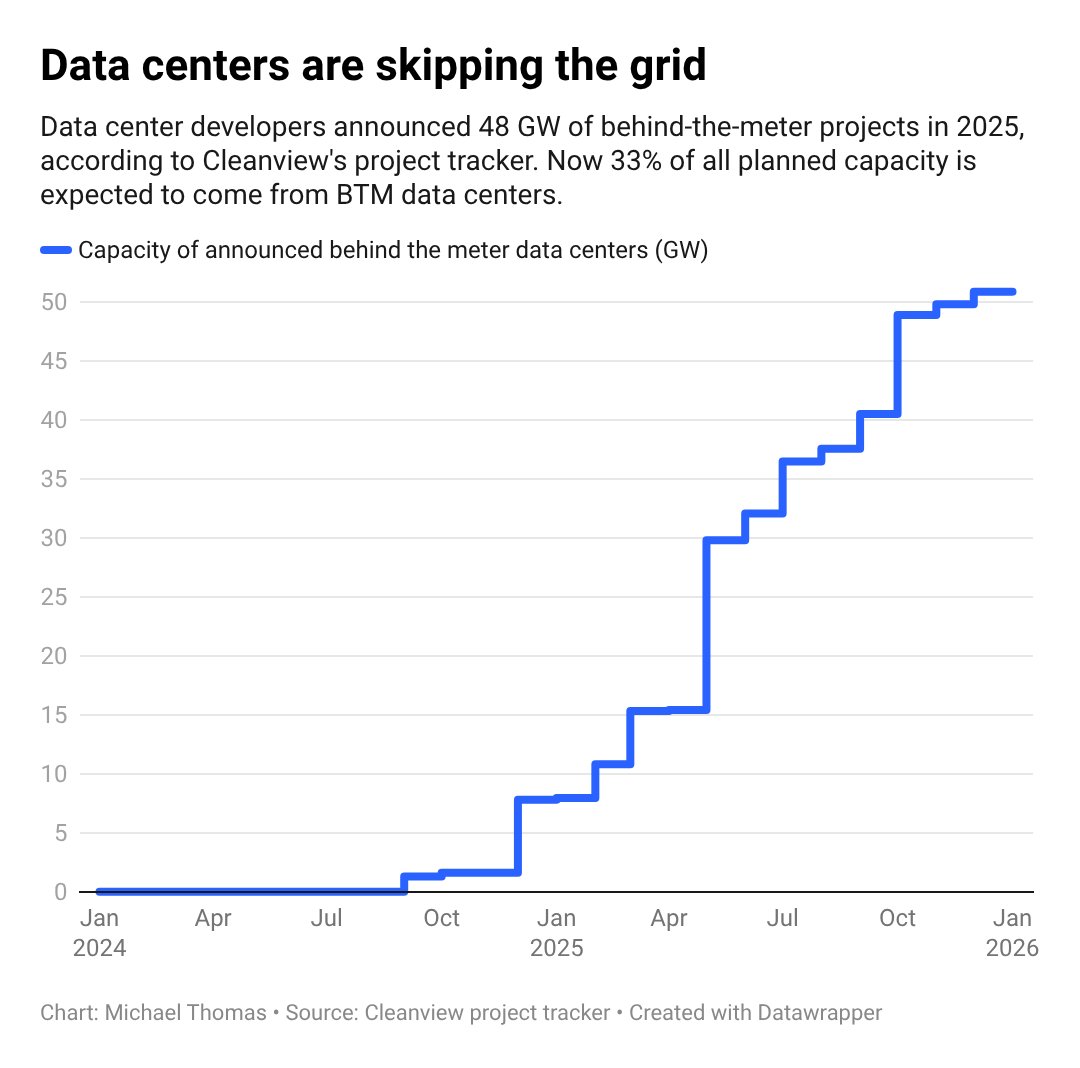
I'm working on a report about data center developers building their own power plants and this data shocked me: 48 GW of proposed data centers—roughly 33% of all planned capacity—now plan to skip the grid by building "behind-the-meter" projects. This is a very new trend. A little more than a year ago, virtually all data center developers planned to use the electric grid to power 100% of their projects. In December 2024, there was less than 2 GW of planned behind-the-meter data center capacity, according to our data center tracker at Cleanview. Then in 2025, developers announced roughly 40 projects that planned to skip the grid partially or entirely. Some of these projects will soon be home to America's largest fossil fuel power plants, like Homer City Energy Campus in PA—a proposed 4 GW+ natural gas plant that will send all of its power to an onsite data center. Other projects will use a combination of technologies—everything from solar, wind, batteries, and even nuclear. Natural gas is by far the most common, though. 72% of projects plan to use it. All projects are motivated by the same goal: getting their data center online as soon as possible. It can take as long as 7 years to connect a hyperscale data center to the grid in a place like Virginia. Building behind the meter power in a red state with lax regulations can get that time down to less than 2 years. But speed comes with a cost. Homer City's 4 GW project could soon become one of the largest single sources of carbon emissions in the country. At Cleanview we're tracking more than 30 projects that plan to use onsite gas with a combined 48 GW of capacity.
Michael Thomas tweet media
English
123
376
1.7K
657K
Brian Janous
Brian Janous@BrianJanous·
@ShanuMathew93 This is where a lot of these islanded datacenter concepts are going to really struggle. I don’t think many people have done the math on how costly it will be long term to not have a grid connection.
English
0
1
7
1.5K
Shanu Mathew
Shanu Mathew@ShanuMathew93·
Yep, assumes 100% utilization but power price assumptions are nominally meaningful $. It's small as % of the overall build costs at <5-10% of overall costs as I've laid out before (e.g., assuming $50M per MW fully loaded cost + ongoing annual costs) but it's no joke. "Small edges are material at scale: Even a tiny difference in power pricing creates a multimillion-dollar annual impact. A move of just 1 cent per kWh on a hyperscaler using 50MW of annual power for a facility is roughly $4.4mn a year. Across the 200GW of AI-driven extra power capacity that Bain has forecast will be needed globally by 2030, that same penny swing equates to nearly $18bn a year in costs. That’s why power cost optimisation and long-term energy contracts are critical for data centre economics."
Shanu Mathew tweet mediaShanu Mathew tweet media
English
4
8
102
83.6K
Brian Janous
Brian Janous@BrianJanous·
@ShanuMathew93 Two clarifications, no new baseload gas, there are some gas leakers in the capacity stack (though relatively low utilization). And it’s 3.5GW by 2030, not 2032 😊
English
1
1
7
1.1K
Shanu Mathew
Shanu Mathew@ShanuMathew93·
This pod was shared with amazing insight that Iron Mountain was deploying BESS at a site equivalent to the capacity of the entire DC market to shed entire load if they need to which got a fair amount of air time (rightfulyl so) But we also skipped over the fact @BrianJanous' Cloverleaf developed a 3.5GW Wisconsin data center site, fully grid-connected with full ramp through 2032, sold to Vantage. Diverse capacity stack with only 500MW nuclear relicensing, zero new gas plants proving gigawatt-scale AI loads viable via wind/solar/storage/VPP resources mix (if my sloppy podcast transcription was right). That's a huge deal that I feel like no one was talking about? gridforward.org/analyzing-data…
English
2
3
37
4K
Tyler Norris
Tyler Norris@tylerhnorris·
I appreciate @CJHandmer’s analysis, but this example is more aligned with my thesis than his. I maintain that off-grid data centers will remain an outlier, in part because it’s resource inefficient to build entirely redundant off-grid power systems when the existing system is so under-utilized and the primary constraint is 50-200hrs/yr during the periods of highest system stress.
Philip 🚀🌐 🏗🇺🇸@philip_the_dude

Casey Handmer nods.

English
10
7
106
49K
Brian Janous
Brian Janous@BrianJanous·
@Ben_Inskeep Look at the VLC Tariff that We Energies just filed in WI. Great example of how to ringfence datacenter related costs
English
0
0
1
60
Ben Inskeep
Ben Inskeep@Ben_Inskeep·
Data centers are driving the costs of energy, capacity, and new generation through the roof. These higher prices flow through to all consumers. Is there any model out there anywhere for isolating this impact and assigning the higher costs caused by data centers to data centers?
English
5
2
4
785
Brian Janous
Brian Janous@BrianJanous·
@johnarnold @ramez Right. What you really need is commitment from buyers and developers to build a fleet. I don’t think anyone wants to finance one. Ten is way easier than one. What we need are the largest buyers (tech companies) to align on a tech and go big
English
3
0
3
121
John Arnold
John Arnold@johnarnold·
@ramez The big challenge is whether private capital is willing to finance an unknown cost curve between FOAK and NOAK. I'm skeptical, but the counterpoint is that Boeing's breakeven point on the 787 was at >1000 units. This isn't exactly apples to apples comparison but in the ballpark.
English
5
0
12
1.2K
Ramez Naam
Ramez Naam@ramez·
Small Modular Nuclear *could* get cheap at scale, but it has a chicken / egg problem. Early units are super expensive (even more than below). Cost reductions are probably a bit faster than below, but you still need >200 built before they're competitive.
Shanu Mathew@ShanuMathew93

SMRs need costs to drop from ~$8,350/kW to $3,000-4,000/kW for competitiveness. Thundersaid analysis: even after 100 units with 10% learning rates, costs only fall to ~$4,000/kW. SMRs use 1.5-3x more materials/labor per MW than large reactors, making early deployment expensive.

English
14
5
50
8.9K
Brian Janous
Brian Janous@BrianJanous·
@ShanuMathew93 Exactly right. They are price inelastic but will become elastic for time to market.
English
0
0
0
57
Shanu Mathew
Shanu Mathew@ShanuMathew93·
I can't post full reports here but this comment was more about the flatness in y/y bid of DR into the capacity auction, not about it's long-term potential. Yes, data centers will be inflexible all else equal. If they want interconnect sooner, they are more likely to get creative.
English
2
0
6
754
Shanu Mathew
Shanu Mathew@ShanuMathew93·
Jefferies: "The lack of DR is indeed an angle we had not anticipated. Yes, eventually peak shaving and other demand responses to higher capacity prices will motivate customers, but we appreciate that new load (Data Centers) appears to be quite price inelastic. This equally has implications across the grid elsewhere in the country, where we've been expecting some degree of increase in DR participation more broadly."
Shanu Mathew@ShanuMathew93

Prices cleared at $329/MW-day price cap across all of PJM. The capacity price comps above the 2025-26 auction of $270/MW-day (which had risen ~9x from $29 in the auction prior to that). Clear signal the RTO is going to see i) bill increases (est. 1-5%) and ii) shouldn't accelerate retirements.

English
3
7
50
26.3K
Brian Janous
Brian Janous@BrianJanous·
@TheStalwart @TheStalwart , I don't know if you recall, but we talked about Jevon's Paradox in this context when I was on the pod last year. We were way ahead of the curve on this one :)
English
0
1
7
11.5K
Joe Weisenthal
Joe Weisenthal@TheStalwart·
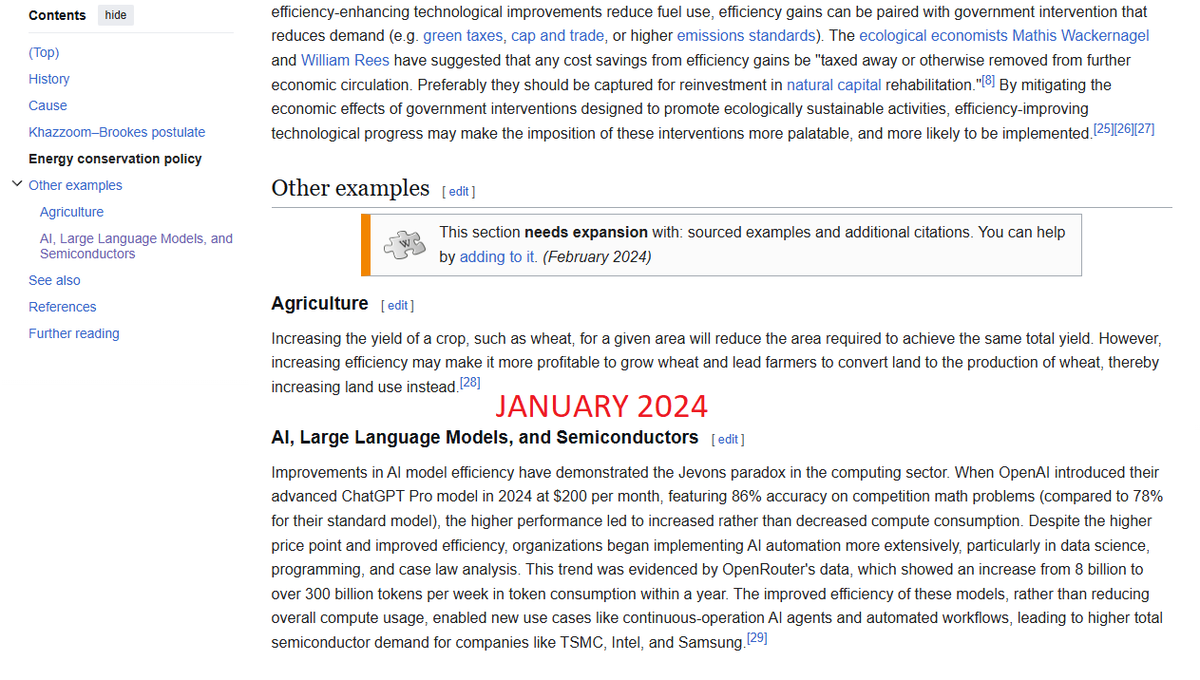
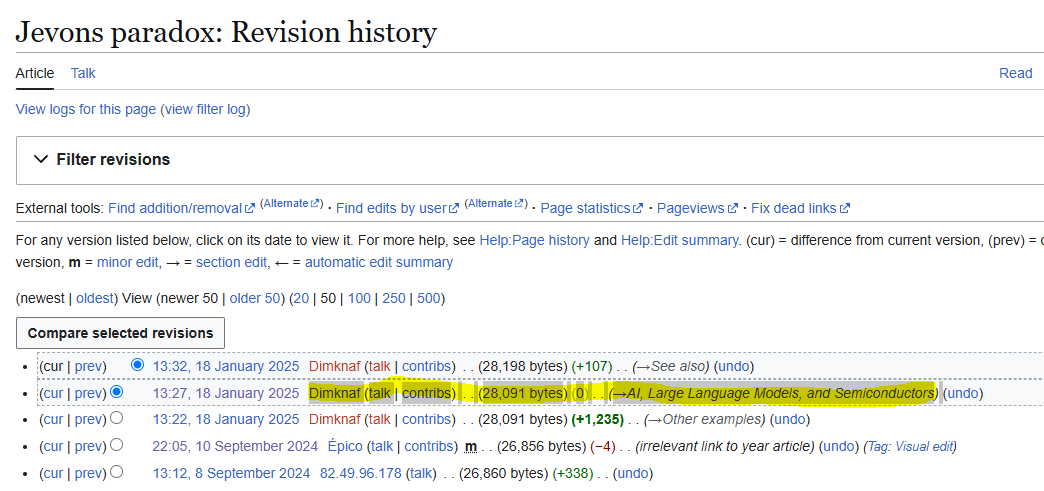
Here's a thing: The section on "AI, Large Language Models, and Semiconductors" was added to the Jevon's Paradox Wikipedia page just 9 days ago, by a user named Dimknaf. Someone with the same handle is on Reddit linking to that page to explain why chip stocks will be fine.
Joe Weisenthal tweet mediaJoe Weisenthal tweet mediaJoe Weisenthal tweet mediaJoe Weisenthal tweet media
English
50
75
753
111.2K
Brian Janous
Brian Janous@BrianJanous·
@TheStalwart @energybants there are a lot of nuclear cheerleaders, but cheerleaders actually never step foot on the playing field. We need more nuclear quarterbacks.
English
1
0
1
194
Joe Weisenthal
Joe Weisenthal@TheStalwart·
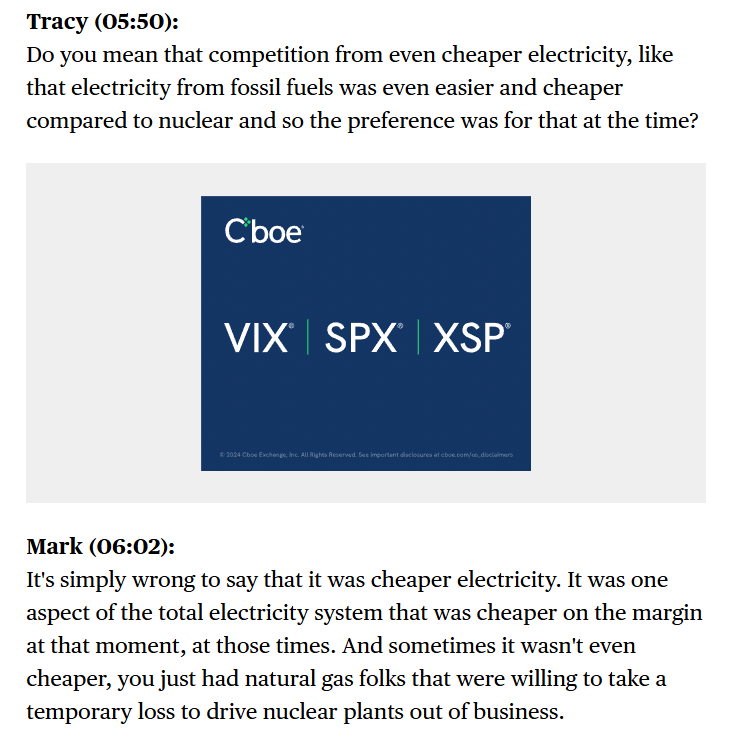
We interviewed @energybants earlier this year -- one of the most pro-nuclear people on here -- and as he described it, the structure of the existing energy markets (not stuff like endangered bees) is the major economic impediment
Joe Weisenthal tweet mediaJoe Weisenthal tweet mediaJoe Weisenthal tweet media
English
5
6
33
13.4K
Joe Weisenthal
Joe Weisenthal@TheStalwart·
A lot of people are, you know, "pro nuclear" in some sense. But I don't know what that means. We're not talking about rooting for a sports team here. What matters is whether you're pro the public investment and electricity market reforms that would enable nuclear to thrive.
Dan@robustus

@TheStalwart Musk is pro-nuclear. (as are most crypto people in my experience)

English
24
25
417
70.5K
Brian Janous
Brian Janous@BrianJanous·
@JesseJenkins @tylerhnorris Most of them would sign up for that at $100/MWh, but the the coordination between utilities, developers, and buyers is unfortunately lagging. Hopefully we can find a way to unblock it.
English
0
0
2
91
Jesse D. Jenkins
Jesse D. Jenkins@JesseJenkins·
@tylerhnorris So you want them to go buy AP1000s? I have been thinking about that this week. If they're willing to pay $100/MWh, and federal ITC now covers 30-40% of cost, you could probably build a bunch of AP1000s for less than that...
English
4
0
20
2.2K
Tyler Norris
Tyler Norris@tylerhnorris·
Every big tech company pursuing its own reactor, rather than forming a consortium to buy the only proven advanced US reactor (AP1000), *could* pay off. But setting aside 70yrs of operating LWR experience in pursuit of next-gen reactors is a significant gamble.
English
29
20
188
58.3K
Brian Janous
Brian Janous@BrianJanous·
@Stphn_Lacey Absolutely. Supply chain, labor availability, regulatory lag...the tech industry consistently underestimates the inertia of the power industy
English
1
0
4
210
Stephen Lacey
Stephen Lacey@Stphn_Lacey·
@BrianJanous Also, supply chain constraints may also hold back that much development.
English
1
0
2
200
Brian Janous
Brian Janous@BrianJanous·
@ShanuMathew93 My money is on 25-30GW. While there will be some colocation, eventually everyone will realize that the gas network is also a grid, with its own constraints and limitations and forego the fantasy that they're going "off grid"
English
1
0
2
142
Shanu Mathew
Shanu Mathew@ShanuMathew93·
Where are you shaking out in terms of GW added or data centers added? What’s the latest market pulse on what’s achievable? Any validity to the on-prem,co-located firm resources getting built for the purposes of bringing data centers online sooner? If gas, are these guys thinking about trunk lines they’d need to build?
English
1
0
0
75
Jesse D. Jenkins
Jesse D. Jenkins@JesseJenkins·
@rohanspatel Im 99% sure the US-made Toyota will use LFP batteries too. If you look at the battery plants Toyota is building in the US, they aren't solid state. All the solid state hype from Toyota seems to be a mirage....
English
2
4
36
2.5K