Yiddish Translator

35.3K posts

Yiddish Translator banner
Yiddish Translator

Yiddish Translator

@JewYid

Old postcards and letters in Yiddish? I can help. Check out new Yiddish words I find on Twitter at #NotInTheDictionary. Tweets in 🇬🇧 🇩🇪 and 💂


Boston, MA Beigetreten Haziran 2014
1.3K Folgt6.5K Follower
Angehefteter Tweet
Yiddish Translator
Yiddish Translator@JewYid·
pronouncing Christmas with a khet until they stop pronouncing Chanukkah with an H
English
32
112
952
89.8K
Steve McGuire
Steve McGuire@sfmcguire79·
“Canvas is down. You’ll have to finish the semester without it.” The faculty:
English
10
8
133
9.5K
The Jewish Meme Queen
The Jewish Meme Queen@jewishmemequeen·
Why did I think smorgasbord was a Yiddish word. It’s Swedish
English
12
0
45
3.3K
Vaad HaBadchanim
Vaad HaBadchanim@VaadHaBadchanim·
Your annual Lag BaOmer songs reminder: “Elo-KEE” – Doesn’t rhyme so well with “Yochai”, but isn’t kefira “Elo-KAI” – Rhymes perfectly with “Yochai”, but is absolute kefira.
English
11
2
53
8.1K
Yiddish Translator
Reminds me of chabad's way of saying upsherenish instead of upsherin. Extra syllable
English
0
0
0
128
Ben Greenfield
Ben Greenfield@benzgreenfield·
@Romy_Holland It’s a religious term, full of religious belief, for ppl who think they aren’t religious
English
1
0
8
275
Romy
Romy@Romy_Holland·
why does everyone use the term “late stage capitalism” all the time? how do they know which stage it is? we might still be early.
English
530
135
6.3K
479.5K
Narrative and Naysaying
Narrative and Naysaying@hahistorion·
Yes, what were the “third places” in the shtetl?
Rabbi Shais Taub@ShaisTaub

I don't live in Lakewood and I'm not familiar with the details of this situation. But the discussion around it has me thinking about a bigger issue that deserves a thoughtful conversation: What is the role of kosher restaurants in the frum world today? On one side, some argue that when security has to disperse groups of teens, we should ask: "Where exactly do we want these kids hanging out? In non-kosher places?" On the other side, many say that when a restaurant turns into a teen hangout, it becomes uncomfortable (even questionably inappropriate) for others to eat there. This touches on something larger. Sociologists call these kinds of spots "third places" — informal public gathering spots that are neither home (first place) nor work/school (second place). Neutral, public places where people can just show up. In a secular world that has largely lost these third places (think of the dead malls), the frum community is one of the last bastions where they still exist. Yet I wonder: Throughout our entire history, in Eretz Yisrael and across the diaspora for thousands of years, did we ever have official kosher "third places" that weren't shuls (or batei medrash)? In the alta heim there were things like the simple tehoyz (teahouse), but they hardly had official corporate hashgacha — such things simply did not exist. And the fabled kretchme seems to have been largely a non-Jewish scene even if managed by Jews. Does the Jewish community have a responsibility to create kosher third places for those who may be on the fringe of observance? If not a responsibility, then at least a right to do so? Or is the whole notion ill-advised? I have some thoughts of my own, but I'd love to hear some informed perspectives first.

English
2
0
2
502
🅿️
🅿️@the_P_God·
@TurnerNovak Still happens in Boston September 1st
English
2
1
57
4K
Turner Novak 🍌🧢
Turner Novak 🍌🧢@TurnerNovak·
One of the most insane things I’ve ever come across: Up until World War II, the majority of renters in NYC all moved at the same time on May 1st at 9am. This is because (almost) every housing lease in NYC expired on the same day. This goes back to an old Dutch tradition where every contract had an end date of May 1st. This was carried over when Dutch settlers immigrated to the US. And in 1820, the state of New York actually passed a law mandating that any housing contract without a specified term ended on May 1st. Many housing leases were just oral / handshake agreements and not actually written down, so they all had this same end date. At the height of Moving Day in the early 1900’s, it was estimated that over a million people in NYC all changed their residences at the same time. For context, NYC’s population was 1.5m in 1890 and 7.4m in 1940. Every year on May 1st, tens of thousands of farmers, etc came into NYC with wagons to make money moving people and their things around all day. There’s a few quotes about this on the Wikipedia page. A good one from 1832: “On the 1st of May the city of New York has the appearance of sending off a population flying from the plague, or of a town which had surrendered on condition of carrying away all their goods and chattels. Rich furniture and ragged furniture, carts, wagons, and drays, ropes, canvas, and straw, packers, porters, and draymen, white, yellow, and black, occupy the streets from east to west, from north to south, on this day. Every one I spoke to on the subject complained of this custom as most annoying, but all assured me it was unavoidable, if you inhabit a rented house. More than one of my New York friends have built or bought houses solely to avoid this annual inconvenience” Moving Day finally ended during WW2 because they couldn’t get enough able-bodied men in town to help move people. They were all away at war. These labor shortages + a general housing shortage + rent control finally put an end to NYC’s Moving Day.
Turner Novak 🍌🧢 tweet media
English
70
223
3.1K
801.4K
Yiddish Translator
Yiddish Translator@JewYid·
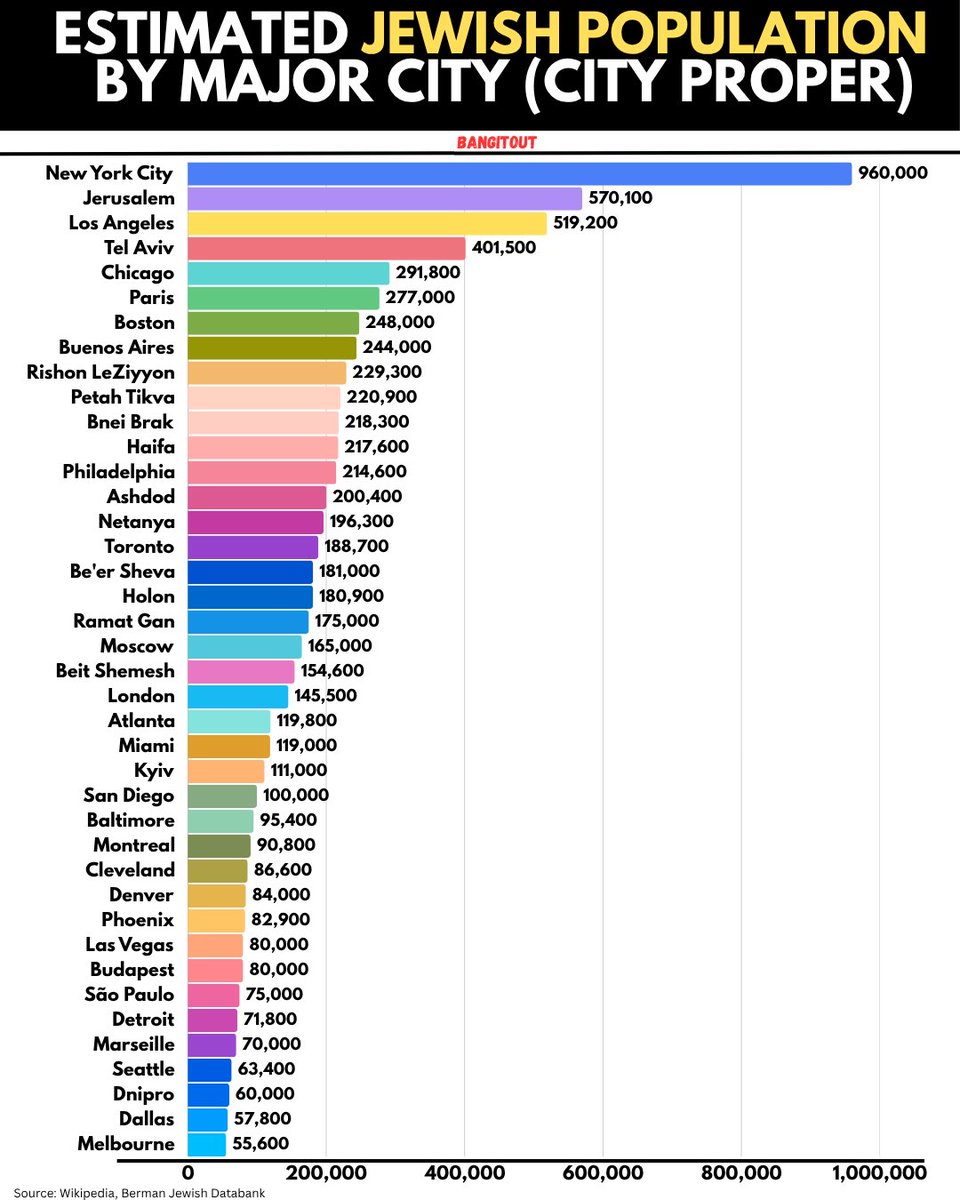
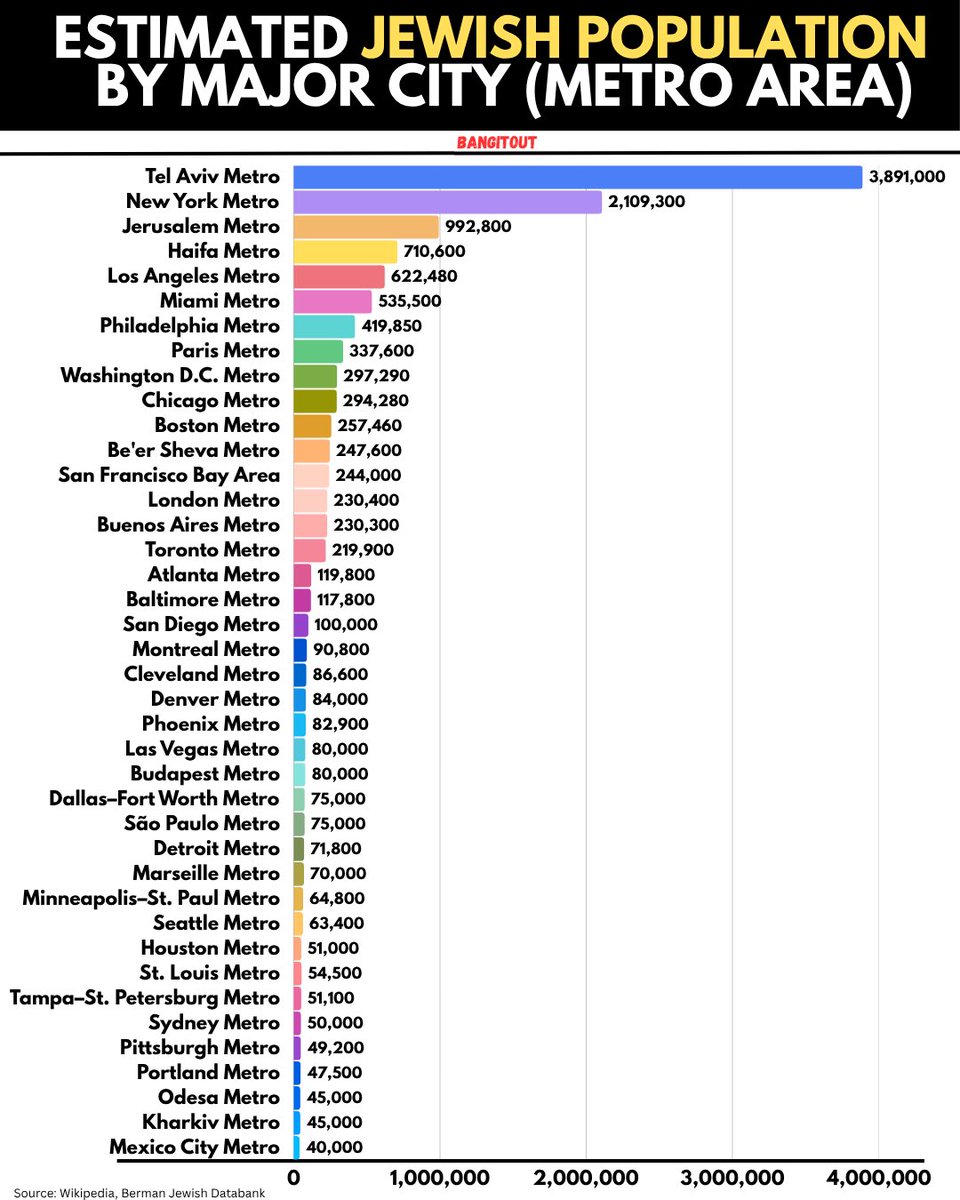
@bangitout makes no sense for Boston. Boston proper has 248K, but Boston metro has 258K? The latter number might be true. No way does Boston proper have 248K Jews. City of Boston only has 675K people total. The numbers here are way off
English
0
0
1
96
Yiddish Translator retweetet
Jewish History Status
Jewish History Status@jewishhistoryst·
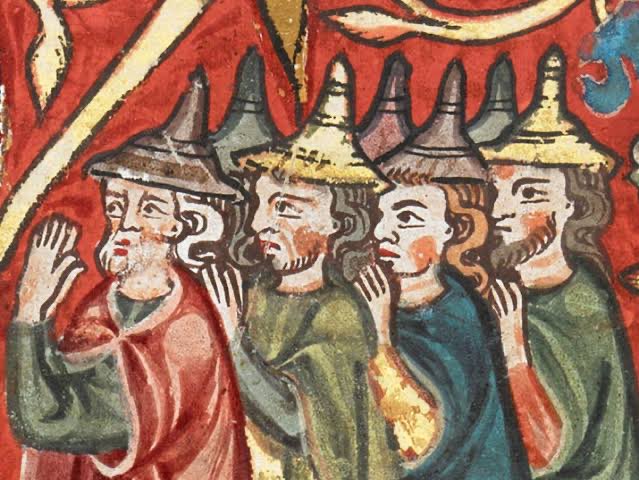
In 1267, an ecclesiastical synod held in Vienna, Austria, ordered all Jews to wear distinctive clothing. Specifically, the church mandated the wearing of the pileus cornutum (horned or pointed hat), a form of discriminatory attire meant to publicly identify Jews and separate them from the Christian population.
Jewish History Status tweet mediaJewish History Status tweet media
English
0
5
42
7K
Yiddish Translator retweetet
Mizrahi Bookstore
Mizrahi Bookstore@mizrahi_israel·
A Ladino archive from a rabbi who documented Salonica's Jewish history via it's cemetery just before the Nazis destroyed it, preserving the memory of 50,000 Jews before their murder. Read about it here: jewishpress.com/preserving-mem…
Mizrahi Bookstore tweet media
English
1
6
22
697
Yiddish Translator retweetet
Moshe Kolat
Moshe Kolat@moshe_kolat·
Ashkenaz- Yeshiva Sefardi- Yeshivah
हिन्दी
2
1
9
491
GB
GB@OnlyGB·
Being a reform Jew was weird. The rabbi would sing a song about Shabbat, which none of us held, and the lyrics were simply: Sha bat sha lom. Sha bat sha lom. Shabbat Shabbat Shabbat Shabbat Shalom. We might toss a “Hey!” in between the Shalom and the Shabbat.
English
69
12
567
79K