Larry Hartman 🇺🇸

668 posts

Larry Hartman 🇺🇸 banner
Larry Hartman 🇺🇸

Larry Hartman 🇺🇸

@LarryHartman

Navigating the intersection of Oil & Gas and Green Energy. CEO | Engineer | Occasional writer. Pro-energy, pro-reality, pro-common sense.

New Orleans, LA Beigetreten Mart 2009
649 Folgt274 Follower
Larry Hartman 🇺🇸
Larry Hartman 🇺🇸@LarryHartman·
With Iran threatening strikes on Saudi’s Yanbu pipeline, UAE’s Fujairah facility, and Houthi closure of Bab el-Mandeb, potentially knocking out 32% of global oil supply, maybe it’s time for an honest discussion. Despite bona fide efforts and trillions of dollars spent on the energy transition, hydrocarbons still power ~80% of the world’s energy, fuel transportation, produce fertilizers that feed billions, and enable plastics, steel, cement…you know, modern life. This should be a wake up call to all of us on the continued importance of HC’s, despite the need to transition. Vilifying them in the name of climate ‘justice’ ignores reality. We may learn this lesson the hard way.
English
1
3
8
777
HealthRanger
HealthRanger@HealthRanger·
If 32% of the global oil supply is taken offline for an extended period, this will translate into a minimum 16% global GDP reduction (extreme economic contraction) and will likely put around 700+ million human beings into extreme poverty / famine. Nearly 10% of the global population would face starvation. This appears to be the plan. Global depopulation.
Financelot@FinanceLancelot

Tasnim News Agency reports that Iran plans to strike the following targets, taking a total of 32% of global oil supply offline: The Yanbu pipeline in Saudi Arabia, used to bypass the Strait of Hormuz The Fujairah facility in the UAE, which is used to bypass the Strait of Hormuz Complete closure of the Bab el-Mandeb Strait by the Houthis

English
75
450
1K
52.1K
Larry Hartman 🇺🇸
Larry Hartman 🇺🇸@LarryHartman·
This makes a lot of sense in understanding the lack of action. (Not necessarily supportive or against such inaction)
James E. Thorne@DrJStrategy

Food for thought. Trump, Hormuz and the End of the Free Ride For half a century, Western strategists have known that the Strait of Hormuz is the acute point where energy, sea power and political will intersect. That knowledge is not in dispute. What is new in this war with Iran is that the United States, under Donald Trump, has chosen not to rush to “solve” the problem. In Hegelian terms, he is refusing an easy synthesis in order to force the underlying contradiction to the surface. The old thesis was simple: the US guarantees open sea lanes in the Gulf, and everyone else structures their economies and politics around that free insurance. Europe and the UK embraced ambitious green policies, ran down hard‑power capabilities and lectured Washington on multilateral virtue, secure in the assumption that American carriers would always appear off Hormuz. The political class behaved as if the American security guarantee were a law of nature, not a contingent choice. Their conduct today is closer to Chamberlain than Churchill: temporising, issuing statements, hoping the storm will pass without a fundamental reordering of their responsibilities. Trump’s antithesis is to withhold the automatic guarantee at the moment of maximum stress. Militarily, the US can break Iran’s residual ability to contest the Strait; that is not the binding constraint. The point is to delay that act. By allowing a closure or semi‑closure to bite, Trump ensures that the immediate pain is concentrated in exactly the jurisdictions that have most conspicuously free‑ridden on US power: the EU and the UK. Their industries, consumers and energy‑transition assumptions are exposed. In that context, his reported blunt message to European and British leaders, you need the oil out of the Strait more than we do; why don’t you go and take it? Is not a throwaway line. It is the verbalisation of the antithesis. It openly reverses the traditional presumption that America will carry the burden while its allies emote from the sidelines. In this dialectic, the prize is not simply the reopening of a chokepoint. The prize is a reordered system in which the United States effectively arbitrages and controls the global flow of oil. A world in which US‑aligned production in the Americas plus a discretionary capability to secure,or not secure, Hormuz places Washington at the centre of the hydrocarbon chessboard. For that strategic end, a rapid restoration of the old status quo would be counterproductive. A quick, surgical “fix” of Hormuz would short‑circuit the dialectic. If Trump rapidly crushed Iran’s remaining coastal capabilities, swept the mines and escorted tankers back through the Strait, Europe and the UK would heave a sigh of relief and return to business as usual: underfunded militaries, maximalist green posturing and performative disdain for US power, all underwritten by that same power. The contradiction between their dependence and their posture would remain latent. By declining to supply the synthesis on demand, and by explicitly telling London and Brussels to “go and take it” themselves, Trump forces a reckoning. European and British leaders must confront the fact that their energy systems, their industrial bases and their geopolitical sermons all rest on an American hard‑power foundation they neither finance nor politically respect. The longer the contradiction is allowed to unfold, the stronger the eventual synthesis can be: a new order in which access to secure flows, Hormuz, Venezuela and beyond, is explicitly conditional on real contributions, not assumed as a right. In that sense, the delay in “taking” the Strait, and the challenge issued to US allies to do it themselves, is not indecision. It is the negative moment Hegel insisted was necessary for history to move. Only by withholding the old guarantee, and by saying so out loud to those who depended on it, can Trump hope to end the free ride.


English
1
0
0
39
Tracy Shuchart (𝒞𝒽𝒾 )
Congrats California for creating a hostile business environment that has caused PSX and VLO refining to leave your state during a time when we need domestic refining capacity the most.
English
27
58
491
79.1K
Larry Hartman 🇺🇸 retweetet
US Oil & Gas Association
@EnergyAbsurdity pointed out to me this am: "The blowout between Brent - at $115 - and WTI - at $96 - is directly thanks to America's extremely high degree of energy security. U.S. consumers are paying about $3.80 for a gallon of gas today, but Germans are forking over $8/gallon. Drivers in Asia are paying more than that. It's all thanks to two factors: 1) The Shale Revolution, and 2) An Energy Dominance agenda."
zerohedge@zerohedge

And now we have three oil markets: Asia (Oman oil at $167), Brent ($113) and US (WTI $97)

English
11
54
273
9.7K
Honey 🛼
Honey 🛼@honeymoon250·
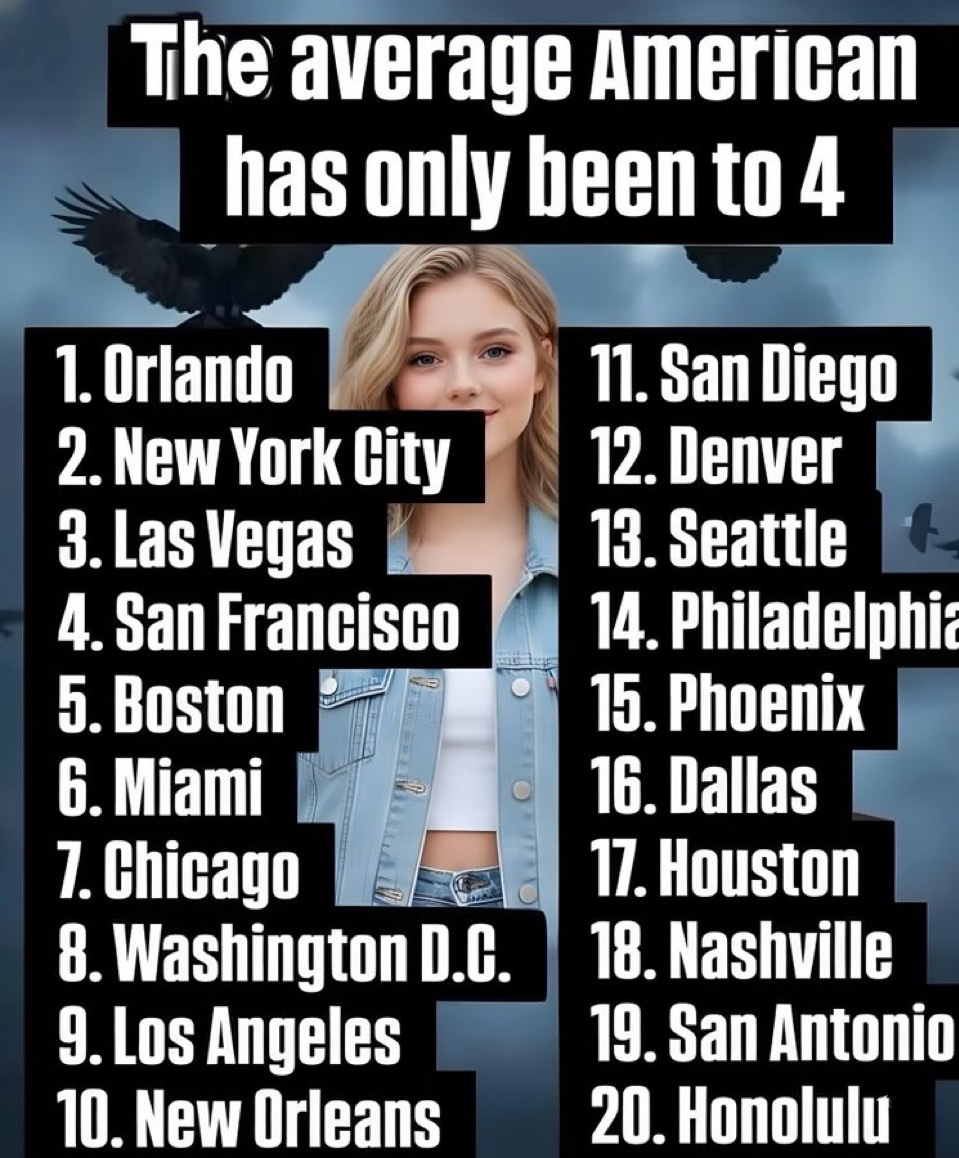
I've been to 3, you ?
Honey 🛼 tweet media
English
7.6K
149
1.8K
590.1K
Larry Hartman 🇺🇸 retweetet
Hedgie
Hedgie@HedgieMarkets·
🦔 Just commenting here to explain what this chart actually shows, because it's one of the most significant economic stories that's not getting enough attention. China's vehicle exports went from basically zero to 7 million units, and this isn't normal market competition. From 2009-2023, China's government invested $230 billion into the EV industry, with spending accelerating three-fold in recent years. Over 6.6 million vehicles received subsidies up to $2,800 each in 2024 alone. The Overcapacity Reality Chinese automakers are using only about half their production capacity. With 200 EV producers competing for a domestic market that can't absorb their output, exports become the relief valve. When you have that much excess capacity funded by government subsidies, below-cost selling is inevitable. Why This Matters for Everyone This isn't just about cars. It's about industrial strategy. China used similar tactics with solar panels and now controls 96% of EU imports. The goal isn't profit maximization, it's market domination followed by pricing power once competitors are eliminated. The Real Risk When foreign governments subsidize industries specifically to eliminate competition, they create strategic dependencies. Once domestic competitors shut down, those artificially low prices tend to disappear. What the Tariff Response Means The US imposing 100% tariffs and EU imposing 37.6% tariffs isn't protectionism, it's recognition that you can't compete against treasuries. No private company can match state-sponsored below-cost pricing indefinitely. This is economic statecraft disguised as trade.
English
24
59
303
78.2K
Larry Hartman 🇺🇸
Larry Hartman 🇺🇸@LarryHartman·
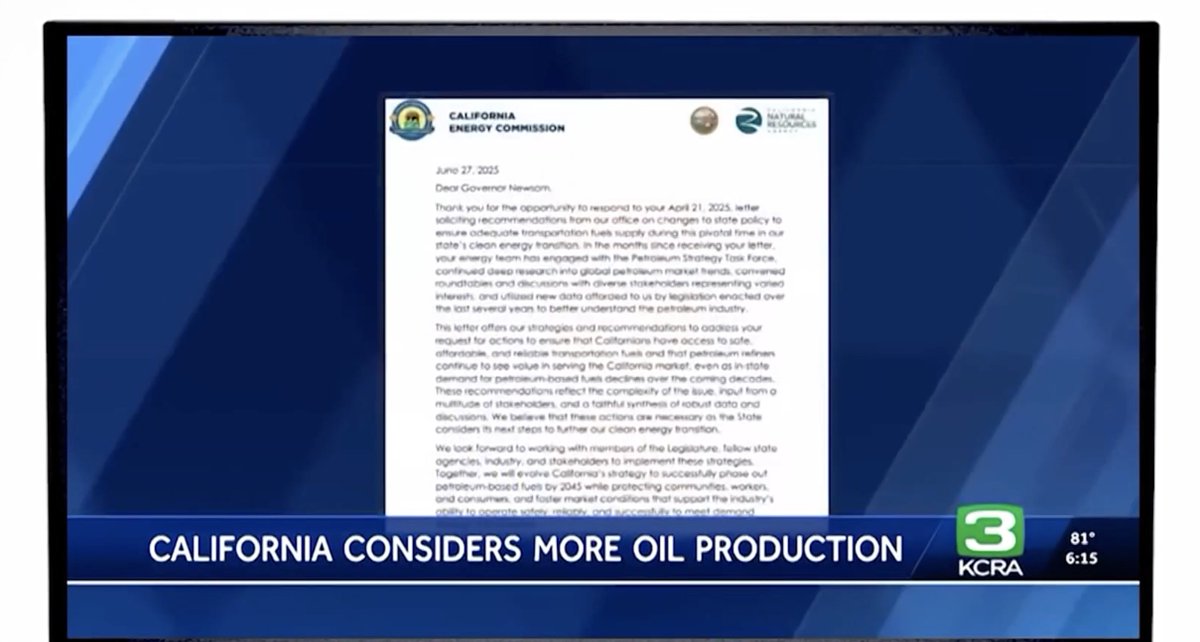
Basra burns while California plays climate hero on borrowed emissions. Local production shuts down. Seaborne crude flows in. The result? More flaring. More emissions. Just somewhere else. The Smoke and the Mirror From my new Substack: Rational Emissions (Link in comments)
Larry Hartman 🇺🇸 tweet media
English
2
0
5
587
Larry Hartman 🇺🇸
Larry Hartman 🇺🇸@LarryHartman·
Have another article about 75% done. Lots of other ideas to flesh out!
English
1
0
1
37
Larry Hartman 🇺🇸
Larry Hartman 🇺🇸@LarryHartman·
I'm trying a new thing. I just wrote my first article: “Silicon Sickness” It’s about what happens when a country trades factories for iPhones, and engineers for influencers. Please give it a read...and remember to be nice. I am an enginerd, after all! Link in the comments.
Larry Hartman 🇺🇸 tweet media
English
0
0
2
71
Larry Hartman 🇺🇸 retweetet
Bushels 🌾 Barrels 🛢 & Bullion 💰
It’s honestly so fitting that the US’s leverage over China is completely undermined by critical minerals. For decades the West has shunned the resources industry, despite its warnings, starving firms of capital and denying permits. Complacently relying increasingly on China while they built mines across LATAM and Africa. @robert_ivanhoe has said wars will no longer be fought over oil but instead critical minerals. It’s already happening, actually. And it’s only going to get worse.
English
6
19
81
15.3K