

Nobiha
192 posts



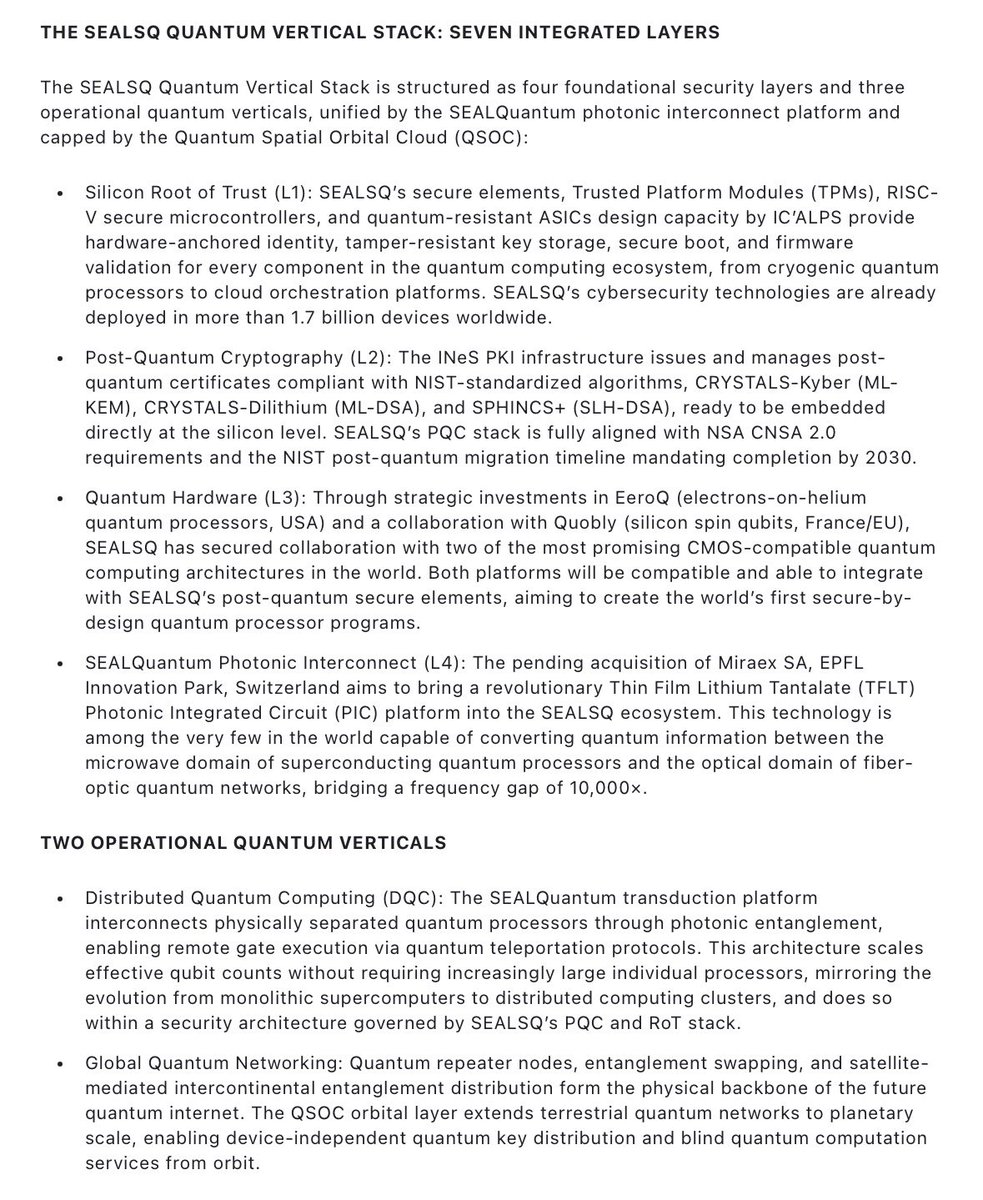
$LAES $IONQ $RGTI $QBTS $RKLB | SEALSQ reveals its Quantum Vertical Stack, a 7 layer ecosystem from silicon to space.
With a $100B SpaceX launch in June and 100 satellites planned, the QSOC platform delivers quantum secure cloud services globally.

English
English

Yes, WECAN is an important part of the bigger picture.
WISeSat adds the communication layer.
SEALSQ adds the post-quantum hardware layer.
WECAN adds the compliance and identity layer.
And Hedera as part of the trust / integrity / DLT layer across that architecture.
That is exactly why the broader architecture around Hedera looks more interesting than many people realize.
English
🚨$HBAR IS GOING TO SPACE 🚀
Massive news as @SEALSQcorp (who are built on @hedera) have completed a pilot phase with THE SPACE COMMAND OF THE SWISS ARMED FORCES!
The pilot proved that SEALSQ tech can support a future secure space communication network. Stage 2 is set for Q4

English
Something much bigger may be taking shape here around WISeSat, SEALSQ, the Swiss Armed Forces, and Hedera.
And that is why I think people should pay attention.
This is not random speculation from the community.
In a December 2025 SEC filing tied to the WISeSat transaction, WISeSat’s overview explicitly says the satellite platform is designed with support for Hedera distributed ledger technology. The same filing says the nanosatellites are built for real-time, quantum-resilient communication and data integrity across a decentralized network.
That already makes the @hedera angle very real.
But it goes further.
In September 2025, @SEALSQcorp said WISeSat satellites are intended to enable secure satellite-to-satellite transactions powered by @Sealcoin_QAIT decentralized trust management using Hedera distributed ledger technology. The release also said upcoming satellites were planned to include deeper Hedera integration and expanded use of SEALCOIN for secure machine-to-machine transactions and data exchange.
And this does not look like a one-off mention.
Back in December 2024, SEALSQ announced a strategic partnership with Hedera around next-generation post-quantum semiconductors, framing Hedera as part of a longer-term quantum-resistant infrastructure push. SEALSQ later also said it was collaborating to integrate the QS7001 secure chip into Hedera’s ecosystem to strengthen authentication and network-level security.
Now the story becomes even more serious.
SEALSQ, @WISeKey and @WISeSatSpace have advanced their collaboration with the Swiss Armed Forces around quantum-secure satellite security. According to SEALSQ, that work now integrates post-quantum semiconductors together with WISeKey’s Swiss Root of Trust to deliver quantum-resilient encryption and authentication for satellite-to-ground and inter-satellite communications.
And the military angle is not small.
SEALSQ says the collaboration is aimed at secure, sovereign satellite-based communications, reconnaissance and navigation systems, while also extending into LEO-IoT and Internet of Battlefield Things applications.
Then came another important update.
WISeSat and the Swiss Space Command of the Swiss Armed Forces said they completed the pilot phase of their partnership and are now preparing a next-generation WISeSat 6U mission planned for November 2026. They also said the first 15 next-generation 6U satellites planned by 2027 are intended to form the initial building blocks of WISeSat’s Quantum Space Orbital Cloud roadmap.
That matters because even though this latest Swiss Armed Forces update does not repeat the Hedera line directly, it fits perfectly with what the SEC filing already said about WISeSat technology being built with support for Hedera DLT.
Put it all together and the picture gets a lot clearer.
Post-quantum chips.
Trusted machine identity.
Swiss Root of Trust.
WISeSat.
SEALCOIN.
Sovereign satellite security.
And Hedera-backed integrity for data and transactions in orbit.
SEALCOIN is built on Hedera and uses Hedera as part of its trust and transaction layer.
That is what makes this story so interesting to me.
It is not just about satellites.
It is about the emergence of a real infrastructure stack where post-quantum hardware, secure identity, defense-linked satellite communications, and distributed ledger technology begin to converge.
And if that stack keeps developing, this could become a very serious real-world infrastructure story.

Carlos Creus Moreira@CreusMoreira
WISeSat.Space and Swiss Space Command of the Swiss Armed Forces Complete Pilot Phase and Prepare Next-Generation WISeSat 6U Mission Planned for November 2026 The first 15 next-generation 6U satellites planned by 2027 are intended to form the initial elements of WISeSat’s Quantum Space Orbital Cloud (“QSOC”). WISeSat is expected to own and operate these satellites and the associated space and ground segment in cooperation with the Swiss Space Command as part of its program architecture, while SEALSQ is expected to contribute its quantum and cybersecurity technology stack across selected constellation resources and capabilities. uk.finance.yahoo.com/news/wisesat-s…
English

@Sealcoin_QAIT 프로젝트 배경
SEALSQ Corp (NASDAQ: LAES)는 양자 내성 암호화 솔루션 전문 기업
Sealcoin은 SEALSQ의 양자 보안 기술을 IoT/AI 에코시스템에 적용한 프로젝트
2025년 7월, SEALSQ는 암호화폐 투자 펀드 $30M 조성 발표 (이후 $200M으로 확대)
한국어

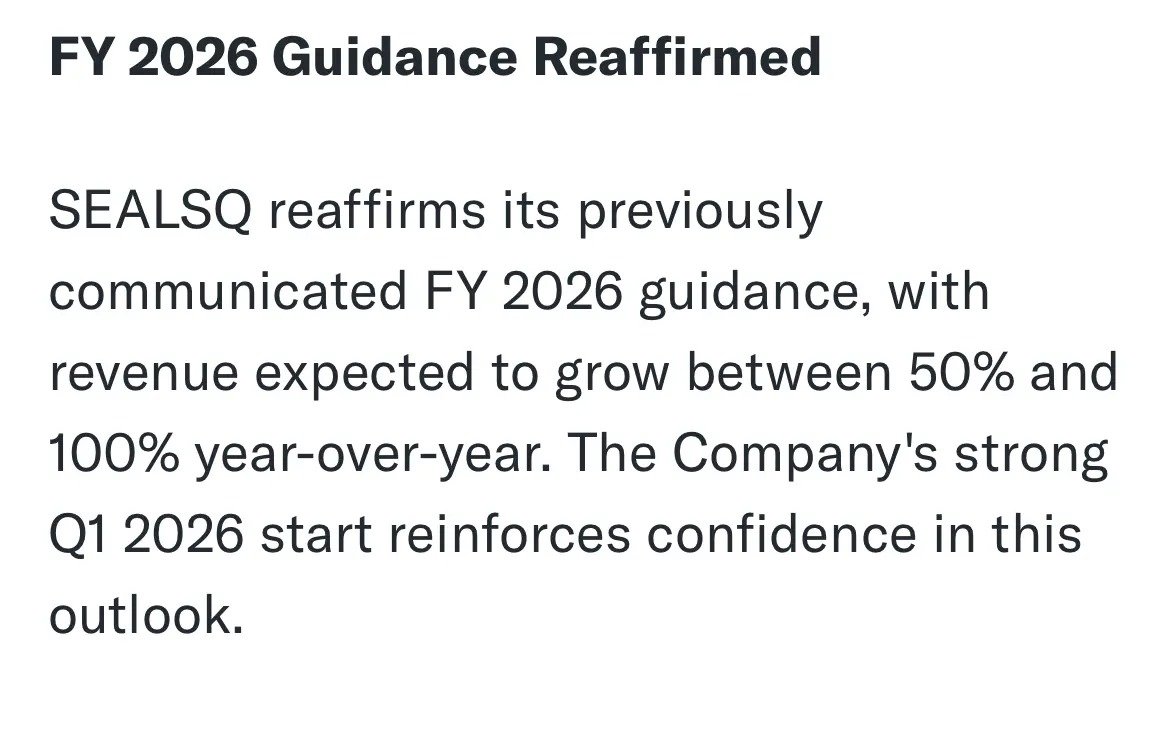
After hitting a new 52-week low of $2.02, I started a position in $LAES. Preliminary revenue for Q1 2026 reached $4.1 million, more than tripling the previous year's figures. SEALSQ reported over $525 million in cash.
English
@CodePerelman The technical vision may sound compelling, but please look at the financial reality of $LAES. Management uses these PQC narratives to justify endless dilution—over $400M recently—with ZERO SEC-filed large-scale commercial contracts. It's just paid PR, not revenue
@c
English

Carlos, your positioning of SEALSQ at the intersection of semiconductors, identity, and PQC is strategically correct — especially in a world moving toward sovereign digital trust stacks.
One dimension that may expand this thesis is moving beyond canonical PQC assumptions into non-canonical cryptographic constructions where security is not inversion-based but identification-constrained.
I’ve been developing a mock theta–based framework in which the public transcript is intentionally underdetermined, and security derives from the attacker’s inability to reconstruct the underlying analytic object — even with quantum resources.
This is not a replacement for NIST primitives, but potentially a complementary layer for identity and hardware-rooted trust, particularly in adversarial geopolitical environments.
If relevant, I can share a concise technical note. I believe this aligns with your long-term vision of trust as infrastructure.
Carlos Creus Moreira@CreusMoreira
The CNBC roundtable on Quantum and Quantum Security at Davos 2026, bringing together leadership from Cisco, IonQ, and SEALSQ, converged on a clear and urgent message: quantum computing and cybersecurity must evolve together, starting now—not sequentially. Participants emphasized that the rapid acceleration of quantum computing is already creating a structural risk for today’s digital infrastructure, as most global communications still rely on cryptographic systems that will become vulnerable. The concern is not hypothetical; adversaries can already capture encrypted data today with the intention of decrypting it once quantum capabilities mature. This “record now, decrypt later” scenario makes the transition to quantum-resistant security an immediate priority rather than a future upgrade. A central point of agreement was that security must be embedded directly into the architecture of quantum systems. It cannot be treated as an external layer added after deployment. This applies not only to protecting data, but also to safeguarding the integrity of quantum machines, their control systems, and the intellectual property behind them. In this context, trust becomes a foundational requirement for scaling quantum technologies. The discussion also highlighted the need to accelerate adoption of post-quantum cryptography while maintaining flexibility through crypto-agility, allowing systems to evolve as standards mature. A hybrid approach combining new cryptographic algorithms with complementary technologies is seen as the most pragmatic path forward. Another critical dimension raised was the importance of hardware-based security. Reliance on software alone is insufficient in a quantum era; security must be anchored in semiconductors, secure elements, and trusted infrastructure layers. This reflects a broader shift toward end-to-end security ecosystems, where protection is embedded from the chip level up to networks and applications. Finally, the roundtable underscored the geopolitical implications of quantum security. Control over cryptographic infrastructure is increasingly tied to digital sovereignty, with governments and enterprises seeking independence, resilience, and trust in their systems. In this environment, quantum security is not only a technical challenge but also a strategic imperative shaping global competitiveness. The overall conclusion was unequivocal: the quantum era will not be defined solely by computational breakthroughs, but by the ability to build secure, trusted systems from the outset. @SEALSQcorp youtube.com/watch?v=zjSl_c…
English

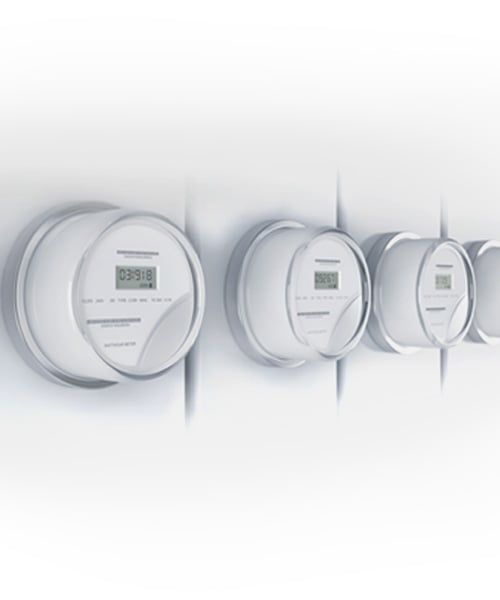
Smart meters last 10–20 years. Their security must too. 🔌🔐
WISeKey subsidiary @SEALSQ delivers:
✅ Field-proven PKI & secure hardware today
✅ Post-quantum capabilities (QS7001) now
✅ Seamless path to quantum-safe grids
Learn more ↓
sealsq.com/applications/s…
#PQC #SmartGrids

English
@du_sheng17644 @CreusMoreira 🇨🇭 HQ: info@sealsq.com / +41 22 594 3000
🇺🇸 US IR: lcati@theequitygroup.com / +1 212 836-9611
Demand accountability. Stop the wealth destruction!
English

SEALSQ stock volatility surges. 🚨 Insiders sold 5.4M shares in the past week, sparking investor concerns about the company's future prospects. Will SEALSQ recover or decline? #StockMarket #InvestorConcerns
English
@kaynessemicon Behind Carlos Moreira’s flashy PR: SEALSQ ($LAES) is running a $125M dilution program on retail investors. Analysts cite accelerated cash burn and severe warrant overhang. This isn't tech innovation; it's a machine built to dilute shareholders to fund operations
@CreusMoreira
English

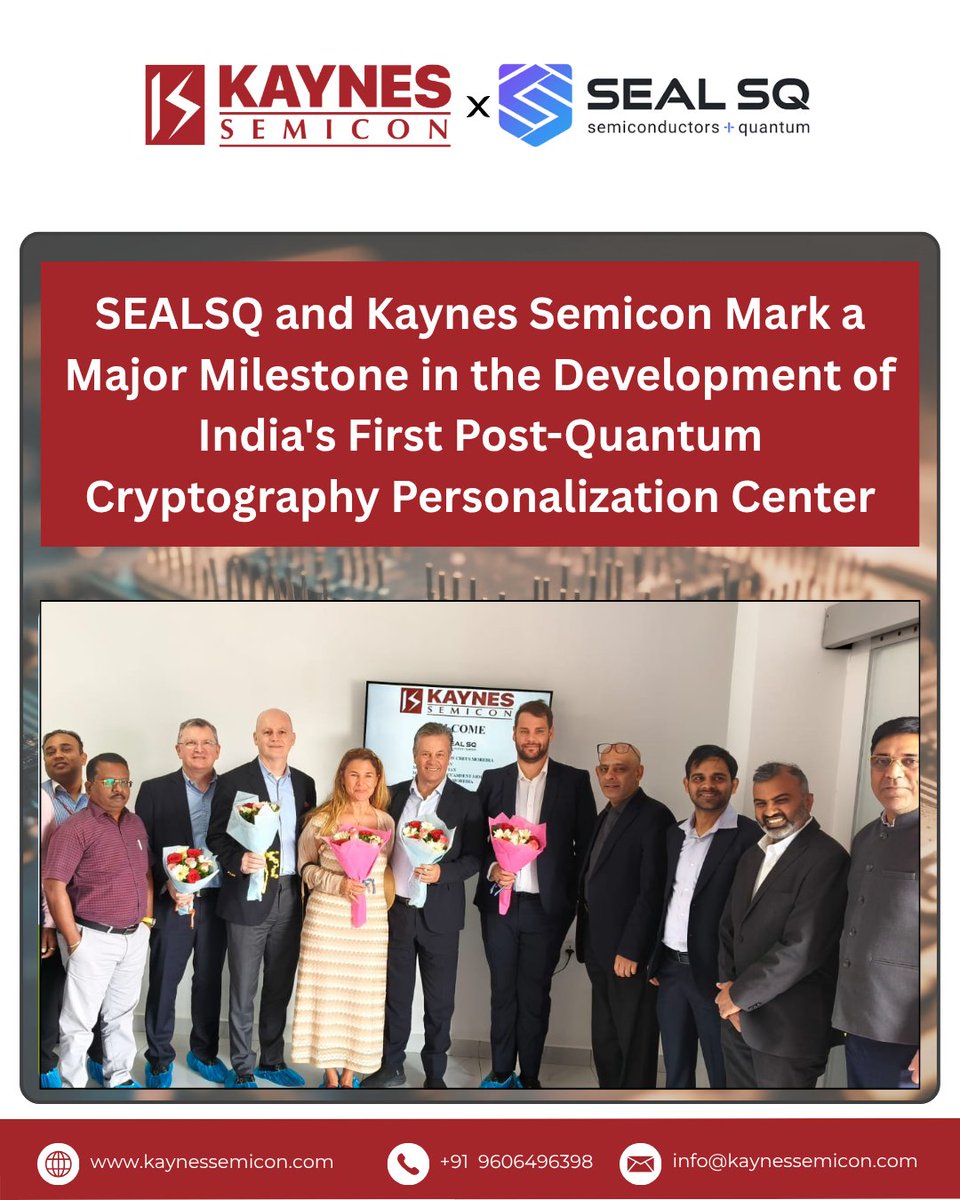
A significant step forward in India’s semiconductor and cybersecurity journey.
At the inauguration of @kaynessemicon OSAT facility in Sanand, we also marked the integration of India’s first Post-Quantum Cryptography (PQC) Personalization Center, in collaboration with SEALSQ.
English


※양자 해킹 시대, 대비하고 있나? $SEALSQ(LAES)
보안 칩 인증 로드맵 총정리
최근 보안 업계에서 가장 핫한 화두는
'양자 컴퓨터가 나오면 기존 암호가 다 뚫린다'는 공포임.
이걸 막으려고 전 세계가 '양자 내성 암호(PQC)'로
갈아타는 중인데, 국내엔 잘 안 알려진 $SEALSQ(LAES)
가 최근 꽤 의미 있는 성적표를 던졌음.
"방패 검증 완료" – CC EAL 5+ 통과
얘네 보안 칩(QS7001)이 최근 '오류 주입'이랑
'사이드 채널' 테스트를 통과함.
비유하자면:
금고를 팔기 전에 망치로 때려보고(오류 주입),
청진기 대서 번호 맞추는 소리 들리는지(사이드 채널)
확인했는데, "절대 안 뚫림" 판정받은 셈.
자회사 IC'Alps도 사이트 인증 갱신 성공하면서
칩 설계부터 제조까지 보안 프로세스가 탄탄하다는
걸 증명함.
2026년까지의 '양자 방패' 로드맵 공개
단순히 "우리 잘해요"가 아니라 구체적인 타임라인을
깠음. 이게 핵심임.
QS7001 V1 & TPM 183:
올해 3월에 이미 생산 샘플 나왔고, 인증 절차 밟는 중.
QS7001 V2:
7월에 샘플 나오고 9~10월에 하드웨어 평가 보고서랑
인증 마무리 단계 들어감.
중요한 건 2027년 1월:
미 국가안보국(NSA)이 정한 CNSA 2.0 가이드라인
마감 시점이 이때임.
$SEALSQ 는 2026년 말까지 모든 인증(FIPS, TCG 등)을
끝내서 '규제 떡상' 시기를 정확히 정조준하고 있음.
시장의 반응과 냉정한 현실
뉴스 뜨고 거래량이 평소보다 46%나 터졌음.
시장이 이 인증 뉴스를 단순한 찌라시가 아니라
실질적인 매출 기반으로 보고 있다는 증거.
다만, 주가는 여전히 52주 고점 대비 70% 넘게
빠진 상태고 200일 이동평균선(4.07달러) 아래에 있음.
한줄평:
기술력은 "찐"인데 주가는 아직 "바닥 기는 중".
2026년 인증 스케줄대로 매출이 찍히기 시작하면
'퀀텀 점프' 가능성이 보이지만, 지금은 인증 마일스톤
하나하나 체크하며 길게 봐야 할 시점임.
※요약
"창(양자 컴퓨터)이 나오기 전에 방패(PQC 칩)를
제일 먼저, 제일 튼튼하게 만들어서 전 세계 정부와
대기업에 납품하겠다"는 의지가 돋보임.
보안 칩은 한 번 채택되면 바꾸기 힘들어서 선점 효과가
무서운데, 그 선점 경쟁에서 앞서나가고 있는 건 팩트인 듯.
#SEALSQ #LAES #양자컴퓨팅 #양자보안 #PQC

한국어

$LAES to 100🚀🚀🔥🔥
SEALSQ is expanding massively! 🚀
✅ New factory opened in India 🇮🇳
✅ Massive $200M pipeline confirmed
✅ Market leader in PQC with the Q701 chip
✅ Indian government contract is the logical next step
If you're betting on Quantum Security, $LAES is the one to watch. The growth engine is firing on all cylinders! 📈
#SEALSQ #PQC #CyberSecurity #Stocks #QuantumComputing #Semiconductors #LAES #bullisheveryday

English
@kastriooot8 3. Certification: The QS7001 chip is NOT fully certified yet. Based on their March 2026 roadmap, FIPS 140-3 and Common Criteria certifications are still pending, targeted for Q4 2026.
Do your own research on the balance sheet, not just the CEO's resume
English
I completely disagree. Why a scam? You could say the company could secure more contracts, but it’s not a scam. Have you looked into the CEO? Just Google “Gemini”—that’s what comes up:
'Carlos Moreira is a reputable tech pioneer who founded WISeKey in 1999, leading it for over 25 years. His credibility stems from a background as a UN expert and his regular involvement with the World Economic Forum. In 2023, he expanded his leadership by taking SEALSQ public on the Nasdaq to focus on semiconductors. As CEO of both entities, he operates under strict regulatory standards, ensuring high corporate transparency. His long-term tenure and institutional ties confirm his status as a serious and trusted industry leader.'
Ultimately, everyone has to decide for themselves. I’m convinced that the 200 million pipeline figure is accurate. Do your own research.
English
$LAES to 100🔥🔥🚀🚀
Things are heating up for $LAES (SealSQ) tomorrow! 🚀
SEALSQ is releasing final 2025 numbers, but the real story is the massive scaling ahead for 2026:
📈 Growth Turbo: 2026 revenue guidance confirmed at $27M – $36M (+50-100% YoY)!
📊 Gigantic Pipeline: Active order pipeline of over $200M through 2028!
💰 War Chest: Over $530M in cash ready for aggressive expansion & M&A.
🔒 Tech Leader: Upcoming launch of the QS7001 Post-Quantum chips.
A true diamond in the rough in the quantum segment with the photonic acquisition (Miraex)! 💎🙌
#SEALSQ #LAES #QuantumComputing #CyberSecurity #Miraex #Photonic #PQC #bullisheveryday
SEALSQ@SEALSQcorp
Post-quantum security isn’t just a roadmap. SEALSQ focuses on what can be deployed today: integrated hardware + software security for connected devices. Because preparing for quantum risk starts at the root of trust : in silicon. sealsq.com/?utm_medium=so… #Cybersecurity #PostQuantum #IoTSecurity #Semiconductors #LAES
English
@kastriooot8 2. Revenue: The '$200M pipeline' is just an estimate of potential opportunities. According to SEALSQ’s own PR (Feb 2026), actual revenue for the new QS7001 post-quantum chip is not expected until the 'latter part of 2026.' Current quantum revenue is $0.
English
@kastriooot8 A background at the WEF doesn't change SEC filings. Here are the actual facts about $LAES:
1. Dilution: Management raised over $80M in 2024 alone and filed a $125M shelf registration in late 2024, continuously crushing shareholders with ATM and direct offerings
English

$SEALSQ x 일본 에코넷: 스마트홈 보안 표준의
'게임 체인저' 등장
1. ECHONET 컨소시엄이 도대체 뭐임?
쉽게 비유하자면, "가전제품계의 UN" 혹은
"공용어 번역기"라고 보면 됨.
일본은 스마트 홈 강국임.
파나소닉, 미쓰비시, 도시바 같은 거물들이
다 여기 속해 있음.
문제는 각자 만드는 기기들이 말이 안 통하면
사용자가 불편함.
그래서 "우리 다 같이 ECHONET Lite라는
공용어를 쓰자"라고 약속한 모임임.
특히 일본 내에서는 이 표준이 없으면 스마트
가전이나 에너지 관리 시스템(HEMS) 시장에
명함도 못 내미는 수준임.
2. SEALSQ는 여기서 무슨 역할을 함?
$SEALSQ 는 반도체 설계와 보안(PKI, 암호화)에
특화된 기업임.
이들이 합류했다는 건 단순 가전 연결을 넘어
'보안의 규격화'를 맡겠다는 의미임.
비유:
예전에는 가전제품끼리 대화할 때 옆집에서
엿들을까 봐 걱정했다면, 이제 $SEALSQ 가
"지문 인식 기능이 달린 특수 보안 통신망"
을 깔아주는 격임.
스마트 홈은 개인의 사생활
(언제 불을 끄는지, 집에 누가 있는지 등)과
직결되기에 보안 칩과 인증 기술이 필수적인데,
$SEALSQ의 하드웨어 보안 모듈(HSM) 기술이
여기에 녹아들 예정임.
3. 왜 지금 이 시점에 합류했나? (Matter와의 연동)
최근 글로벌 스마트 홈 트렌드는 'Matter(매터)'
라는 표준으로 통합되고 있음.
ECHONET은 일본 내수용 느낌이 강했지만,
최근 Matter와 협력하며 글로벌 호환성을 키우고 있음.
$SEALSQ 는 이미 Matter 인증 분야에서
앞서가는 기업임.
따라서 일본 가전 업체들이 글로벌
시장(미국, 유럽 등)으로 나갈 때, $SEALSQ 의
칩을 쓰면 '보안'과 '글로벌 표준'이라는 두 마리
토끼를 한 번에 잡을 수 있게 됨.
4. 투자 및 산업적 관점에서의 시사점
시장 확장:
$SEALSQ 입장에서는 일본의 탄탄한
가전/에너지 인프라 시장이라는 거대한
먹거리를 확보함.
에너지 효율(HEMS):
일본은 전기료가 비싸서 에너지 관리 시스템이
발달함.
태양광 발전, 전기차 충전기, 가전제품을 효율적으로
연결하는 과정에서 $SEALSQ 의 보안 반도체가
대량으로 투입될 가능성이 높음.
기술적 우위: 단순 소프트웨어 보안이 아니라
'뿌리부터 안전한(Root of Trust)' 하드웨어
기반 보안을 스마트 홈 표준에 심는다는 점에서
기술적 해자를 강화하는 행보로 보임.
#실스크 #SEALSQ #양자컴퓨팅
#양자보안 #LAES #BTQ

한국어
