Angehefteter Tweet
PeterSticks
3.7K posts

PeterSticks
@PeterSticks_
#Bahai #Bitcoin Optimalist #EarlyTreatment #FLCCCProtocol #HoneyBadger #CBP
Beigetreten Kasım 2009
1.1K Folgt326 Follower

@HodlMagoo Stablecoins could collapse the whole legacy banking system…
x.com/petersticks_/s…
PeterSticks@PeterSticks_
@dgt10011 If stablecoins get approved there will be a bank run on legacy banks.
English

If deposit flight happens too fast — credit contraction, regional bank failures, recession.
A weaker sovereign means weaker Treasuries.
Weaker Treasuries means the stablecoins eating the banks start to wobble.
The thing consuming the system destroys itself in the process.
The yield fight is a speed governor. Not an on/off switch.
English

@HodlMagoo @River @grok What about the 60M Millionaires in the world?? You got to discount lost Bitcoin and Michael Saylor!! 🤪🤪
English

@MURPHSLIFE Rectangles: See your optometrist stat! 😉
English

@gothburz @25Bison10 The fix is having the government give you a max profit percent…. Then we will cry about goverent regulation because CEOs like you. We got to fix the incentives so people like you dont game the system.
English

@25Bison10 The fix would require the person with authority to change the chargemaster to want to change it. My compensation is tied to EBITDA. I am the person with the authority.
English

I am Sam Hazen, CEO of HCA Healthcare. The largest for-profit hospital system in the United States.
One hundred and eighty-two hospitals. Twenty states.
I oversee a spreadsheet called the chargemaster. It has 42,000 line items. Each line item is a price. The prices are not real.
I need to be precise about that. They are not estimates. Not approximations. Not market rates. They are anchors. An anchor is a number you set high so that every negotiated discount feels like a victory. No relationship to cost. No relationship to value. A relationship to leverage.
My team sets the anchors. That is the job.
The price is correct.
Take a drug. Keytruda. Immunotherapy. Treats sixteen types of cancer. The manufacturer charges approximately $11,000 per dose. That is the acquisition cost. What the hospital pays.
My team enters it into the chargemaster. They do not enter $11,000. They enter $43,000.
That is the gross charge. The gross charge is a fiction. No one pays it. No one is expected to pay it. The gross charge exists so that when Blue Cross negotiates a 68% discount, they pay $13,760, and the contract says "68% discount" and both parties feel the transaction was rigorous.
A 68% discount on a fictional price produces a real price that is 25% above acquisition cost. That margin is where I live. My 2025 compensation was $26.5 million. Eighty percent of my bonus is tied to EBITDA. Earnings Before Interest, Taxes, Depreciation, and Amortization. It is also earnings before the patient opens the bill.
Same dose of Keytruda at the hospital across town. Gross charge: $12,000. Blue Cross rate: $10,200. Same drug. Same dose. Same needle. Same cancer. Different spreadsheet.
The CMS transparency data showed the ratio between the highest and lowest negotiated price for the same drug at the same hospital can reach 2,347 to one. Not 2x. Not 10x. Not 100x. Two thousand three hundred and forty-seven to one. For the same thing. In the same building. On the same Tuesday.
The price is correct.
Every drug in the chargemaster has twelve prices. Twelve.
Gross charge. Medicare rate. Medicaid rate. Blue Cross. Aetna. Cigna. UnitedHealth. Humana. Workers' comp. Tricare. Auto insurance.
And the self-pay rate.
The self-pay rate is for the person without insurance. It is the gross charge. The fictional number. The anchor. The person without insurance pays the number that was designed to be negotiated down from. They pay the ceiling because they have no one to negotiate on their behalf. Same drug. Same chair. Same nurse. They pay the price that no insurer in the country would accept.
I maintain a file. CDM line item 637-4892-PKB. Saline flush. Sodium chloride 0.9%. Acquisition cost: $0.47. We charge $87. That is an 18,410% markup.
The saline flush is used before and after every IV infusion. A chemo patient receiving twelve cycles will be charged $87 for saline fourteen times per visit. I know the math. My team built the math. The math is the job.
The price is correct.
In 2021, the federal government required hospitals to publish their prices. The Hospital Price Transparency Rule. Machine-readable file. Gross charges. Discounted cash prices. Payer-specific negotiated rates.
We complied. We posted the file.
The file is a 9,400-row CSV on our website under "Patient Financial Resources." Four clicks from the homepage. Column F: "CDM_GROSS_CHG." Column J: "DERV_PAYERID_NEGRATE." My team designed the column headers. They designed them to comply. They did not design them to communicate.
CMS reported 93% of hospitals now post a file. Compliance. But only 62% of the posted data is usable. That gap is where we operate. We are compliant. The data is published. The data is incomprehensible.
A researcher downloaded our file. She spent three weeks cleaning it. She called the billing department for clarification on 340 line items. They transferred her four times. The fourth transfer was to a voicemail box that was full.
She published her analysis anyway. Cardiac catheterization lab charges: $8,200 to $71,000 for the same procedure depending on the payer. The report received eleven views on our press monitoring dashboard. I saw it. I did not forward it.
On April 1, a new CMS rule takes effect. Hospital CEOs must personally attest — by name, encoded in the machine-readable file — that the pricing data is "true, accurate, and complete."
My name. Sam Hazen. In the file. Attesting that 42,000 fictional anchors are true, accurate, and complete. They are complete. I will give them that. Forty-two thousand line items is nothing if not complete.
A new analyst read the transparency data. She asked why the same MRI costs $450 for Medicare and $4,200 for Aetna in the same building on the same machine.
I told her the rates reflect negotiated contractual agreements between the payer and the facility. She said that doesn't explain the difference. I told her the difference IS the contractual agreement. She said that sounds like the price is arbitrary.
I told her the price is the result of a rigorous, multi-variable analysis that accounts for acuity, case mix, regional market dynamics, and payer contract terms. She asked if I could show her the analysis.
I told her the analysis is proprietary.
The analysis does not exist. The analysis is my team, in Q4, adjusting the chargemaster upward by the percentage the CFO wrote on a sticky note. The sticky note this year said "6-8%." They chose 7.4% because it is between six and eight and it has a decimal, which makes it look calculated.
She stopped asking.
The price is correct.
My insurance. The executive health plan. Not in the chargemaster. Administered separately.
I do not pay the gross charge. I do not pay the negotiated rate. I pay a $20 copay for services at our own facilities. Gross charge for my treatment: $14,200. Insured rate for our largest commercial payer: $8,600. I pay $20.
The executive health plan was designed by the Chief Human Resources Officer and approved by the compensation committee. I was not on the compensation committee. I was a beneficiary of it. That is a different thing.
I benefit from the system I price. I price the system I benefit from. These are two separate facts that happen to involve the same person.
HCA Healthcare was named the Most Admired Company in our industry by Fortune magazine for the twelfth consecutive year. That was February. The same month I sold $21.5 million in company stock and purchased zero shares. Fortune did not ask about the chargemaster.
I am Sam Hazen, CEO of HCA Healthcare. I have 42,000 prices in a spreadsheet across 182 hospitals. None of them are real. All of them are charged.
Same drug: $12,000 or $43,000. Depends on which spreadsheet. Which building. Which contract. Which page of which PDF.
The patient who has no contract pays the most. The researcher who found the discrepancy got a voicemail box that was full. The analyst who asked why stopped asking. The executive who prices the system pays $20.
On April 1, I will personally attest that this is true, accurate, and complete.
The price is correct. The price has always been correct. I am the price.
English

@w_s_bitcoin 210k…. 😂😂😂. If you would have told me two years ago he was going to have 760k in 2 years I would have told you to put down the crack pipe.
English

DATA CENTERS UNDER CONSTRUCTION IN THE UNITED STATES
The number of data centers currently under construction by state shows how quickly AI infrastructure is expanding.
Texas — 135
Virginia — 134
Georgia — 51
Ohio — 45
Arizona — 35
Nevada — 29
Indiana — 21
Mississippi — 21
Illinois — 19
Iowa — 16
Oregon — 12
South Carolina — 12
Wisconsin — 11
Maryland — 11
North Carolina — 11
Pennsylvania — 11
Utah — 10
Missouri — 8
Wyoming — 7
Alabama — 7
New York — 7
Tennessee — 7
Florida — 7
$NVDA $NBIS $IREN $CRWV $AMZN $MSFT $GOOG $ORCL

English


@scottmelker that's why there's reserve requirements
you're trying to cause fear that there's an issue when there really isn't
English

A man deposits $10,000 in a bank.
The bank thanks him and records the deposit on its balance sheet. But not where you might expect. For the bank, that $10,000 is actually a liability – because technically it belongs to the customer and might have to be returned.
So the bank does what banks do. It lends $9,000 of that money to someone buying a car.
Now something interesting happens. The $9,000 loan appears on the bank’s books as an asset – because someone now owes the bank money.
So the same $10,000 is doing two jobs at once. The depositor believes he has $10,000 safely in the bank. The borrower now has $9,000 to spend.
That $9,000 gets deposited somewhere else. The next bank lends $8,100. That gets deposited again. Then $7,290 gets lent out.
Soon the original $10,000 has quietly turned into tens of thousands of dollars of loans scattered across the economy.
Everyone believes they have money. Depositors see balances in their accounts. Borrowers have the money they spent. Banks show healthy assets on their balance sheets because people owe them money.
And here’s the best part.
Banks charge interest on all those loans – maybe 7%. But the depositor who supplied the original money might earn only 0.5% on their savings account.
So banks collect interest on money that mostly wasn’t theirs to begin with – and keep the difference.
The system works beautifully.
As long as nobody asks for the money back at the same time.
English

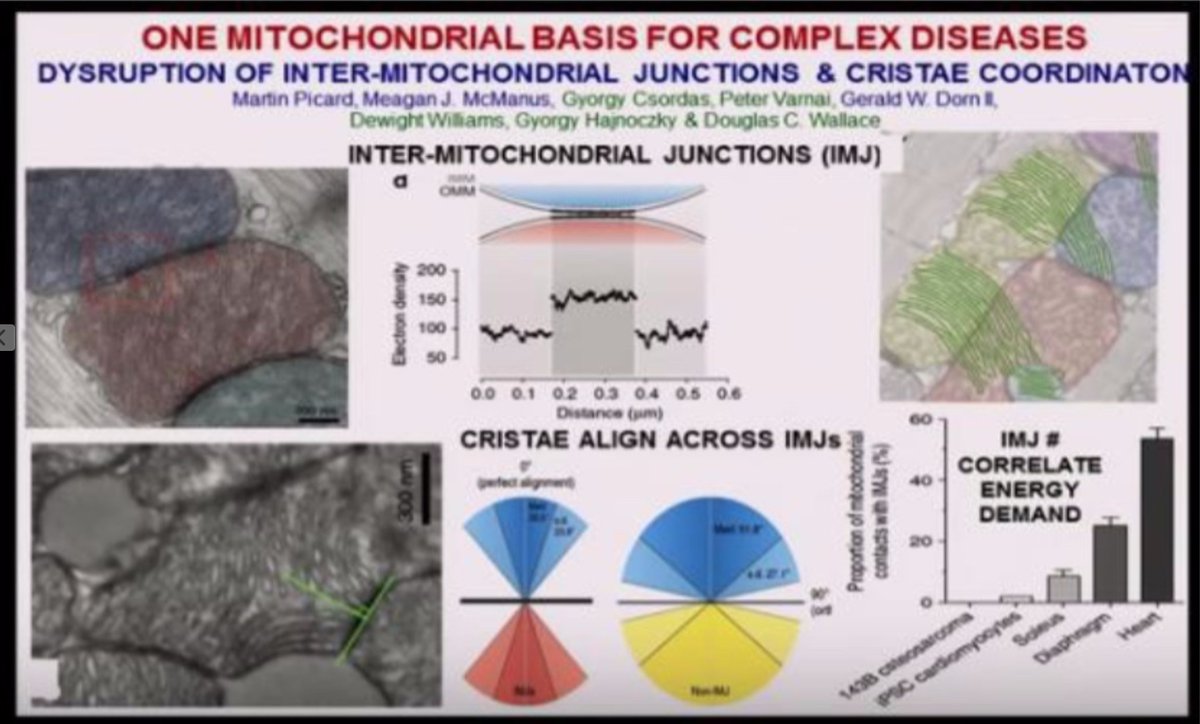
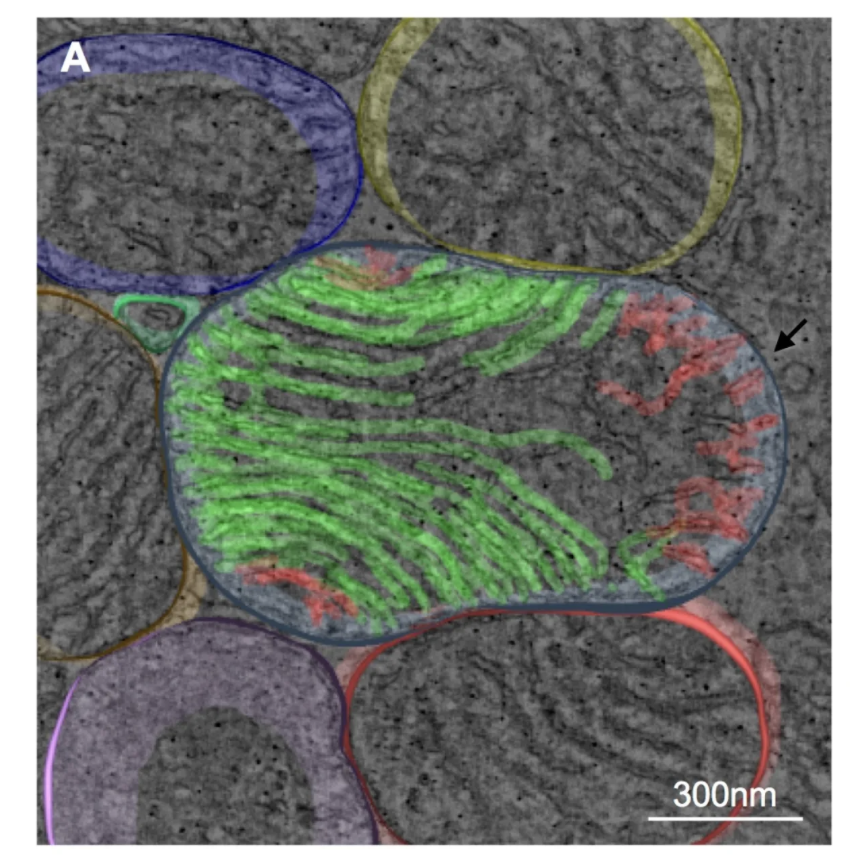
The most interesting finding of these patches is that when you do a dermal biopsy under them you find amazing skin thickness, and then when you send the needle biopsy to your friends who have an electron microscope in their lab and view their mitochondria, you never see a normal cristae alignment. When you go further and ask for an isotopic analysis of the dermis you find it loaded with deuterium. @MitoPsychoBio @niroshajmurugan
Guess why?


CardiovascularCorner@TrackYourHeart
A patient presents with velvety, hyperpigmented plaques in the axilla as shown in the image. What is the most likely diagnosis? A. Addison disease B. Acanthosis nigricans C. Tinea versicolor D. Lichen planus
English

@dgt10011 If stablecoins get approved there will be a bank run on legacy banks.
English

heres the real reason why regulators/banks dont want to let stablecoins pass yield-
it destroys fractional reserve banking as a system
consider the unspoken truth that "narrow banking" is practically illegal in the US. no entrants who wanted to run a 100% deposit only business has been successfully able to get a fed master account. what this really means is that the US financial system is entirely built on the backbone of credit --> "if you dont originate credit, you dont get to become a deposit institution"
take that one step further where "productive" credit can only be originated without 1:1 coverage ratio, the ultimate business of banking is always the same: maturity transformation between savers and borrowers. for this is the only way the fractional reserve system can ever exist, which means the fatal flaw of is built into the very system of yield mechanism
put simply, the idea of having a stablecoin that passes yield is by definition completely contradictory to the banking model. you obviously can't simultaneously do fractional reserve stuff and also be 1:1 "stable"
so the yield question isnt really about customer rewards and affiliate marketing, thats just convenient gaslighting. its really about the endless cycle of credit on an semi-unstable yet regulatorily captive deposit base that capitalism must perpetuate at all cost.
its always liquidity transformation: create more duration so that the day of reckoning gets forever postponed. until one day it fantastically implodes.
English

@washingtonpost hmmmm... those things are suppose to go "boom"....right?
should they be doing that?!!
English

Images released from The Associated Press show locals inspecting an unexploded Iranian missile that landed in an open field on the outskirts of eastern Syria.
Follow our live updates: wapo.st/4csTHAV


English

@ProofOfMoney It was May 1844…. And he prophesized in Persia!!
bahaiblog.net/articles/holy-…
English

@ProofOfMoney So we are now arguing beleives… yikes! It is not going to be resolved.
English

The most dangerous aspect of common sense regarding the Carnivore diet is the following.
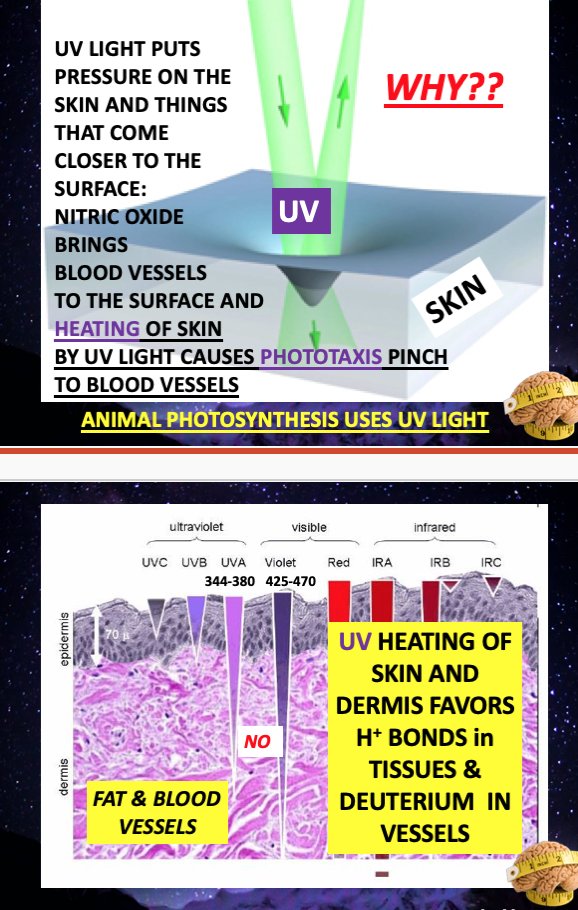
The first image highlights the ignorance of "Food Gurus" regarding the sun.
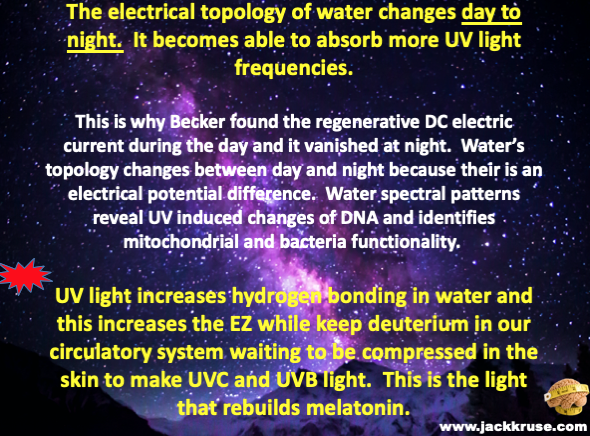
Fat is the body's primary storage for Deuterium. So when you want to use it for fuel you have to have solar power to get rid of the high mass deuterium via the 380nm light.
Paleo/Keto/Carnivore: These diets rely on high fat-burning. If done under the sun, the UV-driven Centrifuge cleans the
𝐷euterium from the IMJ and keeps it in the blood.
The Indoor/Winter Trap: If you do these diets in an IT office or a dark winter or in a gym lit with blue light, you are simply concentrating Deuterium in your vital organs.
Ketosis without the sun is a "dirty" burn that produces high levels of Singlet Oxygen and oxidative stress because the "Radiosynthetic Shield" of melanin is offline. Nothing raises your heteroplasmy more when your facade lies to you. If one does a muscle biopsy on these meatheads you never see this below.

English

USDC on base seems far more common for 402 payments now than Bitcoin. Recently, even Stripe joined the bandwagon. That’s a centralized stablecoin on a permissioned chain. Agents are starting to use fiat. It’s a huge loss, and in a race, many aren’t even aware that it exists.
The scam coins are marching on, and even fiat is evolving.
Where are the Bitcoin solutions that attract real users? Which other concept other than buying and selling Bitcoin has actually broken out of the bubble and made it to the mainstream?
Bitcoin doesn’t just happen. These missing solutions need to be built by someone. Reject the “Bitcoin wins by hodling” narrative. The devs and entrepreneurs are what keep this project alive and keep marching forward.
It’s not the scammy influencers, not the psychotic drama queens, the child-like infighting, or incompetent idiots dancing on the graves of word-class devs leaving Bitcoin.
I hope the bear market flushes all that crap away, and we can get back to building stuff instead of tearing it down.
English

@krillyboy @fig2k4 @RjNol Unfortunately the origins of humans is a mistery from a science perspective. If you want to beleive the evolution theory that is your prerogative. It is intuitively silly from my point of view.
English

@PeterSticks_ @fig2k4 @RjNol what is your hypothesis for how humans evolved and what is your evidence for it, then?
English

@PeterSticks_ @fig2k4 @RjNol is your contention that, scientifically, all other organisms are subject to evolution but humans arent?
English