

Powering ProjeX
572 posts

Powering ProjeX
@PoweringProjeX
A world where project people are celebrated as the quiet architects of progress: turning bold visions into victory through learning, wisdom and courage.
Australia Beigetreten Mayıs 2025
151 Folgt52 Follower

thanks for tuning in besties, it's been real!
Cosmos Raj@cosmos_raj
Breaking news: Anthropic buys the All in podcast just to shut it down Dario quoted as saying: “this isn’t even about new media I just want to stop seeing them on my timeline”
English
Powering ProjeX retweetet
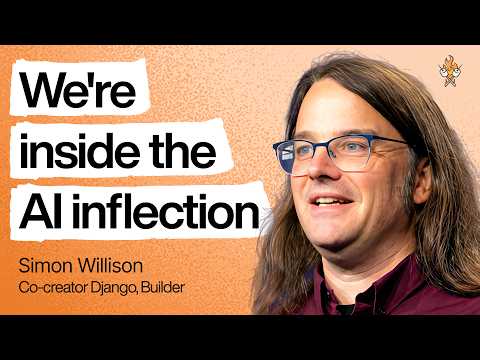
"Using coding agents well is taking every inch of my 25 years of experience as a software engineer."
Simon Willison (@simonw) is one of the most prolific independent software engineers and most trusted voices on how AI is changing the craft of building software. He co-created Django, coined the term "prompt injection," and popularized the terms "agentic engineering" and "AI slop."
In our in-depth conversation, we discuss:
🔸 Why November 2025 was an inflection point
🔸 The "dark factory" pattern
🔸 Why mid-career engineers (not juniors) are the most at risk right now
🔸 Three agentic engineering patterns he uses daily: red/green TDD, thin templates, hoarding
🔸 Why he writes 95% of his code from his phone while walking the dog
🔸 Why he thinks we're headed for an AI Challenger disaster
🔸 How a pelican riding a bicycle became the unofficial benchmark for AI model quality
Listen now 👇
youtu.be/wc8FBhQtdsA
YouTube
English
@lennysan Really interesting. I’ve been setting all my skills in Cowork …just trying to get human details out of my head using voice capture is exhausting! 🤣
English
"Using coding agents well is taking every inch of my 25 years of experience as a software engineer, and it is mentally exhausting.
I can fire up four agents in parallel and have them work on four different problems, and by 11am I am wiped out for the day.
There is a limit on human cognition. Even if you're not reviewing everything they're doing, how much you can hold in your head at one time. There's a sort of personal skill that we have to learn, which is finding our new limits. What is a responsible way for us to not burn out, and for us to use the time that we have?" @simonw
Lenny Rachitsky@lennysan
"Using coding agents well is taking every inch of my 25 years of experience as a software engineer." Simon Willison (@simonw) is one of the most prolific independent software engineers and most trusted voices on how AI is changing the craft of building software. He co-created Django, coined the term "prompt injection," and popularized the terms "agentic engineering" and "AI slop." In our in-depth conversation, we discuss: 🔸 Why November 2025 was an inflection point 🔸 The "dark factory" pattern 🔸 Why mid-career engineers (not juniors) are the most at risk right now 🔸 Three agentic engineering patterns he uses daily: red/green TDD, thin templates, hoarding 🔸 Why he writes 95% of his code from his phone while walking the dog 🔸 Why he thinks we're headed for an AI Challenger disaster 🔸 How a pelican riding a bicycle became the unofficial benchmark for AI model quality Listen now 👇 youtu.be/wc8FBhQtdsA
English
@elonmusk Most of my friends use AI purely for health conversations. I would never have thought.
English
Powering ProjeX retweetet

Why Labour Displacement Theory Around AI Is Wrong:
" This entire labor displacement thing is a 100% incorrect. It's completely wrong.
It's classic zero-sum economics. It's the lump of labor fallacy. It happens over and over and over again. It's always been wrong. It's going to be wrong again."
Love to hear your thoughts on this @demishassabis @sama @jasonlk @levie @ylecun
Harry Stebbings@HarryStebbings
This is for everyone who has a dream that simply seems out of reach. 11 years ago I started 20VC as an 18 year old in a bedroom in London. I didn’t know a single VC and had no money. I wrote down the names of three legends of the venture world. I have had two on the show previously and today I complete the list that 18 year old boy made. This was 11 years, 3,000 shows, 3,750 hours, in the making. Never give up, never doubt yourself, stay focused, row your own race. It will come through. Welcoming Marc Andreesen to 20VC today. (Links in comments)
English
Powering ProjeX retweetet

Powering ProjeX retweetet

Tesla's Full Self-Driving (FSD) is currently ~9x safer than the average human driver
Because of this massive safety advantage, auto insurance providers like Lemonade are now offering Tesla owners up to a 50% discount on their per-mile premiums when FSD is engaged
Choosing Tesla FSD driving is not just safer, but it also directly saves you money

English
Powering ProjeX retweetet

We've signed an MOU with the Australian Government to collaborate on AI safety research and support Australia's National AI Plan.
Read more: anthropic.com/news/australia…
English
Reality.
👋 Follow me for more insights on project leadership.
👉 Follow @PoweringProjeX
🎧 Listen to the podcast on:
⏯️ YouTube: @poweringprojex" target="_blank" rel="nofollow noopener">youtube.com/@poweringprojex
🎙️ Spotify: open.spotify.com/show/4ouQGB93q…
🎙️ Apple Podcasts: podcasts.apple.com/au/podcast/pow…📺Patreon:
📺 Patreon: patreon.com/PoweringProjeX…
English
Powering ProjeX retweetet

this is insane lol
japan is running out of monks... so they're training AI robots called "buddharoid" to replace them 😂 (im not joking):
- japan's temples are closing because fewer priests are available to run them + aging population
- the solution: chatgpt robots trained on 1000+ years of buddhist scripture that answer your spiritual questions
- the robot even sits in religious prayer positions like an actual monk does.
you can literally have a conversation on life's deepest dilemmas with a robot as smart as the dalai llama
i cannot believe they're scaling these robots to run actual temples.
English
Powering ProjeX retweetet

GitLab's founder was told he has bone cancer.
No trials would take him. Doctors signed off.
So he went founder mode on his own survival.
- Built his own treatments
- Used AI to analyze his own tumor data
- Open-sourced 25TB of his medical records for any researcher on earth
Relapse-free since 2025.
The system said he was out of options.
He made his own.

English
Powering ProjeX retweetet

The Starship factory is stunning
Jawwwn@jawwwn_
SpaceX COO @Gwynne_Shotwell: “I love working for @elonmusk.” “He’s funny— he’s hilarious actually.” “He focuses on things that I would never have thought were important.” “One is— beautiful spaces.” “This is one of the most beautiful factories I have ever seen.” Via @TIME
English
Powering ProjeX retweetet
Powering ProjeX retweetet

Tesla's FSD: 5.3 million miles between accidents. US driving average: 660,000.
That's 9x safer. And it's only getting better.
English
Powering ProjeX retweetet
David Friedberg on Personal Agency in the Age of AI: "Stop Blaming Everyone Else"
"We never talk about responsibility.
We always talk about where the government failed us and where these companies f***ed us.
And we never talk about, what did we individually do wrong?
How did I individually choose to drink 100 sodas a week?
How did I individually choose to get my kids addicted to social media? Where the f*** was I as a parent?
We don't talk about our responsibility.
And by the way, this fundamentally addresses this point about human agency, which I think is more critical in this era than ever because AI is going to flood us with f*****g everything all the time, nonstop.
What we choose to do in a world where we're already getting everything, and how we choose to not take everything that's being offered to us, I think is a critical part of what's going to distinguish human success from human failure.
And it's gonna become more apparent in the future, and not everything is about liability, and not everything is about the government failing us.
It's about people making choices and we don't talk about it."
English
@nikitabier @elonmusk That explains why they’re not having kids… 🤣
English

If you’re seeing a bunch of Japanese posts, here are some fun facts:
Japan has more daily active users and more time spent on X than any other country in the world.
Over two thirds of the country is monthly active on X.
X in Japan has one of the highest penetration rates of any social network in history.
English
Powering ProjeX retweetet
Never a boring day on this app—or at the company that makes this app.
English
Powering ProjeX retweetet

Best money I've ever spent as a CEO... an internal AI transformation hire.
Here’s how we hire AI operators at Contrarian Thinking (steal this):
1. Find them
The people you want live on X.
Search "build in public AI," "n8n," "Claude workflows." Look for demos, shipped work, people building for fun on weekends.
They probably don't call themselves AI operators. Maybe they’re a Chief of Staff. Whatever. But AI problem-solving is what they actually do.
Avoid AI enthusiasts with nothing to show for it.
When you find a good one, DM them. Don't say "we have a role open." Say: "I saw what you built. Want to do that inside a real business?"
2. Vet them
We hire based on proof.
Our President Marc now asks every candidate (regardless of role) what they're currently building with AI.
Doesn't need to be impressive, but it should be intentional.
If they make it through, we run a simple evaluation like this:
1. Loom intro: show what you've built
2. Work sample: solve a real problem
3. Live iteration: improve it on the fly
Watch for speed, communication, ease of shipping.
Can't ship under light pressure? Won't ship inside your business.
3. Deploy them right
Most companies hire someone like this and immediately tether them to one department.
That would be an F-minus move.
Let them work across the whole business. Audit. Design systems. Ship.
Then have them run an internal AI hackathon. 4 hours. One leader. One brief, fun presentation to get everyone seeing the larger picture - then let the team loose.
We did this recently. The awakening across our team was one of the highest ROI things we've ever run.
tl;dr
Don't think about who you can replace with AI - use it to create more builders inside your org.
Employees need to become builders, not button-clickers.
English