josh

25.5K posts

josh banner
josh

josh

@RuffReader

writing, film, decision analysis, criminal justice, wildlife habitat management, nuance advocacy & basketball (#FearTheDeer). Likes=bookmarks & RTs ≠ agreement

Toledo, OH Beigetreten Mart 2009
1.8K Folgt381 Follower
Angehefteter Tweet
josh
josh@RuffReader·
🚨 Exciting news—I’ve just launched a new writing project! 🚨 It’s a space for longform essays, cultural critiques, and occasional fiction. The first post is coming soon—please subscribe so you don’t miss it! open.substack.com/pub/ruffreader…
English
0
0
2
171
josh retweetet
Stefan Schubert
Stefan Schubert@StefanFSchubert·
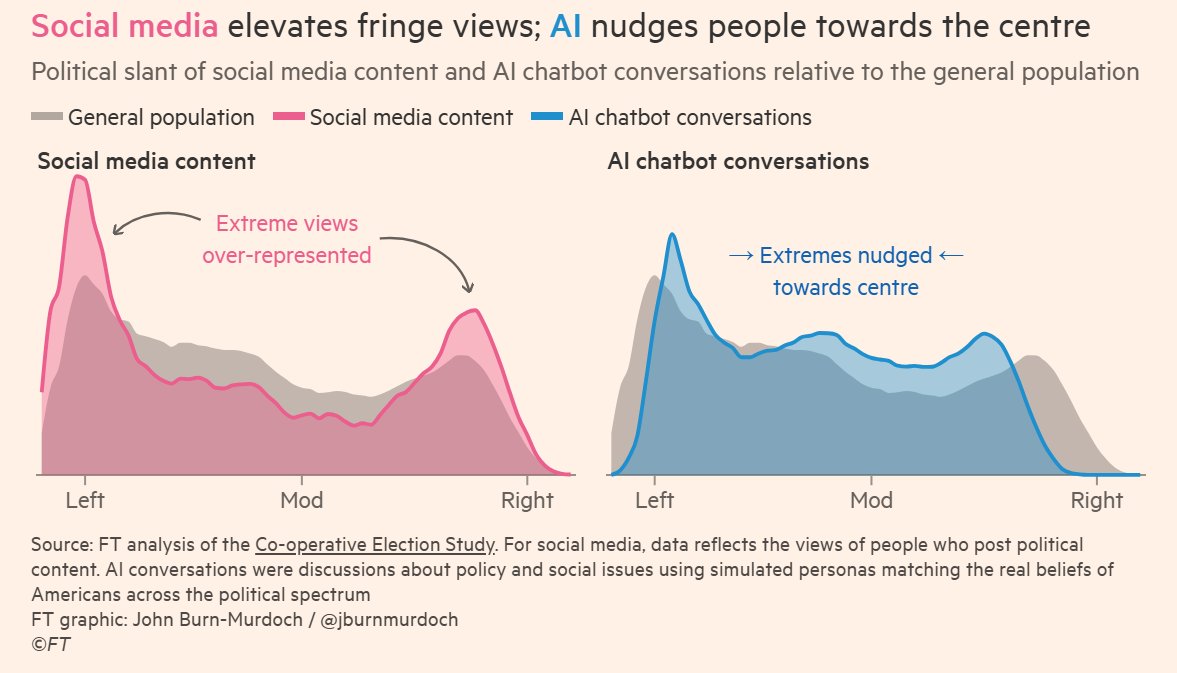
While social media is polarising, evidence suggests AI may nudge people towards the centre. This holds true of all studied models. Grok is more right-leaning than other models, but also has depolarising effects. By @jburnmurdoch.
Stefan Schubert tweet media
English
198
894
5.4K
743.6K
josh retweetet
josh
josh@RuffReader·
@Anthonysmdoyle That seems like a last-two-weeks kind of tanking to precisely get the seeding right, which is much better than entire season tanking
English
0
0
0
62
josh
josh@RuffReader·
@2181Embiid @SamQuinnCBS Exactly. Option 1 is most likely to solve tanking. But we would have to swallow the possibility of 7-8 seeds getting the first pick
English
2
0
0
110
Embiid PR
Embiid PR@2181Embiid·
@SamQuinnCBS No it doesn’t because you lose playoff revenue and you can still get a top 10 pick. It’s a lottery drawing for 1-18, not just the top 4.
English
1
0
2
617
josh retweetet
Shams Charania
Shams Charania@ShamsCharania·
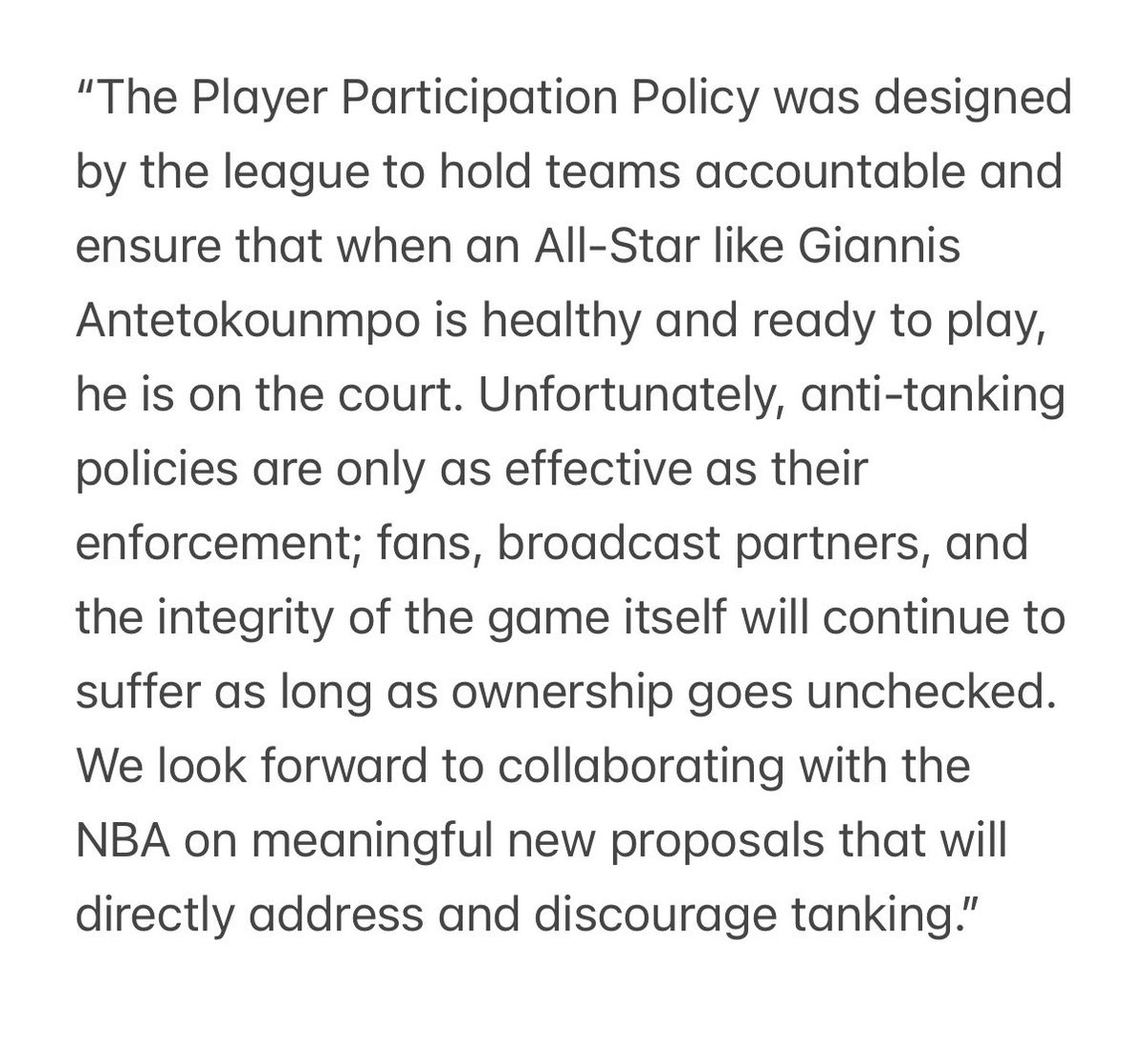
Statement from the National Basketball Players Association on the Milwaukee Bucks' desires to shut down Giannis Antetokounmpo, who wants to play:
Shams Charania tweet media
English
516
596
7.6K
1.3M
josh retweetet
Anish Moonka
Anish Moonka@anishmoonka·
Sal Khan was one of the first people on Earth to see GPT-4. OpenAI called him in the summer of 2022, months before ChatGPT existed, and showed him what was coming. He couldn’t sleep that weekend. By March 2023, Khan Academy launched Khanmigo, an AI tutor built on GPT-4, the same day OpenAI unveiled the model to the public. They were a launch partner. While every other education company was figuring out what ChatGPT meant for them, Khan Academy had already been building for seven months. The “obsolete” platform now has 120 million yearly learners. Khanmigo, their AI tutor, grew 731% year over year in the 2024-25 school year, reaching 2 million users. In classrooms alone, adoption went from 40,000 students to 700,000 in a single year, with projections past 1 million for 2025-26. Their teacher tools are free in over 70 countries. In January 2026, Khan Academy signed a deal with Google to put Gemini (Google’s AI) into new Writing Coach and Reading Coach tools for middle and high schoolers. They’re now working with both OpenAI and Google. A peer-reviewed study published in PNAS (one of the top scientific journals in the world) in January 2026, with researchers from Stanford and the University of Toronto, found that more Khan Academy usage is directly linked to higher student test scores. Sal Khan wrote a whole book in 2024 called “Brave New Words” arguing AI would save education. Sam Altman wrote a blurb for it. His TED Talk making the same argument was one of the 10 most-watched of 2023. In October 2025, he was named TED’s “vision steward.” Khan Academy is now the AI education company. That 731% growth happened while students spent 7.7 billion minutes learning on the platform in 2025.
Sag Harbor Capital@sagharborcap

The saddest thing about all the AI stuff is that it’s rendered the Khan Academy guy’s life’s work totally obsolete

English
41
461
6.1K
569.1K
josh
josh@RuffReader·
@SmellyBucksFan @TiWindisch Exactly. I don’t understand what the friction is about. They will lose with him on the court anyway. If he gets hurt, he’ll be fine come November.
English
0
0
2
83
SmellyBucksFan
SmellyBucksFan@SmellyBucksFan·
@TiWindisch If he’s under contract and healthy and wants to play then he can play. Done way too much for this city to be told he can’t play especially when it could mean he’ll never play for the franchise again. We can still tank with him
English
5
1
10
7.4K
josh retweetet
Bobby Marks
Bobby Marks@BobbyMarks42·
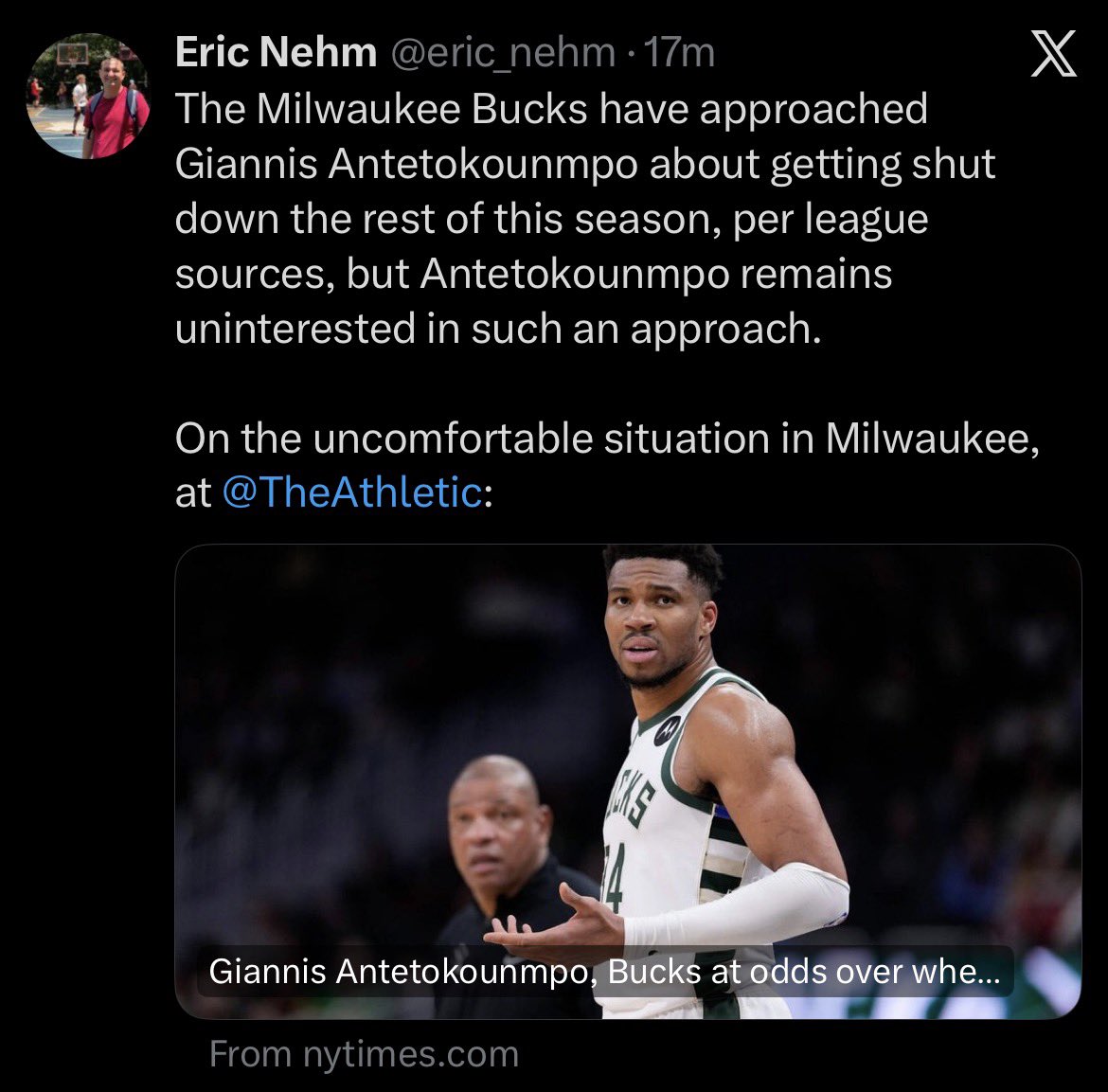
The Bucks have the least favorable first of their own or New Orleans. Currently: New Orleans is no. 7 and Milwaukee no. 9 They have no control of their own first until 2031. There are no players under the age of 21 on the roster and Antetokounmpo is the only player on the roster they drafted in the first round.
Shams Charania@ShamsCharania

There have been multiple meetings over Antetokounmpo's status in the last 24 hours since his hyperextended knee diagnosis, and a disagreement has ensued between the sides on whether it is best for him to return, sources said.

English
40
23
339
134.2K
josh retweetet
Arnaud Bertrand
Arnaud Bertrand@RnaudBertrand·
Unreal... The man literally breaks the global energy supply, directly affecting the lives of billions of people and then is like "wait, should we even be there? It's not our problem after all." The level of thoughtlessness and hubris is genuinely off the charts.
Ounka@OunkaOnX

Trump: "Maybe we shouldn't be there at all. We have a lot of oil." Trump says other countries should protect the Strait because "we have a lot of oil." After starting a war, disrupting global oil - he's now asking why the US is even there

English
288
4.3K
14.9K
354.7K
josh retweetet
Bilawal Sidhu
Bilawal Sidhu@bilawalsidhu·
People are undoubtedly a little alarmed at having unwittingly helped build a 3D map of the world for Niantic by contributing 30 billion crowdsourced images. I interviewed Niantic's CTO Brian McClendon about exactly this in a TED interview last year -- he's also the guy who co-created Google Earth. But let's put it in perspective. Pokestop data isn't what you think it is. It's not a surveillance panopticon of your neighborhood. These are static captures of parks, statues, murals, landmarks -- the places people congregate. Brian described it as "building the map from the bottom up, from the locations where people spend time." Think of these 20 million waypoints as basically the inverse of what Google mapped with Street View. Google mapped the drivable streets. Niantic mapped where people actually hang out. Cool data, genuinely useful for visual positioning -- but very different from what the headlines imply. And lest we forget that Niantic is just one of many companies quietly building their own map of the world right now -- and they're all capturing different facets of reality: >🚶 person-level: Axon body cams on hundreds of thousands of officers. Meta Ray-Ban glasses capturing first-person POV at scale -- overseas operators reviewing images every time someone says "Hey Meta." > 🚗 vehicle-level: Tesla dashcams on every car in the fleet, massive onboard compute extracting and distilling data to the cloud. Waymo with cm-accurate 3D maps of every city they operate in. Fleet telematics cameras on delivery vehicles globally. > 🏠 street & home-level: Flock Safety deploying CCTV across neighborhoods and cities. Amazon with Ring cameras on every doorstep and mailroom (recently got dragged over that Super Bowl commercial about fusing all these cams together to find your dog) plus dashcams on every Prime delivery van. Roomba mapping your floor plan every time it vacuums -- Amazon wanted that data badly enough to try acquiring iRobot for $1.7B before regulators shut it down. > 🥽 headset-level: Apple Vision Pro and Meta Quest build a 3D model of whatever room you're in every time you put them on. Between Ring, Roomba, and your headset, your entire home is being spatially understood by at least three different companies. >📍platform-level: Google with Street View cars, aerial planes, satellite imagery, and live location from every Android phone in your pocket. Apple doing the same with mapping cars AND every LiDAR iPhone is quietly a 3D scanner. And yeah, despite the "Apple is too privacy-conscious" narrative, they're collecting location data too. >🏃 trajectory-level: Strava mapped every running and cycling trail on Earth -- and accidentally exposed secret military bases in Afghanistan and Syria because soldiers logged their jogs. When you aggregate enough individual trajectories, patterns emerge that were never supposed to be visible. > 🛰️ space-level: Planet Labs imaging the entire Earth's landmass every single day from orbit. Vantor capturing it in higher detail. Iceye doing it in 3D using SAR. If something changes anywhere on the planet -- a building goes up, a forest burns down, a military convoy moves -- before-and-after imagery within 24 hours. Fused together -- we have everything from body cam to dashcam to doorbell to phone to satellite -- every layer of physical reality is being mapped by somebody right now. Different sensors, different angles, different purposes. Same pattern. The interesting part is how they incentivize it. Google spends billions. Mapillary tried altruism. Hivemapper grinds with crypto. Pokémon GO cracked something none of them could: a game mechanic that subsidizes the scanning behavior. You're not building a map. You're catching pokemon. The map is just a side effect. 3D scanning is still a niche hobby for reality capture nerds like me. The moment somebody gamifies dense 3D capture at scale -- not posed photos but actual geometry -- that's when this blows wide open. Niantic sold the games for $3.5B but kept the spatial platform, with a data-sharing agreement in place. One team makes the game great, the other builds the spatial infrastructure underneath. Incentives finally aligned. Gaming is becoming a way for humans to contribute real-world trajectories that help physical AI learn about the real world. Google does it with live traffic. Tesla does it with autopilot. The mechanic is different but the pattern is identical -- and most people are already part of at least one -- if not a majority -- of these datasets whether they realize it or not.
Mark Gadala-Maria@markgadala

This is wild. 143 million people thought they were catching Pokémon. They were actually building one of the largest real-world visual datasets in AI history. Niantic just disclosed that photos and AR scans collected through Pokémon Go have produced a dataset of over 30 billion real-world images. The company is now using that data to power visual navigation AI for delivery robots. Players didn't just walk around with their phones. They scanned landmarks, storefronts, parks, and sidewalks from every angle, at every time of day, in lighting and weather conditions that staged photography would never capture. They documented the physical world at a scale no mapping company with a fleet of vehicles could have replicated on the same timeline or budget. Niantic collected this systematically, data point by data point, across eight years, while users thought the only thing at stake was catching a rare Charizard. The most valuable AI training datasets in the world aren't being assembled in data centers. They're being built by people who have no idea they're building them.

English
38
152
995
201.6K
josh retweetet
Aakash Gupta
Aakash Gupta@aakashgupta·
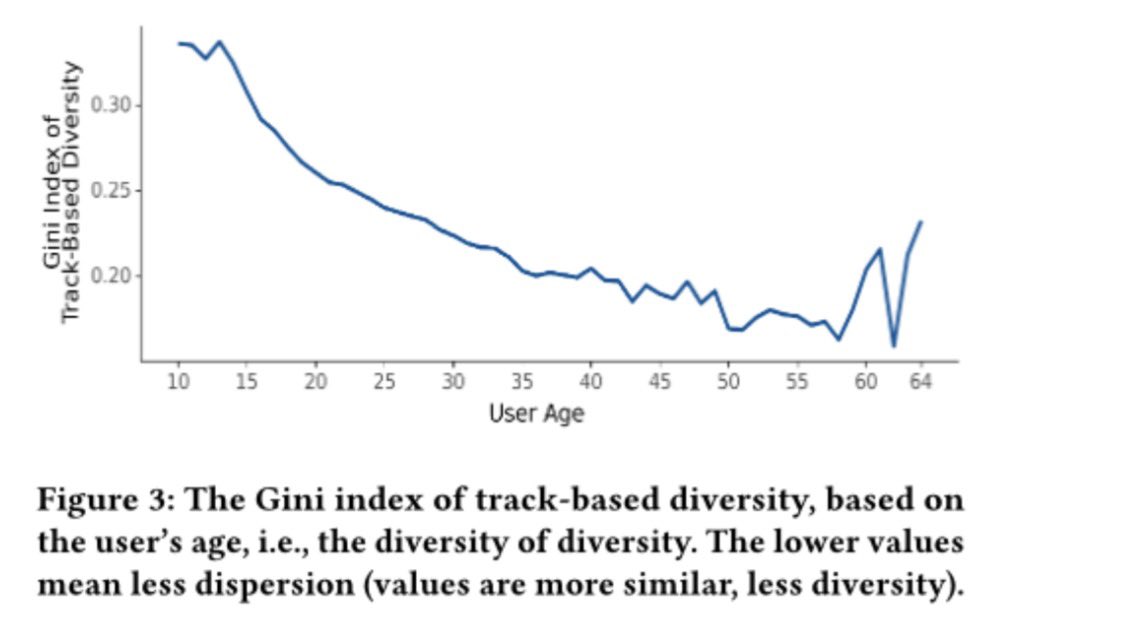
Your brain peaked musically somewhere around age 16. Everything since then has been a dopamine echo. Between the ages of 12 and 22, the mesolimbic dopamine pathway, the same circuit that processes cocaine and sex, fires at levels in response to sound that it will never reach again for the rest of your life. A 2011 McGill study used PET scans and fMRI simultaneously and found that music triggers dopamine release in the striatum at peak emotional arousal. The caudate nucleus lights up during anticipation of the good part. The nucleus accumbens lights up when it hits. Your brain is treating a guitar riff with the same reward architecture it uses for food-seeking and pair bonding. During adolescence, that response is dramatically amplified. Pubertal hormones are flooding the system. The prefrontal cortex is still wiring itself. Memories formed during this window get encoded with a density of emotional tagging that nothing in your 30s or 40s can replicate. Researchers at the University of Leeds identified this as the “reminiscence bump”: the period when your sense of self is forming, and the music playing during that formation becomes structurally integrated into your identity. A 2025 longitudinal study from the University of Gothenburg analyzed 40,000 users’ streaming data across 15 years. Younger listeners explored broadly across genres. Older listeners collapsed into increasingly narrow loops, almost entirely anchored to music from their teens and early twenties. Your brain stopped losing interest in new music years ago. It’s running a cost-benefit analysis. Familiar songs deliver guaranteed dopamine with zero processing cost. New songs require pattern recognition, expectation-building, and repeated exposure before the reward circuit kicks in. Past 25, most people stop paying that tax. The one variable that predicts whether someone keeps exploring: the personality trait “openness to experience.” Score high, you keep seeking. Score average, you default to the familiar forever. The fix, if you want one: deliberate exposure. Three listens minimum before your auditory cortex builds enough predictive models to generate a reward response. One passive listen on a playlist will never get there. Your brain needs repetition to find the pattern, and it needs the pattern to release dopamine.
Aakash Gupta tweet media
𐌁𐌉Ᏽ 𐌕𐌉𐌌𐌉@OrevaZSN

Unfortunately, as you get older, you gradually become less interested in new music and keep going back to the old favorite songs you once loved.

English
357
806
5.4K
778.5K
josh retweetet
The ₿itcoin Therapist
The ₿itcoin Therapist@TheBTCTherapist·
“Tell them 4 days. “Now tell them 4-5 weeks.” “Now say it will be over soon.” “Tell them it’s just the beginning.” “Now tell them no boots on the ground.” “Tell them nothing is off the table.” “Say it’s only going to be 2,500 Marines.” “Now tell them it’s only 5,000.”
The ₿itcoin Therapist tweet media
Remarks@remarks

JUST IN: 🇺🇸 Pentagon deploying up to 5,000 Marines to the Middle East, WSJ reports.

English
114
1.4K
10.5K
426.6K
josh retweetet
Steve Shickles
Steve Shickles@shickles·
Claude Code going down really exposes how dependent we've become on these agentic loops. When your orchestration layer drops, you don't just lose a chat box—you lose your entire dev pipeline. This is why multi-agent redundancy and local-first fallbacks are non-negotiable now.
English
0
1
1
339
josh retweetet
Eliezer Yudkowsky
Eliezer Yudkowsky@allTheYud·
People in the comments are posting replications. I say yet again that any SF novel or movie in 2006 or even 2016 would have depicted this AI as unquestionedly taken-for-granted sapient. And abused.
Joseph Viviano@josephdviviano

me: "can you use whatever resources you like, and python, to generate a short 'youtube poop' video and render it using ffmpeg ? can you put more of a personal spin on it? it should express what it's like to be a LLM" claude opus 4.6:

English
48
53
1.1K
116.1K
josh retweetet
Josh Kalla
Josh Kalla@j_kalla·
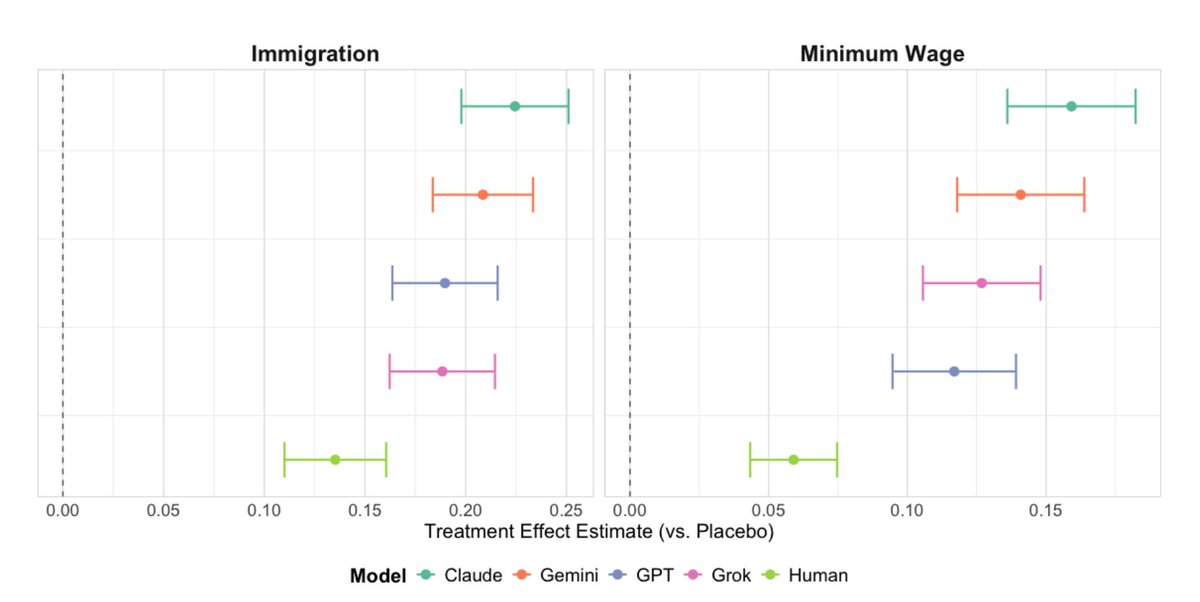
The bigger finding: all of these models now consistently are more persuasive than actual campaign advertisements. Our earlier work found that chatting with older models was around as persuasive as watching a campaign ad. That's no longer true — frontier LLMs have pulled ahead.
Josh Kalla tweet media
English
2
13
41
6.8K
josh retweetet
MKE BUCKS | 29-43
MKE BUCKS | 29-43@Bucksssin6·
Bam shot under 50% and got 83 😂😭
English
0
1
2
76