Single Cell Media

85.1K posts

Single Cell Media banner
Single Cell Media

Single Cell Media

@SingleCellMedia

owner: @ireflectit | We are sharing content related to "Single Cell" research. Tweets, papers, comments and much more!

Italy Beigetreten Ocak 2020
174 Folgt3.8K Follower
Angehefteter Tweet
Single Cell Media
Single Cell Media@SingleCellMedia·
If you are interested in Single Cell Sequencing studies (specially scRNAseq), make sure you follow: @SingleCellMedia In case you want us to share your material (paper, protocol, studies or positions) feel free to send a DM or contact @ireflectit
English

1
3
10
0
Single Cell Media retweetet
Mark Histed
Mark Histed@HistedLab·
I very much regret that "Requiem for A Spike" was deleted from the title of this paper when it was published. (I just googled "requiem for a spike" - no dice to this!) nature.com/articles/natur…
English
0
10
38
7K
Single Cell Media retweetet
YF Yang- @ufangyang.bsky.social
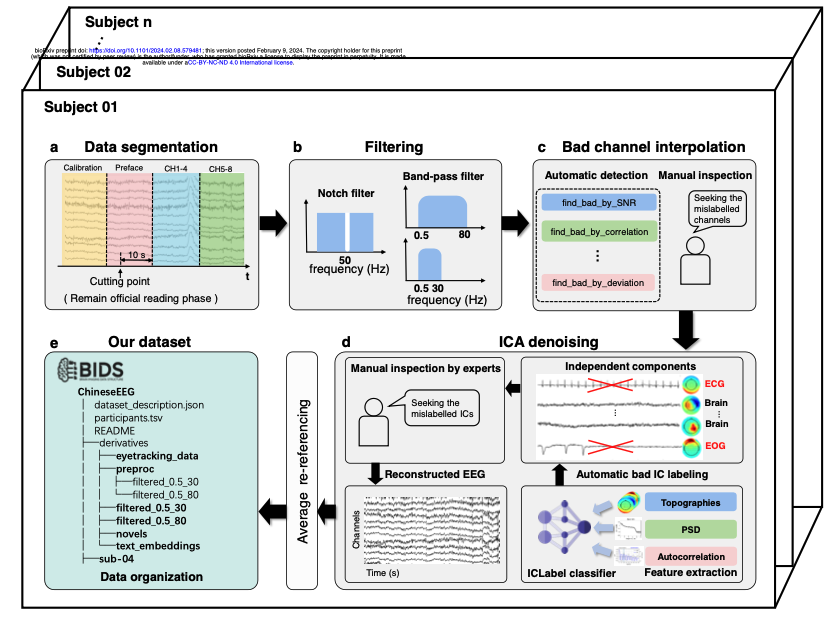
Are you looking for #EEG datasets focused on linguistic processing, especially with raw EEG data and #eye-tracking? Excited to share our recent preprint: A Chinese Linguistic Corpora EEG Dataset for Semantic Alignment and Neural Decoding. biorxiv.org/content/10.110…
YF Yang- @ufangyang.bsky.social tweet media
English
1
14
43
7.8K
Single Cell Media retweetet
S
S@SsJankauskas·
Let’s discuss the Informational Theory of Aging proposed by @davidasinclair and colleagues? doi.org/10.1038/s43587… On a phenotype level it looks very believable. Indeed progressive erosion of epigenetic landscape seems to play a central role in aging. However, my issue is with mechanistical explanation authors propose. They believe that maintaining the right epigenetic pattern depends on ability of chromatin modifying proteins (CMPs) to return every time to a right “default” or “home” genome loci after their work is done. If this “home” return mechanism is disrupted CMPs start putting epigenetic marks into wrong places. Authors suggest that double strand DNA breaks (DSBs) and subsequent reparation compromise CMPs ability to recognize their “home” loci. Hence, DSBs are actually the primary cause of aging. DNA damage is not my expertise, but as far as I know, DSBs are rare events and what is more important are know to be caused only by ionizing radiation, oxidative damage and specific modifications of DNA, caused by ROS. If it’s true and there is no other robust sources of DSBs, then mechanistical explanation proposed by authors looks insufficient. We know that different classes of antioxidants were tested and gave no conclusive evidence that reduction of ROS production could prolong lifespan. There could be several explanations for this discrepancy. 1. There are other robust sources of DSBs besides oxidative stress and IR. I would highly appreciate comments on this from people with deep knowledge in this field. 2. Antioxidants that were tested are not efficient in precluding nuclear DNA damage. DNA damage is not my expertise, so again will highly appreciate if you know studies proving or disproving this. However, theoretically it could be the case because majority of ROS are extremely short lived (with H2O2 being one of rare exceptions). Thus ROS production could elicit microdomain activity and without antioxidants targeted to these microdomains we fail to interfere with it. I’m not sure if there are ROS generating enzymes in nucleus, but maybe we need antioxidants targeted specifically to the nucleus? 3. Other mechanisms besides DSBs mediate erosion of epigenetic landscape. This explanation seems most feasible for me. Here could several possibilities: i) could it be that CMPs are not very accurate? If yes then erosion of epigenetic landscape with age would be just the consequence of chronological age. ii) Non-enzymatic acetylation and methylation. iii) could single nucleotide mutations disrupt ability of CMPs to recognize their DNA binding sites? iv) CMPs activity as well as affinity with their DNA and protein consequences are regulated by posttranslational modifications. Hence one can suggest that that misslocalization of CMPs could be result of “inappropriate” signaling cascade. Once wrongly located epigenetic marks further misbalance intracellular signaling networks affecting CMPs even more. Hence a positive feedback loop created. 4. Antioxidants effectively prevent DSBs formation, but erosion of epigenetic landscape is just one of the hallmarks of aging. What’re your thoughts?
S tweet media
English
11
24
117
40.1K
Single Cell Media retweetet
Ming "Tommy" Tang
Ming "Tommy" Tang@tangming2005·
Initial recommendations for performing, benchmarking and reporting single-cell proteomics experiments | Nature Methods nature.com/articles/s4159…
English
1
19
75
12.7K
Single Cell Media retweetet