
Adams Conrad

243 posts

Adams Conrad banner
Adams Conrad

Adams Conrad

@TheAdamsConrad

Investing in fintech @qedinvestors. Previously growth @plaid and @quovo. YSR and Go Jackets.

New York, NY Beigetreten Mart 2014
866 Folgt481 Follower
Adams Conrad retweetet
Stabledash
Stabledash@stabledash·
In 2021-22, founders threw "Web3" or "token" in the deck because "number go up." What's happening now in Africa is the exact opposite. @TheAdamsConrad, Principal at @QEDInvestors who just led @KASTxyz's $80m Series A: "We're seeing companies we invested in that were pure play fintech companies starting to become stablecoin-based companies... They aren't doing this to raise money, they are doing this because their customers want it.(stablecoins)"
English

2
2
10
424
Adams Conrad retweetet
fintechjunkie
fintechjunkie@fintechjunkie·
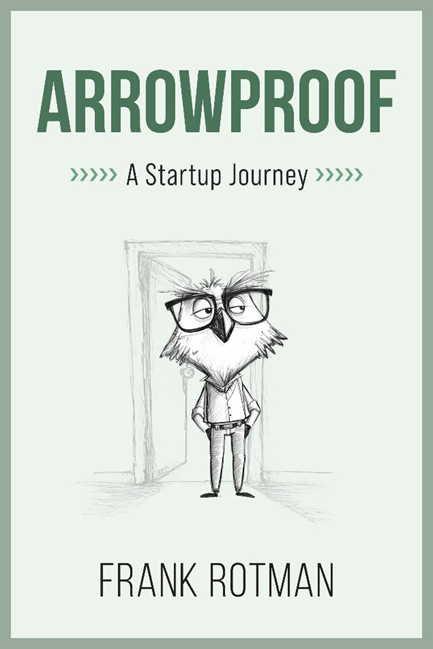
What if the best startup advice came wrapped in a story you couldn't put down? It’s finally here! After a year of hard work and many sleepless nights, I can finally say that my book has been published. Amazon and Ingram links are in the comments if you want to pick up a copy for yourself or your company. ArrowProof is my attempt to package insights about the Startup journey into something more engaging than “yet another business book”. Rather than lecture with a framework laid out in a highly sanitized format, I wanted to show an Advisor’s “wise advice” in action through the eyes of two first-time Founders navigating their own impossible journey. And because I can’t help but break from convention, my characters aren’t what one would expect. I chose Achilles and Tortoise as my protagonists as an homage to a remarkable literary heritage that’s near and dear to my heart. These characters first appeared in Zeno's famous paradox, were brilliantly reimagined by Lewis Carroll in his mathematical dialogues, and found new life in modern literature in Douglas Hofstadter's "Gödel, Escher, Bach" and "I Am A Strange Loop." What drew me to them was how these great writers used them as a convention to make complex ideas accessible through conversation. They represent the art of distillation that I've spent my career perfecting. My superpower has always been the ability to take nuanced, sophisticated concepts and make them digestible without losing their power. And this is why using Achilles and Tortoise was my obvious choice. This book is for Founders who want to see the Startup journey mapped out honestly, without sugar-coating the inevitable challenges or overselling the victories. It's for Investors who want to better understand what Founders actually experience during the critical moments that determine success or failure. It's for anyone curious about how real companies emerge from the chaos of Entrepreneurial ambition. Most importantly, it's for anyone who appreciates that the best business wisdom often comes not from textbooks or case studies, but from the messy, complicated, deeply human process of building something from nothing. AI might eventually replace me with better advice that’s wrapped in a better-written book, but until then, I hope ArrowProof serves as a useful guide for anyone brave enough to build something new. Please enjoy. Please share. And please reach out if you're looking for advice. Onwards and upwards. Fintechjunkie
fintechjunkie tweet media
English
40
32
121
23.6K
Adams Conrad retweetet
Sean Neville
Sean Neville@psneville·
The challenge for a multi-stablecoin financial system isn't technical issuance or regulatory clarity -- it's interoperability and liquidity. Stablecoins backed by US Treasuries are effectively "narrow banking" -- risk-free deposits with no fractional reserve lending, unlike traditional bank deposits that look risk-free via FDIC insurance and regulatory gymnastics but are actually backed by risky lending. The GENIUS Act codifies this "narrow bank as stablecoin" model except that it prohibits issuers from paying yield directly to holders. This creates an obvious incentive: if you hold someone else's stablecoin, they capture the yield on reserves. If you issue your own, you keep it, minus whatever you pay to your distributors. So people ask: won't every platform, wallet, institution, and treasury be tempted to issue their own stablecoin, at least behind their own walled garden? Then a second, tougher question: How would thousands of stablecoins — or even a half dozen that "really matter" —transact with each other seamlessly at par? What infrastructure enables acceptance and exchange without fragmenting into walled gardens where each stablecoin only works inside its own ecosystem? Again, the hard challenge is interoperability and liquidity, not issuance. The answer may determine whether we get an open, composable financial system or a fragmented mess of isolated narrow banks.
English
42
17
164
29.3K
Adams Conrad retweetet
fintechjunkie
fintechjunkie@fintechjunkie·
Why VCs Are Chasing AI Speed at All Costs Raising VC capital in today’s market is a tale of two cities. The AI “haves” and the non-AI “have nots”. Behind this trend is a psychological trap that's reshaping the VC landscape: "Becoming Velocitized." The term "velocitized" comes from driving safety. It's what happens when you cruise at high speeds for too long. You get numb to the pace, and suddenly, dropping to a normal speed feels painfully slow. You misjudge risks because everything blurs into the rush. Replace "speed" with "growth," and you'll see how this applies to VCs in the AI era. Companies like OpenAI, Anthropic, and countless others are scaling at unprecedented rates and hitting billion-dollar valuations in months, not years. User adoption of new products is happening at an unprecedented rate, funding rounds are closing in days, and revenue multiples can only be described as defying gravity. It's like flooring it on the Autobahn. But here's the catch: Once velocitized by AI's hyper-growth, every other sector looks sluggish. Fintech? Healthtech? SaaS? Biotech? Building steadily and de-risking over time with solid models and sustainable economics isn’t interesting anymore. In comparison, they feel like crawling in traffic. VCs, hooked on the adrenaline of AI deals, start passing on "slow" opportunities that might actually deliver long-term, durable returns. The world of “triple triple double double” is no longer good enough which makes raising capital difficult for almost every solid non-AI opportunity in today’s market. Don't get me wrong, AI's potential is massive. But as fast as these companies are growing, key questions loom: Durability: Many AI firms rely on massive compute resources and data moats, but what happens when the hype cycle cools? We've seen bubbles before where early winners faded fast without defensible barriers. Economics: The unit economics often look shaky or are unknown. Training models costs fortunes, margins are thin amid fierce competition, and customer retention is unknown. Consolidation: End-users (businesses and consumers) are in "try everything" mode, testing dozens of tools. But inevitably, they'll consolidate their AI stack or be more discriminating about what they buy and how much they pay. When that happens, standalone AI startups could face a shakeout, with winners taking all and losers vanishing. I've seen this velocitization firsthand. VCs who once prized patient capital now chase AI term sheets with FOMO-fueled urgency. Founders in non-AI spaces report deals stalling because "we’re not growing fast enough." Investors, numb to 100% YoY growth, demand moonshots that mirror AI trajectories. This mindset has ripple effects. For Founders: Pressure to pivot to AI, even if it doesn't fit. For Investors: Overconcentration in one sector which amplifies systemic risks and increases the odds of an eventual crash For the ecosystem: A talent drain to AI opportunities, starving other innovations. Full throttle all the time? That's how accidents happen. Valuations will pop, portfolios will crater, and VCs will write about how it was obvious but they had to play the game on the field. It difficult to recognize when you're velocitized. It’s even more difficult to do something about it because it requires conviction to play the long game while everyone else is celebrating their short-term wins. AI is thrilling, but being velocitized can have nasty consequences.
fintechjunkie tweet media
English
13
14
95
19K
Adams Conrad retweetet
Stable
Stable@getstable_io·
If stablecoins can speed up global money movement, they can unlock new economic growth 🌍 Excited to have @TheAdamsConrad from @qedinvestors join us at Stable to break down where money movements are headed next. Apply to attend 👉 getstable.io
Stable tweet media
English
1
5
12
1.5K
Adams Conrad retweetet
fintechjunkie
fintechjunkie@fintechjunkie·
A Thought Exercise About Value Re-reading "Debt: The First 5,000 Years" by David Graeber reminded me that many things we think of as "real" are just human constructs. How money actually works and how people interact with it isn't as straight forward as everyone thinks it is. And what we as a society ascribe “value” to isn’t immutable. It’s a social contract that can change if enough people want it to. And today’s news seems to be obsessed with topics that touch on but don’t explain what money is and why new “things of value” are emerging. Governments around the world are printing money. Bitcoin is emerging as a global reserve currency. Memecoins and Memestocks are achieving and sustaining valuations that shock and awe the TradFi establishment. With Graeber whispering in my ear and real-world developments catching my eye, I find myself in a philosophical mindset where I’m asking myself a host of fundamental questions about “value”. So if you’re interested, feel free to read on and traverse a thought exercise with me. If not, I totally understand. This isn’t for everyone. Thought Exercise About Value Ask yourself: Is it possible for a thing with no intrinsic value to be worth more than the thing of value that it represents? My viewpoint: Consider money. Once tethered to gold in vaults, it has evolved into an almost entirely conceptual construct – numbers flowing through digital spaces, backed by nothing but collective belief and agreement. Yet this abstraction has become more powerful than the physical goods it represents. It can be transferred instantly across the globe, divided infinitely, and used to represent everything from future promises to complex financial instruments. And at its core, the history of money is a story of collective belief, with periods of stability and periods where everything changes. For instance, in 1971, Richard Nixon shocked the global financial system by decoupling the US dollar from gold which transformed money from a tangible, precious-metal-backed instrument to a pure abstraction backed only by the US Government’s promise and collective faith. This watershed moment blew many people’s minds by revealing an uncomfortable truism: Money is less a physical commodity and more an expression of value that only exists because we collectively agree it does. But what if the collective decides to change what it values? What if the collective faith rethinks what was deemed “valuable” in the past and decides it’s no longer true. As a tangible example, what if society simply decided that diamond rings are no longer valid symbols of romantic commitment? This seemingly simple act of collective reimagining could instantaneously liberate billions of dollars annually from the marriage economy and completely upend the “value” of more than a billion rings globally. Diamond engagement rings are pretty. They’re rare. They shine. But the truth is that these glittering tokens represent nothing more than a social construct with zero intrinsic economic utility when trapped in ring form. A diamond ring's value exists purely because we collectively agree it exists, and just as quickly that agreement can be withdrawn. We're witnessing another profound transformation with Bitcoin, a digital currency that challenges traditional notions of monetary value. Unlike fiat currencies controlled by central banks, Bitcoin represents a decentralized store of value, deriving its worth from mathematical scarcity, technological trust, and global consensus rather than governmental decree. Human societies consistently demonstrate an extraordinary ability to create, modify, and reimagine constructs of value which is a form of proof that money is not a fixed reality, but rather a fluid, evolving concept shaped by our collective imagination. So if we return to the question of whether it’s possible for a thing with no intrinsic value to be worth more than the thing of value that it represents I think the answer is “yes”. Consider this paradox: A retail company called GameStop exists in the physical world. It has tangible assets: stores filled with inventory, warehouses, cash in the bank, and employees who come to work each day. It generates real revenue from selling actual products. Traditional finance tells us this company's value should be based on its ability to generate future cash flows, its assets, its market position, and its growth potential. Now imagine a digital token called GME that represents the IDEA of the company and its history but exists purely as an abstract concept. This token has no intrinsic value. It cannot generate revenue. It has no employees. It sells no products. It is, in the most literal sense, nothing more than an idea that people can trade. Yet this theoretical token, a digital shadow of the real company, could command a higher market value than the actual business it represents. Why? Because while the real company is constrained by the physical limitations of retail space, inventory management, and the need to generate profits, the token trades purely in the realm of belief and narrative. So the operative question to ask is why would people part with money that has true buying power to hold something that’s purely a representation of a concept? Maybe to be part of a movement that’s one part nihilism and two parts theater of the absurd. Maybe as a nod to history and a way to hold a pure version of “the thing” that made everyone re-think what the power of the collective masses could accomplish. Maybe as a way of having fun while chasing unlimited financial upside. Think of it like Plato's cave allegory in reverse: What if the shadows on the wall, freed from the constraints of the physical objects casting them, could grow larger and more valuable than their sources? The token, unburdened by the need to deliver quarterly earnings or maintain profit margins, can be valued purely on collective belief, community momentum, and shared narrative. If enough people believe in it’s value, these same people have the ability to maintain its value through sheer HODLing. Supply/demand economic theory will take care of the rest. This raises uncomfortable questions about the nature of value itself. If a valueless token can become more valuable than what it represents, what does that tell us about our entire system of assigning worth? Perhaps value has always been more about our shared beliefs than any intrinsic quality – the token just makes this truth more explicit. This thought exercise is not meant to diminish the importance of the real. The real is important. Productive activities matter. Selling goods and services for more than they cost to manufacture and distribute is how companies and economies thrive. But in the space between the thing itself and our conception of it, something magical can happen. There will be times when the unreal will surpass the real.
fintechjunkie tweet media
English
68
105
280
53.6K
Adams Conrad retweetet
John Raymond Hanger 
John Raymond Hanger @johnrhanger·
Map below includes costs of storage with solar and wind. Solar Plus Storage is cheapest source of power globally by 2027 to 2030. Coal and gas are not competitive anywhere by 2030, though coal costs less than gas. Fossil fuel burning becomes a political, not economic, choice.
John Raymond Hanger  tweet media
English
1
5
33
1.7K
Adams Conrad retweetet
fintechjunkie
fintechjunkie@fintechjunkie·
What Speed Is Startup Speed? Investors often tell Startup Founders that the distinction between success and failure often comes down to one critical factor: Speed. Startups exist in a unique ecosystem where time is both their greatest asset and their most formidable enemy. Every day counts in the race to validate ideas, acquire customers, and achieve profitability before running out of cash. This urgency creates a culture where problems must be solved rapidly and “getting to yes” on a daily basis is non-negotiable. In contrast, larger companies often have the luxury of time. Their established revenue streams and market positions allow them to move more cautiously, sometimes even benefiting from a "wait and see" approach. For them, "no" or "slow" can be perfectly acceptable answers as the stakes of rapid change are often higher than the potential benefits of quick action. But many Founders don’t actually understand what Startup Speed actually is. They think they’re moving fast but oftentimes the feedback they get from Investors is “move faster”. And while it’s easy for a Founder to dismiss advice coming from an outsider, a seasoned Investor has seen fast and has seen slow and knows when to tell Founders to kick their companies into another gear. Measuring Startup Speed Everyone talks about “Startup Speed”, but is there a way to measure it? While there’s no definitive test that can tell a Founder how fast they’re moving, there are probing questions that can be used to triangulate “Speed”. Here are examples of useful “Speed Tests”: Speed Test 1: Rate of Growth Startup Speed companies strive to meet or exceed the annual “triple triple double double” standard when they’re young and then continue growing at a doubling pace when at mid-scale. Only when they’ve hit public markets metrics do they slow down to sub-100% growth rates. The fastest companies find a way to keep growing even at scale. Speed Test 2: Rate of Learning Startup Speed companies minimize the time between adding topics to their learning agenda and ticking them off. Startup Speed companies know how to cut corners and hack their way to delivering super-fast “80% answers” as a precursor to judging whether the last 20% is worth chasing down. And ultra-fast Startups routinely deliver learnings in days/weeks rather than months/years. Speed Test 3: Rate of Shipping Code Startup Speed companies understand that innovation is brought to life in code and code is very much like trying to study the stars. To look at a star 50 light years away means looking 50 years in the past. To ship code 1 year after having an idea means trying to address problems that are 1 year old from a market perspective. Startup speed companies are shipping code in days and weeks vs. months, quarters or years at more established companies. Speed Test 4: Rate of Decision Making Startup Speed companies realize that forward momentum will slow or stall if the organization takes too long to make decisions. Startup Speed companies are comfortable making rapid decisions with incomplete information and then adjusting if necessary. The fastest Startups are exceptional at categorizing decisions as “reversible” and “irreversible” and relying on judgment rather than attempting to perfect “reversible” decisions. Speed Test 5: Rate of Talent Management Startup Speed companies rely on top-tier talent to deliver twice the quality at twice the speed of their competitor’s typical employee. Startup Speed companies can onboard new team members and have them contributing meaningfully within their first few weeks. And Startup Speed companies can identify underperformers quickly and offboard them to make room for the talent they need. The fastest Startups hire self-starters and world class problem solvers instead of spending precious time training and redeeming mid-tier talent. Speed Test 6: Rate of Crisis Resolution Startup Speed companies are adept at identifying and solving crises at warp speed. Startup Speed companies don’t panic when problems arise. Positive and negative information travels equally quickly throughout the organization and isn’t slowed down for “spin control”. Instead, Startup Speed companies are structured to identify mission critical problems and can quickly pivot to “war mode” with dedicated crisis management teams spun up and wound down as needed. Speed Test 7: Rate of Adjustment Startup Speed companies set measurable goals/KPIs and are quick to adjust plans when it’s clear the goals won’t be met. Startup Speed companies know when a missed goal is acceptable as well as when a missed goal puts the company at risk. The fastest Startups have leaders who are exceptional asset allocators who quickly adjust the assignment of people and budget when goals aren’t being met. Speed Test 8: Rate of Collecting Input Startup Speed companies create a culture focused on having ALL conversations as close to “now” as possible. Startup Speed companies think fast and act fast, so the work cadence is designed to collect input from co-workers in real-time. This can take many forms and range from spontaneous huddles to real-time electronic communication channels. But many (not all) seasoned Startup Veterans believe that the fastest Startups are fully in-person because it maximizes the speed and quality of collecting input and solving problems. This list of “Speed Tests” isn’t exhaustive, but the answers to these tests provide insight into whether a Startup is truly embracing the speed necessary for success. And the converse is also true. Startups that fail to achieve a critical level of speed face dire consequences. Without the ability to "get to yes" on a daily basis, startups risk many forms of death: Death By Starvation Slow Startups can easily burn through their cash before achieving product-market fit or scaling enough to attract more capital from Investors. Death By Being Second Slow Startups can have problems scaling if there are faster-moving competitors that get in front of customers and build awareness for their offering first. Death By Defection Slow Startups oftentimes struggle from morale issues and lose top talent to faster moving Startups. TLDR: For Startups, the message is clear: If you can't get to "yes" every day you might as well close shop. The Startup journey is a race against time and those that can't maintain the pace will likely face some form of death before they can crack the code on the business they're trying to build.
fintechjunkie tweet media
English
16
34
147
45.6K
Adams Conrad retweetet
QED Investors
QED Investors@QEDInvestors·
🚨New report🚨 What are the key issues shaping fintech globally? We're excited to share our new paper - Global Fintech 2024: Prudence, Profits and Growth - co-authored with @BCG. 9⃣ trends influencing fintech 5⃣ calls to action 4⃣ major themes of today's landscape
QED Investors tweet media
English
5
6
27
12.2K
Adams Conrad retweetet
Karen Webster
Karen Webster@karenmpd·
20/20 Hindsight and 20/20 Foresight. That’s how I would sum up my convo w/@QEDInvestors' @amiasmg on BaaS and the Synapse-sized cloud over it. We talked about everything from what should have happened that didn’t to prevent the current situation (lots of things, he said), the three pillars that will determine the ultimate outcome, the 66 cents on the dollar scenario, and why Synapse’s downfall could  actually be a good thing for BaaS. Tune in on @PYMNTS TV: pymnts.com/news/banking/2…
English
0
3
6
641
Adams Conrad retweetet
Ben Leventhal
Ben Leventhal@benleventhal·
Blackbird Pay is live for testing rn. Check in, set your tip, add your friends, leave when you want. Take it for a spin and DM me your feedback and I'll drop you 2,500 FLY.
Ben Leventhal tweet media
English
35
12
217
24.4K
Adams Conrad retweetet
Bryce Roberts
Bryce Roberts@bryce·
Couldn’t think of a better way to kick off Idea Guy/Gal Summer™️ than a crash course in navigating the idea maze and what’s knowable/provable with @wquist. Disclosure- there will be a non-trivial amount of whiteboarding involved in this video…
English
2
5
20
17.1K
Adams Conrad retweetet
Blackbird
Blackbird@blackbird·
Today we are excited to announce the close of a $24M Series A financing round, led by @a16zcrypto, with participation from new investors Amex Ventures and @QEDInvestors. We are incredibly proud to count them as partners on our journey to build the future of restaurant tech.(1/4)
English
33
42
511
235.3K
Adams Conrad retweetet
Naré
Naré@_foundress·
So the new chapter @ntropy_dev just landed. Hear me out on why we are building one of the most valuable companies in the coming decades. If you are using or planning to use LLMs for financial use cases: labeling, enriching, reconciliation - you name it, you can do that through Ntropy . Accounting automation, back office, underwriting : it’s all about to change. We have one of the most dynamic and largest merchant databases in the world. Now, we have a smart transaction cache, which means costs and rate limiting are never an issue, if you use large models via us. At a fraction of the time and a fraction of the cost. This makes Ntropy one of the most valuable products in the technology space in the coming decades and I am super excited to continue on this journey. There is so much that is possible now! We are hiring and building ! Ntropy.com P.S. You can buy GPU-s, you cannot simply buy cache 💥📷📷📷
English
2
7
46
53.3K
Adams Conrad retweetet
Peter Johnson
Peter Johnson@TheChicagoVC·
"The Relentless Rise of Stablecoins" is the result of hundreds of hours of onchain stablecoin analysis. Download here: lnkd.in/gz7QBdjJ Top 10 takeaways below.
Peter Johnson tweet media
English
35
139
505
459.8K
Adams Conrad retweetet
Rex Salisbury
Rex Salisbury@rexsalisbury·
looking for a fintech co-founder? Our bi-annual co-founder matching is live! Already got some great folks! head here to participate: cambrianhq.com/cofounder-matc…
Rex Salisbury tweet media
English
7
34
97
19.3K
Fintech Insider
Fintech Insider@FintechInsiders·
🔎 Fintech Insider Focus 🔍 What are America’s VCs looking for in today’s market? 🇺🇸🤔 David Barton-Grimley is joined by a great guest as we dive deeper into the questions raised on our previous pod. 🎙️ @TheAdamsConrad || @QEDInvestors 🎧 Listen now: pod.link/1134439359
Fintech Insider tweet media
English
1
0
4
5.1K