
Thomas Troy
1.8K posts


Man, when Ronny Mauricio hits ‘em, he really hits ‘em
111.3 mph off the bat and 421 feet
English

the Bitcoin bottom is in.
you won’t be buying in at $45k because it’s not coming.
the bull market wasn’t as high as most thought and the bear won’t be as low.
you’ve been fooled.
tricked.
trapped.
diddled, even.
English

My top 5 horror movies:
1. Sending crypto to the wrong address
2. Founder with zero revenue giving advice
3. “Quick 15 min call?”
4. Thinking it’s a business meeting but they think it’s a date
5. Hotel WiFi

English

Bitcoin's typical down cycle is 364 days.
The top was October 6, 2025 putting the $BTC bottom at October 5, 2026
Based on the parabolic support, that's roughly around $19,000

Financelot@FinanceLancelot
Federal Reserve chair change timed for Bitcoin's down cycle? I've seen stranger things. According to the chart $BTC it should begin in MAY bottom around November 2026. This would align with Kevin Warsh's appointment.
English
@twistartups @Jason 🤡🤡🤡🤡🤡
Barely anyone understands Bitcoin. Adoption is just getting started. SOL and TAO are great projects but they’re window dressing on the Bitcoin train.
English

Is Bitcoin on a decline? @jason seems to think so!
Most people who want exposure are already hodling. Stablecoins replaced the “move money” use case, and builders are shipping on newer rails (TAO, SOL, etc.).
So where will new buyers come from? Not investment advice!
English
@LeveredUSTs Velocity of capital increases compounding.
And it will further stabilize $STRC volatility which will enable $MSTR to acquire more $BTC which further strengthens the collateral base.
Which part of this is confusing?
English

Help me understand, $STRC holders. What problem are bi-weekly return of capital distributions solving for you that once a month isn’t?
Strategy@Strategy
$MSTR & $STRC holders, check your inboxes & mailboxes. Brokerages have started sending voting notices on the proposed amendment to pay dividends twice a month instead of once. Be sure to cast your vote for both share classes. Learn how to vote: strategy.com/strc/vote
English

“Governments will never let Bitcoin become the money”
Hate to break it to you, but when it comes to a harder money, they wont have a choice
Govs that don’t adopt Bitcoin will ultimately fall behind, eventually
You can print your own money until you’re blue in the face. It wont matter
English
@BitcoinErrorLog The product is $STRC, which everyone wants.
It’s the most liquid preferred stock in the world.
Single-day trading volumes reached record highs of $1.156 billion in April.
I think people like the product.
Maybe that’s why people are bullish on $MSTR?
English

When Saylor buys 10000 bitcoin it is because someone sold 10000 bitcoin.
There is nothing inherently bullish about Bitcoin treasuries unless they are overpaying.
Someone is always holding all the bitcoin. Trading is not interesting unless it is for products and services.
English
@scottmelker @cz_binance Exactly. Lightbulbs didn’t compete with candles they just become lighting.
English

Crypto is not competing with traditional finance.
It is becoming the next evolution of finance.
@cz_binance
English
@SenWarren @JetBlue @SpiritAirlines @JusticeATR @USDOT Spirit is a deplorable airline. It’s the only box I check when excluding carriers during a Google search.
English
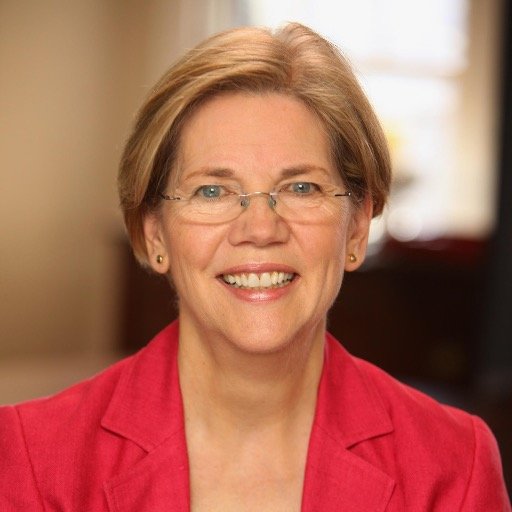
I've warned for months that a @JetBlue-@SpiritAirlines merger would have led to fewer flights and higher fares.
@JusticeATR and @USDOT were right to stand up for consumers and fight against runaway airline consolidation.
This is a Biden win for flyers! apnews.com/article/jetblu…
English
@LeveredUSTs Searching for the substance of your argument…
Every novel idea shocks people. That’s why it’s novel.
English
Since at least the late 19th century, semi-annual coupon payments have been the standard in U.S. bond markets. The British consols -- history's most famous and geopolitically significant perpetual credit instrument-- paid quarterly.
If the promoters' claims that bi-monthly payments represent a game-changing "structural refinement" designed to "improve cash-flow utility, reduce dividend-cycle friction, support price stability, increase trading liquidity, and potentially expand the investor base" ... why in the span of 200+ years haven't all credit issuers converged on this standard earlier?
Or is this latest "innovation" to shrink the distribution cycle just another demonstration of Saylor's unmatched genius, sitting right under the nose of everyone ever involved in the history of credit markets until now?
Roxom@roxom
English


First homer of the season for Mauricio and it couldn’t have come at a bigger time.
English
English

$MSTR
Strategy has the tools to build its Rome in the capital markets.
It could be one of the longest lasting companies the world has seen…
Saylor made an observation
that got me thinking;
During the Revolutionary War,
the average human life expectancy
was 32.
Sterilizing a surgical knife,
harnessing antibiotics,
got us from there to 80.
Technology is what takes
the human race from a world where you die at 30 to one where you live to 80.
The question I started asking myself
is what happens when you apply the same
to a company.
The average S&P 500 company today
lasts 15 to 20 years.
In the 1950s that number was over 60.
Companies are dying faster.
Most are capitalized
on assets that erode.
Their cash devalues,
their debt compounds,
which eventually bleeds the balance sheet.
BUT…
What happens
when a company stops bleeding?
@Strategy has made one defining decision.
To capitalize itself on an asset
that doesn’t erode.
As long as the network holds
and the company never sells
its Bitcoin…
the foundation remains intact.
The only threat is the temptation
to overcomplicate.
Rome didn’t fall because it lacked leadership
or power.
It overextended itself.
The mission here is simple.
Accumulate.
Preserve.
Don’t deviate.
As Saylor says, “maintain laser like focus.”
As long as Strategy holds that line,
the world is looking at something
that has never existed before.
A company built to outlast its era.
$BTC $MSTR $STRC


English

you should call her
𝕋𝕙𝕖 ❷4𝐓𝓱𝕃𝔼𝕋𝕋𝔼ℝ ™@4thletterThe
Massive coastal fissure. I’d probably fly right in there…🤣
English
English

@d_rufner Yes indeed :)
I became a father today!
GOD IS GREAT! CHRIST IS KING!
English
The average MSTR bear thinks preferred stock is a rug pull because they learned corporate finance from a YouTube thumbnail titled “THE TRUTH THEY DON’T WANT YOU TO KNOW” and a Discord guy named LiquidationLarry.
English

I don’t think I’ve ever been more bullish on Bitcoin over the next 12 months.
English

@VERYKOOLLUKEY AI infrastructure, genomics, Bitcoin. Pretty easy, actually.
English

Realistically what even is there to invest in on a 5-10 year horizon?
S&P at ATHs
Gold near ATHs
Treasury bills barely above the rate of inflation
Housing market is cooked
The dollar is cooked
WHERE DO I PUT MY MONEY
Kalshi@Kalshi
JUST IN: S&P 500 hits all-time high of 7,200
English